How to Start a Cabin Rental Business in the Mountains
The mountain hospitality market continues to expand rapidly today. Therefore, entering the short-term lodging space offers a reliable and highly lucrative opportunity for real estate investors. Think about it realistically. Travelers, families, and remote workers rarely want to spend thousands of dollars staying in cramped, sterile city hotels for a wilderness getaway. Instead, they look for a cozy, authentic log cabin to rent.
For an ambitious entrepreneur, learning how to start a cabin rental business in an alpine environment makes perfect sense. Starting with a clear operational strategy forces you to optimize your property management early on. Consequently, this organized approach allows you to shelter your revenue legally and fund your future portfolio expansion entirely out of actual booking revenue. In this comprehensive mountain cabin rental business guide, we will break down the exact operational steps you need to follow. Additionally, we will dive deep into the real-world cabin rental business cost, and we will look closely at the math to answer the big question: is cabin rental business profitable?
Detailed Mountain Cabin Rental Business Requirements
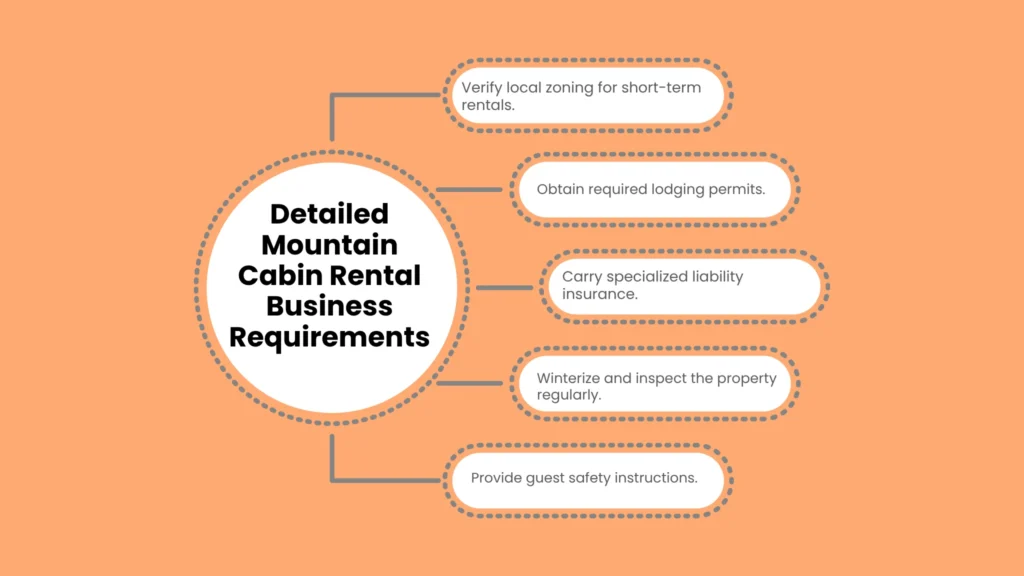
You do not need to manage a massive resort property to launch your venture successfully. Similarly, you do not need a background in corporate hospitality to secure steady bookings. However, you must meet a specific set of foundational legal, safety, and environmental guidelines. Skipping over your regional zoning checks to save time early on is a dangerous trap. It can easily result in heavy municipal fines, which can end your business before it even starts. To operate with confidence, you must satisfy a few basic cabin rental business requirements to protect your brand and your personal savings.
1. Land Zoning and Short-Term Rental Permits
Before you spend a single dollar on property acquisition, you must establish the legal right to host transient guests. Most successful mountain operators choose locations with flexible county ordinances. It’s worth reviewing the general licensing requirements for rental businesses before finalizing your location, since permit rules vary heavily by county. Your business plan must clearly verify that local zoning laws permit short-term rentals (STRs). If an area is strictly zoned for residential agriculture or long-term leases, your business faces instant closure.
After you verify your zoning compliance, you must secure a formal lodging permit from the county clerk. Doing this keeps your company completely legal on regional municipal registries.
2. Specialized High-Risk Liability Insurance
You absolutely cannot skip out on comprehensive, hospitality-specific insurance coverage when running a mountain cabin rental business. In the wilderness lodging space, liability is a daily reality. A guest could accidentally cause a fireplace mishap, experience a slip on an icy outdoor deck, or encounter wildlife issues on the property.
Therefore, you must bind a specialized commercial property and general liability policy that explicitly covers short-term rental activities. Fortunately, choosing a policy with a reputable hospitality insurer keeps your coverage intact if an accident occurs. However, having a formal insurance certificate is mandatory because premium booking channels will ban your listing if you cannot prove your equipment and structure carry full liability protection.
3. Alpine Maintenance and Winterization Protocols
Your maintenance routine stands as the most important behind-the-scenes part of your entire mountain operation. You need an organized checklist to inspect your property before and after every single guest arrival. This checklist must include verifying the structural integrity of the roof under heavy snow loads, testing backup generators, and checking pipe insulation.
Furthermore, you should include a clear safety briefing for your customers. This section ensures that your clients know exactly how to operate the hot tub safely and handle garbage disposal properly to avoid attracting local bear populations.
The Ultimate Cabin Fleet Budget Breakdown
How much capital do you realistically need to set aside to launch a mountain cabin rental business? If you’re still weighing the numbers, our general breakdown of the cost to start a rental business is a useful starting benchmark before you factor in mountain-specific expenses. The total volume depends entirely on your initial property acquisition strategy. If you attempt to buy a massive luxury estate on day one, you will need a massive cash injection.
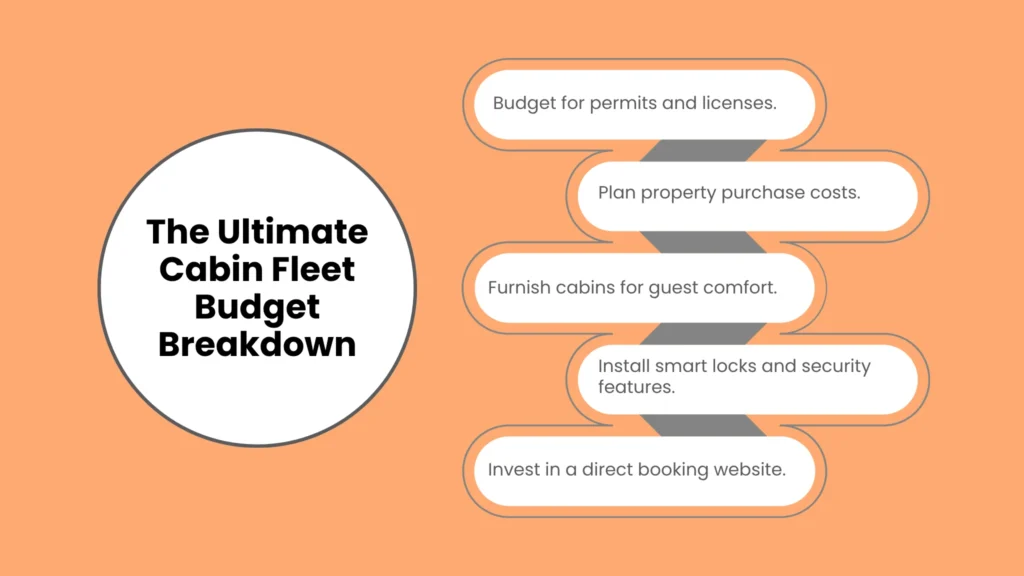
However, if you focus on a modest, highly aesthetic A frame cabin, your initial startup costs can stay highly efficient. Let’s take a look at a realistic financial breakdown of your estimated setup expenses.
Estimated Acquisition and Operational Fees
| Expense Category | Lean Budget Startup (Existing Small A-Frame) | Mid-Range Startup (Premium Custom Cabin) | Who You Pay |
| Zoning Permits & Lodging Licenses | $150 to $400 | $300 to $800 | County or City Clerk |
| Down Payment & Closing Costs | $25,000 to $50,000 | $75,000 to $150,000+ | Mortgage Lender & Escrow Co. |
| Rustic Mountain Interior Furnishing | $5,000 to $12,000 | $20,000 to $45,000 | Wholesale Decor & Furniture Outlets |
| Commercial Property Insurance (Annual) | $1,500 to $3,000 | $4,000 to $7,500 | Specialized STR Insurance Broker |
| Smart Locks & Bear-Proof Bins | $400 to $800 | $1,000 to $2,500 | Property Security Vendors |
| Direct Website & PMS Integration | $0 to $200 | $300 to $800 | Tech Providers & Hosting Companies |
| Total Estimated Initial Budget | $32,050 to $66,400 | $100,600 to $206,600+ | Total Startup Capital Needed |
Based on available industry data from successful bootstrapped operators, starting with a distinct, highly photogenic micro-cabin allows you to achieve maximum capital efficiency very early on. By avoiding massive commercial debts during your first year, you ensure that every single reservation dollar goes directly toward paying off your initial asset expenses.
Is a Mountain Cabin Rental Business Profitable?
Prospective investors frequently look at rising mountain real estate prices and ask: is cabin rental business profitable over the long haul? The answer becomes obvious once you look at the math behind strategic location choice and asset utilization.
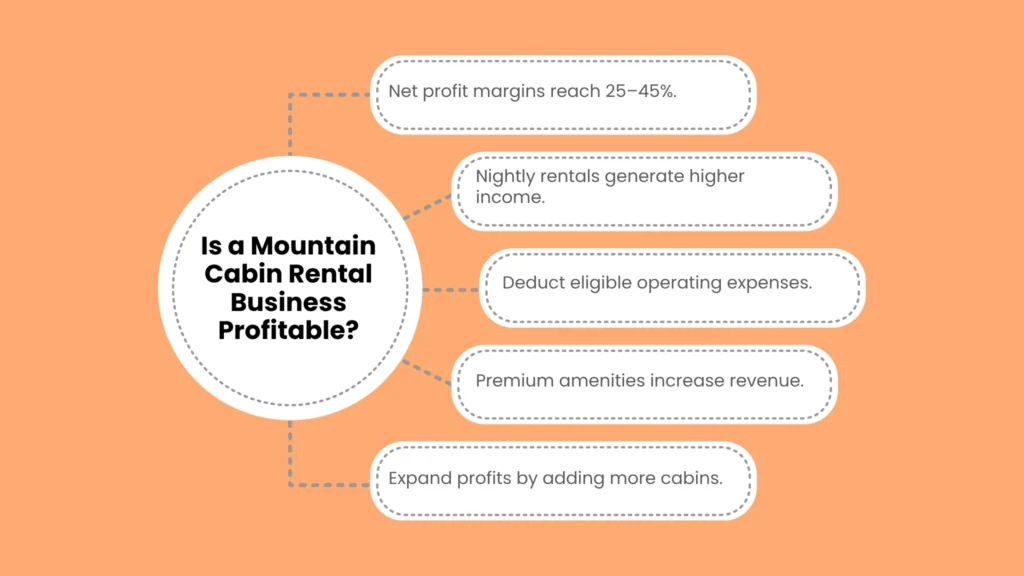
Unlike a traditional long-term rental where you receive a flat monthly check, a short-term mountain lodging business allows you to monetize your property on a nightly basis, pulling in premium rates during peak holiday seasons.
Your Expected Mountain Cabin Rental Business Profit Margin
A well-run mountain lodging company can achieve an outstanding net cabin rental business profit margin of 25% to 45% after adjusting for operational write-offs. This is significantly higher than average rental business profit margins across other rental categories, largely due to premium nightly pricing during peak season. If you claim all eligible tax deductions legally and track your utility bills accurately, your net operating income remains exceptionally healthy. This allows your net cash flow margins to surge higher than traditional investments.
Most baseline operating expenses like property management fees, professional cleaning costs, firewood sourcing, and hot tub maintenance are completely deductible. Once your property bookings clear your mortgage interest and structural depreciation floors, your business generates pure profit, minus a tiny fraction for routine wear and tear.
Real World Revenue and Scaling Potential
Let’s look at a simple, real-world example of a lean mountain setup. Suppose your cozy A-frame cabin commands an average nightly rate of $220. If your property maintains a conservative 55% occupancy rate throughout the year, you will generate roughly $3,630 per month in gross revenue. Consequently, you will easily cover your baseline mortgage, insurance, and maintenance expenses while building significant home equity.
As your local reputation grows, you can easily reinvest that cash into high-margin property additions. These upgrades include installing a luxury outdoor sauna, building an expansive viewing deck, or adding a premium fire pit area. A single independent cabin can realistically generate $40,000 to $80,000 in gross annual revenue. As you scale to a multi-cabin portfolio, the business can easily expand into a full-time operation pulling in six figures.
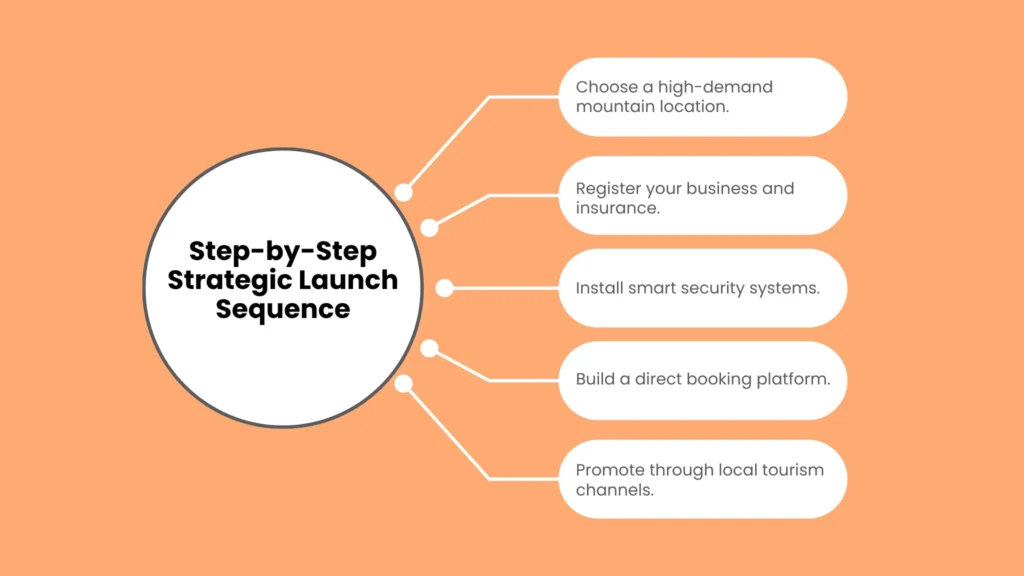
Step-by-Step Strategic Launch Sequence
To launch your wilderness hospitality brand without making costly financial mistakes or getting overwhelmed by logistics, follow this clear chronological order to secure your very first guest reservation.
Common Rental Operation Pitfalls to Avoid
The biggest mistake new cabin owners make is neglecting seasonal winterization protocols. You do not need to be a professional contractor right away, but you must have a reliable property manager or local handyman. Many beginners successfully check their heating systems before the first freeze. If you leave a cabin unattended with uninsulated pipes during a sudden mountain freeze, water line blowouts can completely destroy your floors and erase your seasonal profits.
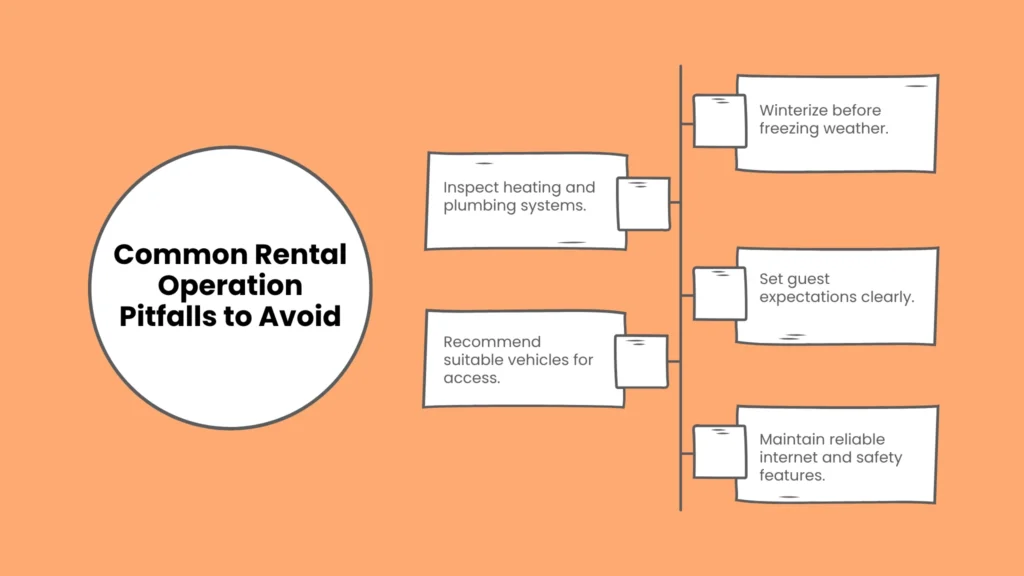
Another critical error is failing to manage guest expectations regarding cell service and accessibility. Renting a remote cabin down a steep, unpaved road without warning your guests will cause severe negative reviews during winter storms. Therefore, you must establish a strict communication workflow that advises guests to bring four-wheel-drive vehicles during snowy months. Additionally, provide reliable satellite internet on-site to maintain a premium guest experience.
Closing Thoughts on Building Your Hospitality Brand
Launching an alpine lodging brand remains one of the most accessible, high-yielding paths to independent entrepreneurship and real estate wealth. By narrowing your focus to high-demand scenic niches, keeping your operational overhead optimized, and using digital automation to manage bookings, you can build a highly resilient business. Focus on providing a flawless guest experience and maintaining strict safety standards. Consequently, your inventory will naturally generate the revenue required to scale your venture.
If you are looking for practical startup checklists, downloadable rental contract templates, and operational blueprints to grow your lodging company, explore our complete start-up library at reliablestartup.
Frequently Asked Questions
What cabin amenities drive the highest nightly rental rates?
While cozy indoor fireplaces are fantastic, an outdoor hot tub with mountain views, a dedicated game room, and a wrap-around viewing deck offer the highest long-term return on investment for hosts. They are highly desired by travelers, allow you to command premium weekend rates, and significantly increase your listing’s visibility online.
How should I handle guests who damage the cabin or its amenities?
Your rental contract must clearly state that customers are financially responsible for any structural damage or missing gear during their stay. To protect your investment, collect a refundable security deposit at checkout. Alternatively, implement a mandatory credit card authorization hold that you can legally charge if the property requires professional deep cleaning or immediate repair.
Is the mountain cabin rental business highly seasonal?
Yes, demand typically spikes during the winter ski season and the summer hiking months. To keep your cash flow strong during the slower spring and autumn “shoulder” seasons, shift your marketing focus toward romantic weekend getaways, creative remote-work retreats, and localized off-season discount packages.
Should I build a new cabin from scratch or buy an existing property?
When you are operating on a tight timeline, sourcing an existing cabin that requires minor aesthetic updates is an excellent move. However, you must inspect the foundation and roof carefully before buying. Avoid properties with signs of severe water damage or active pest infestations, and reject structures with outdated electrical systems.