Best Places to Start a Kayak Rental Business in the US
Choosing exactly where to base your fleet is the most critical decision you will make as an outdoor recreation entrepreneur. While launching a watercraft venture offers incredible margins, your top-line revenue is entirely tied to your geography. Therefore, the best places for kayak rental business success must combine consistent tourist foot traffic, long paddling seasons, and highly accessible, calm waters.
Whether you prefer a sun-drenched coastal beach, a crystal-clear natural spring, or a bustling urban riverfront, picking from the top kayak rental business locations requires balancing high consumer demand against local operating costs. Currently, the outdoor recreation market is shifting heavily toward sustainable eco-tourism and friction-free digital bookings. As a result, entrepreneurs who position their businesses in prime geographic areas stand to capture massive market share.
This comprehensive guide analyzes the top-performing rental regions across the United States. Additionally, we break down localized expenses and evaluate the hidden regulatory requirements you must clear to build a highly lucrative, scaling brand. Before diving into location strategy, it helps to have the fundamentals locked down, and this complete kayak rental business guide walks through the core startup costs, equipment checklist, and profit math every operator needs first.
High-Performing Regions: At a Glance
Different markets across the United States offer completely distinct advantages. While some territories reward you with a continuous 12-month booking cycle, others provide dense, ultra-profitable summer crowds. Consequently, these high-volume spots allow for premium hourly pricing. The table below outlines the financial and operational realities across prime geographic zones.
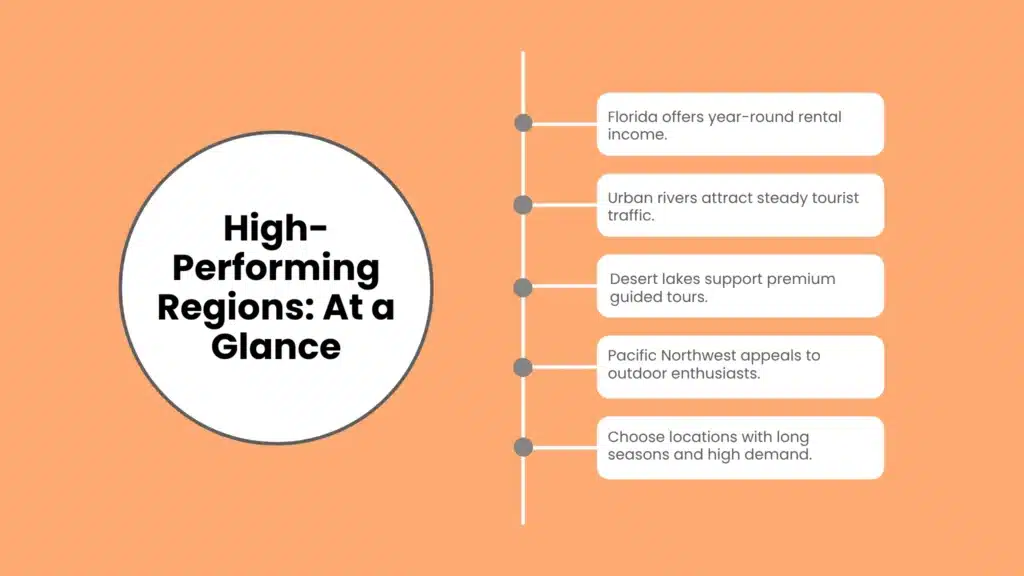
| Geographic Region | Top Target Cities | Operating Season | Key Location Advantage | Typical Customer Profile |
| Florida Springs & Coast | Crystal River, Key West, Orlando | Year-Round (12 Months) | Continuous cash flow; massive wildlife draws (manatees) | Families, eco-conscious travelers, senior vacationers |
| Urban Rivers & Canyons | Austin, Chicago, Milwaukee | Seasonal (May – October) | Dense tourist crowds; premium hourly rates; corporate events | Young professionals, weekend tourists, corporate groups |
| Desert Adventure Oases | Page (Lake Powell), Las Vegas (Black Canyon) | Year-Round / Extended | High tour markups; bucket-list destinations; scenic draws | Adventure seekers, travel influencers, international tourists |
| Pacific Northwest | San Juan Islands, Seattle, Portland | Seasonal (June – September) | Strong local outdoor culture; premium tandem demand | Nature enthusiasts, whale watchers, active couples |
Assessing the Financial Blueprint
To accurately evaluate a territory, you must understand how your chosen geography influences your best places for kayak rental business cost metrics. For example, a fixed physical storefront lease on a premium urban boardwalk will cost significantly more than running a lean, mobile delivery setup at a local state park lake. Similarly, long-term concession permits in popular national parks command a premium price.
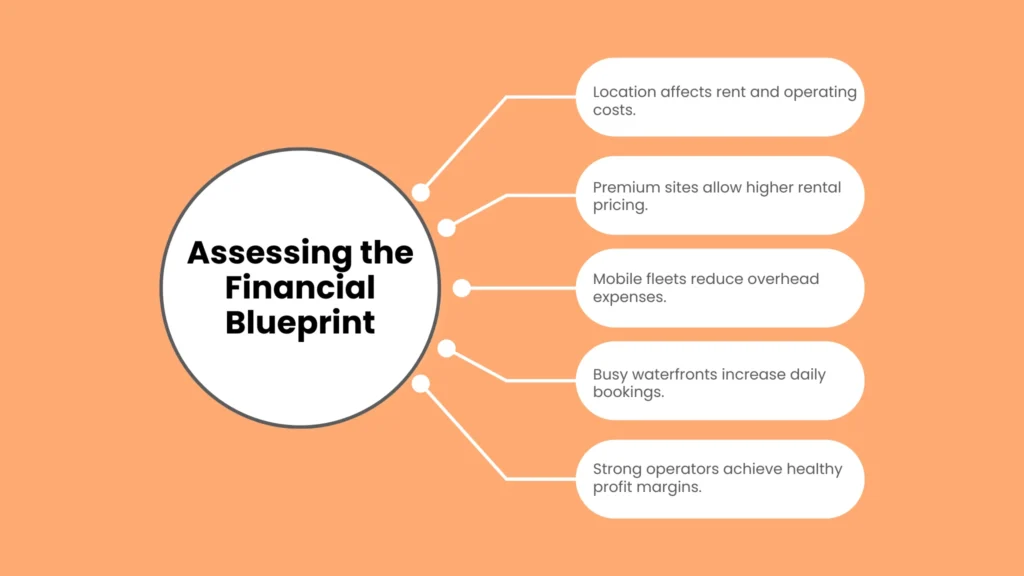
However, these high-traffic locations allow you to command premium, uncompromising pricing. Indeed, urban liveries along major city water paths frequently charge $35 to $45 per hour for a single recreational kayak. This immense pricing power directly protects your best places for kayak rental business profit margin. Thus, efficient operators can easily maintain net margins between 45% and 60% even after accounting for local real estate or licensing premiums.
Deep Dive: The Top US Kayak Rental Locations
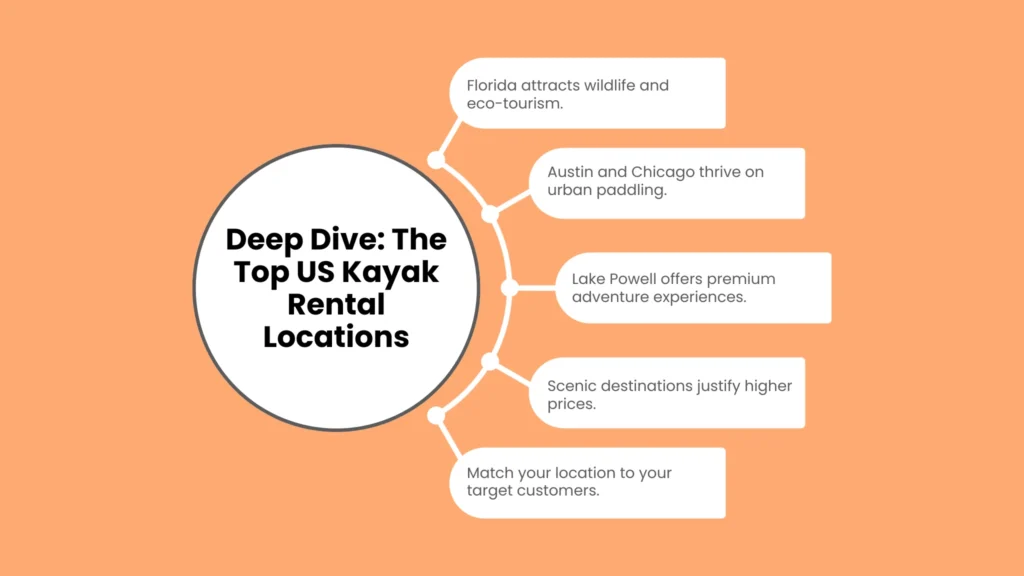
1. The Florida Ecosystem (Crystal River, Orlando, and the Keys)
Florida is arguably the most reliable and lucrative state for water sports. Because the weather stays warm year-round, you escape the financial squeeze of a winter off-season. This allows you to maintain continuous employment for your staff. Furthermore, it ensures reliable monthly cash flow for your business.
Locations like Crystal River and the Florida Keys draw millions of tourists eager to view manatees, sea turtles, and winding mangrove tunnels. Because 40% of kayakers state that wildlife viewing is their primary motivation, these ecosystems act as natural customer magnets. Consequently, clear-bottom kayak rentals and neon-lit night tours are incredibly popular here. As a result, operators can easily charge premium prices well above standard day rates.
2. High-Traffic Urban Waterways (Austin, TX and Chicago, IL)
Urban kayaking is experiencing an unprecedented boom across the country. This trend grows as city residents seek quick, outdoor escapes without traveling hours away from home. In Austin, Lady Bird Lake bans motorized boat traffic entirely. Therefore, it creates a perfectly safe, low-stress paradise for casual paddlers.
Meanwhile, renting kayaks along the skyscraper-lined riverfront in Chicago commands massive crowds from Memorial Day to Labor Day. These urban locations thrive on a diverse mix of revenue streams. Specifically, they benefit from high-volume weekend tourists, after work sunset paddles, and highly profitable corporate team building events that book out dozens of vessels simultaneously during slower weekdays.
3. Desert Adventure Hubs (Page, AZ and Las Vegas, NV)
The contrast of cool, emerald waters against towering, sun baked desert rock formations creates an irresistible draw for travelers. For this reason, operating near Lake Powell is highly lucrative. Similarly, running guided shuttle trips to the famous Emerald Cave along the Colorado River allows you to market your rentals as premium excursions.
Consumers actively looking for “soft adventures” are highly visual buyers. They want activities that combine light physical exercise with high end relaxation. Consequently, they routinely pay over $100 for half-day self-guided rentals or guided eco-tours. They choose these remote, breathtaking desert locations simply to capture the perfect experience.
Navigating Legal and Municipal Hurdles
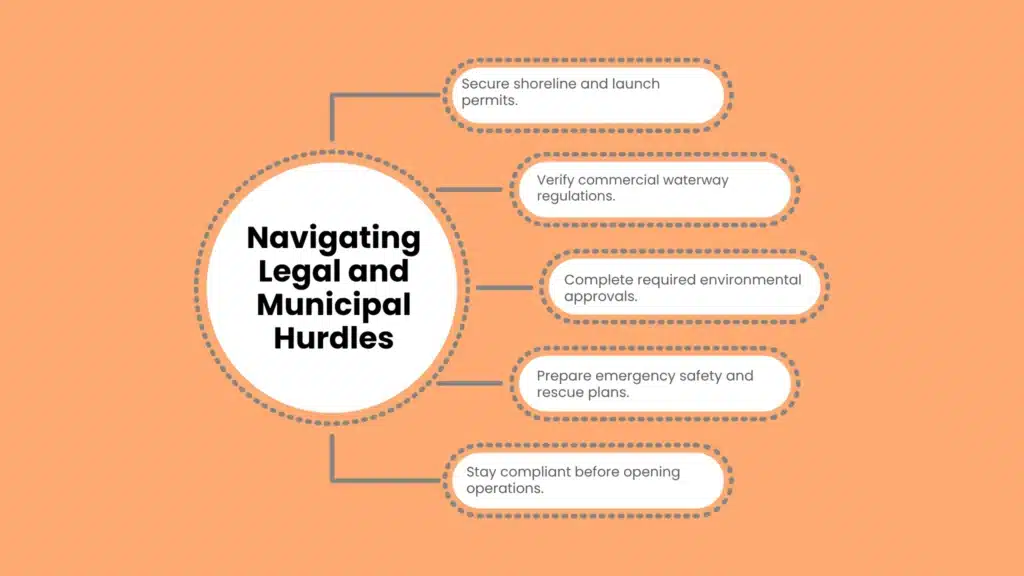
Before purchasing a single watercraft for your fleet, you must carefully navigate the complex best places for kayak rental business requirements in your chosen municipality. After all, a stunning, crystal-clear waterway is completely useless to your business if local zoning laws or environmental protections prevent you from launching.
The Ultimate Question: Is a Destination Venture Profitable?
So, is best places for kayak rental business profitable in the long run? The data shows a resounding yes. However, this is true only if you pick a location with a high density of transient tourists who do not own, store, or transport their own gear.
In drive-to vacation hubs or major metropolitan centers, travelers want immediate, hassle-free access to the water. They are happy to pay $60 to $90 for a two-hour block of time because it includes absolute convenience. Specifically, the kayak is already launched, safety gear is perfectly fitted, and an optimized route map is provided for them. By choosing a location that matches high tourist volume with manageable local permit fees, a newly launched fleet can completely pay for its initial capital expenditure within the first two months of a peak operating season.
Strategic Blueprint: Maximizing Location Revenue
To truly maximize your returns in a competitive market, you cannot rely entirely on casual walk-up traffic. Instead, the most profitable kayak rental businesses use their location to upsell high-ticket packages and digital add-ons.
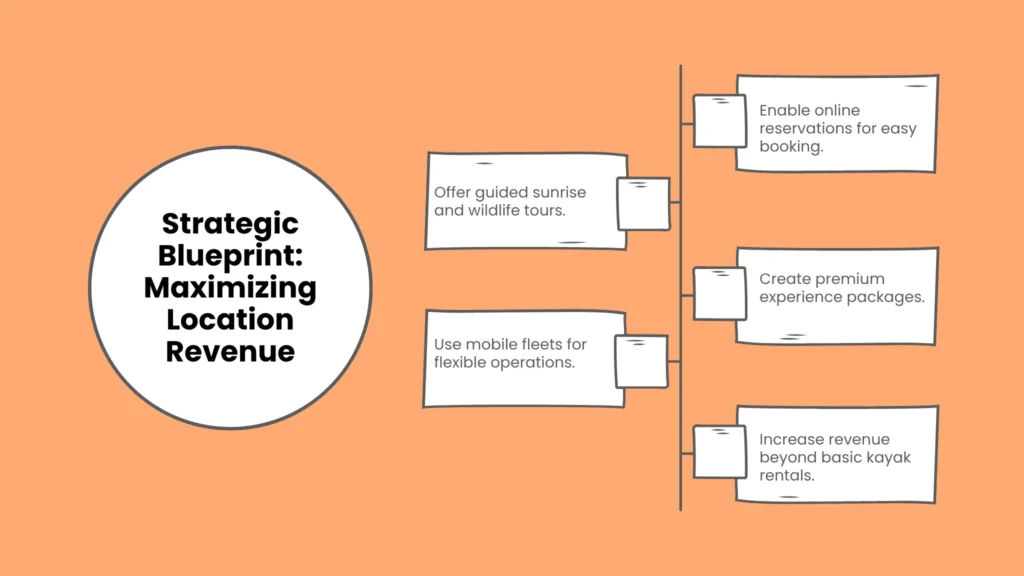
Integrate Direct Digital Bookings: Modern travelers expect to view real-time fleet availability from their smartphones. By integrating online reservation software directly into your website, you capture bookings 24/7. Consequently, you lock in revenue weeks before the customer ever arrives at your waterfront kiosk. Getting this booking system right matters as much as the location itself, and these digital marketing strategies for kayak rental businesses show how to drive advance bookings from tourists before they even arrive at your destination.
Bundle Guided Nature Experiences: Casual tourists are often intimidated by navigating unfamiliar tides or currents alone. For this reason, hiring a knowledgeable local guide to lead sunrise, sunset, or wildlife paddles is a smart move. This strategy allows you to instantly double your revenue per vessel compared to a standard unguided rental.
Deploy Inflatable or Modular Fleets for Mobile Delivery: If physical waterfront real estate is completely unavailable or cost-prohibitive in your target city, pivot to a mobile delivery model. High-durability, commercial-grade inflatable kayaks allow you to transport a massive fleet on a standard utility trailer. Thus, you can drop the gear off directly at designated public boat ramps only when you have confirmed, pre-paid online bookings.
Conclusion
In conclusion, the secret to building a highly profitable, scalable water sports brand lies almost entirely in your choice of geography. By placing your fleet in a proven tourist hotspot, whether that is a sun soaked Florida natural spring, a bustling urban river canyon, or a dramatic desert oasis you ensure a steady, predictable stream of eager customers.
Take the time to thoroughly clear your local municipal permitting hurdles early. Furthermore, purchase high-durability commercial gear that can withstand heavy daily use, and select a launch site that offers the perfect mix of high foot traffic and safe, calm water. When you align your business with prime location dynamics, the water handles the rest.
For more strategic territory profiles, commercial permit checklists, and operational launch frameworks explicitly designed for modern outdoor entrepreneurs, explore our latest deep dives at reliablestartup.com.
Frequently Asked Questions
What type of insurance do I need for high-traffic tourist areas?
First and foremost, you need a comprehensive commercial marine liability policy along with general business liability coverage. If you operate in highly trafficked commercial waterways like the Chicago River or Miami’s Intracoastal Waterway, your local city permits will often require a minimum of $1 million to $2 million in active liability coverage.
How do I compete in a destination market that already has existing kayak liveries?
Do not try to compete solely on rental price, as a race to the bottom directly destroys your operational margins. Instead, differentiate your brand by offering premium, unforgettable add-on experiences. For example, introduce clear-bottom night tours equipped with waterproof LED lighting systems.
Can I run a successful business in a state with a short 4-month summer season?
Absolutely. Many highly successful northern operators generate their entire annual target income between Memorial Day and Labor Day. For instance, businesses in Michigan, Wisconsin, upstate New York, or Maine thrive this way. The key to surviving and thriving in a highly seasonal market is to run an incredibly lean off-season operation.
How do I protect my fleet from long-term weather damage in coastal environments?
Saltwater and constant UV exposure are the two biggest enemies of marine rental gear. In fact, UV degradation can reduce a plastic kayak’s hull strength by up to 10% after a few years of direct sun exposure. To protect your assets, establish a mandatory “Clean-Drain-Dry” protocol at your docks. Rinse every vessel thoroughly with fresh water at the end of every operating day.