How to Calculate Startup Burn Rate and Runway
Managing cash flow is the most critical responsibility for any founding team. No matter how innovative your software or physical product is, running out of money ends your business instantly. Knowing how to calculate startup burn rate gives you a clear window into your financial health, allowing you to make smart hiring decisions, control operational overhead, and time your next fundraising round accurately.
If you need to evaluate your cash spending, this practical guide breaks down the core formulas, operational requirements, financial impacts, and step-by-step methods needed for accurate startup runway calculation.
What Is Startup Burn Rate and Runway?
Burn rate is the speed at which a company consumes its cash reserves to cover operational expenses before reaching positive cash flow. Expressed as a monthly metric, it tells you exactly how much cash leaves your bank account each month.
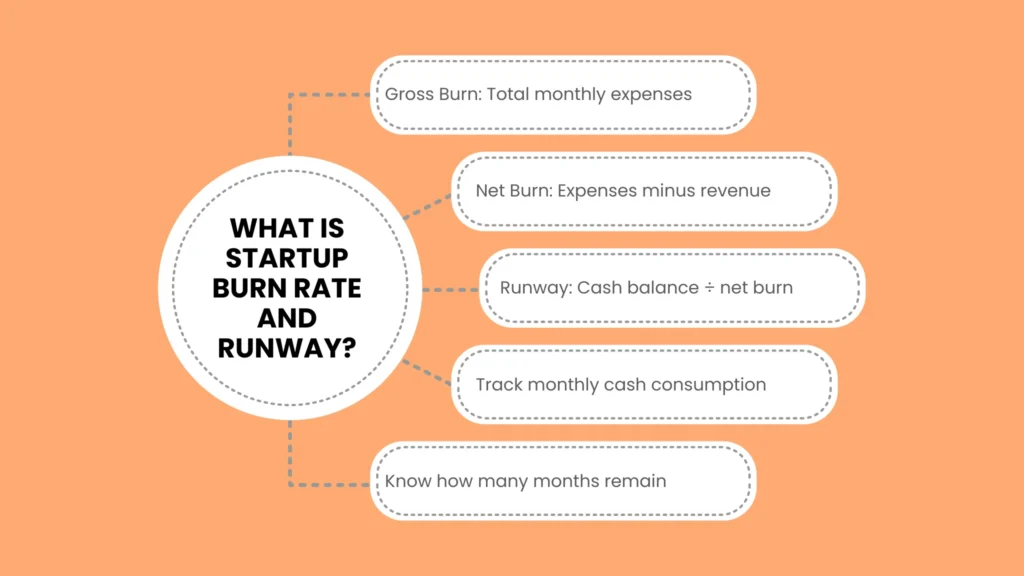
Runway represents the total amount of time your company can continue operating at its current burn rate before running completely out of money. It answers the fundamental question every investor asks: “How many months of capital do you have left?”
There are two primary ways to measure cash burn:
Gross Burn Rate: The total amount of cash spent on operating expenses each month, ignoring any incoming revenue.
Net Burn Rate: The net loss of cash each month, calculated as gross expenses minus total monthly revenue.
Essential Startup Runway Calculation Formulas
Calculating these metrics accurately requires applying standard financial formulas to your balance sheet and cash flow statements.
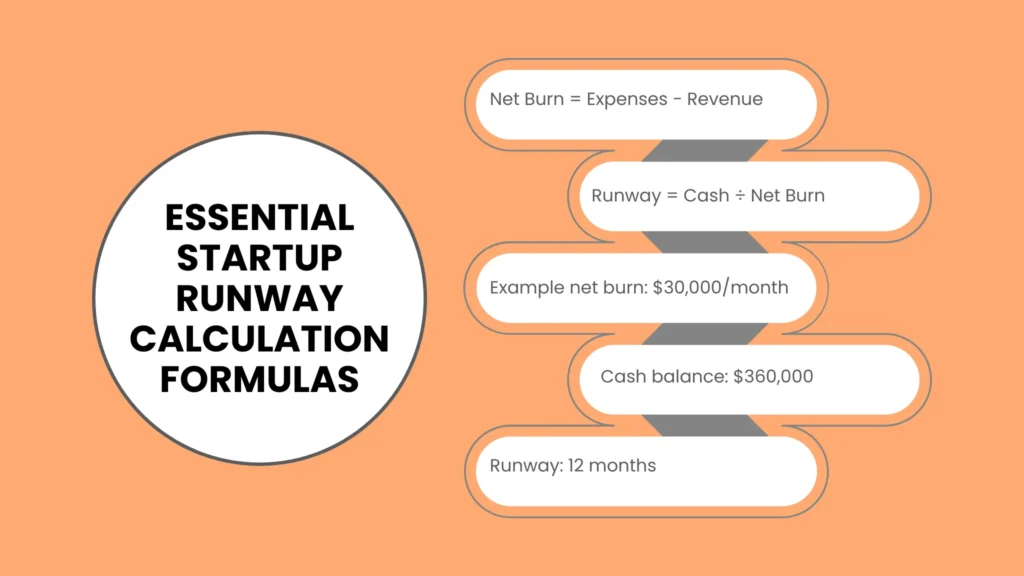
1. Net Burn Rate Formula
For example, if your company spends $50,000 per month on payroll, server hosting, and office rent, but generates $20,000 in monthly recurring revenue (MRR), your net burn rate is $30,000 per month.
2. Startup Runway Calculation Formula
Using the example above, if you have $360,000 remaining in the bank and a net burn rate of $30,000 per month, your startup runway calculation yields exactly 12 months.
Is Calculate Startup Burn Rate Profitable?
Founders often ask: is calculate startup burn rate profitable for an early-stage company? While calculating a financial metric is an operational practice rather than a direct revenue generator, maintaining strict visibility over cash consumption directly protects your company’s long-term profitability.
Without accurate cash tracking, startups risk overhiring, overspending on unproven marketing channels, or miscalculating their fundraising timelines. By monitoring monthly net burn, you can adjust spending proactively before facing a cash crisis.
When evaluating financial health, keeping a disciplined net burn rate directly expands your future calculate startup burn rate profit margin. Extending your runway gives your team time to optimize customer acquisition costs (CAC), improve pricing structures, and achieve sustainable gross profit margins between 40% and 80%, depending on your industry sector.
Calculate Startup Burn Rate Cost Breakdown
Tracking cash metrics carries minimal direct software expenses, but miscalculating them creates immense financial risk. Understanding your expected calculate startup burn rate cost helps you budget for financial tools and professional advisory services appropriately.
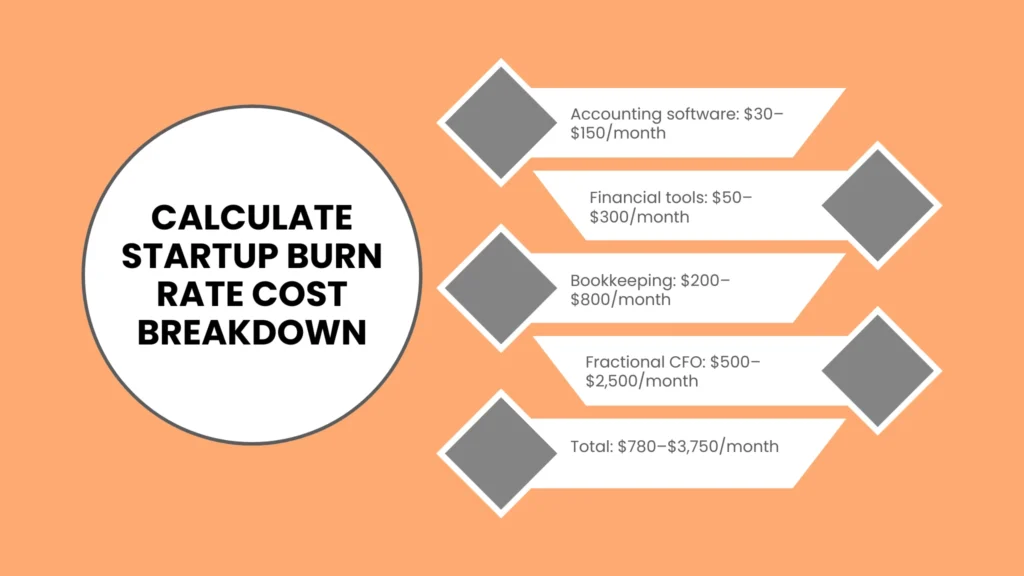
Based on available industry data, setting up robust financial monitoring requires between $50 and $2,000 per month, depending on whether you use automated accounting software or fractional CFO services.
Estimated Monthly Accounting & Financial Monitoring Costs
| Expense Category | Estimated Monthly Cost | Key Components & Deliverables |
| Cloud Accounting Software | $30 – $150 | Automated bank feeds, ledger tracking, invoice management. |
| Financial Modeling Tools | $50 – $300 | Dynamic runway forecasting, scenario planning, cap table tracking. |
| Bookkeeping Services | $200 – $800 | Monthly reconciliation, expense categorization, financial reports. |
| Fractional CFO Advisory | $500 – $2,500 | Strategic runway analysis, investor deck financial reviews, burn optimization. |
| Total Estimated Expense | $780 – $3,750 | Total monthly investment for accurate financial governance. |
Core Calculate Startup Burn Rate Requirements
To perform an accurate startup runway calculation, your management team must establish clean accounting practices. Meeting these baseline calculate startup burn rate requirements prevents errors that could lead to unexpected cash shortfalls.
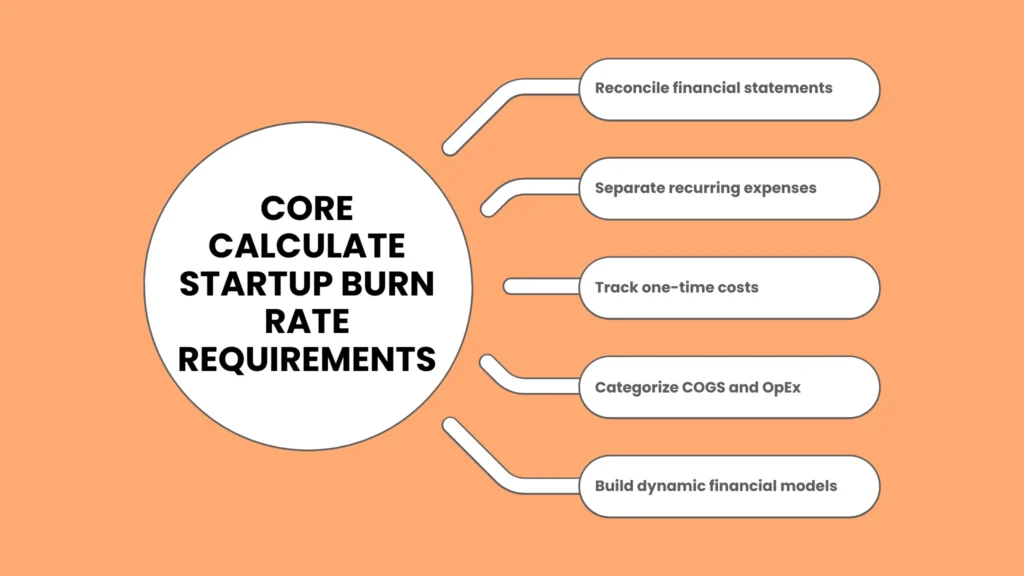
1. Reconciled Monthly Financial Statements
You need up-to-date income statements, balance sheets, and cash flow statements. Attempting to calculate cash burn using un-reconciled bank balances leads to inaccurate projections due to pending accounts payable, uncleared checks, or processing delays.
2. Separation of One-Time vs. Recurring Expenses
Accurate burn modeling requires separating regular operating expenses (payroll, software subscriptions, office space) from one-time capital expenditures (annual legal filings, equipment purchases, initial branding packages).
3. Clear Categorization of COGS and OpEx
Differentiate between Cost of Goods Sold (COGS) expenses directly tied to delivering your product and general Operating Expenses (OpEx). This distinction ensures you calculate gross margins accurately alongside cash burn.
4. Dynamic Financial Models for Hiring and Revenue Growth
Static cash burn calculations assume spending and revenue remain flat. A robust model accounts for planned headcount additions, wage increases, seasonal revenue shifts, and delayed payment terms from clients.
How to Calculate Startup Burn Rate and Runway Step by Step
Follow this structured process to measure your monthly cash consumption and calculate your remaining runway accurately.
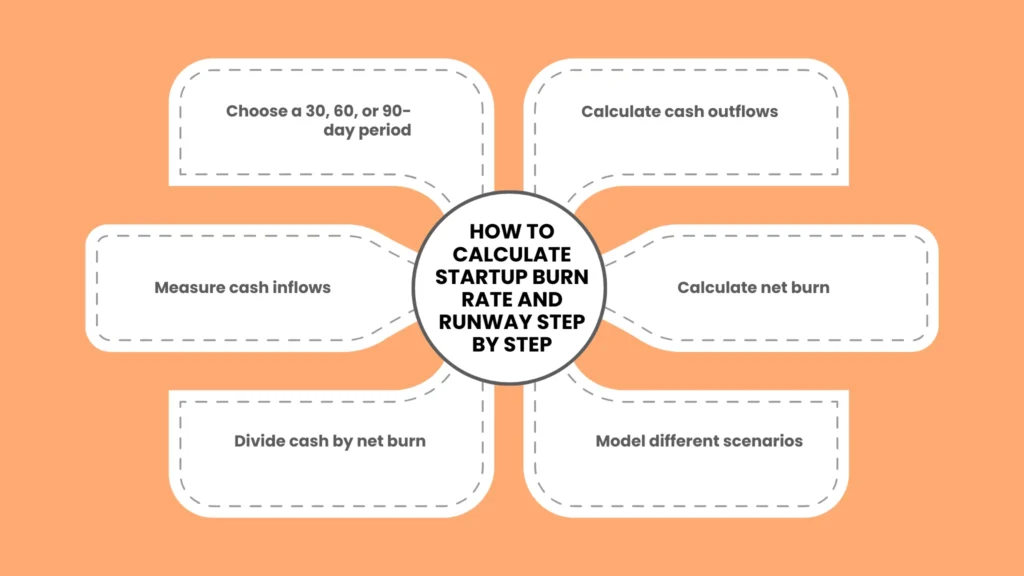
Step 1: Define Your Evaluation Period
Choose a specific timeframe to evaluate. While monthly calculations are standard, averaging cash consumption over the past 3 to 6 months smoothes out short-term fluctuations caused by quarterly tax payments or annual software renewals.
Step 2: Sum Total Operating Cash Outflows (Gross Burn)
Add up every cash payment made during the selected period. This includes employee salaries, payroll taxes, contractor fees, cloud hosting, office space, software licenses, marketing expenses, and insurance premiums.
Step 3: Account for Operational Revenue Inflows
Calculate total cash collected from clients during the same period. Be sure to count actual cash received in your bank account, rather than accrued revenue or outstanding accounts receivable invoices.
Step 4: Compute Your Net Burn Rate
Subtract your total monthly cash outflows from your total monthly cash inflows. If your monthly cash expenses are $80,000 and your monthly cash receipts are $30,000, your net burn rate is $50,000 per month.
Step 5: Perform Your Startup Runway Calculation
Divide your total liquid bank balance by your monthly net burn rate.
Step 6: Create Scenario-Based Projections
Build dynamic financial projections that reflect different operational conditions:
Base Case: Reflects current hiring plans and steady revenue growth.
Worst-Case: Assumes zero revenue growth and models how long cash lasts if sales plateau.
Expansion Case: Models how new hires or increased marketing spending impact your runway.
5 Practical Strategies to Reduce Burn and Extend Runway
If your startup runway calculation reveals less than 12 months of capital remaining, take proactive steps immediately to protect your financial position.
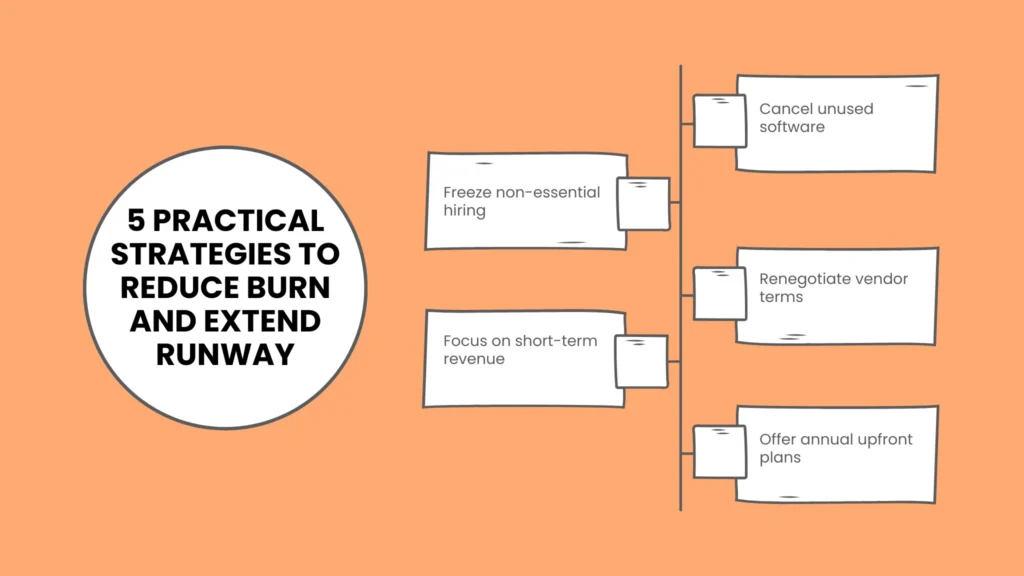
Audit Unused Software Subscriptions: Cancel duplicate SaaS tools, downsize unused user seats, and negotiate annual payment discounts on critical business software.
Freeze Non-Essential Hiring: Pause recruiting for non-critical roles and focus existing personnel on high-ROI projects that directly generate revenue or improve customer retention.
Renegotiate Vendor Payment Terms: Request extended payment terms (such as Net 60 instead of Net 30) from key suppliers to keep cash in your account longer.
Focus on Short-Term Revenue Generation: Shift marketing efforts toward high-converting sales channels that deliver immediate cash flow rather than long-term brand building.
Convert Monthly Billing to Annual Upfront Plans: Offer discounts to clients who pay annually upfront. This provides an immediate cash injection without diluting your company equity through outside fundraising.
Final Thoughts: Protecting Your Company’s Financial Health
Learning how to calculate startup burn rate accurately gives you complete visibility over your company’s operational lifespan. Regularly reviewing your cash consumption ensures you make informed decisions about hiring, product investments, and fundraising timelines.
Maintain clean accounting records, update your dynamic runway models monthly, and act decisively when cash reserves drop below safety thresholds. Managing your burn rate with discipline keeps your business resilient, adaptable, and attractive to future investors. For comprehensive financial plan templates, dynamic runway calculators, and startup growth guides, explore additional resources at reliablestartup.com.
Frequently Asked Questions
What is considered a healthy runway for an early-stage startup?
A healthy runway for a Seed or Series A startup is generally between 18 and 24 months. This timeframe gives your team enough buffer to hit product milestones, build market traction, and execute a 6-month fundraising process without running low on cash.
How far in advance should a founder start fundraising?
You should start fundraising at least 6 to 9 months before your runway ends. Running low on cash during investor meetings reduces your negotiating leverage and creates operational risk if closing the round takes longer than expected.
What is the difference between cash burn and net loss?
Net loss is an accounting metric reported on an income statement that includes non-cash expenses like depreciation and accrued revenues. Cash burn measures actual cash entering and leaving your bank accounts.
Should I include expected future sales in my runway calculation?
For baseline runway modeling, it is safest to use guaranteed or historical cash collections. Counting unclosed sales pipelines in your core runway calculation can create a false sense of security if deals slip or cancel.