Parking Lot Striping Business: Equipment and Contracts
Key Takeaways
Low line striping startup cost with fast payback
High profit margins on commercial parking lots
Essential tools range from stripers to stencils
Accurate striping bid pricing prevents profit losses
Securing ongoing maintenance contracts ensures steady revenue
Have you ever driven into a fresh commercial parking lot, seen crisp bright white lines, and wondered who gets paid to paint them? It is actually one of the most profitable service niches around. Launching a parking lot striping business is an accessible, high-margin way to enter the commercial property maintenance industry. Property managers, local retailers, and commercial real estate owners need fresh, compliant lines to maintain safety and avoid expensive regulatory fines.
You do not need an engineering degree or hundreds of thousands in capital to launch this venture. With a modest investment in the right gear, a firm grip on striping bid pricing, and a proactive strategy for securing contracts, you can build a reliable business step by step.
A parking lot striping business involves applying high-visibility paint lines, handicap symbols, and traffic control markings to asphalt or concrete surfaces. Success depends on selecting reliable line striping equipment, managing line striping startup cost requirements, and mastering competitive striping bid pricing. By establishing maintenance contracts with commercial property managers, entrepreneurs can build a high-margin pavement marking business with predictable recurring revenue and rapid payback periods.
What Is a Parking Lot Striping Business and How Does It Work?
Ever think about how many parking stalls surround every store, church, school, and office building in your town? Every single one of those lines fades over time under sun and tires. When you run a specialized pavement marking business, you provide an essential safety service that commercial property owners must maintain by law.
The process begins by evaluating a property, assessing existing stall counts, and planning required markings like handicap stalls, crosswalks, and directional arrows. Once a contract is secured, you clean the pavement, lay out your chalk guide lines, and execute precise paint application using specialized machinery. Finally, you hand off the completed job to the property manager and put them on a multi-year re-striping schedule for recurring business.
Line Striping Startup Cost: Initial Investment Breakdown
One of the best reasons to start a line striping startup is the low financial barrier to entry compared to traditional paving or excavation. You do not need a commercial warehouse on day one. Most operators store their gear in a standard garage or utility trailer and operate right out of a pickup truck.
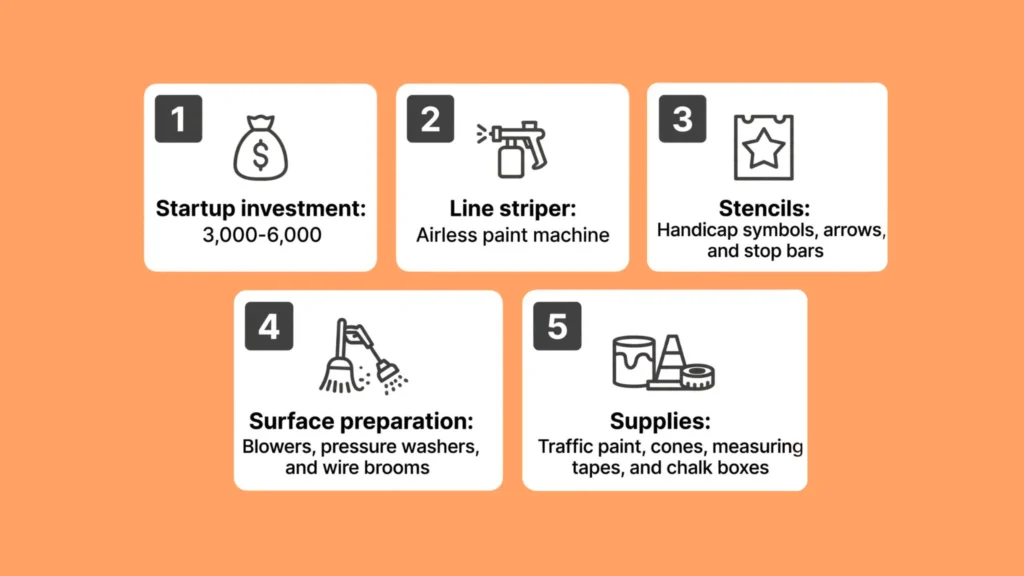
Understanding your line striping startup cost helps you budget wisely and avoid overspending on unneeded machinery before booking your first clients. Here are the primary initial expenses you can expect when getting your service business off the ground:
Professional Line Striper: A mid-range airless paint machine designed specifically for crisp pavement lines handles most commercial lots.
Stencil Package: Durable plastic or aluminum stencils for handicap logos, arrows, visitor text, and stop bars.
Surface Cleaning Tools: High-powered gas blowers, pressure washers, and wire brooms prepare dirty asphalt surfaces.
Commercial Traffic Paint: Fast-drying waterborne or solvent-based paint formulated specifically for heavy tire abrasion.
Safety Gear and Transport: Traffic cones, high-visibility vests, tape measures, chalk boxes, and a reliable utility trailer or truck.
Essential Equipment Needed for a Pavement Marking Business
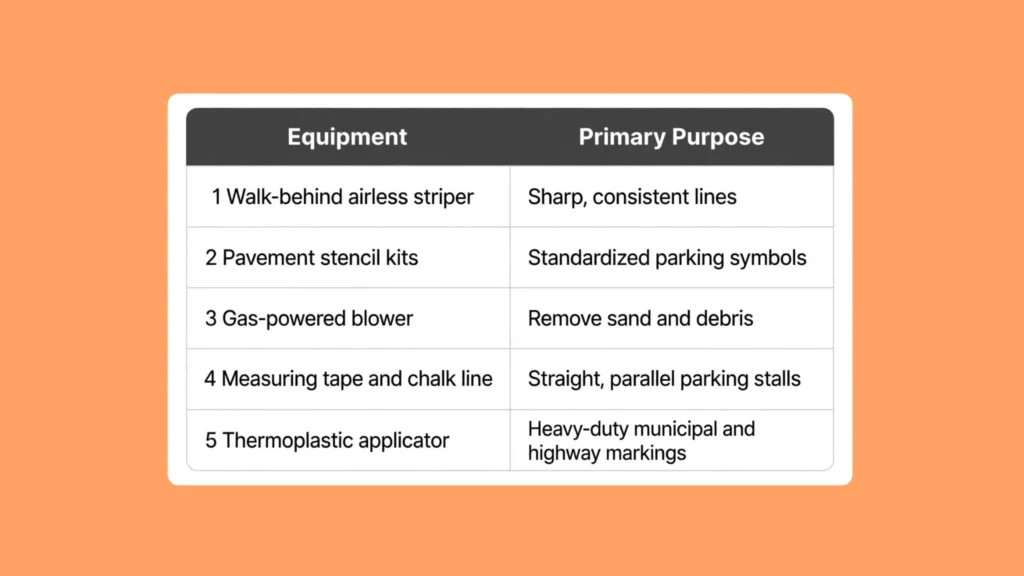
Using the correct gear is what separates professional contractors from amateurs who try to paint lines with cheap aerosol cans. Your primary machine needs to deliver straight, sharp-edged lines quickly so you can finish jobs in hours rather than entire days. A proper line striping setup allows you to handle everything from minor restriping jobs to full brand-new parking lot layouts.
| Equipment Type | Key Features & Purpose | Primary Benefit |
| Walk-Behind Airless Striper | High-pressure pump system, adjustable spray guns | Delivers razor-sharp line edges quickly |
| Pavement Stencil Kits | Heavy-gauge plastic or aluminum symbols | Creates standardized, compliant markings |
| Gas Powered Blower | High CFM air velocity output | Cleans sand and debris out of asphalt pores |
| Layout & Measuring Gear | 100-ft tape measure, chalk line reel, laser guide | Ensures perfectly straight and parallel stalls |
| Thermoplastic Applicator | Heated shoe melt unit for heavy-duty markings | Unlocks high-end municipal and highway jobs |
Striping Bid Pricing: How to Price Jobs for Profit
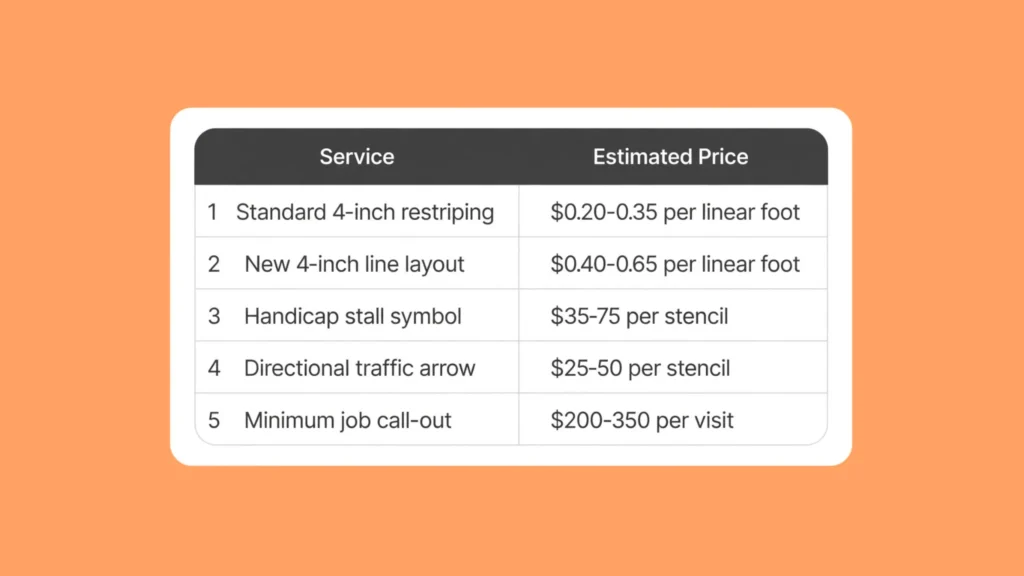
Mastering striping bid pricing is critical if you want to land competitive bids while maintaining a high profit margin. If you price too high, property managers will go with another vendor. If you price too low, you will end up working for pennies after covering paint and fuel.
Most experienced contractors use a combination of linear foot pricing for standard lines and flat-rate pricing for stencils and specialty markings. Keeping track of daily material costs keeps your profit margins predictable across different parking lot sizes. Based on available data, here is a general breakdown of estimated pricing expectations for common parking lot items:
| Item / Service | Measurement Unit | Estimated Pricing Range |
| Standard 4-Inch Line Restripe | Per linear foot | $0.20 – $0.35 |
| New Layout 4-Inch Line | Per linear foot | $0.40 – $0.65 |
| Handicap Stall Symbol | Per stencil | $35.00 – $75.00 |
| Directional Traffic Arrow | Per stencil | $25.00 – $50.00 |
| Minimum Job Call-Out Fee | Per job visit | $200.00 – $350.00 |
Landing Commercial Contracts and Maintenance Agreements
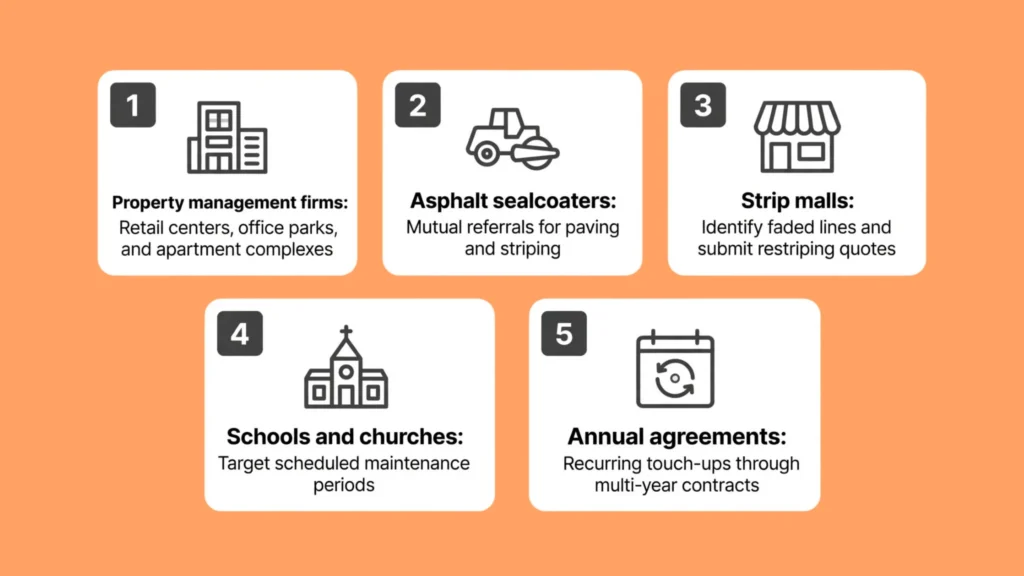
Securing recurring contracts with property managers provides consistent, predictable revenue that builds long-term business value. Instead of hunting for single residential jobs, focus on commercial clients who manage dozens of retail centers, office parks, and apartment complexes.
Property managers prefer working with one reliable contractor who handles their entire regional portfolio on a scheduled maintenance plan. Here are proven strategies for connecting with commercial decision-makers and locking in multi-year service contracts:
Direct Outreach to Property Managers: Reach out directly to commercial real estate management firms and present a simple portfolio of your work.
Partner with Asphalt Sealcoaters: Connect with local sealcoating and paving crews who do not offer striping and exchange mutual customer referrals.
Target Strip Mall Retailers: Walk local strip centers, identify faded lines, and drop off a direct restriping quote with the property owner.
Bid on School & Church Lots: Educational institutions and religious centers usually schedule parking lot maintenance during summer breaks or slow days.
Offer Multi-Year Maintenance Deals: Include scheduled annual touch-ups in your initial proposal to lock in long-term recurring revenue.
ADA Compliance and Regulatory Requirements
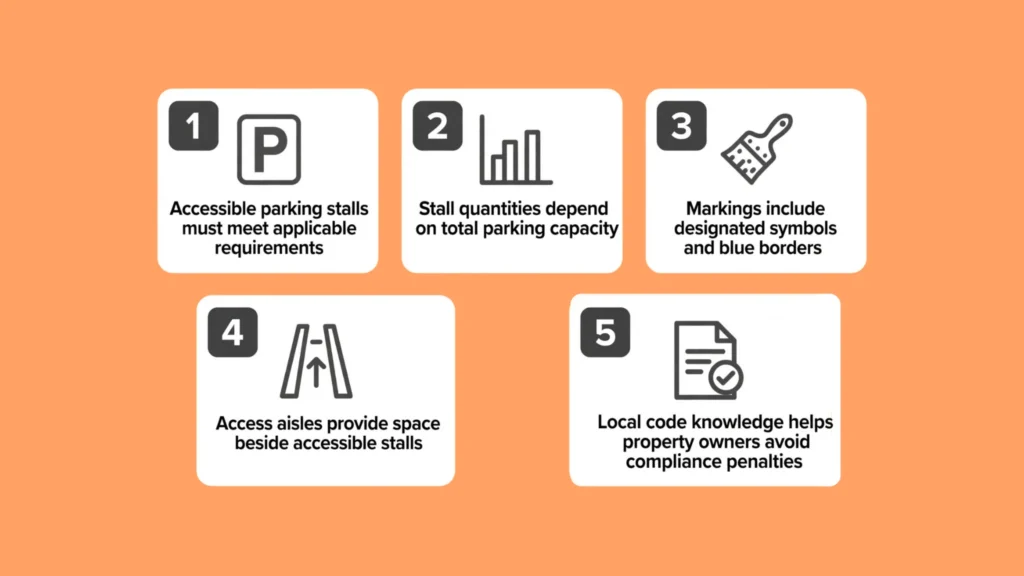
Understanding Americans with Disabilities Act (ADA) guidelines gives your pavement marking business a huge competitive advantage over general handymen. Commercial parking lots are legally required to maintain a specific ratio of accessible handicap stalls based on their total parking capacity. These designated stalls require precise dimensions, blue painted borders, high-visibility vanity logos, and adjacent loading access aisles.
Building expertise in local code enforcement positions you as a trusted advisor rather than just a person holding a spray gun. As your business grows, exploring other service-based opportunities, such as starting a box truck business without a CDL, can also help diversify your income. Resources available at reliablestartup.com emphasize that helping clients avoid heavy non-compliance penalties makes your services invaluable to property owners.
How to Scale Your Line Striping Business Efficiently?
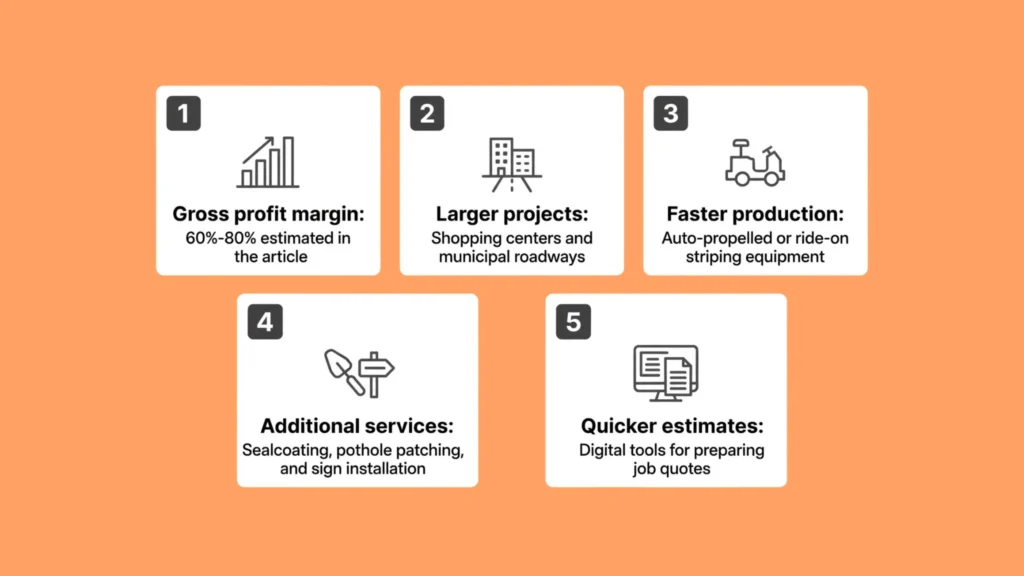
Once you master basic restriping work, it is time to think bigger about scaling your operations for higher revenue. Transitioning from a solo operator to a multi-crew fleet allows you to take on larger commercial shopping centers and municipal roadways. Upgrading to auto-propelled striping attachments or ride-on driver units drastically reduces operator fatigue and cuts job completion time in half.
Adding complementary maintenance services like asphalt sealcoating, pothole patching, and sign installation boosts your average ticket size per lot. Strong financial management is equally important as your business grows, and resources on starting a bookkeeping business from home can offer useful insights into tracking expenses, managing records, and maintaining organized business finances.
Frequently Asked Questions
How much does it cost to start a line striping business?
In most cases, you can launch a basic line striping startup with an initial investment between $3,000 and $6,000 for essential machinery and supplies.
What equipment is required to stripe a parking lot?
Generally, you need an airless line striping machine, high-visibility traffic paint, a stencil kit, a gas blower, measuring tapes, and safety gear.
How do you charge for parking lot striping jobs?
Contractors typically charge per linear foot for straight lines while using fixed prices for stencils like handicap stalls, arrows, and curb markings.
Is a parking lot striping business profitable?
Yes, estimated gross profit margins generally average between 60% and 80% due to low material costs and high commercial service demand.
Conclusion
Building a successful parking lot striping business is a realistic, highly profitable journey that turns clear pavement lines into reliable recurring income. By investing in the right line striping equipment, mastering striping bid pricing, and building strong relationships with commercial property managers, you can position your enterprise for long-term growth.
Focus on delivering crisp, professional results, stay up to date on local compliance standards, and explore complementary service-based opportunities, such as starting a loan signing agent business, to diversify your income and support long-term business growth.
About The Author