Notary and Loan Signing Agent Business Explained

Key Takeaways
Low startup costs with flexible daily scheduling
Straightforward path to securing your notary certification
High-demand service across mortgage and real estate industries
Strong earning potential with local repeat business
Ever wondered how mortgage documents get safely signed at someone’s dining room table? That’s where a trained professional comes in to walk signers through every form. Launching a loan signing agent business is one of the most practical routes to self-employment today. It offers flexible working hours, minimal overhead, and steady local demand.
In simple terms, a loan signing agent is a specialized notary public trained to guide borrowers through mortgage, refinance, and real estate closing packages.
A loan signing agent business provides specialized mobile notary services for mortgage real estate closings. Agents walk signers through loan packages, confirm identities, and ensure proper notarization.
It requires standard notary certification, essential office equipment, and flexible availability. Based on available data, it offers low startup costs and high earning potential for both part-time and full-time operators.
What Exactly Is a Loan Signing Agent?
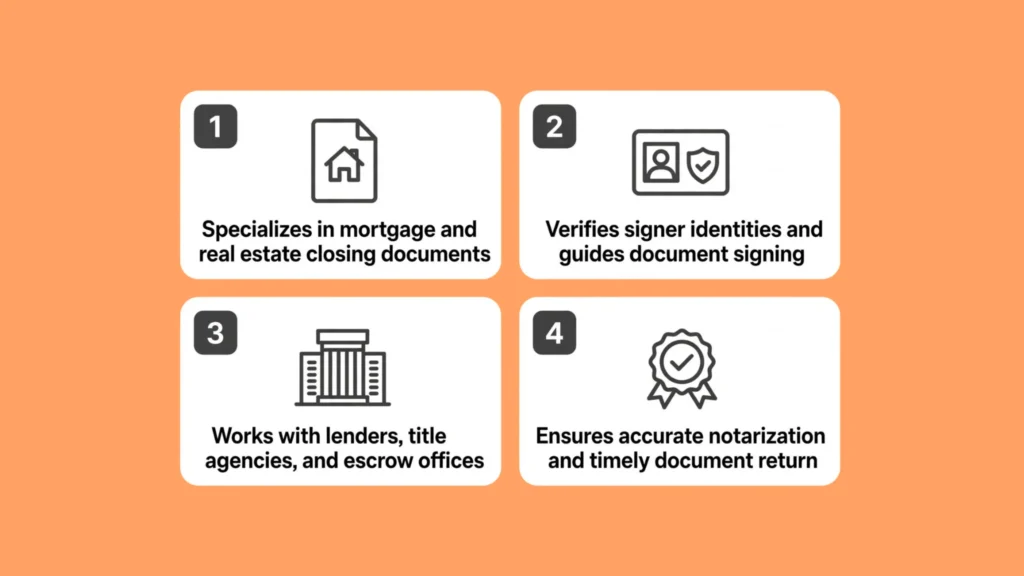
Let us keep things clear and simple from the start. While any commission holder can stamp a basic agreement, not everyone knows how to handle a complex stack of mortgage paperwork. Specialized training makes all the difference when managing high-stakes financial files.
A loan signing agent acts as the essential final link in the entire home buying or refinancing process. Title agencies, escrow offices, and lenders hire you to print closing packets, meet borrowers in person, guide them where to sign, and return completed files promptly.
Because these transactions involve major financial commitments, absolute precision is required on every page. A single missed signature can easily halt a real estate deal, which is why hiring skilled agents remains a top priority for settlement teams.
Why Launch a Mobile Notary Business Today?
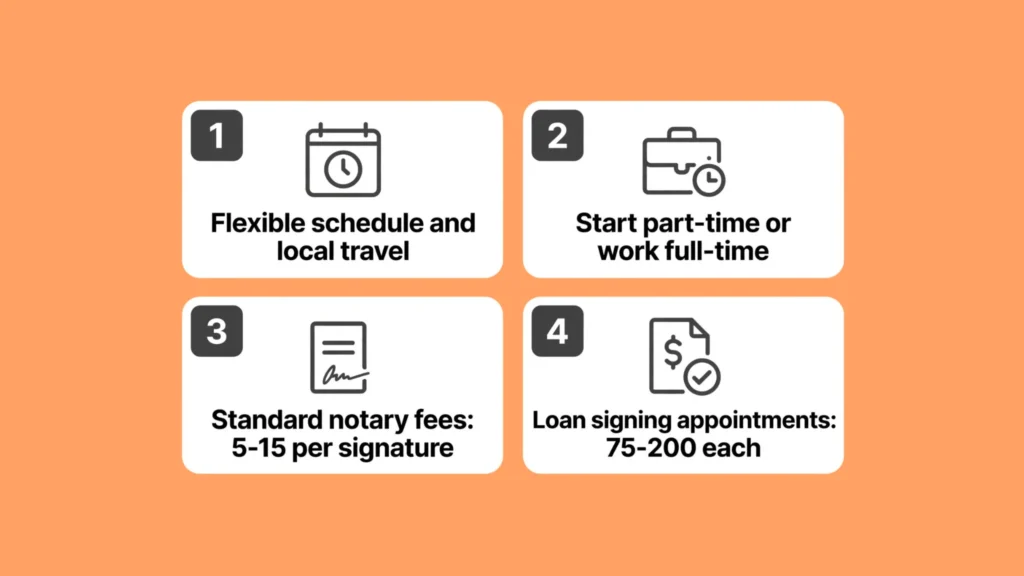
If you prefer freedom over spending forty hours a week trapped in a cubicle, starting a mobile notary business is an attractive career move. You set your service territory, manage your calendar, and drive out to meet signers at their homes or local offices.
The flexibility lets you build a schedule that works around your personal life and family commitments. You can start on a part-time basis during evenings or dive in full-time right away.
Demand for reliable field representatives remains steady across suburban and urban communities alike. Mortgage deals, property transfers, and private financial agreements happen every day, requiring professional notarization to finalize public records.
| Business Feature | Standard Notary Public | Mobile Loan Signing Agent |
| Primary Document Focus | Single-page forms, simple affidavits, powers of attorney | Multi-page mortgage, purchase, and refinance loan packets |
| Average Service Fee | $5 to $15 per signature stamp | $75 to $200 per scheduled appointment |
| Work Location | Fixed office desk, bank, or store counter | Flexible travel across local service areas |
| Credential Level | Basic state notary commission | Advanced background check and notary certification |
As shown in the comparison above, specializing in real estate closings creates far greater earning potential than handling basic walk-in stamp requests.
Understanding Notary Signing Agent Income Potential
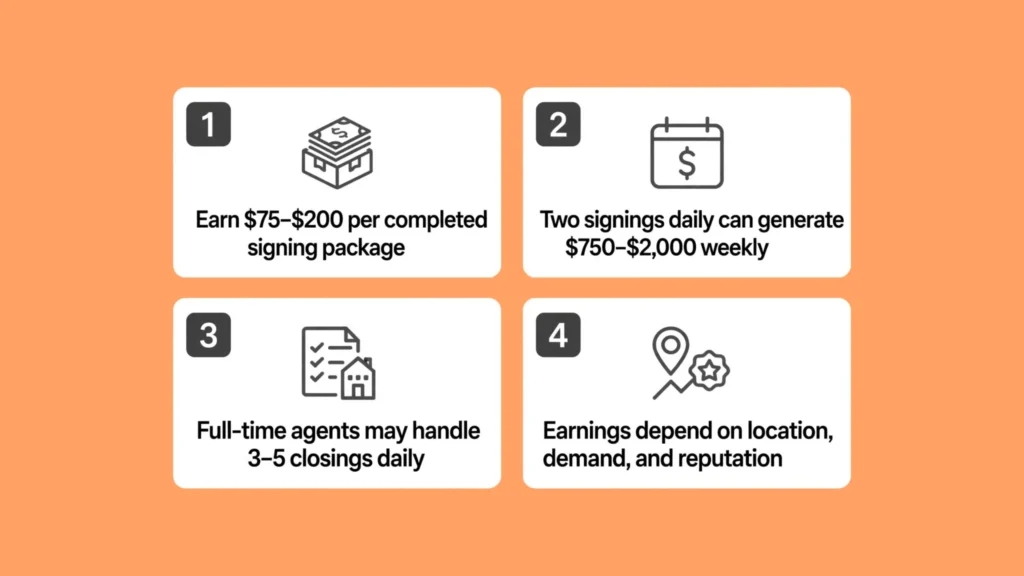
How much can an agent actually expect to make in this industry? Based on available data, notary signing agent income generally ranges from $75 to $200 per completed package. An appointment usually takes about an hour at the table, plus travel and prep time.
If you complete just two loan signings per day over a five-day workweek, your estimated weekly revenue can reach $750 to $2,000. Full-time professionals who build direct ties with local escrow offices often schedule three to five closings daily.
Your actual earnings depend on your local real estate activity, marketing efforts, and reputation for error-free work. Educational resources on reliablestartup.com can help you structure your operations cleanly so you minimize travel expenses and protect your profit margin.
The Role of Technology in Modern Loan Signings
The mortgage industry has evolved, and technology plays a major role in how appointments are booked and completed. Mobile applications allow agents to receive assignment alerts instantly based on their live location.
Digital document delivery means you can download loan packets securely to your home office within minutes of accepting an offer. This eliminates long trips to pick up physical paperwork from title companies before your appointments.
Remote online notarization is also expanding across many states. While face-to-face appointments remain the primary income driver, offering digital signing services allows you to serve clients straight from your desk.
Steps to Earn Your Notary Certification
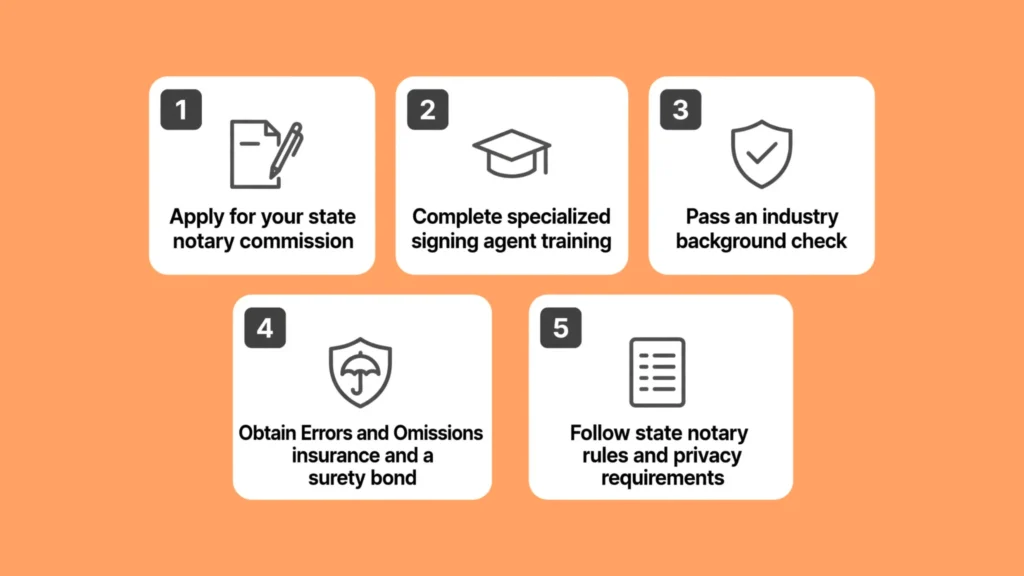
Before booking your first client appointment, you need to establish proper legal standing and earn your credentials. Applying for your standard state notary public commission through your state authority is the initial requirement. This process involves filling out state forms, paying filing fees, and taking a brief oath.
Next, complete specialized signing training and pass an industry background check. Most settlement companies require an annual screening to verify that you can handle sensitive consumer financial data safely.
Purchasing Errors and Omissions insurance along with a surety bond protects your business against unintentional mistakes. Finally, acquire a dual-tray laser printer, letter and legal paper, and a fast mobile scanner. Earning your notary certification proves to title officers that you understand loan paperwork, consumer privacy rules, and state notary guidelines.
Managing Your Daily Schedule and Travel Route
Running a successful mobile notary business means becoming a master of time management and route optimization. Spacing your appointments properly ensures you never arrive late to a signer’s home. Always build in buffer time for traffic delays, unexpected client questions, or document printing issues.
Group your daily appointments by geographic zones whenever possible. Handling three signings in the same neighborhood saves gas, reduces vehicle wear, and boosts your hourly profit rate. Communication is key when traveling between clients. Sending a quick text to confirm your arrival time builds trust and reassures signers that their appointment is on schedule.
How to Get Clients for Your Loan Signing Agent Business?
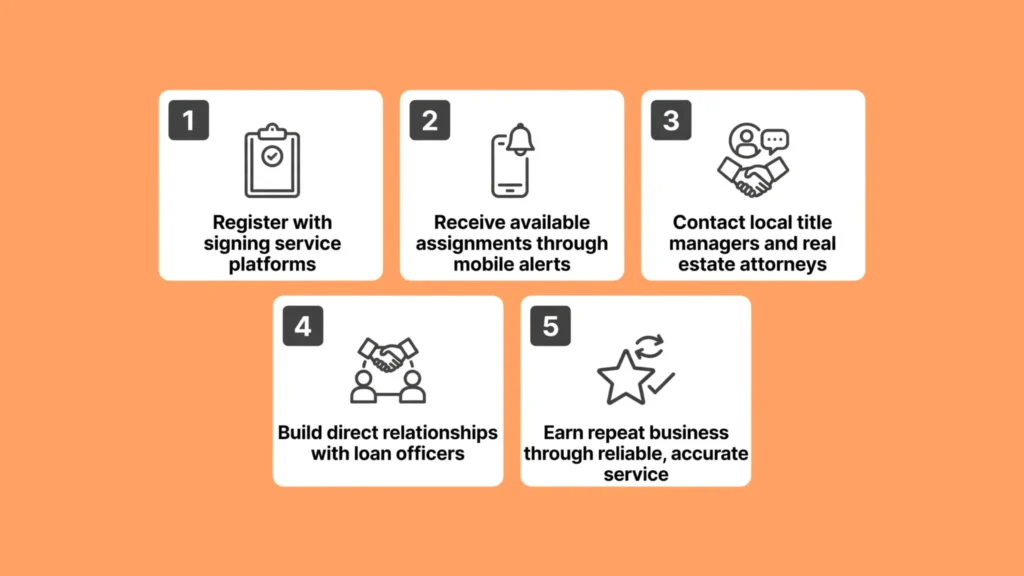
Once fully credentialed, your next job is getting signing orders onto your daily calendar. New agents usually start by registering with signing services. These third-party platforms broadcast available signings straight to your smartphone, making it simple to build initial table experience without doing heavy cold outreach.
As your confidence grows, you can start reaching out directly to local title managers, real estate attorneys, and loan officers. Direct clients offer higher pay rates and repeat assignments without platform split fees. Using step-by-step guides from reliablestartup.com will help you pitch local settlement teams effectively and build lasting professional relationships.
Essential Equipment Needed for Daily Operations
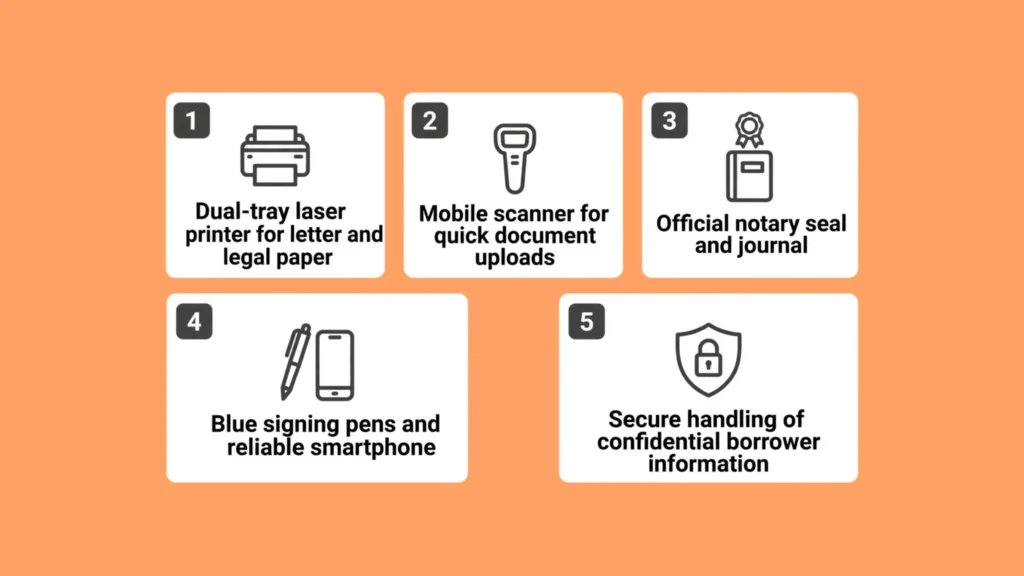
Operating a smooth mobile notary business requires a few key tools to keep your work professional on the move. Having a high-speed dual-tray laser printer is mandatory because loan packets mix both letter and legal page sizes in a single file. You will also need a fast mobile document scanner to upload scan-backs immediately after a closing finishes.
Additionally, carry a sturdy notary journal, official seal, blue signing pens, and a reliable smartphone for navigation and client updates. Investing in good tools early on prevents print errors and protects your business reputation.
Overcoming Common Challenges in the Industry
Like any small business, operating as an independent contractor comes with occasional hurdles that require patience. Document errors represent the biggest risk for new agents. Double-checking every page before leaving the appointment table prevents missed signatures, forgotten dates, or unnotarized forms.
Managing fluctuating cash flow is another area that requires smart planning. Some signing services pay on a thirty-day cycle, so keeping a small financial buffer helps cover fuel and office supplies while invoices process. Maintaining strict confidentiality is essential when handling loan applications. Keeping physical documents secured in your vehicle and using encrypted digital tools helps protect borrower data.
Similarly, if you’re exploring other business opportunities, starting a honey business can be an option to research when considering different income streams.
Summary of Starting Your Business
Building a loan signing agent business gives you a clear path toward financial flexibility and schedule control. By completing your notary certification, acquiring the right tools, and providing dependable service to local title teams, you can build a stable, scalable business.
If you’re exploring other service-based opportunities, a mobile car detailing business is another option worth considering. Be sure to visit Reliablestartup.com for additional resources, business templates, and step-by-step operational strategies!
Frequently Asked Questions
What does a loan signing agent do?
A loan signing agent is a qualified notary who guides real estate borrowers through their mortgage closing documents cleanly and accurately.
How much does notary certification cost?
In most cases, obtaining your notary certification and state commission costs between $200 and $500 total for testing, background checks, and basic supplies.
How much can a mobile notary business earn?
Based on available data, an active mobile notary business generally yields an estimated $3,000 to $8,000 monthly depending on location and local real estate activity.
Why is a dual-tray printer necessary for signings?
Loan packages combine letter and legal page sizes, so a dual-tray laser printer is required to print each page on the correct paper size automatically.
About The Author