Bookkeeping Business From Home: Your Step-by-Step Guide
Key Takeaways
Flexible home-based business opportunity
Low upfront startup costs
High demand for remote services
Simple certification pathway
Scalable recurring monthly revenue
Have you ever wondered if you could turn your knack for organization into a steady income stream without stepping foot outside your house? Starting a bookkeeping business from home is one of the most accessible and reliable ways to build a profitable remote career today. You do not need a fancy accounting degree or decades of corporate experience to get started. Small business owners everywhere are drowning in receipts and desperately need trustworthy help to keep their financial records balanced and tax-ready.
If you enjoy working with numbers, paying attention to details, and managing your own schedule, launching your own home-based numbers business might be the smartest move you make this year. In this comprehensive guide, we will walk you through everything from getting certified to finding your very first paying client.
Starting a bookkeeping business from home offers financial freedom, low startup costs, and complete schedule flexibility. You can manage financial records, organize expenses, and reconcile accounts for small business owners right from your desk. With basic software skills, proper certification, and clear pricing strategies, anyone can build a reliable monthly revenue stream without needing an advanced accounting degree.
Why Home-Based Bookkeeping Is a Winning Choice?
Freedom and Flexibility
Imagine waking up, pouring a hot cup of coffee, and walking just a few steps to your dedicated workspace. Working from home gives you total control over your daily calendar and your personal life. You can work during early mornings, quiet afternoons, or late evenings depending on what suits your household best.
Low Overhead Costs
Starting a traditional brick-and-mortar office requires heavy rent payments, commercial insurance, and long commutes. Running a virtual business dramatically reduces your monthly expenses. All you really need to begin is a reliable computer, high-speed internet, and cloud accounting software.
High Demand Across Industries
Every single business, from the local coffee shop to a fast-growing online store, must track its income and expenses. Taxes are mandatory, and clean financial books are non-negotiable for business success. Because many small business owners lack the time or skill to manage their accounts, your services will always remain in demand regardless of economic shifts.
Setting Up Your Business Foundation
Choosing Your Legal Structure
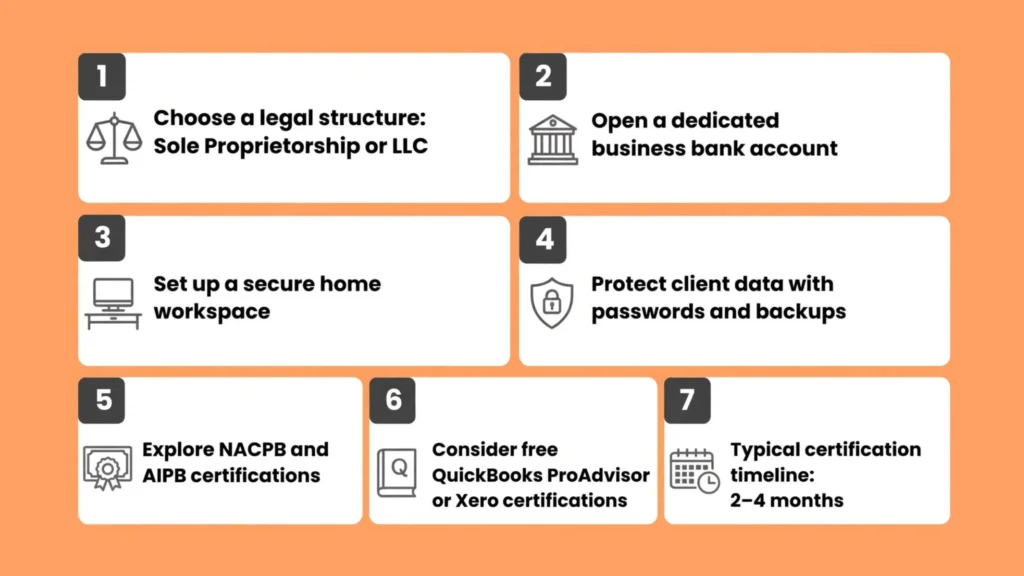
Before taking on your first client, you need to make your operations official. If you’re new to entrepreneurship, learning the basics of starting a business can help you understand the steps involved. Most virtual entrepreneurs start as a sole proprietorship or form a Limited Liability Company (LLC). An LLC may offer personal liability protection, depending on the circumstances and applicable laws.
Opening a Business Bank Account
Never mix your personal money with your client funds or business operational money. Opening a dedicated business checking account makes your annual taxes much easier and keeps your operations professional. It also builds immediate credibility with potential clients who write checks or send bank transfers to your business name.
Setting Up Your Virtual Office Workspace
Creating a quiet, organized space in your home is essential for staying productive throughout the week. You do not need a massive room; a simple desk in a quiet corner works just fine. Ensure your computer is secure, password-protected, and backed up to cloud storage regularly to protect sensitive client data.
Obtaining Your Bookkeeping Certification
Why Credentials Matter
While you do not strictly need a college degree to manage small business books, getting a formal credential builds instant trust. Having a bookkeeping certification shows potential clients that you understand essential accounting principles, software tools, and financial regulations. It gives you the confidence to charge professional rates right from day one.
Top Certification Programs
Two of the most widely recognized programs are offered by the National Association of Certified Public Bookkeepers (NACPB) and the American Institute of Professional Bookkeepers (AIPB). Additionally, becoming a certified QuickBooks ProAdvisor or Xero Certified Advisor is completely free and immensely valuable. These platform-specific credentials prove that you know how to navigate the exact software your clients use daily.
Program Comparisons
The Certified Public Bookkeeper credential through NACPB focuses heavily on general accounting principles and small business compliance. The Certified Bookkeeper program from AIPB focuses on advanced practice, adjustment entries, and error correction. Software certifications like QuickBooks ProAdvisor and Xero Certified Advisor focus strictly on platform mastery and digital workflow management.
How Long It Takes to Get Certified
Most self-paced certification courses can be completed in two to four months of part-time study. If you already have a basic understanding of debits, credits, and financial statements, you might finish even faster. Investing a few hours each week into your bookkeeping certification will pay massive dividends over your business lifetime.
Choosing Your Tools and Software
Cloud Accounting Platforms
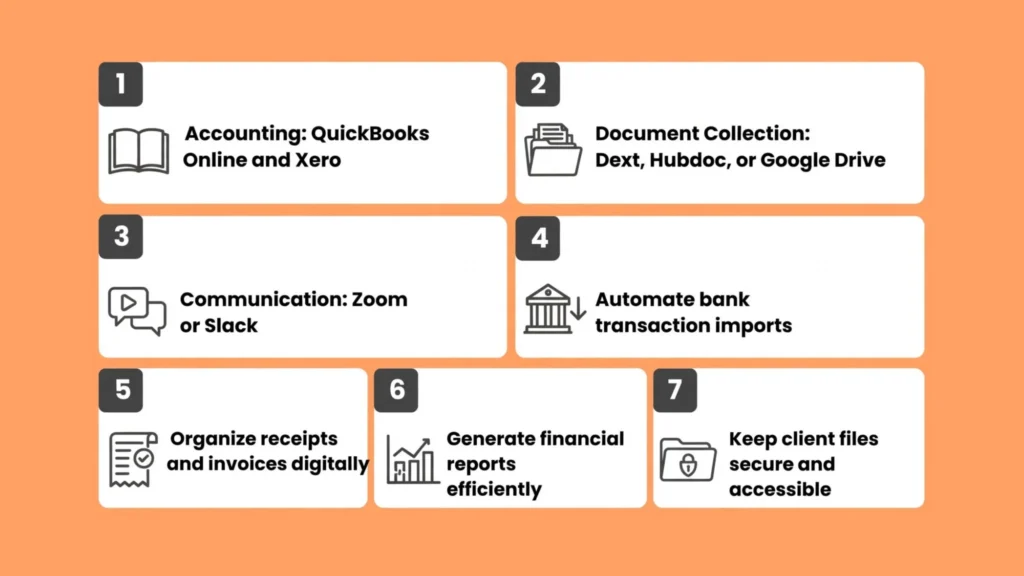
Modern financial management happens entirely in the cloud. Software like QuickBooks Online and Xero allow you to access client files securely from anywhere. These platforms automatically import bank transactions, categorize expenses, and generate real-time financial reports with just a few clicks.
Document Collection and Communication Tools
Getting receipts and invoices from clients can sometimes feel like pulling teeth. Using tools like Dext, Hubdoc, or Google Drive allows your clients to snap photos of receipts with their phones and send them to you instantly. For daily check-ins and monthly meetings, simple tools like Zoom or Slack keep communication clear and smooth.
Launching a Virtual Bookkeeping Startup
Defining Your Service Packages
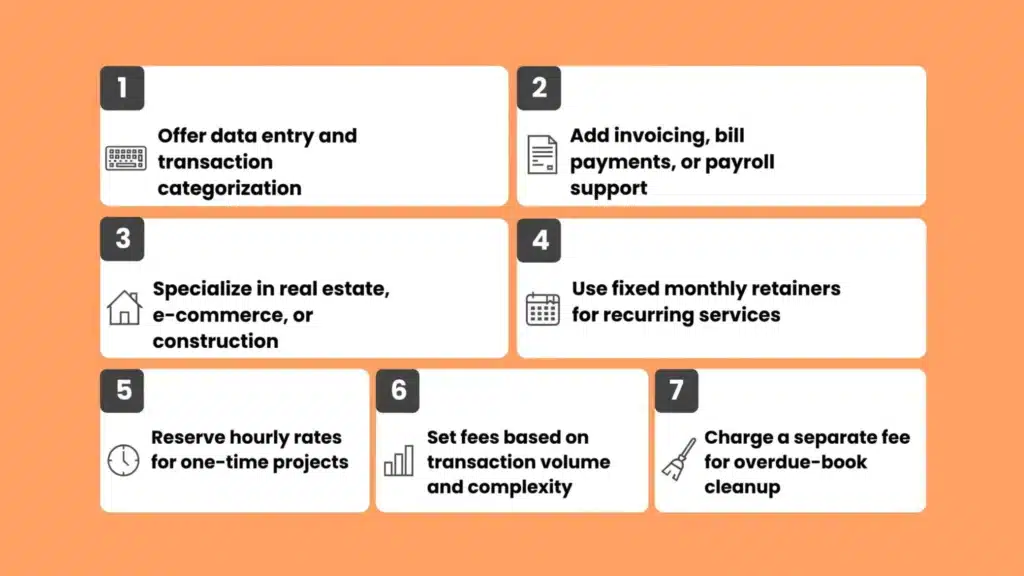
When launching your virtual bookkeeping startup, you must clearly define what services you offer. Will you provide basic data entry, or will you handle invoicing, bill payments, and payroll management? Grouping your services into clear tiered packages makes it easy for business owners to pick the exact level of support they need.
Finding Your Niche
Trying to serve every business under the sun can quickly overwhelm your daily operations. Specializing in a specific industry like real estate agents, e-commerce stores, or local tradespeople helps you become an expert in their specific financial needs. It also makes your marketing efforts significantly more targeted and effective. For example, e-commerce sellers rely heavily on sales tax integration tools like A2X combined with QuickBooks, while construction businesses require dedicated job costing and payroll configurations inside their software.
Building an Online Presence
Your business needs a clean, modern digital home where prospective clients can learn about your services. Setting up a simple website through resources like reliablestartup.com helps establish your credibility online. Be sure to list your services, show off your credentials, and include a clear call-to-action for booking a consultation call.
Mastering Bookkeeping Client Pricing
Hourly Rates vs. Fixed Monthly Retainers
One of the most common hurdles new business owners face is deciding on bookkeeping client pricing. Charging by the hour often punishes you for becoming faster and more efficient at your work. Instead, offering fixed monthly retainers creates predictable income for you and predictable expenses for your clients.
Evaluating Pricing Models
Hourly rates are generally best reserved for one-time cleanups or irregular advisory projects where the scope is difficult to predict. Fixed monthly retainers are ideal for ongoing monthly maintenance because they give you predictable recurring revenue while giving clients peace of mind. Value-based pricing ties your compensation directly to the financial clarity and tax savings you unlock, making it perfect for higher-end advisory services.
Calculating Your Monthly Rates
To set your rates, estimate how many hours a client’s books will take each month, factor in transaction volume, and add a margin for unexpected tasks. In most cases, basic monthly retainers for small businesses start around a few hundred dollars per month and increase based on complexity.
Handling Initial Book Cleanups
To set your rates, estimate how many hours a client’s books will take each month, factor in transaction volume, and add a margin for unexpected tasks. In most cases, basic monthly retainers for small businesses start around a few hundred dollars per month and increase based on complexity.
Finding and Winning Your First Clients
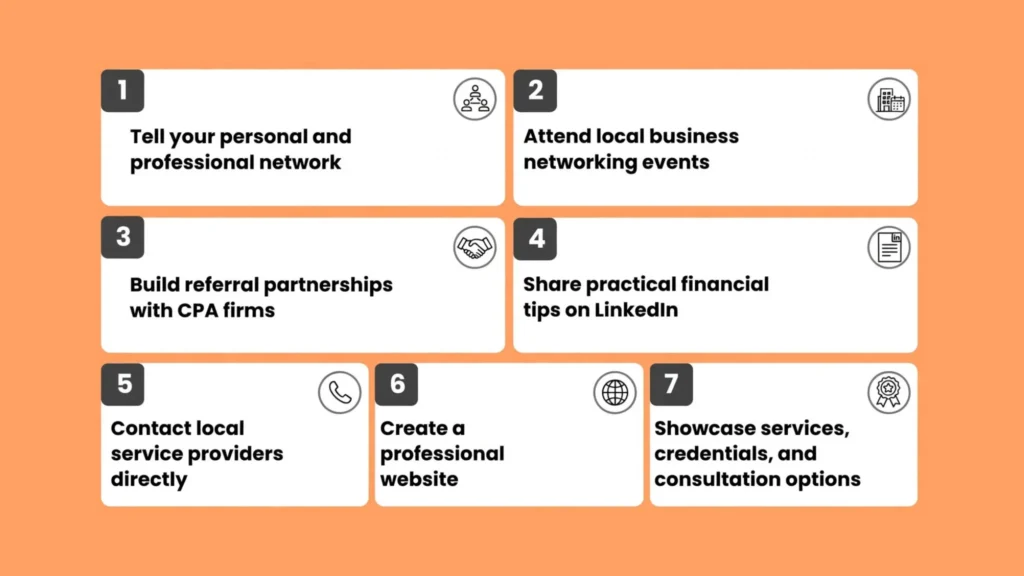
Tap into your personal network by letting friends, family, and past colleagues know about your new business venture.
Attend local business networking meetings, regional chamber of commerce events, and small business meetups in your town.
Build strategic referral partnerships with local CPA firms who often pass along basic bookkeeping work to trusted freelancers.
Maintain an active LinkedIn profile by sharing helpful financial tips, practical advice, and small business bookkeeping insights regularly.
Reach out directly to local service providers who may be struggling to manage their daily receipts and paperwork alone.
Managing Workflow and Delivering Great Service
Establishing Onboarding Processes
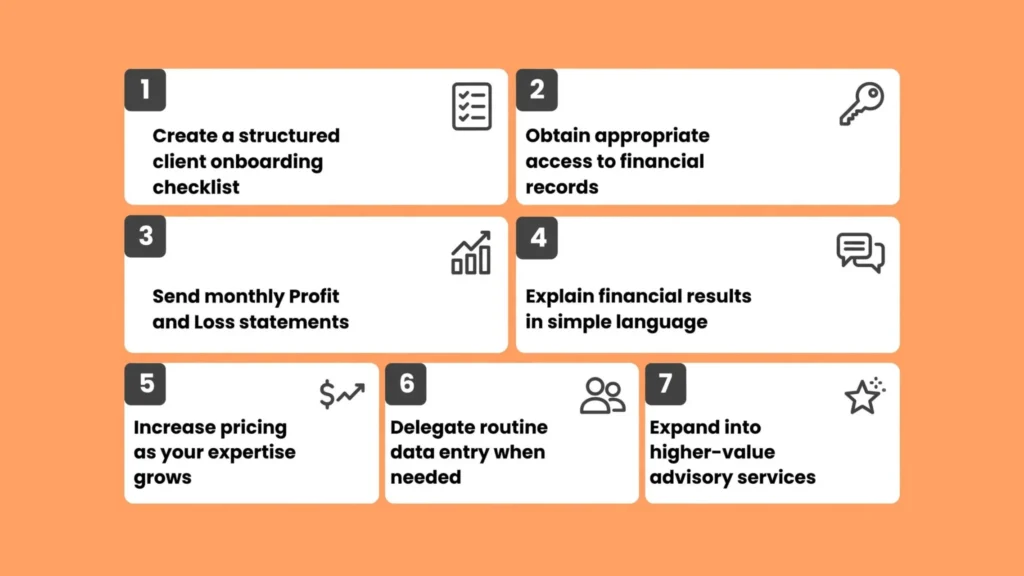
Once a client signs your engagement letter, send them a simple onboarding checklist. Ask for read-only access to their business bank accounts, software logins, and past tax returns. Having a structured onboarding workflow ensures a seamless experience and sets clear expectations right from the start.
Maintaining Consistent Communication
Schedule brief monthly updates to deliver basic financial reports like Profit and Loss statements and Balance Sheets. Translating numbers into plain, everyday language helps your clients understand their business health better. When clients see you as a supportive partner rather than just an expense, they remain loyal for years.
Scaling Your Virtual Business
As your client list grows, you will eventually reach maximum capacity for your personal time. When that happens, you can increase your bookkeeping client pricing for new inquiries or hire subcontracted helpers to handle routine data entry. This allows you to focus on high-value advisory services and business strategy.
Conclusion: Bookkeeping Business From Home
Building a bookkeeping business from home is a practical, rewarding, and highly achievable path to career independence. By earning your bookkeeping certification, establishing clear bookkeeping client pricing, and systematically launching your virtual bookkeeping startup, you can create a business that fits your lifestyle.
Remember, every large enterprise started with simple, organized books. At reliablestartup.com, we encourage you to take that very first step today—organize your plan, set up your software, and begin building the flexible home business you deserve.
FAQs: Bookkeeping Business From Home
Do I need a degree to start a bookkeeping business from home?
No formal degree is required to start your home business. Having a certified credential or practical software training is usually enough to gain client trust and manage financial records accurately.
How much does a virtual bookkeeping startup cost to launch?
Initial startup expenses generally range from a few hundred to a couple thousand dollars. These costs typically cover basic software subscriptions, initial business registration, marketing materials, and professional certification fees.
How do I set my bookkeeping client pricing as a beginner?
Start by researching average regional market rates and estimating project hours. Charging fixed monthly retainers based on transaction volume and account complexity is generally better than billing simple hourly rates.
Is obtaining a bookkeeping certification hard for complete beginners?
Most certification courses are designed for beginners and cover foundational accounting concepts step-by-step. With consistent study habits over a few months, anyone can master the material and earn their credential.
About The Author