Scrap Metal Business: Sourcing, Sorting, and Selling
Key Takeaways
Low barrier to entry with high flipping potential
Sourcing from local residential and commercial spots
Sorting ferrous from non-ferrous metals boosts profits
Tracking metal prices per pound maximizes payout
Scaling up safely with reliablestartup.com insights
Have you ever looked at an old discarded washing machine sitting on a curb and wondered if there is actual money hiding inside it? You are definitely not alone. Starting a scrap metal business is one of the most practical, down-to-earth ways to build a steady income from scratch.
At its core, the business is simple: you collect unwanted metal, separate the high-value pieces, and sell them to yard processors for a clean cash profit. It does not require a fancy degree or millions in funding, but it does require hustle, sharp sorting skills, and a solid plan. Let’s walk through how you can turn raw junk into a thriving operation step by step.
A scrap metal business involves collecting, categorizing, and reselling discarded metals like copper, aluminum, steel, and brass to recycling yards or foundries. Success relies on understanding metal prices per pound, sourcing local materials efficiently, and accurately sorting ferrous from non-ferrous metals. With minimal upfront capital, entrepreneurs can launch a profitable scrap yard startup by building strong local supplier connections and following smart processing habits.
What Is a Scrap Metal Business and How Does It Work?
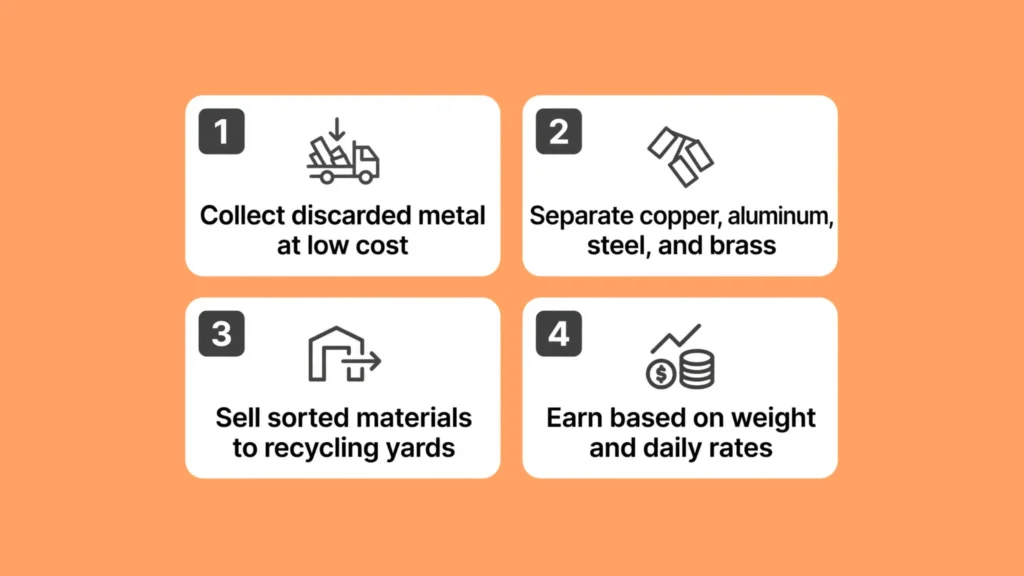
Ever wonder where all those broken appliances, old copper pipes, and abandoned car parts actually end up? They go straight into the circular economy through metal recyclers. When you run a scrap enterprise, you act as the vital middleman between people who want to clear out junk and industrial yards that need raw materials for manufacturing.
The process begins by locating free or low-cost discarded items from homeowners, construction sites, and local repair shops. Once collected, you break the items down, separate valuable metals like copper and brass from basic steel, and pile them up. Finally, you haul your sorted batch to local processors who weigh your load and pay you based on current daily rates.
As your operations grow, exploring technologies used by an AI automation agency can also inspire ways to automate scheduling, manage supplier records, and streamline other business tasks.
Sourcing Scrap Metal: Where to Find Materials Daily?
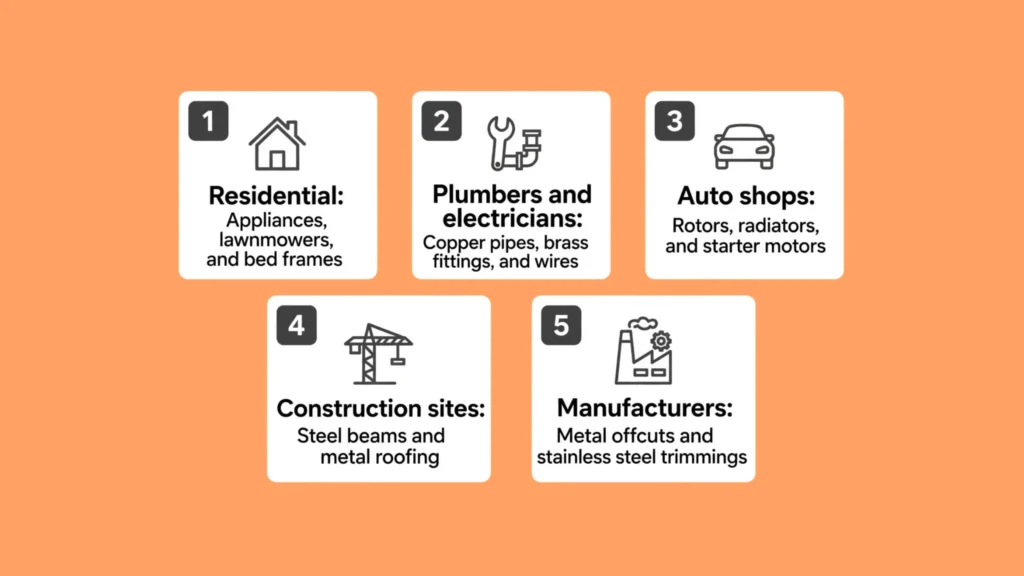
Finding a reliable supply of raw material is the lifeblood of your enterprise, especially when you are just setting up your operations. You do not need to wait around hoping items fall into your lap. You can build a steady pipeline by connecting directly with local residents and businesses. Here are the best everyday places to secure free or low-cost metal for your daily collection runs:
Residential Curb Pickups: Neighborhood bulk trash days are absolute goldmines for discarded lawnmowers, bed frames, and worn-out kitchen appliances.
Local Trades & Contractors: Electricians, plumbers, and HVAC technicians throw away heavy copper piping, brass fittings, and wiring every single day.
Auto Repair Shops: Mechanics frequently discard old rotors, aluminum radiators, mufflers, and broken starter motors that take up valuable shop space.
Construction & Renovation Sites: Demolition crews constantly pile up discarded steel beams, copper wiring, and metal roofing panels needing quick haul-away.
Small Manufacturing Facilities: Local machine shops generate constant piles of metal turnings, off-cuts, and stainless steel trimmings each week.
Sorting Your Metal: Ferrous vs. Non-Ferrous
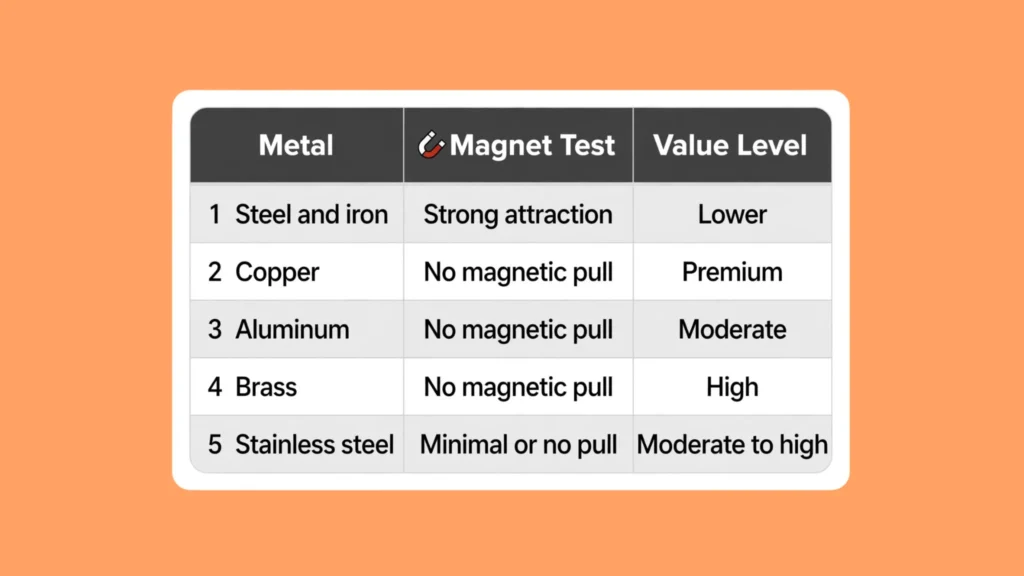
If you bring a mixed pile of random metal to a recycling buyer, they will pay you the lowest possible rate for the entire batch. Sorting your collection before pulling up to the scale is the single fastest way to double or triple your earnings.
The easiest way to start sorting is with a simple pocket magnet. If the magnet sticks firmly, you have ferrous metal; if it doesn’t stick at all, you are holding much more valuable non-ferrous metal.
| Metal Type | Magnet Test | Common Examples | Value Level |
| Steel & Iron | Sticks strongly | Appliances, car frames, pipes, rebar | Lower payout per weight |
| Copper | No magnetic pull | Plumbing pipes, wire coils, roofing trim | Premium high payout |
| Aluminum | No magnetic pull | Beverage cans, window frames, siding | Moderate, steady payout |
| Brass | No magnetic pull | Plumbing valves, door hardware, keys | High payout |
| Stainless Steel | Minimal or no pull | Kitchen sinks, cookware, brewery tanks | Moderate to high payout |
Understanding Metal Prices Per Pound and Market Value
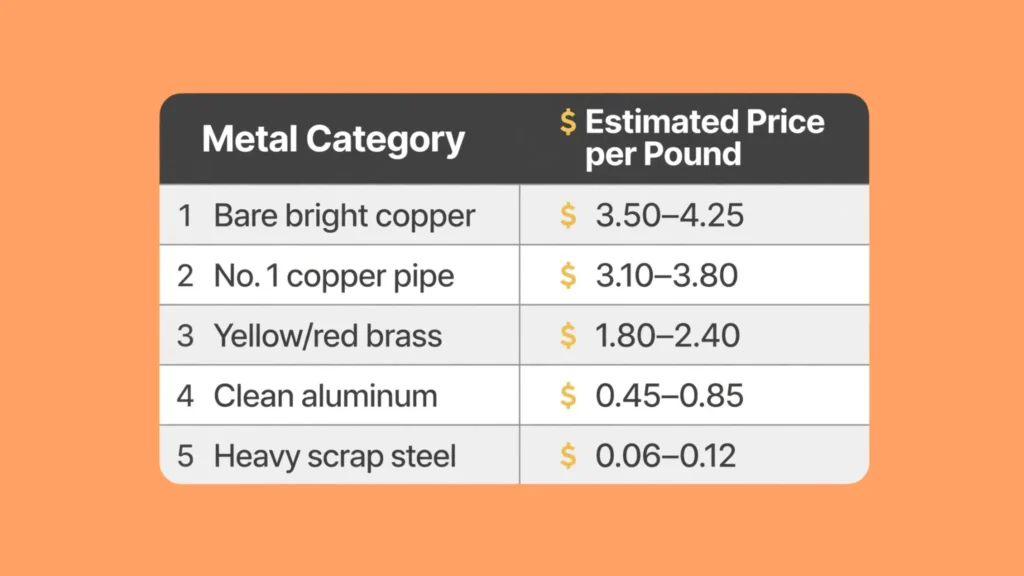
Understanding daily market fluctuations keeps you from leaving hard-earned cash on the table when selling your haul. Prices change daily based on global trade, supply demand, and factory production levels across the manufacturing industry.
Non-ferrous metals usually bring in significantly more cash per load than heavy iron or mixed structural steel. Keeping track of average price ranges gives you realistic expectations before heading out on your daily collection runs. Based on available data, here is a general breakdown of estimated payout expectations across standard metal classes:
| Metal Category | Key Characteristics | Estimated Market Range (Per Pound) |
| Bare Bright Copper | Clean, unalloyed, stripped wire | $3.50 – $4.25 |
| #1 Copper Pipe | Clean tubing, free of solder or paint | $3.10 – $3.80 |
| Yellow / Red Brass | Heavy fittings, valves, decorative hardware | $1.80 – $2.40 |
| Clean Aluminum | Sheet metal, lawn chairs, cast items | $0.45 – $0.85 |
| Heavy Scrap Steel | Thick structural iron, machinery, rotors | $0.06 – $0.12 |
Essential Equipment Needed for a Scrap Yard Startup
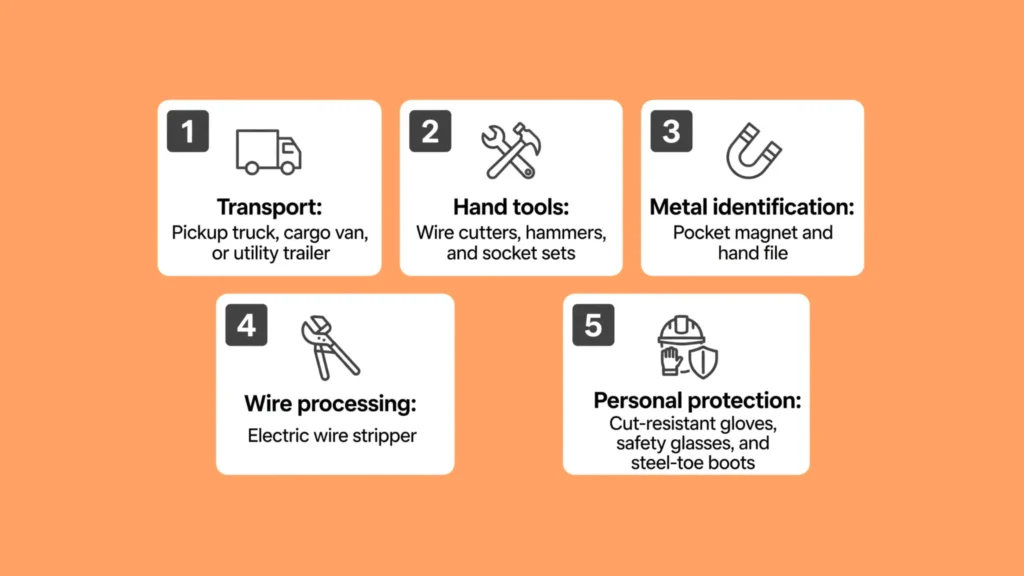
You do not need an expensive fleet of heavy machinery to launch your scrap yard startup on day one. Most successful scrap haulers begin with basic hand tools and an old reliable pickup truck or utility trailer.
As your daily revenue grows, you can re-invest profits into specialized equipment that speeds up your cleaning and sorting process. Here is a checklist of the essential gear you will want to gather as you start building your enterprise:
Sturdy Transport Vehicle: A reliable pickup truck, cargo van, or open utility trailer with tiedown straps handles heavy daily loads safely.
Basic Hand Tools: Wire cutters, hammers, socket sets, pry bars, and screwdrivers help break down complex appliances fast.
Magnet and File: A heavy-duty pocket magnet identifies iron content while a hand file checks bare metal color beneath paint or plating.
Power Wire Stripper: Tabletop electric wire strippers quickly peel insulation off copper cabling to upgrade its market grade instantly.
Safety Gear: Cut-resistant gloves, steel-toe boots, eye protection, and high-visibility vests protect you in busy recycling yards.
Selling Your Haul: How to Get Top Dollar at the Yard
Getting the highest payout requires a little strategy and good preparation before you arrive at the buyer’s scale. Recycling operators work fast, and they respect haulers who bring clean, well-organized material into their bays.
Separating bare copper from soldered pipes and removing plastic fittings from aluminum tubing moves your haul into higher price categories instantly.
Building a friendly relationship with local yard managers goes a long way toward getting fair grading on border-line materials. Guides on business development platforms like reliablestartup.com stress the value of shopping around local yards to compare rates before committing to one buyer.
Legal Requirements, Licenses, and Safety Precautions
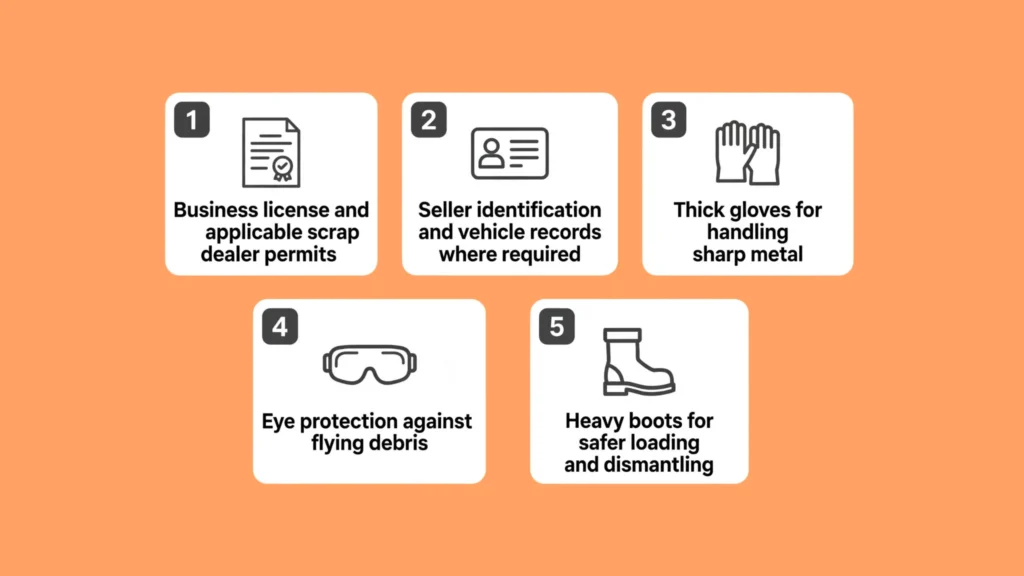
Operating legally keeps your business safe from unexpected fines and builds trust with commercial partners in your area. Most local municipalities require a basic business license along with specialized scrap dealer permits to prevent illegal metal trafficking.
Many states require yards to record your photo ID, vehicle license plate, and thumbprint whenever you sell high-value materials like copper. Safety should always remain your top priority when loading, hauling, and breaking down heavy metal equipment daily. Always wear thick leather gloves, eye protection, and heavy boots to guard against sharp edges, rust, and flying debris during teardowns.
How to Scale Your Scrap Metal Enterprise Efficiently
Once you master basic residential collecting and sorting, it is time to think bigger about growing your daily income stream. Transitioning from simple curb collecting to formal commercial contracts provides consistent high-volume material week after week.
Partnering with local heating technicians, plumbing companies, and remodeling contractors gives you reliable access to valuable non-ferrous scrap. Resources available at reliablestartup.com suggest setting up regular pickup schedules and offering small drop-off bins at local workshop sites.
As you expand, exploring other service-based opportunities, such as starting a loan signing agent business, can also provide ideas for diversifying your entrepreneurial ventures. Investing in a small storage yard or commercial stripping machine allows you to hold materials until market prices bounce upward.
Frequently Asked Questions
How much money do I need to start a scrap business?
In most cases, you can start with under $500 if you already own a reliable truck or trailer.
Which metals yield the highest profit per pound?
Bare bright copper wire and clean brass fittings generally yield the highest payouts per pound across most recycling centers.
Do I need special permits to collect scrap metal?
Generally, basic business licenses and local scrap collector permits are required depending on your specific state or city laws.
How do I keep up with daily changing metal prices?
You can easily check mobile pricing apps or call local buyers directly to get accurate daily price updates per pound.
Conclusion
Starting a scrap metal enterprise is a hands-on, highly rewarding journey that converts unwanted clutter into real cash flow. By mastering how to source clean material, separate ferrous from non-ferrous metals, and track daily market rates, you can build a sustainable operation from the ground up.
As your business grows, developing strong financial management habits, similar to those needed when starting a bookkeeping business from home, can help you manage expenses and maintain steady profits. Take it one load at a time, stay consistent with your sorting habits, and use modern business resources like reliablestartup.com to guide your path toward long-term growth.
About The Author