How Much Does Land Clearing Equipment Cost for a New Business
The total land clearing equipment cost for a new business typically ranges from $50,000 to $175,000 for a streamlined single-operator setup. A standard starting package includes a commercial compact track loader ($30,000 to $80,000), a forestry mulching attachment ($12,000 to $35,000), a heavy-duty transport trailer ($6,000 to $15,000), and essential hand safety tools. Depending on whether you choose new machinery, certified pre-owned units, or equipment leases, your initial capital outlay can vary significantly based on local market demands.
Understanding the Initial Land Clearing Equipment Cost
Starting a site prep or vegetation management company requires specialized heavy machinery built to withstand tough outdoor conditions. Before taking on your first client, you must acquire machines that can cut trees, grind brush, uproot stumps, and haul heavy debris efficiently.
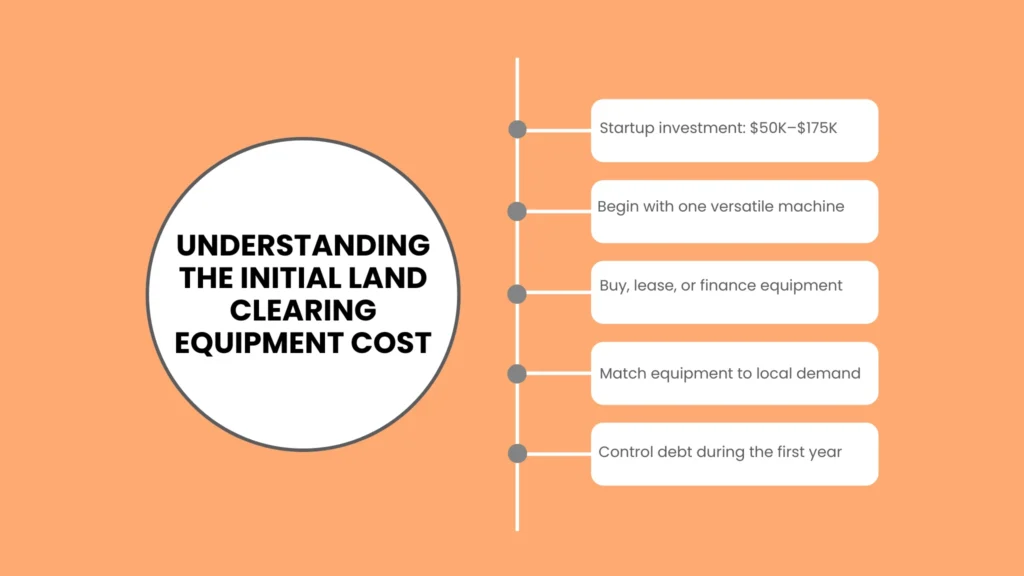
Understanding the overall starting a land clearing business cost allows new operators to secure proper financing without overextending cash reserves. The exact total depends on whether you buy new or used, rent short-term, or lease to own.
Most successful new operators focus on a versatile core machine rather than buying multiple single-purpose units right away. This approach keeps initial debt low while letting you take on residential lot clearing, fence line expansion, and forestry mulching projects.
Primary Land Clearing Equipment Categories and Pricing
To build an accurate budget, you must break down machinery into specific equipment categories. Each machine plays a distinct role on the job site, and pricing varies based on horsepower, hydraulic flow, and brand.
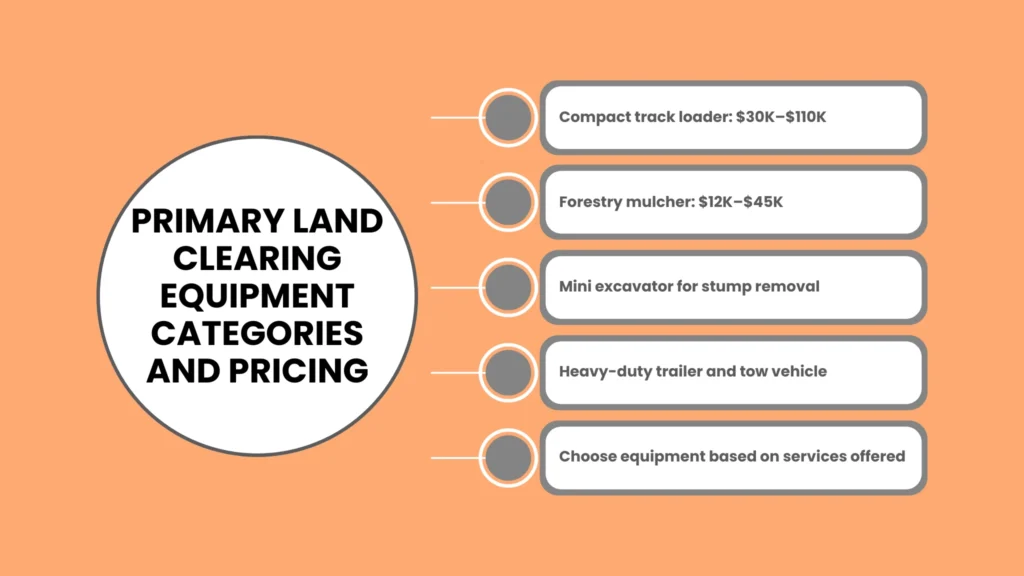
1. Compact Track Loaders (CTL) or Heavy Skid Steers
A compact track loader with high hydraulic flow is the primary workhorse for small to mid-sized clearing crews. Rubber tracks provide superior traction on wet or uneven terrain while minimizing ground damage.
Used (2018–2022 models): $30,000 to $55,000
New commercial units: $65,000 to $110,000
Look for units rated at 80 to 100 horsepower or higher. High-flow hydraulics are mandatory if you plan to operate high-torque forestry mulchers.
2. Forestry Mulching Heads
A forestry mulcher turns standing trees, dense brush, and thick underbrush into fine organic mulch in a single pass. This eliminates the need for expensive haul-off fees and burn permits.
Used or reconditioned mulchers: $12,000 to $22,000
New high-flow drum mulchers: $25,000 to $45,000
Drum-style mulchers offer high durability and clean finishes, making them ideal for residential lot improvement and fire mitigation projects.
3. Mini and Mid-Size Excavators
While skid steers excel at surface clearing, excavators provide unmatched power for digging out stubborn stumps, grading slopes, and clearing boulders.
Used mini excavators (3.5 to 6 ton): $25,000 to $45,000
New mid-size excavators (8 to 15 ton): $70,000 to $150,000+
Many startups begin with just a track loader and rent an excavator when a specific job requires heavy stump extraction.
4. Heavy-Duty Transport Trailers and Tow Vehicles
Moving heavy machinery safely requires a commercial-grade truck and a rated trailer. Your trailer must accommodate the combined weight of your machine, attachments, and fuel.
Gooseneck or tag-along equipment trailer (20k–25k GVWR): $7,000 to $16,000
Used 3/4-ton or 1-ton diesel truck (F-250/350 or Ram 2500/3500): $20,000 to $45,000
Ensuring your tow vehicle complies with local towing regulations prevents costly road penalties and downtime.
Detailed Land Clearing Equipment Cost Breakdown
When analyzing your total land clearing equipment cost cost structure, you must consider both capital acquisition costs and essential support tools.
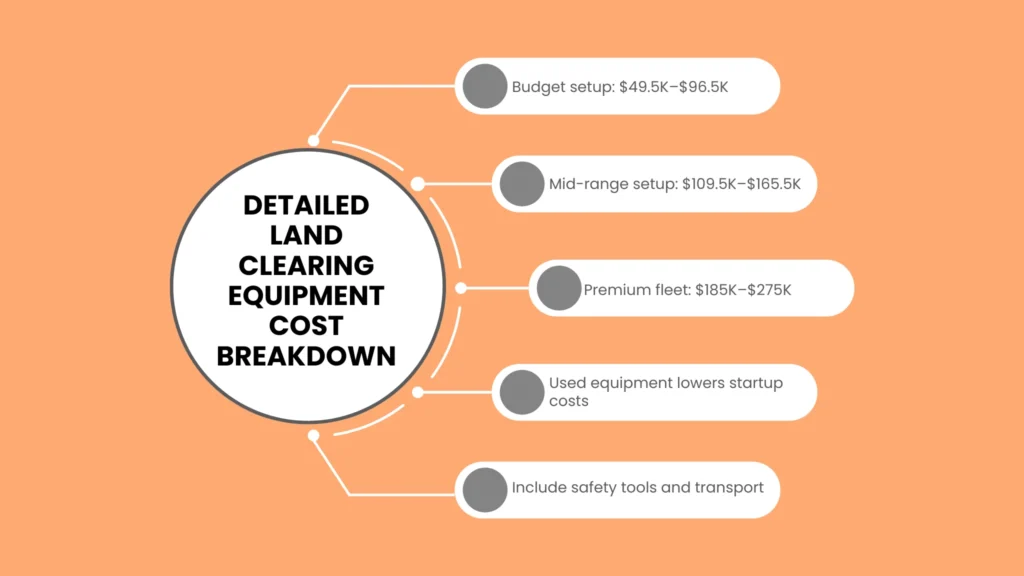
The table below outlines estimated pricing ranges for launching a solo or two-person land clearing operation based on available market data:
| Equipment & Setup Category | Budget Setup (Used Equipment) | Mid-Range Setup (Mixed/Pre-Owned) | Premium Setup (All New Fleet) |
| Track Loader / Skid Steer | $30,000 – $45,000 | $50,000 – $75,000 | $80,000 – $120,000 |
| Forestry Mulching Head | $12,000 – $20,000 | $22,000 – $32,000 | $35,000 – $50,000 |
| Heavy Equipment Trailer | $6,000 – $9,000 | $10,000 – $14,000 | $15,000 – $22,000 |
| Tow Truck (1-Ton Diesel) | Already Owned / $20,000 | $25,000 – $40,000 | $50,000 – $75,000 |
| Support Tools & Safety Gear | $1,500 – $2,500 | $2,500 – $4,500 | $5,000 – $8,000 |
| Estimated Equipment Investment | $49,500 – $96,500 | $109,500 – $165,500 | $185,000 – $275,000 |
Purchasing clean, low-hour used machinery allows new businesses to save 30% to 45% compared to brand-new showroom prices.
Essential Land Clearing Equipment Requirements Beyond Machinery
Buying heavy machines is only part of the startup equation. Meeting essential land clearing equipment cost requirements means factoring in licensing, insurance, maintenance reserves, and specialized safety gear.
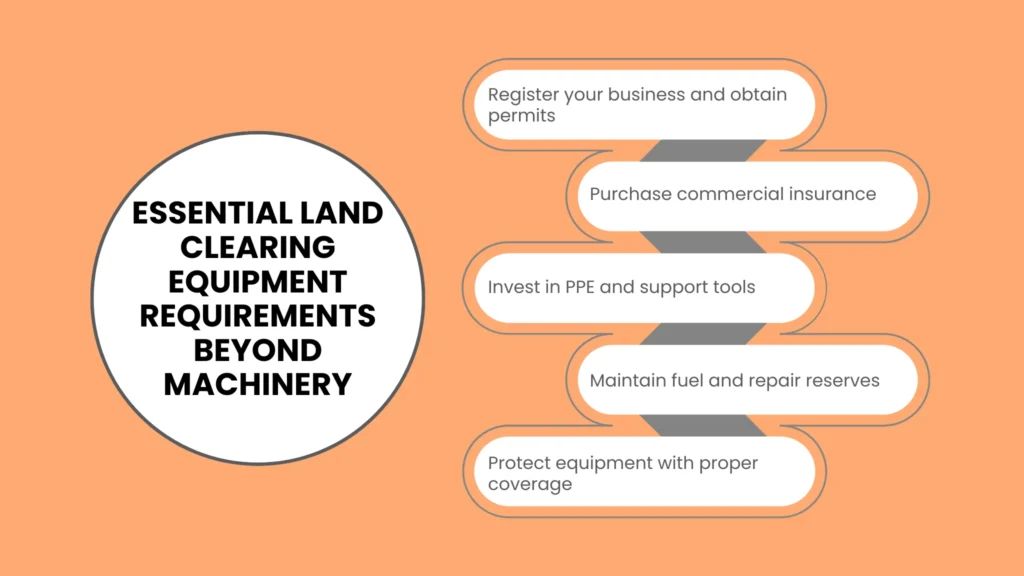
1. Commercial Insurance Policies
Working with heavy equipment carries inherent operational risks. Standard business liability insurance is not sufficient for excavation or forestry mulching contractors.
General Liability Insurance: Protects against property damage or third-party injury ($2,500 to $6,000 annually).
Inland Marine / Equipment Coverage: Covers theft, rollover, or fire damage to your machinery ($1,500 to $4,500 annually).
Commercial Auto Insurance: Protects your truck and trailer during highway transit ($2,000 to $5,000 annually).
2. Support Tools and Safety Equipment
Every job site requires auxiliary support items to keep machines running cleanly and safely. Plan to purchase:
Professional-grade chainsaws (e.g., Stihl MS 462 or Husqvarna 572XP) for limb cutting.
Personal protective equipment (PPE) including hard hats, Kevlar chaps, high-visibility vests, and eye protection.
Heavy-duty grease guns, spare hydraulic hoses, replacement mulcher teeth, and hand tools.
High-capacity fuel transfer tanks mounted on your truck bed.
Profit Margins: Is a Land Clearing Business Profitable?
Before making a massive capital investment, prospective business owners want to know: is land clearing equipment cost profitable when starting out in today’s construction environment?
The answer is a resounding yes. Land clearing and forestry mulching represent one of the most lucrative sectors in the light construction industry. Demand remains strong across residential site clearing, utility line maintenance, wildfire defense clearing, and agricultural improvement.
Evaluating the Land Clearing Equipment Cost Profit Margin
Maintaining a healthy land clearing equipment cost profit margin requires accurate job pricing and strict control over operating costs. Independent operators typically charge between $1,800 and $4,500 per day for forestry mulching and site prep services.
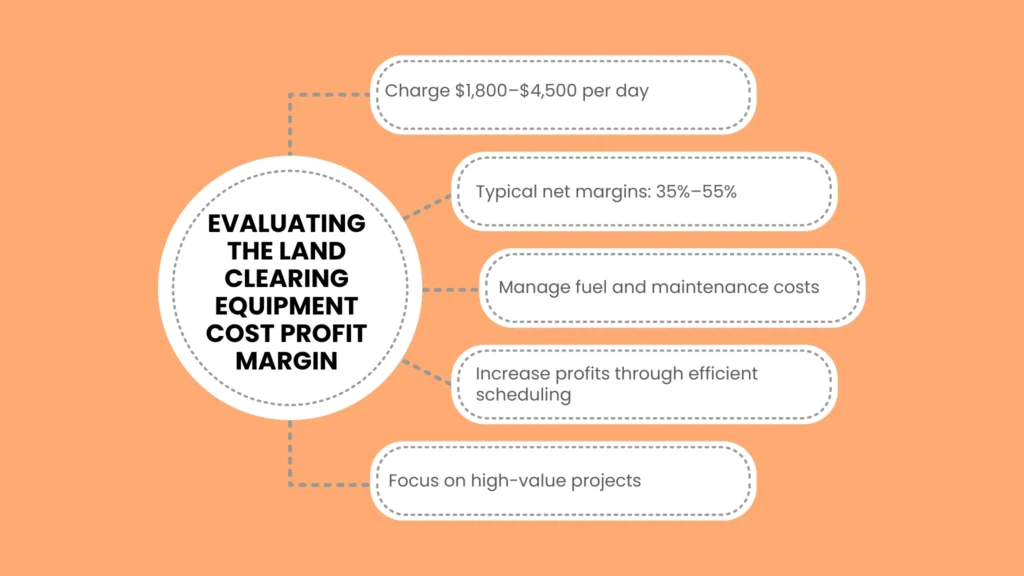
Based on estimated industry figures, here is a typical monthly revenue and profit scenario for a solo operator working 14 billable days per month:
Monthly Gross Revenue (14 days @ $2,800/day): $39,200
Equipment Financing Payment: $1,800
Fuel & Lubricants: $2,800
Insurance & Permits: $650
Maintenance & Wear Parts (Mulcher Teeth/Filters): $1,600
Transport & Overhead: $1,150
Estimated Net Monthly Profit: $31,200 (Net Margin ~79% before income taxes and personal wages)
Because forestry mulching leaves ground mulch in place without requiring haul-off trucks or disposal fees, net margins remain significantly higher than traditional excavation methods. Average net profit margins for efficient operators range from 35% to 55%.
Smart Equipment Purchasing Strategies for New Operators
Managing capital carefully during your first year reduces financial stress and builds long-term operational stability.
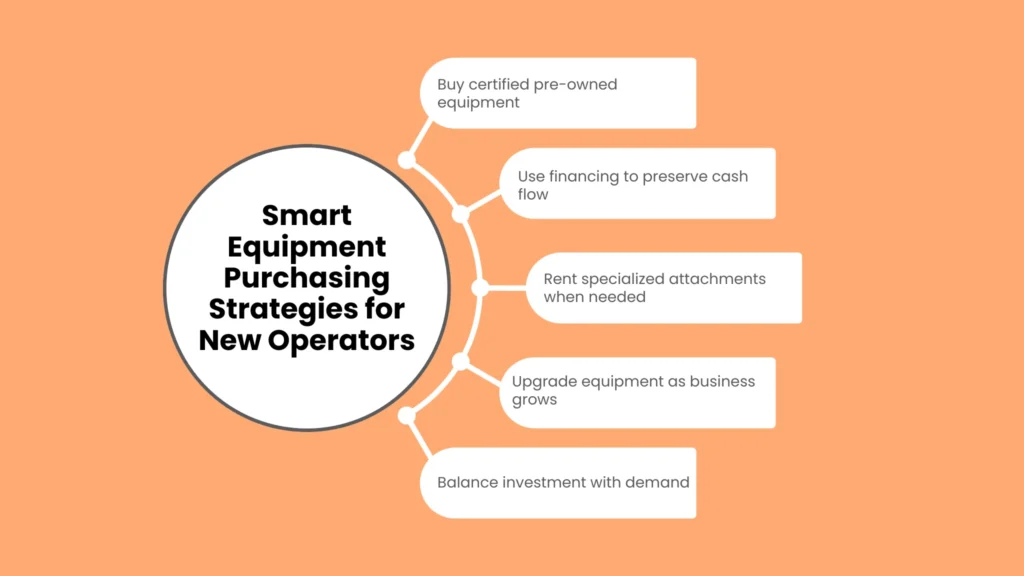
1. Consider Certified Pre-Owned Machinery
Buying equipment that is two to four years old with under 2,500 operating hours offers an ideal balance between price and reliability. Depreciation is highest during the first two years, so buying pre-owned saves significant upfront capital while retaining high resale value.
2. Utilize Equipment Financing
Instead of paying cash for a $100,000 setup, consider equipment financing loans. Preserving cash allows you to handle unexpected breakdown repairs, fuel spikes, or slow winter months without running out of operating capital.
3. Start with Rentals for Specialized Attachments
If you receive a job requiring an excavator with a thumb or a large stump grinder, rent the attachment or machine for that specific project. Factor the daily rental cost directly into your customer quote to keep overhead low.
Marketing Your Business and Finding Local Clients
Once your equipment is secured, acquiring consistent clients becomes your top priority.
Build Relationships with General Contractors: Reach out to local home builders, real estate developers, and pool contractors who need site prep work regularly.
Optimize Your Local Search Presence: Set up a Google Business Profile and publish before-and-after photos of cleared land.
Connect with Rural Property Owners: Run targeted social media advertising in rural counties focusing on pasture clearing, fence lines, and fire prevention.
Conclusion
Investing in the right setup allows entrepreneurs to build a highly profitable site preparation enterprise. While your initial land clearing equipment cost represents a substantial investment, high daily rates and strong local demand make it possible to earn back your capital quickly. By starting with versatile pre-owned machinery, securing proper insurance, and controlling overhead, you set your business up for long-term growth.
As you launch your new company, establishing a strong digital presence is critical for reaching local land owners and commercial contractors. For professional web development, digital branding, and online marketing tailored to growing service businesses, visit reliablestartup to build a high-converting website for your brand.
Frequently Asked Questions
What is the average total cost to start a land clearing business?
The average startup cost for a single-operator land clearing business ranges from $50,000 to $150,000. This estimate covers a compact track loader, forestry mulcher attachment, equipment trailer, commercial insurance, and initial operating capital.
Is it better to buy or rent land clearing equipment when starting out?
Renting equipment for your first few projects helps verify local demand without taking on long-term debt. However, once you secure steady weekly jobs, purchasing or financing equipment is significantly more cost-effective and improves your overall profit margins.
How much can a solo land clearing operator earn per year?
A solo operator running a forestry mulcher 12 to 16 days per month can generate between $150,000 and $350,000 in gross annual revenue. After accounting for fuel, financing, insurance, and maintenance, net owner earnings often range from $80,000 to $180,000 per year.
What horsepower is needed for a forestry mulching head?
For efficient forestry mulching, your compact track loader should have at least 75 to 100 horsepower and a high-flow hydraulic system producing 30 to 45 gallons per minute (GPM) at high operating pressure.