Peer to Peer Rental Business in 2026: Profitable P2P Rental Ideas
A peer to peer rental business lets regular people rent out stuff they already own to others who need it for a short time. Think cars sitting in driveways, cameras gathering dust, or spare rooms going empty. The sharing economy crossed $600 billion this year, and folks at reliablestartup.com keep seeing first-time founders quietly build six-figure rental platforms from scratch.
So why does this model work in 2026? Because it costs almost nothing to start, scales without warehouses, and runs on assets you don’t even own. Below, you’ll get the real launch costs, profitable niches, founder revenue numbers, legal stuff, AI tools, and the first 90 days nobody else explains.
What Is a Peer to Peer Rental Business?
A peer to peer rental business is an online platform that connects people who own items with people who want to rent them. The platform takes a small cut from each booking. You don’t buy inventory. You don’t store anything. Instead, you build a marketplace and earn from every match.
Here’s how it works in three steps:
- Owners list their items (cars, tools, gear, spaces).
- Renters browse, book, and pay through your platform.
- You collect a commission on each transaction.
P2P is different from B2C (where one company owns all rental inventory) and C2C (where buyers and sellers swap goods permanently). With P2P rentals, both sides are individuals, and items go back to the owner after use.
Why the Peer to Peer Rental Business Model Is Booming in 2026
Three big reasons. First, more people want flexible income. Next, renting beats buying when stuff costs more every year. Plus, this is a true sharing economy business model, which means low overhead and faster growth. The 2026 sharing economy is expected to hit $1.4 trillion by 2030, and rental marketplaces are leading the charge.
12 Profitable P2P Rental Ideas You Can Launch This Year
Picking the right niche matters more than the platform itself. Below are the strongest p2p rental ideas working right now, ranked by profit potential and competition.
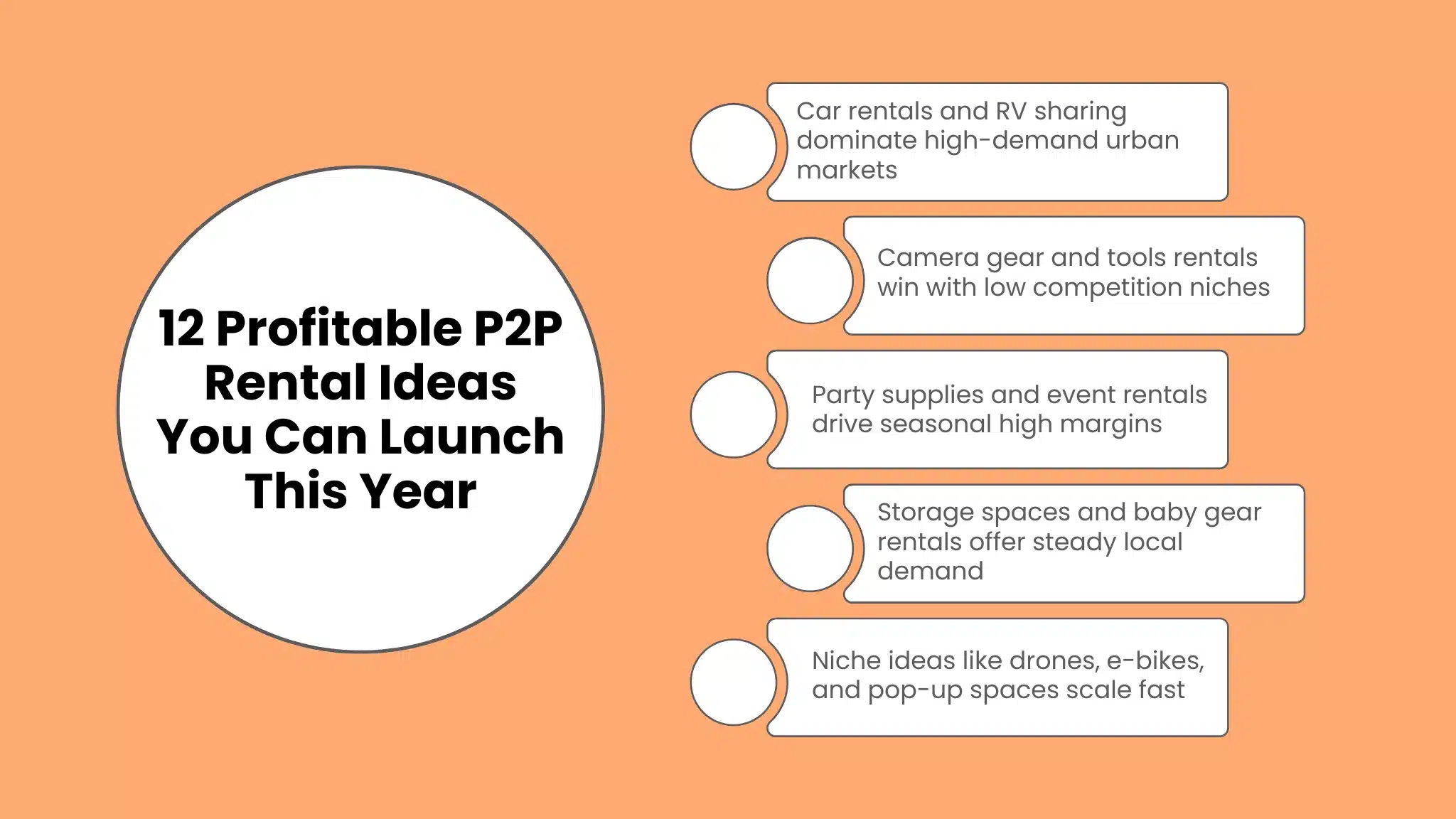
Top Rental Marketplace Ideas Ranked by Profit Margin
| Niche | Avg Margin | Demand | Competition | Best For |
|---|---|---|---|---|
| Car rental (P2P) | High | Very High | High | Urban founders |
| Camera & gear | High | Medium | Low | Creators |
| Tools & equipment | Medium | High | Low | Local markets |
| Party & event supplies | High | Seasonal | Low | Side hustle |
| RV & boats | Very High | High | Medium | Coastal areas |
| Fashion & luxury | Medium | High | Medium | Big cities |
| Storage spaces | Medium | High | Low | Suburban |
| Music instruments | Medium | Low | Very Low | Niche win |
Other solid rental marketplace ideas include baby gear (for traveling parents), drones, e-bikes, sports equipment, and pop-up retail spaces. The trick? Pick one asset rental business niche and own it before going wide.
How Much Does It Cost to Start a Peer to Peer Rental Business?
Most guides skip this part. So let’s get specific.
Real Launch Costs for a Peer to Peer Rental Business in 2026
| Build Method | Cost Range | Time to Launch | Best For |
|---|---|---|---|
| No-code (Sharetribe, Shipturtle) | $99-$299/mo | 7-14 days | First-time founders |
| White-label software | $2,000-$8,000 one-time | 30-45 days | Mid-budget |
| Custom-built platform | $40,000-$120,000+ | 4-8 months | Funded startups |
But software is only part of it. You’ll also need:
- Payment processing fees (Stripe charges 2.9% + 30¢ per booking)
- Business insurance and legal setup ($500-$2,500)
- Initial marketing budget ($1,000-$5,000)
- Domain, branding, and customer support tools ($300-$800)
So a lean launch runs around $2,500-$5,000 total. A serious one with custom code? Closer to $60,000.
5 Real Founders Who Built Successful Peer to Peer Rental Businesses
Real numbers beat theory. Below are real founders who built winning platforms.
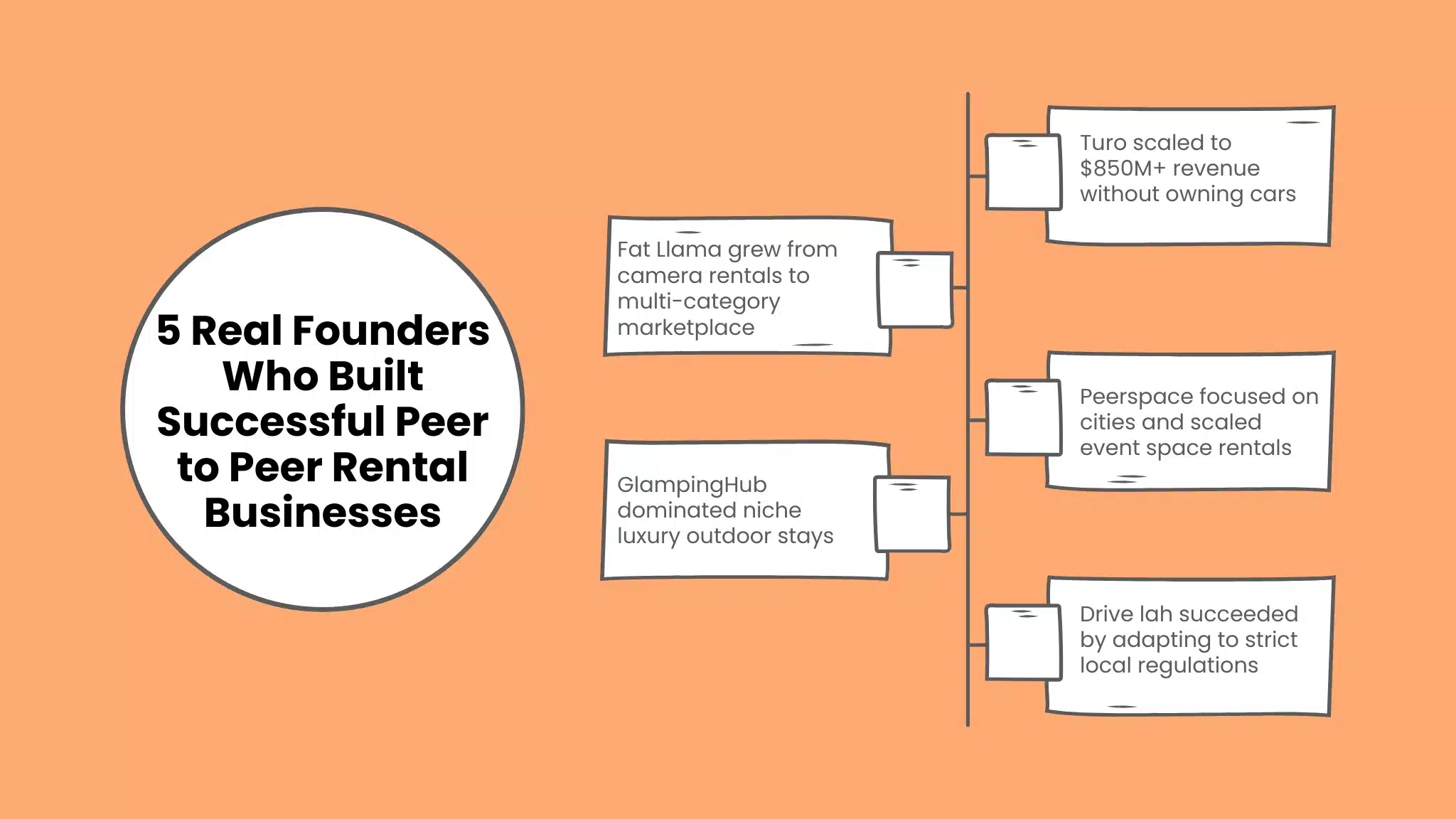
Peer to Peer Rental Business Success Stories
Turo started in 2010 and now pulls over $850 million in yearly revenue, all without owning a single car. The founders solved insurance early, which built renter trust fast.
Fat Llama (Ed Guida) began with one film student renting out his unused camera gear. Today, Fat Llama covers everything from drones to musical instruments and processes millions in transactions.
Peerspace spotted a real gap: renting venues for events, photoshoots, and meetings. They focused on cities first, then scaled.
GlampingHub went hyper-niche with luxury camping rentals and crossed $5M+ in revenue while big players ignored that vertical.
Drive lah localized car sharing for Singapore and Australia. Despite tough regulations, the founders worked with the law and raised millions in funding.
The pattern? Each one picked a tight niche, solved trust early, and scaled slowly.
Peer to Peer Rental Business Models and Revenue Streams
You can mix and match how you earn. Most successful platforms combine two or three streams.
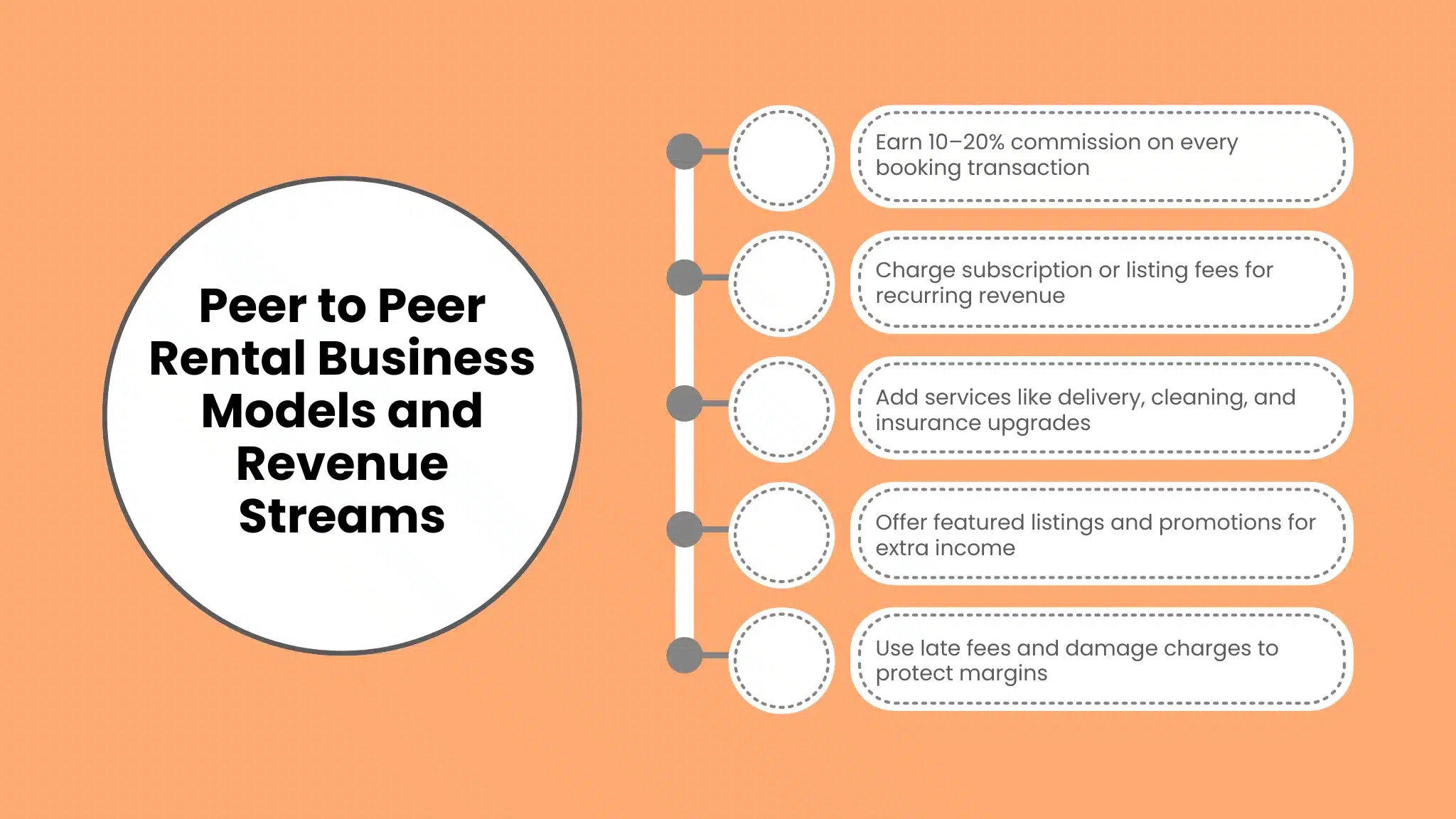
Top Revenue Models for Your Peer to Peer Rental Business
- Commission per booking (10-20% — Airbnb, Turo)
- Subscription or listing fees (Vrbo charges $499/year for hosts)
- Service add-ons (delivery, cleaning, insurance upgrades)
- Featured listings and paid promotions
- Premium membership tiers with extra perks
- Late return or damage fees
Start with a simple commission model. Then layer in extras once you have steady traffic.
Legal, Insurance, and Trust Frameworks Every P2P Rental Needs
This is where most new founders mess up. Without proper coverage, one bad rental can sink your whole platform.
Insurance Products Used by Top Peer to Peer Rental Businesses
- Turo Host Protection offers up to $750K in liability coverage.
- Airbnb AirCover gives hosts $1 million in damage protection.
- Slice and INSHUR offer custom insurance for P2P platforms.
- Stripe Identity, Onfido, and Veriff handle ID verification fast.
- Build a damage deposit hold system so disputes stay clean.
Also, set up clear terms of service, a refund policy, and a dispute resolution flow before launch. Trust is the real product you’re selling.
How to Solve the Chicken-and-Egg Problem on Day One
Every marketplace faces the same trap. No supply means no renters. No renters mean no listings. Here’s the fix.
The First 90 Days of Your Peer to Peer Rental Business
Days 1-30: Recruit your first 50 owners by hand. Hit Facebook groups, Reddit, and local communities. Offer free listings or cash bonuses for early uploads.
Days 31-60: Pick one zip code or city. Then go deep with hyperlocal SEO, flyers, and partnerships with small businesses.
Days 61-90: Now drive renter demand through Google Ads, Instagram reels, and content marketing. By month three, you should hit your first 100 paid bookings.
Keep the launch small and tight. Going too broad too fast is the number one killer.
How AI Is Reshaping the Peer to Peer Rental Business in 2026
This part nobody else is talking about. So here’s the edge.
AI Tools That Give Your P2P Rental Business an Edge
- Sift and Sardine stop fraud before it happens.
- Dynamic pricing engines adjust rates based on demand (like Airbnb’s Smart Pricing).
- AI photo tools auto-enhance listings to boost bookings.
- AI chatbots handle customer support 24/7 in dozens of languages.
- Predictive demand forecasting tells owners when to list and when to pause.
Founders using AI from day one cut support costs by 40-60%, according to early 2026 data. So the gap between AI-first and old-school marketplaces keeps growing every month.
Common Mistakes to Avoid When Starting a Peer to Peer Rental Business
- Picking a niche that’s too broad (be specific).
- Skipping insurance and legal setup.
- Building custom code before testing demand.
- Ignoring the supply side and chasing renters first.
- Setting commission rates too low to stay profitable.
Conclusion
Building a peer to peer rental business in 2026 is one of the smartest moves any new founder can make. The model is asset-light, the sharing economy keeps growing, and the tools to launch fast keep getting cheaper. Pick a tight niche. Then validate with real users before spending big on tech. Set up insurance early, solve the supply side first, and let AI handle the boring stuff.
For more startup playbooks, niche ideas, and real founder breakdowns, bookmark reliablestartup.com. The next big rental platform could easily be yours, so pick your idea, launch lean, and grow smart.
Frequently Asked Questions
Is a peer to peer rental business profitable?
Yes, P2P rental businesses can be very profitable. Top platforms like Turo and Airbnb generate hundreds of millions yearly without owning inventory. Margins stay high because the platform only handles transactions, not storage or maintenance.
What is the best peer to peer rental business to start?
Cars, camera gear, and party rentals offer the best mix of demand and low competition in 2026. Niche rental marketplace ideas like RV rentals, baby gear, and music gear also work well for new founders with smaller budgets.
How do peer to peer rental businesses make money?
They earn through booking commissions (usually 10-20%), subscription fees, featured listings, and add-on services like delivery or insurance upgrades. Most successful platforms combine two or three of these streams.
Do I need a license to start a peer to peer rental business?
Yes, most states require a basic business license. Some niches like cars or short-term rentals also need extra permits and insurance. Always check local laws before launch.
How much can you earn from a peer to peer rental business?
Solo founders often earn $2,000-$10,000 monthly within the first year. Scaled platforms can hit six or seven figures yearly once supply and demand both grow steady.