How to Start a Spray Foam Insulation Business Step by Step
Homeowners and commercial property builders are placing greater emphasis on energy efficiency, indoor climate control, and reducing monthly utility bills. Spray foam insulation provides an air-tight seal that outperforms traditional fiberglass or cellulose insulation, driving massive national demand for qualified installation contractors.
If you want to start a spray foam business, this step-by-step guide walks you through every stage of launching a successful enterprise. Learning how to start a spray foam business requires evaluating equipment investments, obtaining trade licenses, mastering chemical safety, and building contractor relationships. With proper planning, a well-managed insulation company can achieve gross profit margins between 30% and 50%.
Below is an in-depth spray foam insulation business guide detailing equipment costs, operational requirements, revenue potential, and practical steps to build a profitable contracting business in 2026.
What Is Spray Foam Insulation and Why Is Demand Growing?
Spray polyurethane foam (SPF) is a specialized liquid insulation material that expands upon application. Formed by combining two chemical compounds (isocyanate and polyol resin) at high temperatures and pressures, the material expands rapidly to fill cracks, crevices, and wall cavities.
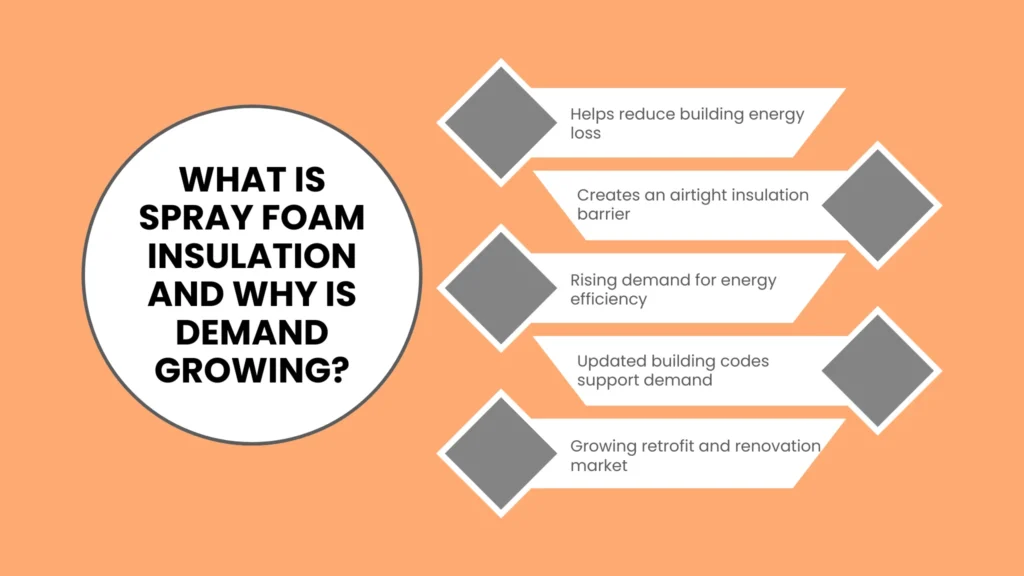
The industry continues to experience rapid expansion due to several market drivers:
Rising Energy Bills: Property owners want solutions that lower heating and cooling expenses. Spray foam can reduce building energy loss by up to 40%.
Updated Building Codes: Modern residential and commercial construction standards require higher R-values (thermal resistance) and stricter air-sealing protocols.
Retrofit and Renovation Boom: Existing homeowners are upgrading older, drafty insulation with high-performance spray foam to improve comfort and indoor air quality.
Because spray foam requires technical machinery and professional safety protocols, property owners rarely install it themselves. This creates a steady stream of high-margin work for trained professional contractors.
Is Spray Foam Business Profitable?
Before making large equipment purchases, every entrepreneur asks: is spray foam business profitable? Based on available industry data, spray foam contracting ranks among the most lucrative trades in the residential and commercial construction sector.
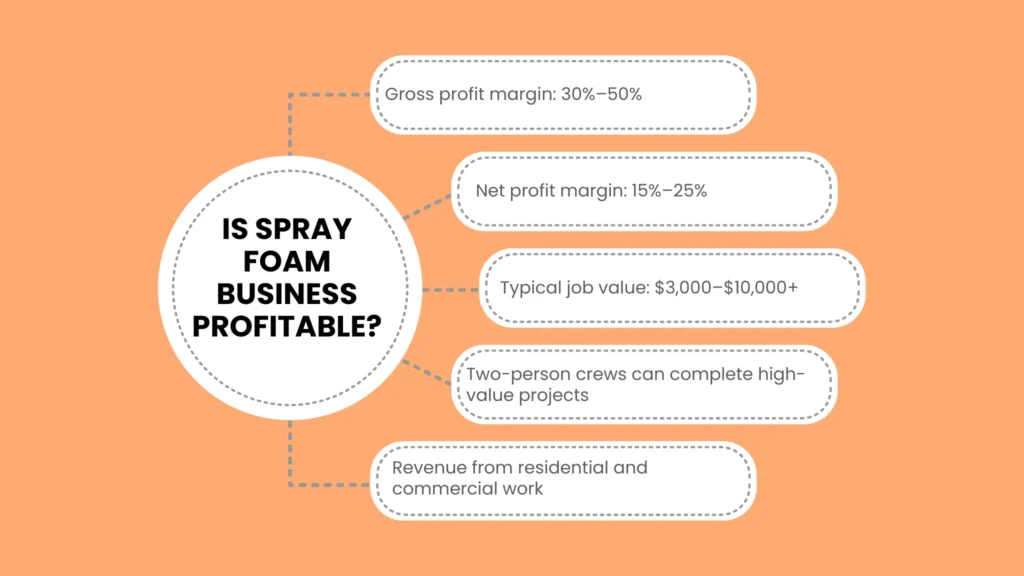
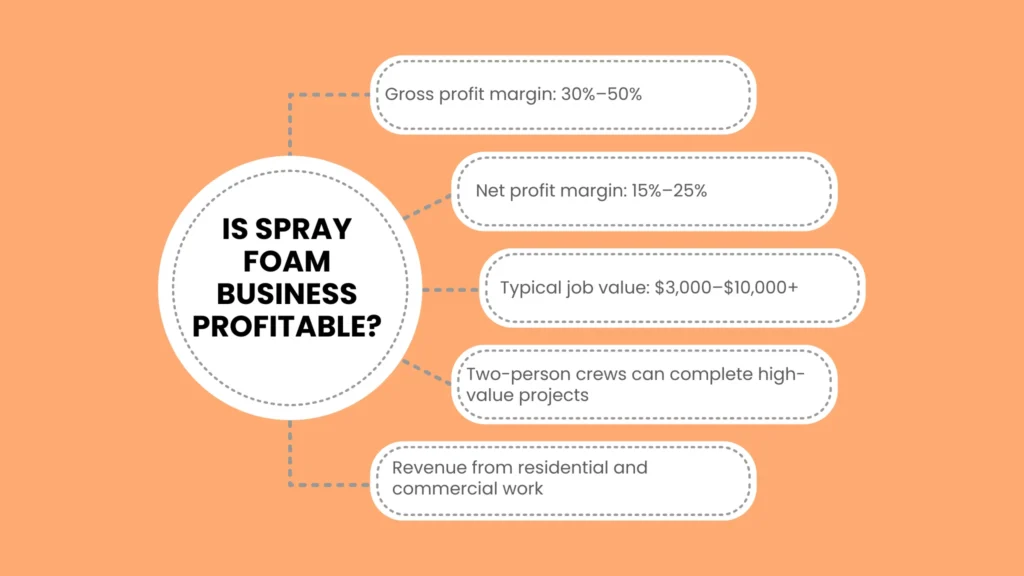
A single operational rig with a two-person installation crew can complete jobs valued between $3,000 and $10,000+ depending on square footage. A standard residential project taking two days to complete often yields significant gross returns after accounting for raw materials and crew wages.
When evaluating is spray foam business profitable, examine how revenue translates into actual income. An established contractor can maintain a healthy average spray foam business profit margin ranging from 30% to 50% on gross project sales. Net profit margins typically land between 15% and 25% after factoring in equipment financing, fuel, insurance, and overhead expenses.
Spray Foam Business Cost Breakdown
Understanding your total spray foam business cost is critical when securing loans or preparing your initial budget. Total startup capital varies based on whether you buy brand-new commercial equipment or start with refurbished mobile rigs.
Based on available industry data, starting a fully equipped spray foam business ranges from $50,000 for a minimal entry-level setup up to $150,000+ for a high-output, brand-new mobile rig trailer.
Itemized Startup Investment Table
| Expense Category | Estimated Cost Range | Key Details and Components |
| Mobile Spray Rig / Trailer | $25,000 – $65,000 | Enclosed utility trailer or box truck with climate control. |
| Proportioner & Spray Equipment | $20,000 – $55,000 | High-pressure proportioner machine, heated hoses, spray guns. |
| Power & Auxiliary Gear | $10,000 – $25,000 | Diesel generator, industrial air compressor, air dryers. |
| Personal Protective Equipment (PPE) | $2,000 – $5,000 | Fresh-air supplied respirators, protective suits, monitors. |
| Initial Chemical Inventory | $5,000 – $12,000 | Open-cell and closed-cell drum sets (A & B side chemicals). |
| Licensing, Insurance & Permits | $2,000 – $6,000 | Business setup, general liability, workers’ comp, state licenses. |
| Training & Industry Certification | $1,500 – $4,000 | SPFA certifications, OSHA safety training, vendor courses. |
| Marketing & Brand Launch | $2,500 – $7,000 | Website development, local SEO, vehicle wraps, signages. |
| Total Estimated Initial Investment | $68,000 – $179,000 | Total capital range for a professional single-rig start. |
Operating costs will ongoingly include raw chemical sets, fuel for the mobile generator and tow vehicle, job site prep materials (plastic sheeting and tape), and maintenance for proportioner pumps. Managing material waste directly preserves your spray foam business profit margin.
Essential Spray Foam Business Requirements
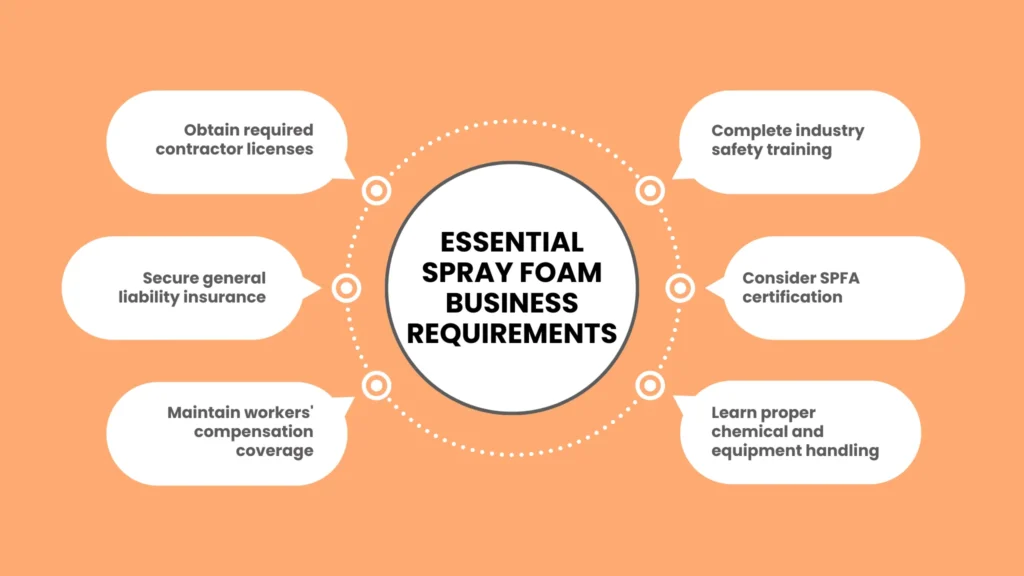
Meeting all legal, safety, and administrative standard requirements protects your company from project shutdowns, liability claims, and worker safety hazards. Review these mandatory spray foam business requirements before taking on client work.
1. General Contractor Licensing
Most states and municipalities require insulation installers to hold a specialty trade or general contractor license. Requirements usually involve passing an exam on building codes, proving trade experience, and submitting proof of financial stability.
2. Industry Certifications
While not always legally required, holding industry-recognized credentials builds trust with general contractors and architectural clients.
SPFA Certification: The Spray Polyurethane Foam Alliance offers master installer certifications covering building science, chemical safety, and proper spraying mechanics.
OSHA Certification: Complete 10-hour or 30-hour OSHA safety training covering hazardous chemical handling and respirator fit compliance.
3. Commercial Insurance Coverage
Working with high-pressure chemicals and hot equipment inside residential homes introduces physical risk. Your insurance suite must include:
General Liability Insurance: Protects against property damage (for example, overspray hitting a client’s roof or parked vehicles).
Workers’ Compensation: Mandatory in most regions when hiring installation helpers and technicians.
Commercial Auto & Inland Marine: Covers your mobile spray rig trailer and high-value internal machinery during transport.
4. Technical Equipment Knowledge
Operating a proportioner unit requires understanding chemical temperature settings, pressure balance, and fluid viscosity. An off-ratio chemical mixture can result in foam that fails to cure properly, leaving offensive odors or failing building inspection codes.
How to Start a Spray Foam Business Step by Step
Launching an organized contracting business requires structured execution. Follow this step-by-step framework to launch efficiently and secure your first paid insulation jobs.
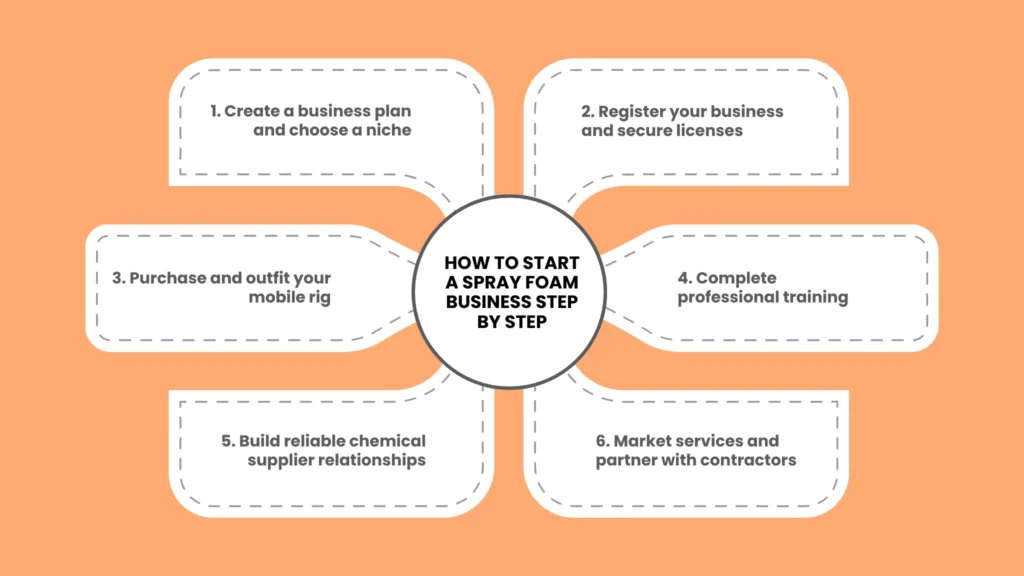
Step 1: Draft a Clear Business Plan
Define your target market and primary service offerings. Will you focus on residential attic retrofits, new construction homes, pole barns, or commercial cold-storage facilities? Calculate your break-even point by analyzing local pricing per board foot (a board foot is a unit of measurement equal to one square foot covered one inch deep).
Step 2: Register Your Legal Business Entity
Form an LLC (Limited Liability Company) or Corporation to isolate personal assets from business liabilities. Register for federal tax numbers (EIN), state tax IDs, and local business licenses. Open a dedicated business checking account to keep financial records clean.
Step 3: Purchase and Outfit Your Mobile Rig
Your spray trailer is your main operational hub. Choose an enclosed trailer or box truck with adequate weight capacity to carry heavy chemical drums, a generator, an air compressor, and proportioner systems. Ensure the rig includes heated hoses, ventilation fans, and fresh-air breathing systems.
Step 4: Get Hands-On Training
Attend manufacturer-sponsored spray schools or SPFA certification courses. Practice spraying both open-cell foam (lighter density, lower cost per board foot) and closed-cell foam (higher density, structural strength, moisture barrier). Learn troubleshooting skills to fix pressure imbalances and clogged spray guns on job sites.
Step 5: Secure Reliable Chemical Suppliers
Establish accounts with major foam chemical manufacturers and distributors. Negotiate volume pricing tiers on A-side (isocyanate) and B-side (resin) drum sets. Partnering with reputable chemical suppliers ensures predictable material quality and technical field support when issues arise.
Step 6: Execute Local Lead Generation
Build relationships with local home builders, general contractors, HVAC technicians, and roofing companies. Launch a fast, professional website showcasing project photos, job-site testimonials, and clear quote forms. Set up Google Business Profiles to capture local homeowners searching for insulation upgrades online.
Overcoming Key Operational Challenges
While running a spray foam company offers lucrative returns, operators face distinct field challenges:
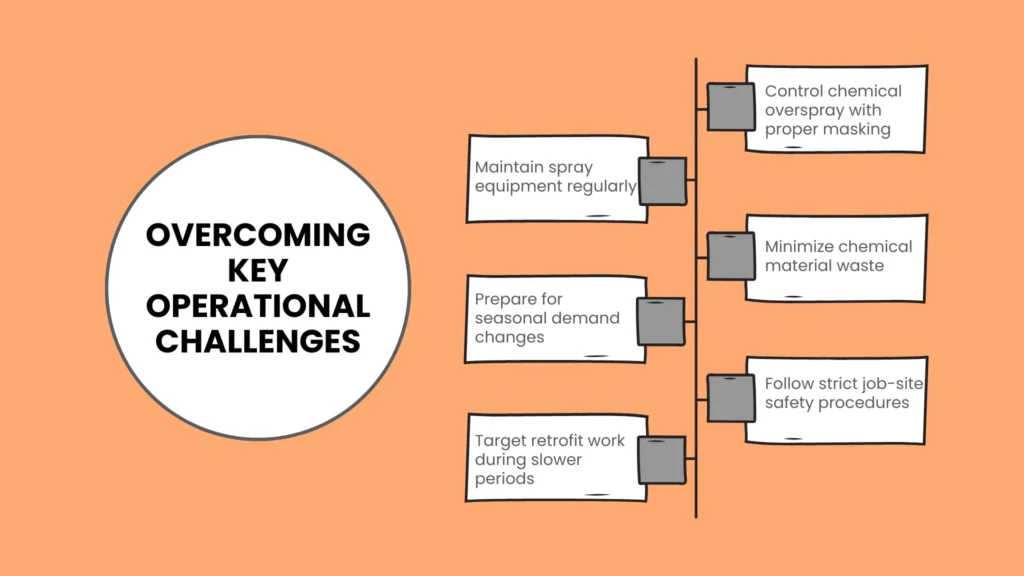
Managing Chemical Overspray: Wind or careless spraying can cause fine foam particles to drift onto nearby surfaces, windows, or vehicles. Always implement strict masking procedures using plastic sheeting before pulling the trigger.
Equipment Maintenance: Sticky chemical residue can quickly ruin proportioners and guns if not cleaned correctly. Build strict daily cleanup routines into your job schedules.
Seasonal Demand Fluctuations: Construction speeds change with winter weather. Balance seasonal slowdowns by targeting interior residential attic upgrades and crawlspace retrofits during colder months.
Final Thoughts: Launching Your Business
Learning how to start a spray foam business opens the door to a growing, recession-resistant market within the building trade. By investing in quality application equipment, completing professional safety training, and building strong contractor networks, you can build a highly profitable enterprise.
Focus on quality workmanship, maintain strict job safety standards, and manage raw chemical waste effectively. Over time, adding a second mobile rig or expanding into complementary services like air sealing or blown-in insulation will allow you to scale operations effectively. For detailed startup resources, operational templates, and step-by-step financial calculators, explore more guides at reliablestartup.com.
Frequently Asked Questions
How much can a spray foam business owner make annually?
An established single-rig spray foam operation can generate between $300,000 and $750,000 in annual gross revenue. With healthy profit margins, an owner-operator can clear a net income of $75,000 to $180,000+ depending on workload and pricing efficiency.
What is the main difference between open-cell and closed-cell spray foam?
Open-cell foam is lighter, softer, and expands significantly, making it ideal for interior wall cavities and attic roofs at a lower material cost. Closed-cell foam cures dense and rigid, offering higher R-value per inch, structural strength, and water vapor resistance for exterior applications.
Can I run a spray foam business by myself?
Technically yes, but it is far more efficient to work as a two-person team. One technician manages the spray gun inside the structure, while the second helper monitors chemical temperatures, manages hose lines, handles surface prep, and trims excess foam.
How long does a typical residential spray foam installation take?
Most average-sized residential attic or wall projects take one to two days to complete, including masking prep work, spraying, curing time, and job-site cleanup.