Commissary Kitchen Costs and How to Choose One
Launching a food truck, catering business, virtual brand, or packaged food line requires access to licensed, commercial-grade equipment. Building a private commercial kitchen from scratch can easily demand tens or hundreds of thousands of dollars in capital for specialized plumbing, ventilation hoods, grease traps, and heavy appliances. Understanding commissary kitchen costs can help food entrepreneurs compare rental options and avoid these substantial upfront expenses.
A commissary kitchen offers an efficient, compliant path forward. By sharing professional facilities, food entrepreneurs drastically reduce upfront overhead while maintaining strict regulatory compliance. However, understanding overall commissary kitchen cost structures, navigating membership agreements, and identifying the right location require careful planning.
Understanding Commissary Kitchens
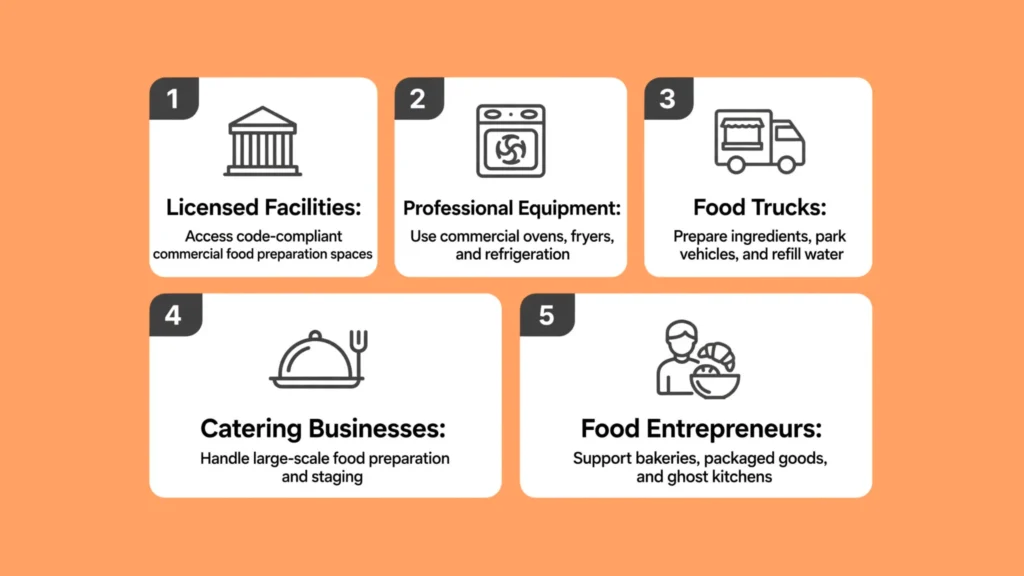
A commissary kitchen is a fully licensed, code-compliant commercial food preparation facility rented by food service operators. These spaces provide essential infrastructure, including heavy-duty convection ovens, commercial fryers, walk-in cold storage, preparation tables, and dishwashing stations.
Beyond basic prep space, commissary kitchens support various business models:
Food truck operators use them for secondary prep, overnight vehicle parking, greywater disposal, and fresh water refills.
Caterers utilize large-format ovens and extensive staging tables for high-volume event production.
Bakers depend on specialized deck ovens, proofing cabinets, and temperature-controlled prep stations.
Consumer packaged goods (CPG) makers scale production for local markets or retail distribution.
Ghost kitchens focus strictly on delivery-optimized food preparation without a traditional dining room.
Breakdown of Commissary Kitchen Costs
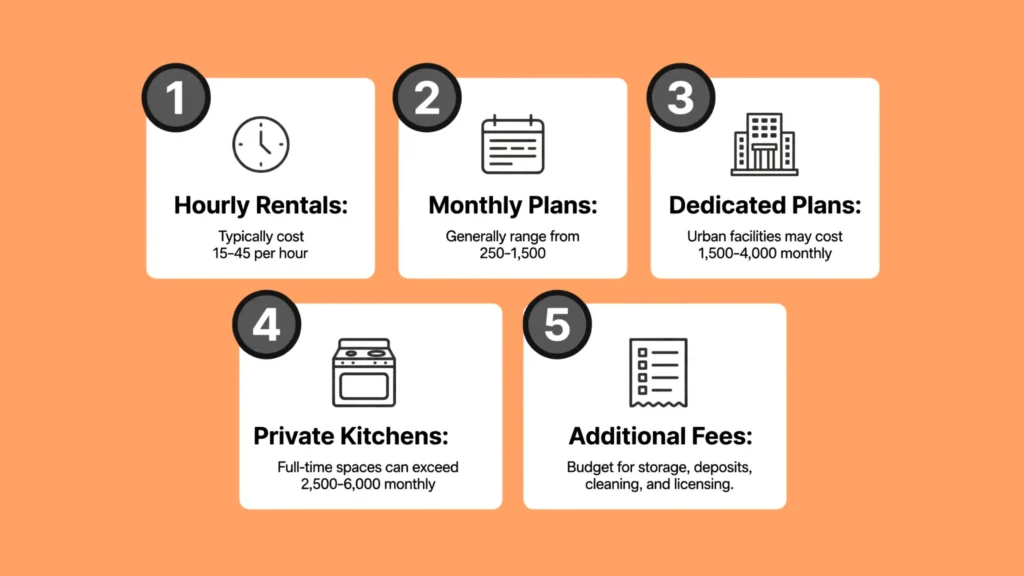
Pricing models vary depending on business needs, frequency of use, and local real estate markets. Most facilities structure their pricing across three primary tiers: commercial kitchen hourly rate models, monthly block subscriptions, or private dedicated spaces.
Commercial Kitchen Hourly Rate vs. Monthly Plans
Hourly rentals suit new operations or low-frequency preparation needs, whereas monthly tiers benefit consistent daily production.
Hourly Rates: Standard hourly pricing typically ranges between $15 and $45 per hour. Off-peak hours ( overnight or mid-afternoon slots) often sit on the lower end of the spectrum, while peak morning or weekend slots cost more.
Monthly Plans: Monthly shared kitchen rental plans generally run from $250 to $1,500 per month depending on reserved hours and storage allocations. In high-cost urban centers, dedicated monthly plans can range between $1,500 and $4,000.
Private/Dedicated Rentals: Full-time private commercial spaces range from $2,500 to $6,000+ monthly, ideal for established brands requiring 24/7 dedicated access.
Hidden and Additional Expenses
Looking strictly at base rates can leave operators surprised by extra operational fees. When budgeting, consider these common additional costs:
Dry and Cold Storage Fees: Shared rental plans often include limited prep space, but dedicated walk-in cooler, freezer, or dry shelf space generally incurs separate monthly fees ($50–$200 per rack).
Security Deposits: Most facilities require an upfront deposit equal to one or two months of rental fees to cover potential property damage.
Cleaning and Sanitation Charges: Some venues include utility usage and sanitation in their base price, while others bill separately for trash removal, grease trap maintenance, or mandatory professional cleaning services.
Peak-Hour Surcharges: Scheduling prep time during high-demand windows may carry extra fees compared to standard booking slots.
Licensing and Registration Fees: Local health department permits, municipal business licenses, and operator certs must be maintained independently by the business owner.
Key Types of Commissary Kitchens
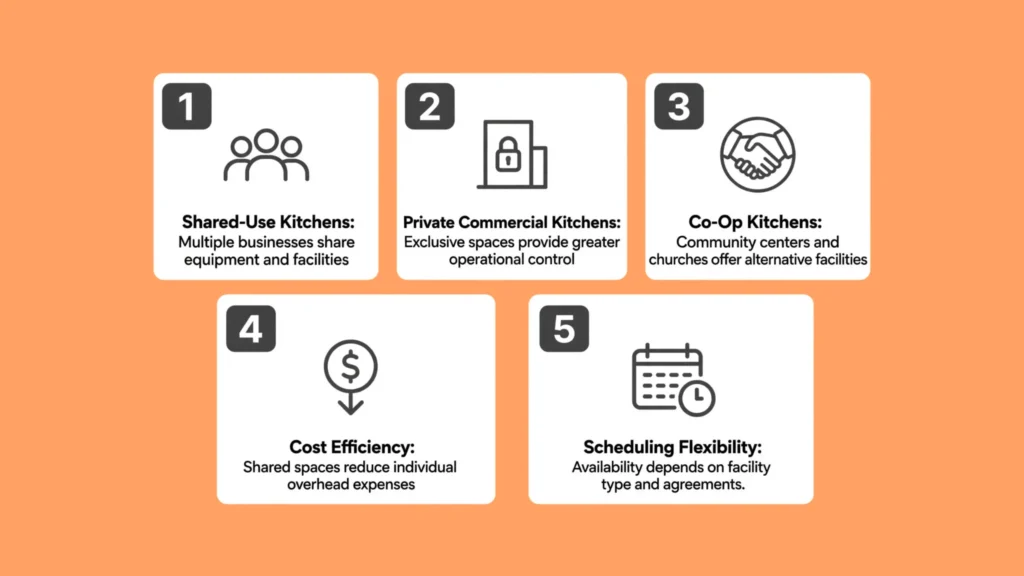
Selecting the proper operational environment depends on your workflow, schedule, and production volume.
Shared-Use Commercial Kitchens
Multiple businesses cook within the same building simultaneously or across structured shift times. These venues maximize cost-efficiency by pooling utility and maintenance overhead across multiple members.
Similarly, entrepreneurs exploring transportation opportunities, such as starting a box truck business without a CDL, can benefit from understanding shared operational costs and resource management.
Private Commercial Kitchens
A dedicated space leased exclusively by one business. While costlier, it grants complete operational autonomy, custom equipment setups, and unrestricted 24/7 access.
Non-Traditional or Co-Op Kitchens
Churches, community centers, schools, and existing restaurants during off-hours sometimes rent out their licensed kitchens. These non-traditional options can offer lower rates, though scheduling flexibility may be constrained.
Benefits of Using a Commissary Kitchen
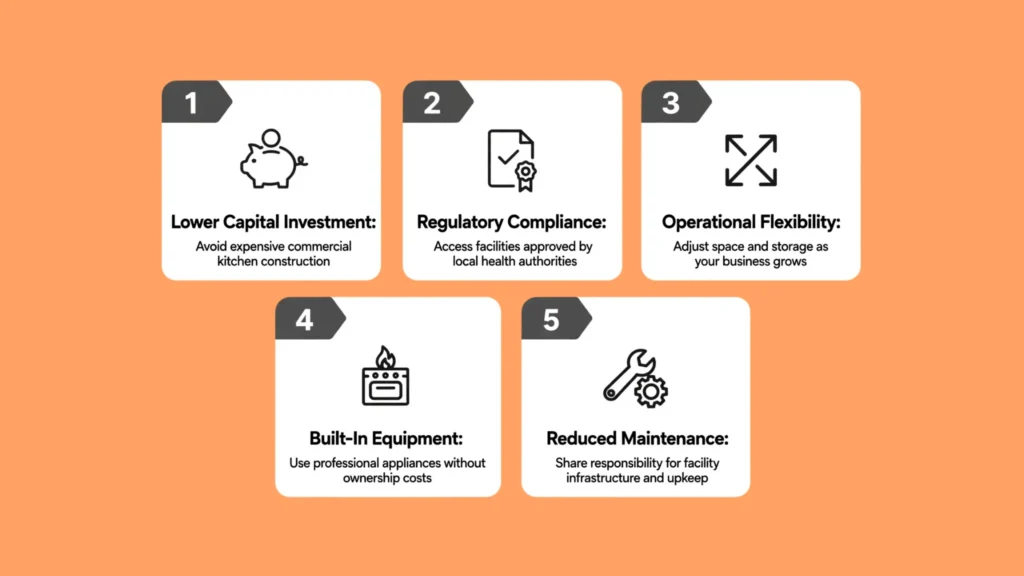
Renting shared space eliminates the heavy burden of commercial real estate development, allowing food entrepreneurs to test ideas quickly and leanly.
Lower Capital Investment: Avoid massive outlays for commercial ventilation, fire suppression systems, and industrial plumbing.
Regulatory Compliance: Reputable facilities are pre-approved by local health departments and regulatory agencies.
Operational Flexibility: Scale your committed space and storage up or down based on seasonal demand or business growth.
Built-In Amenities: Access high-cost specialized equipment, dishwashing equipment, loading docks, and waste disposal systems without maintenance burdens.
How to Choose the Right Commissary Kitchen
Evaluating prospective facilities requires reviewing logistics, compliance, and day-to-day convenience alongside costs. Similarly, entrepreneurs exploring service-based ventures, such as starting a loan signing agent business, should carefully assess operational requirements and business expenses before getting started.
Location and Accessibility
Logistics directly influence operational productivity. Select a location close to key suppliers, distribution channels, delivery radius hotspots, or catering venues. Ensure the facility features adequate parking, large-vehicle accessibility, and functional loading docks for efficient loading and unloading.
Equipment and Facility Standards
Confirm that the facility houses the exact commercial-grade equipment your menu requires. Inspect the condition of gas lines, refrigeration units, prep tables, and dishwashing areas. Ask about equipment booking procedures to ensure critical tools will be available during your reserved shifts.
Reviewing the Commissary Agreement
Before signing any contract, examine the terms carefully:
Scheduling Rules: Understand how far in advance prep times must be booked and whether recurring shifts are guaranteed.
Cancellation Policies: Check penalties for changing or canceling prep sessions on short notice.
Storage Limits: Verify the exact cubic footage allocated for dry goods, walk-in coolers, and freezers.
Termination Terms: Review lease renewal terms, notice periods, and rent escalation clauses.
Health and Safety Compliance
Request the facility’s historical inspection records and proof of current operating licenses. Confirm security measures, such as keycard entry systems and surveillance cameras, to protect high-value ingredients and inventory.
Common Mistakes to Avoid
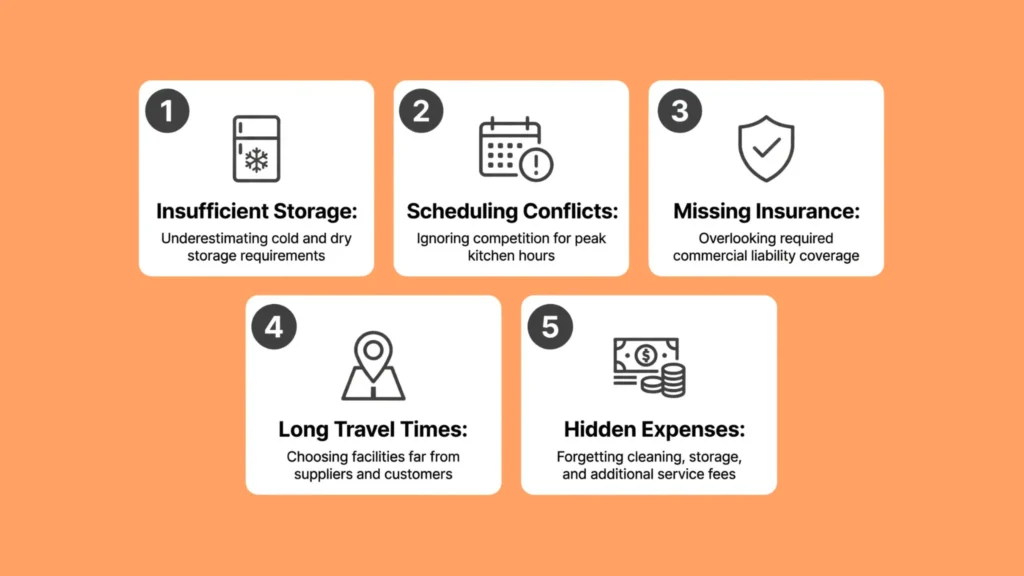
Avoiding operational pitfalls saves significant money and administrative stress:
Underestimating Storage Space: Ordering ingredients in bulk reduces food costs, but insufficient cold or dry storage can create bottlenecks.
Ignoring Peak Scheduling Conflicts: Assuming prime kitchen slots will always be available can disrupt production schedules during busy seasons.
Overlooking Insurance Requirements: Most venues require general liability commercial insurance with specific coverage limits before granting kitchen access.
Miscalculating Travel Time: Long commute times between the kitchen, supply runs, and sales locations quickly erode profit margins.
Frequently Asked Questions
What is included in a typical shared kitchen rental?
Shared kitchen rentals generally include access to prep tables, basic commercial cooklines (ovens, stoves, fryers), commercial dishwashing sinks, utilities (water, gas, electricity), and trash or grease disposal services. Dedicated storage, specialty tools, and linen services typically carry separate charges.
Do I need my own insurance to use a commissary kitchen?
Yes, kitchen operators almost universally require tenants to hold commercial general liability insurance. You will typically need to list the commissary kitchen facility as an additional insured on your policy.
How far in advance should I book kitchen space?
Booking windows depend on facility demand and your agreement structure. Monthly membership plans often allow recurring shift scheduling weeks or months ahead, while hourly members may book anywhere from 24 hours to two weeks in advance.
Can multiple businesses use the same prep station at once?
In shared-use kitchens, multiple businesses may work in the same open room simultaneously, but specific prep stations and cooking equipment are generally reserved for one operator per block of time to avoid cross-contamination and scheduling friction.
What is a commissary agreement and why is it necessary?
A commissary agreement is a legal contract between the kitchen owner and your business. It specifies rental terms, rates, usage rules, and health department authorization. Most local health departments require a signed commissary agreement before issuing a mobile food vendor or catering permit.
How do health inspections work in a shared kitchen space?
Health authorities inspect both the overall building facility and individual tenant operations. The kitchen owner remains responsible for facility-wide infrastructure compliance, while individual operators are inspected on their food handling, personal hygiene, ingredient storage, and labeling standards.
Final Thoughts
Renting a commissary kitchen provides an accessible, cost-effective foundation for growing a food business. By evaluating hourly rates versus monthly plans, factoring in extra costs like storage and sanitation, and assessing key facility features, you can select a space that supports smooth operations.
Thoroughly reviewing your commissary agreement ensures your chosen facility aligns with your production schedules, health compliance needs, and budget goals as your brand scales. Keeping accurate financial records is equally important, and exploring how to start a bookkeeping business from home can provide useful insights into managing business finances and administrative tasks.
About The Author