Chimney Sweep Business: Certification and Season Planning

Running a successful chimney sweep business requires far more than brushes, rods, and a high-powered vacuum. Homeowners rely on chimney technicians to protect their properties from house fires and carbon monoxide hazards, which means credibility, technical training, and smart seasonal scheduling sit at the core of long-term profitability.
Whether you are launching a solo operation or expanding an existing home service company, earning recognized credentials and structuring your calendar around seasonal demand will determine how steadily you grow.
In the chimney service industry, reputation and trust drive repeat bookings. Most homeowners only think about their fireplace when cold weather approaches, creating intense autumn bottlenecks followed by quieter spring and summer months.
Understanding how to earn respected industry certifications, set competitive yet profitable rates, and balance year-round cash flow allows you to turn a highly seasonal trade into a dependable, scalable business.
Why Industry Certification Matters for a Chimney Sweep Business?
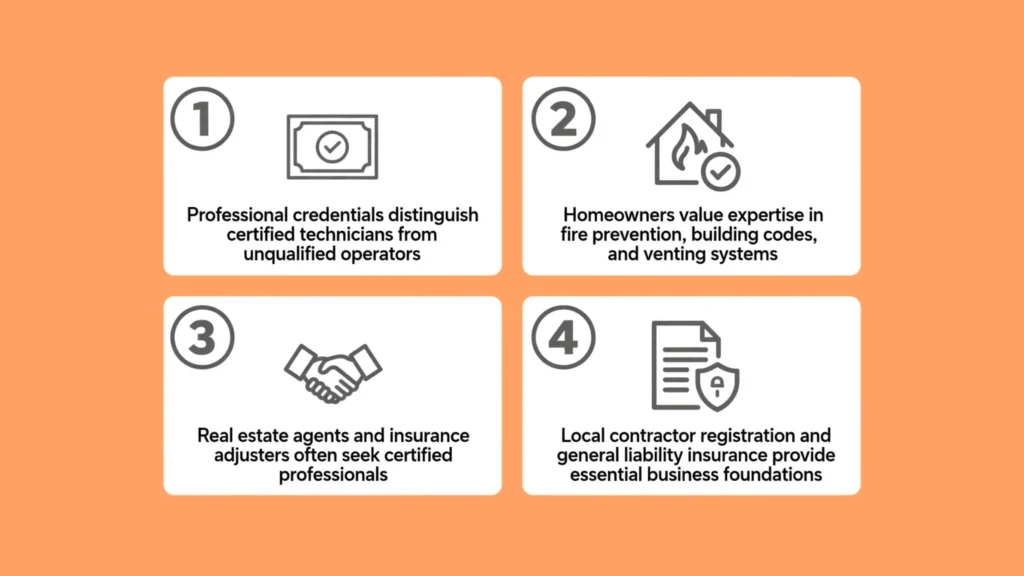
In most regions, no strict federal license is required to clean a chimney, though local contractor registration and general liability insurance are standard baseline requirements. Because barriers to entry are relatively low, professional credentials serve as the primary way legitimate operators separate themselves from uncertified handymen.
Homeowners, real estate agents, and insurance adjusters actively look for certified technicians when scheduling inspections or verifying fireplace safety. Holding a recognized credential signals that you understand building codes, fire prevention standards, and modern venting systems not just basic soot removal.
Like other specialized cleaning services, chimney maintenance requires technical knowledge, specialized equipment, and a strong commitment to safety.
Understanding CSIA and Chimney Cleaning Certification
The CSIA (Chimney Safety Institute of America) is the most widely recognized credentialing body in North America for chimney and venting professionals. Earning a chimney cleaning certification through the CSIA specifically the CSIA Certified Chimney Sweep (CCS) credential demonstrates mastery of fire codes, chimney anatomy, appliance venting, and safe inspection practices.
To earn the CSIA Certified Chimney Sweep credential, candidates typically complete comprehensive training covering:
National Fire Protection Association (NFPA) Standards: Specifically NFPA 211, which governs chimneys, fireplaces, vents, and solid fuel-burning appliances.
International Residential Code (IRC): Structural and clearance rules for masonry and factory-built chimney systems.
Inspection Levels: Understanding the differences between Level 1 (routine annual check), Level 2 (required during property transfers or after system changes, often involving video scanning), and Level 3 (invasive inspection when hidden hazards are suspected).
Creosote and Combustion Science: Identifying the three stages of creosote buildup and diagnosing draft or airflow issues.
Candidates must pass exams testing their knowledge of codes and safety practices and sign a strict code of ethics. Maintaining certification requires continuing education units (CEUs) every few years, ensuring technicians stay current with evolving heating appliances and safety standards.
Additional Credentials That Expand Revenue
While CSIA certification establishes core credibility, adding complementary credentials allows a chimney sweep business to capture higher-ticket repair and installation jobs:
CSIA Certified Dryer Exhaust Technician (CDET): Dryer vent cleaning pairs naturally with chimney work, uses similar rotary equipment, and provides strong off-season revenue.
National Fireplace Institute (NFI) Certification: Focuses on the installation and servicing of gas, wood, and pellet hearth appliances.
State or Local Masonry and Contractor Licenses: Necessary if you plan to offer crown rebuilding, tuckpointing, flashing repair, or chimney relining.
Essential Equipment and Startup Considerations
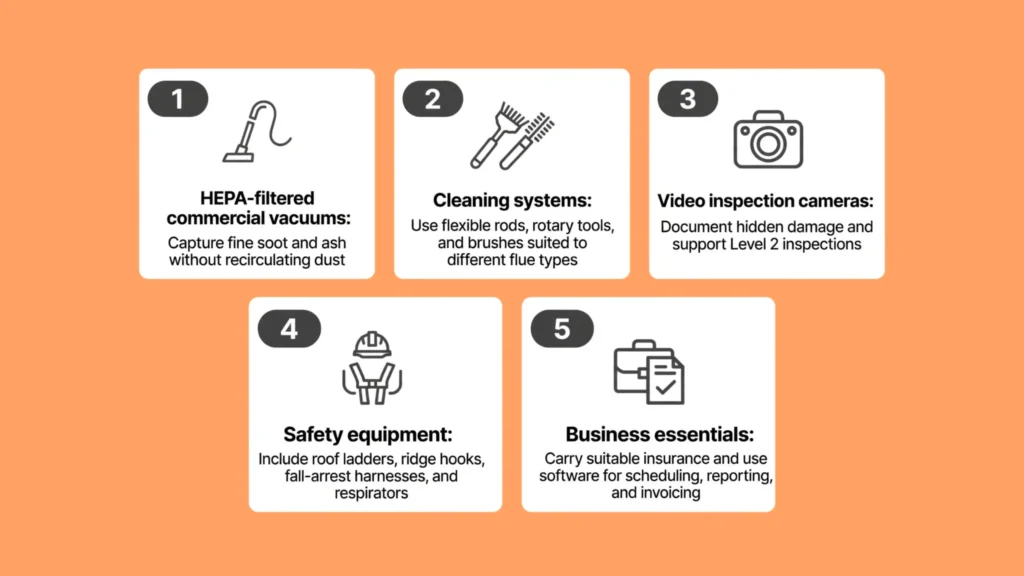
Before booking your first appointments, your operation needs professional-grade tools designed for containment, safety, and thorough diagnostics.
Before investing in professional tools, review typical cleaning business startup costs to understand how equipment, insurance, registration, and initial operating expenses affect your launch budget.
Modern chimney sweeping relies heavily on dust-free negative-air containment so homeowners never deal with soot escaping into their living rooms.
Core startup investments generally include:
HEPA-Filtered Commercial Vacuums: Dual- or triple-motor vacuums capable of capturing fine soot and ash without recirculating dust.
Rotary Cleaning Systems and Traditional Brushes: Flexible rods, whip heads, and poly or wire brushes sized for clay tiles, stainless steel liners, and factory-built flues.
Video Inspection Cameras: High-resolution chimney cameras with flexible push cables are essential for Level 2 inspections and documenting hidden cracks or mortar deterioration for customers.
Safety and Ladder Gear: Roof ladders, ridge hooks, fall-arrest harnesses, respirators, and protective drop cloths.
Business Insurance and Software: Comprehensive general liability coverage tailored to roof and hearth work, commercial auto insurance, and field service software for scheduling, digital inspection reports, and invoicing.
Structuring Chimney Sweep Pricing for Profitability
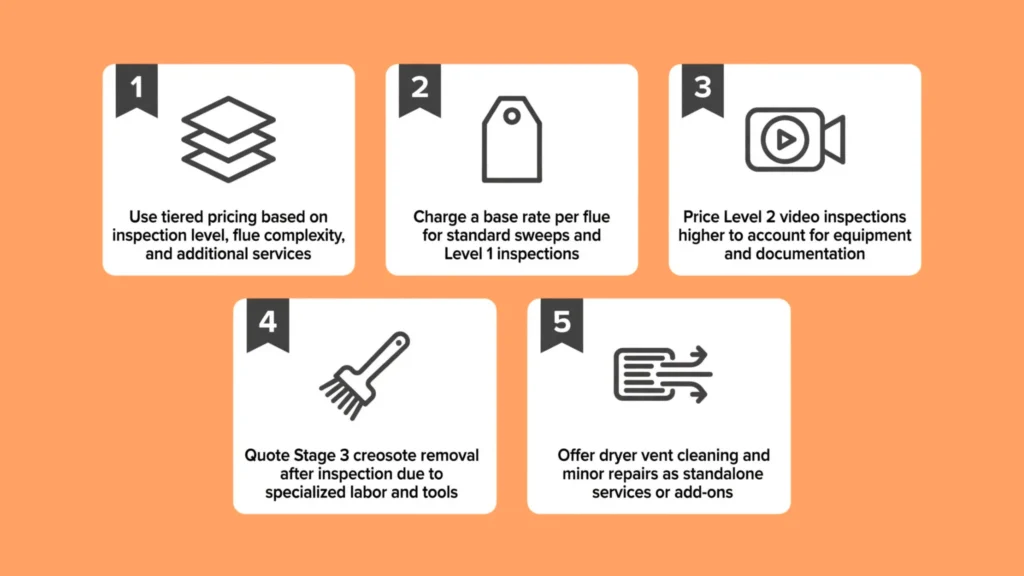
Setting accurate chimney sweep pricing requires balancing local market expectations with your overhead, travel time, and specialized expertise.
Understanding cleaning business pricing models can also help service providers calculate labor expenses, account for overhead, and establish profitable rates.
Underpricing is one of the most common mistakes new operators make, often leaving them overworked during peak months without enough margin to cover insurance, equipment wear, and marketing.
Rather than charging a single flat rate for every house, most established companies use tiered pricing based on inspection level, flue complexity, and additional services.
| Service Category | Typical Scope of Work | Pricing Structure Considerations |
| Standard Sweep & Level 1 Inspection | Basic cleaning of accessible flue, firebox, and damper; visual safety check. | Base flat rate per flue; discounted rate for a second flue at the same address. |
| Level 2 Video Inspection | Comprehensive interior camera scan, attic/crawlspace check, and detailed photo report. | Priced higher than Level 1 due to specialized camera gear and documentation time. |
| Stage 3 Creosote Removal | Intensive mechanical or chemical treatment for glazed, hardened creosote deposits. | Quoted per job or hourly after initial inspection, as it requires specialized tools and extra time. |
| Dryer Vent Cleaning | Clearing lint buildup from dryer transition duct through exterior termination cap. | Standalone flat fee or bundled at a reduced add-on price during a chimney visit. |
| Minor Repairs & Preventative Add-Ons | Chimney cap installation, damper replacement, waterproofing, and minor crown sealing. | High-margin upsells quoted immediately using inspection photos. |
How to Present Pricing Transparently
Homeowners appreciate knowing upfront what is included in a base appointment and what might trigger additional charges.
Clearly define your standard service call for example, specifying that your base fee covers one standard wood-burning flue and a Level 1 inspection, while excessive creosote glaze, animal nest removal, or multi-flue systems carry separate fees.
Using digital inspection reports with clear photos of cracked flue tiles, missing mortar, or rusted caps turns repair estimates into straightforward, educational conversations rather than high-pressure sales pitches. When customers can see the issue on a tablet screen, approval rates for masonry repairs and cap installations rise significantly.
Year-Round Season Planning for a Chimney Sweep Business
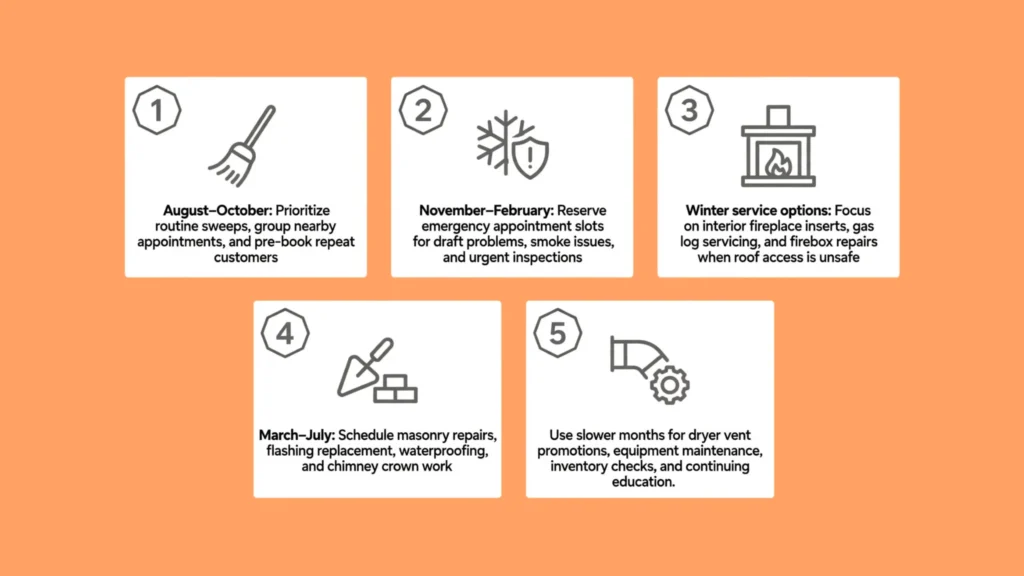
Seasonality is the defining operational challenge of the chimney industry. Demand typically surges from September through December as homeowners prepare to light their first fires of the season, then tapers off sharply in late winter and spring. Without proactive calendar management, your business risks burnout in October and cash-flow slowdowns in April.
Late Summer to Early Fall (August – October): Peak Ramp-Up
This is your highest-demand window, when inbound calls spike and schedules fill weeks in advance.
Prioritize Routine Sweeps and Inspections: Keep appointment slots streamlined so technicians can complete multiple standard sweeps per day.
Tighten Geographic Routing: Group appointments by neighborhood or zip code to minimize windshield time during busy weeks.
Pre-Book Repeat Customers: Send automated email and SMS reminders in July and August to past clients, encouraging them to beat the autumn rush.
Late Fall to Mid-Winter (November – February): Emergency Calls and Heating Diagnostics
Once freezing temperatures arrive, customers call for urgent drafting problems, smoke spillage, chimney odors, and mid-season cleanings.
Reserve Buffer Slots: Leave a few open blocks each week for urgent troubleshooting, damper failures, or real estate Level 2 inspections with tight closing deadlines.
Focus on Indoor Appliance Service: When snow or ice makes steep roofs unsafe to access, shift focus toward interior fireplace inserts, gas log servicing, and firebox repairs.
Spring and Early Summer (March – July): Repairs, Masonry, and Off-Season Marketing
Warmer weather creates ideal conditions for exterior work that cannot be performed safely or effectively in freezing temperatures.
Schedule Masonry and Exterior Repairs: Crown rebuilding, brick tuckpointing, flashing replacement, and breathable waterproofing treatments all require mild, dry weather for mortar and sealants to cure properly.
Promote Off-Season Discounts: Offer modest spring inspection discounts or free dryer vent checks with a chimney sweep to keep technicians busy between April and June.
Maintain Equipment and Renew Credentials: Use slower weeks to service vacuums, replace worn brushes, audit inventory, and complete continuing education courses.
Common Mistakes to Avoid When Scaling
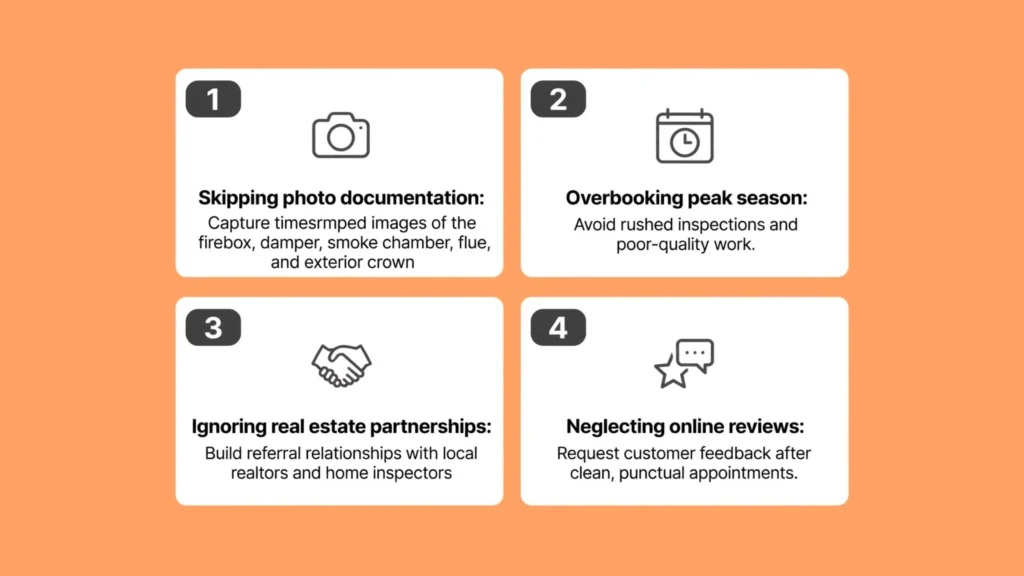
Growing from a single van to a multi-truck operation requires strong systems. Watch out for these frequent pitfalls:
Skipping Photo Documentation: Every inspection should generate timestamped photos of the firebox, damper, smoke chamber, flue interior, and exterior crown. Documentation protects your business against liability claims and validates repair recommendations.
Overbooking Peak Season: Cramming too many stops into an autumn day leads to rushed inspections, missed repair opportunities, and messy work areas. Quality and cleanliness always outperform sheer volume.
Ignoring Real Estate Partnerships: Local realtors and home inspectors regularly need fast, reliable Level 2 chimney inspections during home sales. Building relationships with local real estate offices creates steady year-round referrals independent of weather patterns.
Neglecting Online Reviews: Most homeowners search online for local chimney sweeps and choose companies with strong review profiles. Requesting a review immediately after a clean, punctual appointment compounds your local visibility over time.
Frequently Asked Questions
Do you need a license to start a chimney sweep business?
Most states do not issue a dedicated chimney sweep license, though you must register your business entity, obtain local municipal permits if required, and carry general liability insurance. Earning a recognized credential like the CSIA Certified Chimney Sweep certification is widely considered the industry standard for proving technical competence.
How long does it take to get CSIA certified?
Most candidates prepare for the CSIA Certified Chimney Sweep exam over several weeks using self-study materials, online courses, or an in-person review workshop. Once you are familiar with NFPA 211 standards, International Residential Code rules, and chimney inspection procedures, the exams themselves can be completed in a single day.
How can a chimney sweep business stay profitable during the summer?
Successful businesses bridge the summer slowdown by shifting focus to exterior masonry repairs, chimney waterproofing, cap and liner installations, dryer vent cleaning, and real estate Level 2 inspections. Reaching out to past customers in late spring with early-bird scheduling incentives also fills the calendar before autumn demand peaks.
How much should a chimney sweep charge for a basic cleaning?
Standard chimney sweep pricing varies by region, roof accessibility, and flue type, with most businesses charging a flat base rate for a routine sweep and Level 1 inspection. Additional charges typically apply for Level 2 video camera inspections, heavily glazed creosote removal, secondary flues, or animal nest extraction.
What insurance coverage does a chimney sweep company need?
At minimum, a chimney sweep business needs commercial general liability insurance that explicitly covers roof access, masonry work, and solid-fuel heating appliances. If you hire technicians or operate dedicated service trucks, you will also need commercial auto insurance and workers’ compensation coverage.
What is the difference between a Level 1 and Level 2 chimney inspection?
A Level 1 inspection covers readily accessible portions of the chimney exterior, interior, and appliance connection during routine annual maintenance. A Level 2 inspection is required whenever a property is sold or transferred, after a chimney fire or weather event, or when changing fuel types, and includes accessible areas of the attic, crawlspace, and an internal video scan of the flue.
Final Thoughts
Building a thriving chimney sweep business comes down to combining technical credibility with disciplined calendar management. Investing early in CSIA chimney cleaning certification gives homeowners immediate confidence in your safety standards, while transparent chimney sweep pricing ensures every service call supports sustainable margins.
By mapping out your marketing, inspection workflow, and exterior repair schedule across all four seasons, you can eliminate unpredictable off-season slumps and build a trusted home service brand that grows year after year.
About The Author