Pop Up Camper Rental: Complete Guide to Prices, Profits, and Starting a Rental Business
Pop-up campers offer an ideal entry point for budget-minded outdoor enthusiasts. Operating as collapsible lightweight towables, these units combine the open-air feel of tent camping with elevated comforts like raised beds, kitchenette amenities, and electric hookups.
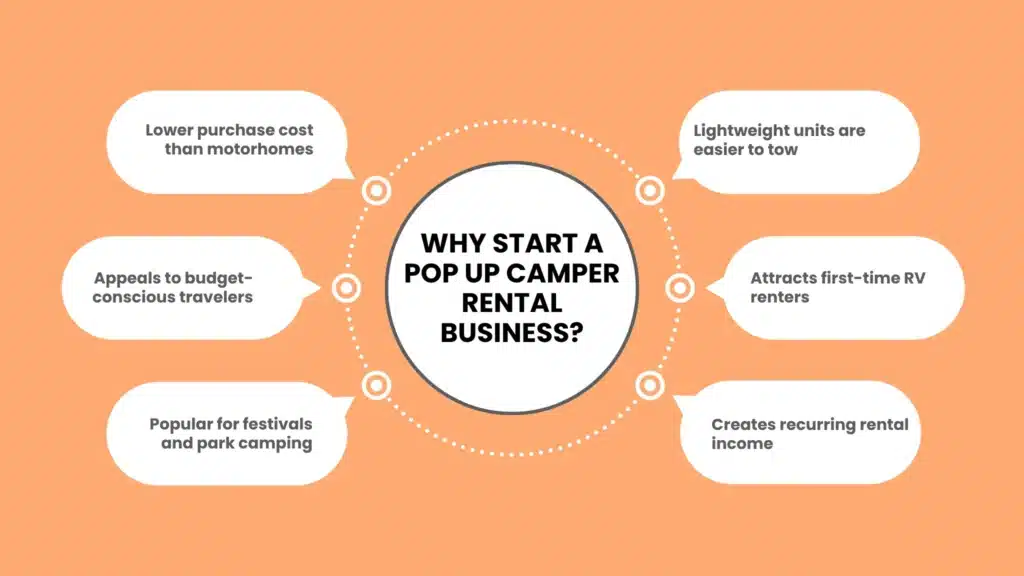
For travelers, choosing a pop up camper rental lowers fuel expenses and simplifies towing requirements. For entrepreneurs, starting a camper rental business around pop-ups requires lower upfront capital than motorhomes, creating an accessible path to build recurring rental income.
What Drives Pop Up Camper Rental Demand?
Pop-up tent trailers solve a specific problem in the RV ecosystem. Heavy class-A motorhomes and massive fifth-wheel trailers require heavy-duty pickup trucks, high fuel budgets, and advanced towing experience. Pop-up campers weigh between 1,200 and 3,000 pounds on average, allowing families to tow them using standard mid-size SUVs, crossovers, or minivans.
These units appeal to specific customer segments:
Budget Vacations: Families seeking weekend road trips without paying premium nightly rates for large drivable RVs.
First-Time RVers: Drivers who want to try camping without buying a specialized tow vehicle.
Festival & Park Campers: Vacationers heading into state parks or music festivals where site footprints are limited.
Pop Up Camper Rental Prices and Pricing Breakdown
Setting competitive rates requires balancing local market demand, seasonal shifts, and vehicle specifications. Pop-up campers maintain lower rental prices than hard-sided travel trailers, which keeps booking volume consistent throughout peak months.
Nightly Rental Rate Averages
Nightly rates vary by geographic location, unit condition, and seasonal peak months:
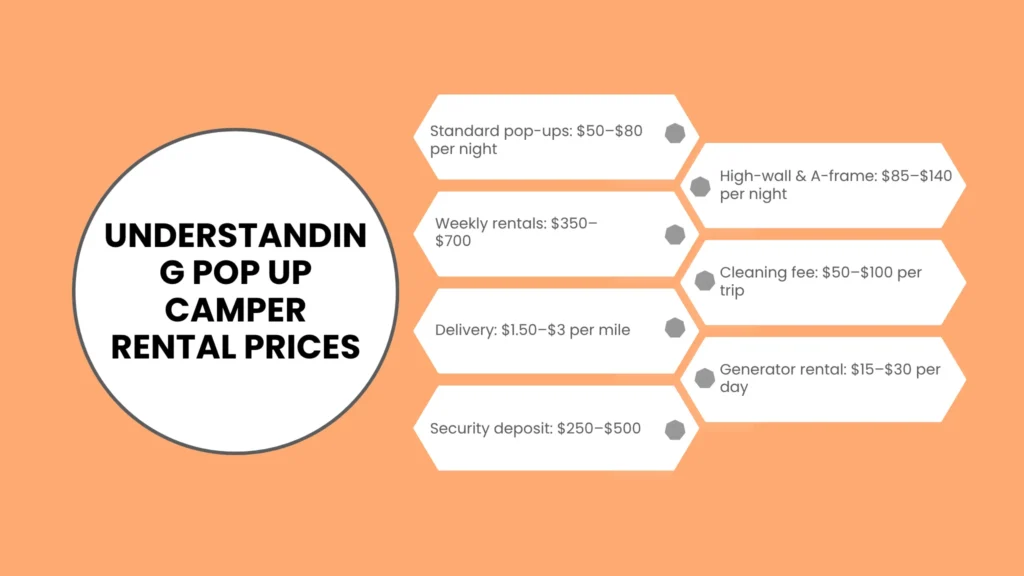
Standard Soft-Sided Pop-Ups: $50 to $80 per night. These units feature canvas fold-outs, basic sleeping berths for 4 to 6 people, and simple galley setups.
High-Wall & A-Frame Pop-Ups: $85 to $140 per night. These units feature rigid wall panels, built-in air conditioning, powered lift systems, and indoor cassette toilets or showers.
Weekly Rates: $350 to $700 per week, often reflecting a discounted rate for long-term bookings.
Secondary Revenue Streams and Fee Structures
When you rent out a camper, base nightly rates represent only part of the overall revenue. Adding transparent fees and optional add-ons increases total ticket value:
| Fee Type | Average Cost Range | Purpose / Operational Cover |
| Preparation & Cleaning Fee | $50 – $100 per trip | Interior sanitation, canvas drying, and safety inspections |
| Delivery & Setup Fee | $1.50 – $3.00 per mile | Delivering the unit directly to the customer’s campsite |
| Generator / Battery Pack Rental | $15 – $30 per day | Off-grid power supply for boondocking trips |
| Linen & Convenience Kits | $40 – $75 flat fee | Cookware, bedding, outdoor chairs, and propane refills |
| Security Deposit | $250 – $500 (refundable) | Safeguard against canvas tears or minor interior damage |
Financial Analysis: Cost to Rent Out a Camper vs. Income Potential
Understanding the pop up camper rental cost structure helps operators set realistic profitability targets. Pop-up units feature fewer mechanical parts than motorhomes, which reduces ongoing maintenance obligations.
Initial Acquisition and Setup Expenses
Entering the market requires minimal upfront investment compared to other RV asset classes.
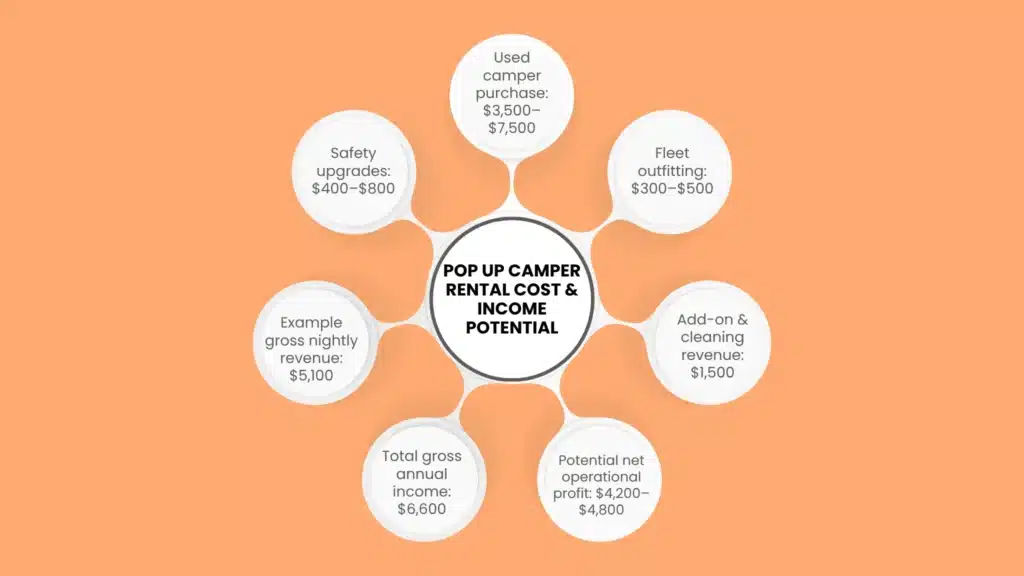
Used Unit Purchase: $3,500 to $7,500 for a clean 3-to-7-year-old pop-up camper.
Safety Overhauls: $400 to $800 (new tires, wheel bearing repacking, battery replacement, canvas waterproofing).
Essential Fleet Outfitting: $300 to $500 (hitch locks, leveling blocks, brake controllers, extension cords).
Yearly Revenue Projections (Per Unit)
If a single pop-up camper rents for an average of $85 per night with a 60% summer occupancy rate (60 booked nights per season):
With annual insurance, storage, platform commission fees, and routine maintenance totaling roughly $1,800 to $2,400 per unit, a single pop-up camper can generate $4,200 to $4,800 in net operational profit per season. This allows operators to recover their initial asset purchase price within 12 to 18 months.
How to Start a Pop Up Camper Rental Business
Starting a structured camper rental business requires moving from casual peer-to-peer listings to a dedicated fleet model.
Step 1: Establish Your Business Entity and Insurance
Operating without proper insurance leaves asset owners vulnerable to liability. Personal auto policies generally do not cover commercial rental activities.
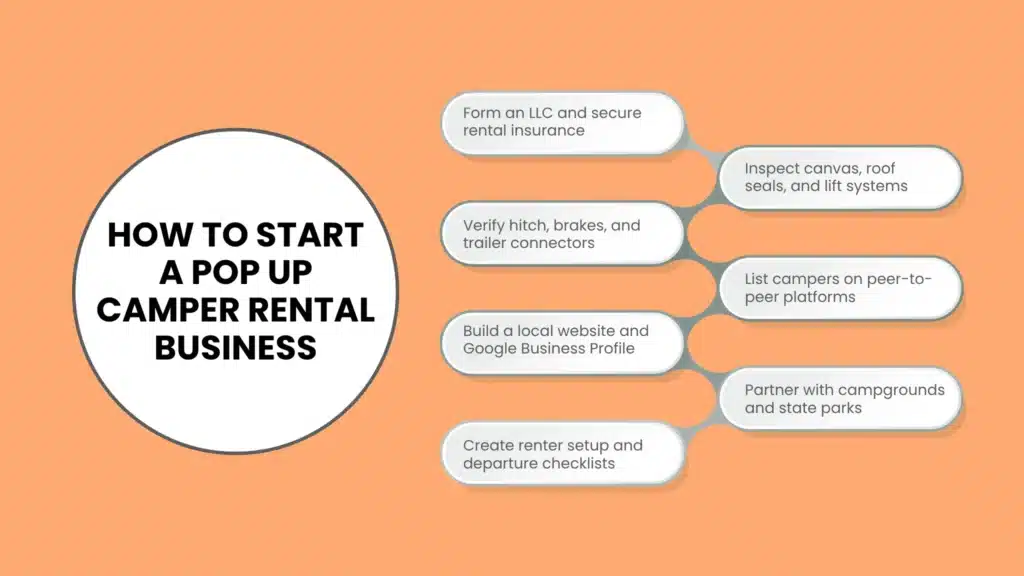
Form an LLC: Register a Limited Liability Company to separate your personal assets from commercial rental operations.
Commercial Rental Insurance: Utilize peer-to-peer platform insurance (such as Outdoorsy or RVshare) that offers up to $1 million in primary liability protection and comprehensive coverage during active booking windows. For direct bookings, contract with commercial RV rental insurance providers.
Step 2: Source the Right Fleet Units
Choose models known for durable lift mechanisms and simple floor plans.
Focus on Condition over Age: Inspect canvas seams, vinyl windows, and roof seals for active or past leaks. Water damage weakens roof framing and lowers resale value.
Verify Towing Hardware: Select units equipped with standard 2-inch ball hitches, functioning electric brakes, and 7-way round trailer connectors.
Step 3: Set Up Your Listing and Marketing Operations
To maintain steady booking rates, market your listings across multiple online channels:
Peer-to-Peer Platforms: List units on platforms like Outdoorsy, RVshare, and RVezy to leverage their existing search traffic, payment processing, and insurance structures.
Direct Local Marketing: Build a localized Google Business Profile and website targeting terms like “camper rental near me” or “pop up camper rental [Your City]”.
Campground Partnerships: Connect with local private campgrounds and state parks to offer delivery packages directly to camper sites.
Step 4: Systematize Onboarding and Handover Workflows
Clear renter handovers prevent vehicle damage and ensure repeat business.
Create a Setup Video: Record a short, step-by-step video demonstrating how to raise the roof, pull out bed wings, and light the propane stove. Send this link to renters before pickup.
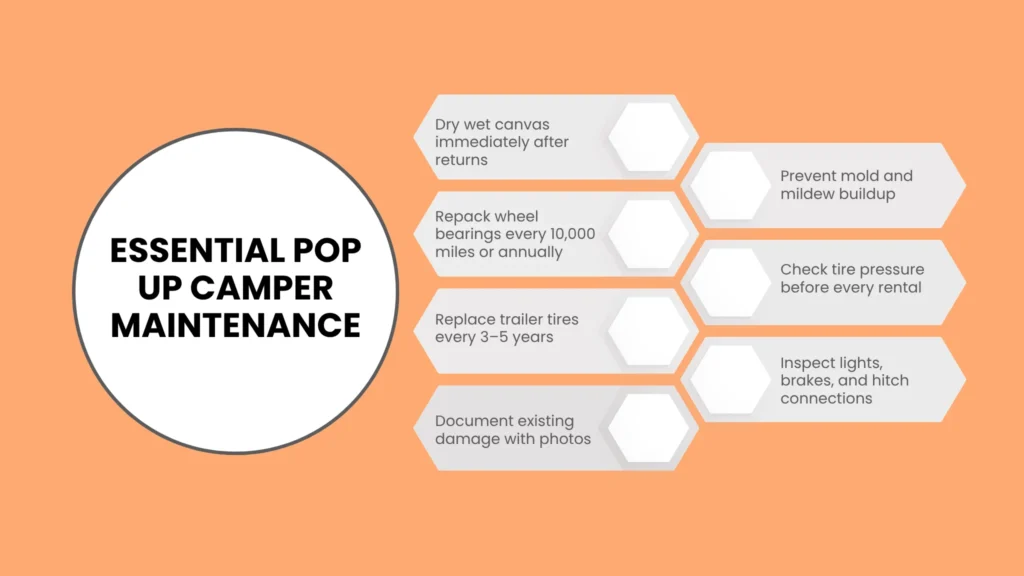
Execute Departure Checklists: Inspect tires, lights, brake wiring, and hitch connections alongside the renter during pickup. Document existing wear with timestamped photos.
Provide Towing Gear: Include adjustable ball mounts, wireless brake controllers, and towing mirrors as part of the rental package to accommodate renters’ vehicles safely.
Managing Fleet Maintenance and Operational Risks
Proper maintenance protects your fleet investments and minimizes unexpected repair downtime.
Canvas Protection and Moisture Control
Water intrusion is the single biggest threat to pop-up campers. If renters fold up a canvas damp from rain or morning dew, mold and mildew can form within 48 hours. Require renters to report any wet pack-ups. Always open, dry, and clean the canvas thoroughly as soon as the unit returns to your staging lot.
Tire, Bearing, and Axle Upkeep
Small trailer tires rotate faster per mile than standard vehicle tires, generating significant axle friction and heat.
Repack wheel bearings with high-temperature marine grease every 10,000 miles or annually.
Check tire inflation levels prior to every rental departure.
Replace trailer tires every 3 to 5 years regardless of remaining tread depth, as rubber degrades from UV exposure.
Key Takeaways
Running a pop up camper rental operation provides an accessible path into the RV rental industry. Because pop-ups feature low purchase prices, broad towability, and simple maintenance requirements, owners can recoup initial investments quickly while maintaining healthy profit margins.
By establishing structured renter handovers, maintaining rigorous canvas drying routines, and leveraging peer-to-peer platform insurance, you can scale a fleet of pop-up campers into a reliable business.
For more small business guides, equipment fleet strategies, and operational frameworks, visit reliablestartup.com.
Frequently Asked Questions
Can any vehicle tow a pop-up camper rental?
Most mid-size SUVs, minivans, and light crossover vehicles can tow a small to medium pop-up camper. However, renters must check their vehicle’s specific towing capacity, hitch tongue weight rating, and payload limits before booking.
What happens if a renter damages the canvas tent during a trip?
Minor tears can be fixed using commercial vinyl repair kits or canvas patches. For larger tears or structural damage, claim deductions against the renter’s security deposit or file a claim through your platform’s rental insurance policy.
Do I need a special driver’s license to tow a pop-up camper?
No special commercial driver’s license (CDL) is required to tow a standard pop-up camper in most regions. A standard personal driver’s license is sufficient, provided the combined gross vehicle weight rating (GVWR) remains within standard passenger vehicle legal limits.
Is renting out a pop-up camper better than renting out a Class C motorhome?
Pop-up campers carry lower purchase costs, lower insurance premiums, and no complex engine mechanics to maintain. While Class C motorhomes command higher nightly rates, pop-up campers often deliver higher return on investment (ROI) per dollar spent on asset acquisition.