Dumpster Rental Business Pricing: How to Set Your Rates
Setting up your operations and securing your municipal permits is a major milestone for any waste hauling startup. However, your business cannot survive on legal compliance alone. To build a sustainable and thriving brand, you must know how to value your services accurately. Choosing the right dumpster rental pricing model is the single most important decision you will make for your daily cash flow.
If you price your roll-off containers too low, local landfill fees will quickly consume your revenue. Conversely, if you price them too high, local roofing contractors and residential homeowners will simply call your competitors. In this guide, we will break down the mechanics of how to price dumpster rentals strategically, analyze average operating costs, and evaluate the overall dumpster rental pricing profit margin you can expect to achieve this year.
The Core Dumpster Rental Pricing Requirements
You cannot simply look at what other local haulers are charging on their websites and copy their rate cards. Every waste removal company operates under unique financial constraints. To build a bulletproof rate structure, you must master the three foundational dumpster rental pricing requirements that shape every single invoice. Before locking in your rate card, make sure your legal foundation is solid, see our full dumpster rental business license guide covering permits and compliance costs.
1. Landfill Tipping Fees
The single largest variable expense in the waste industry is the disposal cost, commonly known as the landfill tipping fee. Disposal facilities charge commercial haulers a flat rate per ton to empty their trucks. If your local landfill charges a high tipping fee, your base rental rates must reflect that burden immediately.
2. Vehicle Operational Burden
Your roll-off truck is a heavy, fuel-hungry asset that requires constant upkeep. When calculating your base rates, you must account for real-world driving costs:
Fuel Consumption: Heavy duty trucks often average only 4 to 8 miles per gallon when carrying fully loaded steel containers.
Tire Wear and Maintenance: Constantly driving over nails and sharp debris at commercial construction sites leads to frequent tire replacements.
Driver Labor Burden: You must pay your drivers an hourly wage that includes payroll taxes and workers’ compensation insurance.
Managing these recurring costs gets much easier with the right systems, check our picks for dumpster rental software built for tracking fuel, maintenance, and driver hours.
3. Equipment Dwell Time
Your dumpsters only generate income when they are out on active jobs. If a container sits empty in your storage yard, it makes zero dollars. Similarly, if a customer keeps a dumpster for three weeks without paying an extension fee, your equipment utilization rate drops significantly. Your pricing model must incentivize rapid inventory turnover.
The Two Most Common Dumpster Rental Pricing Models
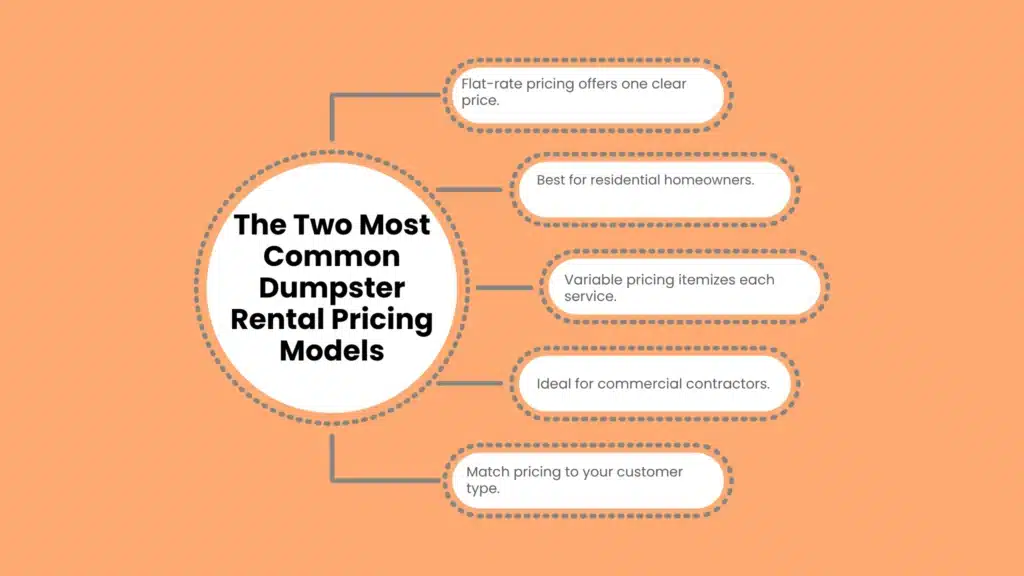
Modern waste hauling businesses generally rely on two distinct structures to invoice their clients. Choosing the right model depends heavily on the specific customer segment you are targeting.
Flat-Rate (Bundled) Pricing
The flat-rate model is highly popular among residential homeowners because it provides immediate clarity. With this structure, you quote one upfront price that bundles the delivery, pickup, a set rental period, and a specific weight allowance together.
For example, you might offer a 20-yard dumpster for a flat rate of $450, which includes a 7-day rental window and a 3-ton weight limit. This simplicity helps close residential deals quickly because customers know exactly what they will pay before the truck arrives.
Variable (Itemized) Pricing
Commercial contractors and high-volume construction companies often prefer itemized variable pricing. Under this model, you bill the customer separately for each individual component of the service:
The Drop and Pick Fee: A flat charge to cover truck fuel and driver labor.
The Daily Rental Fee: A small daily rate for every day the container sits on the job site.
The Actual Tipping Cost: Passing the exact landfill weight charge directly to the client after pickup.
Average Cost Benchmarks and Container Breakdowns
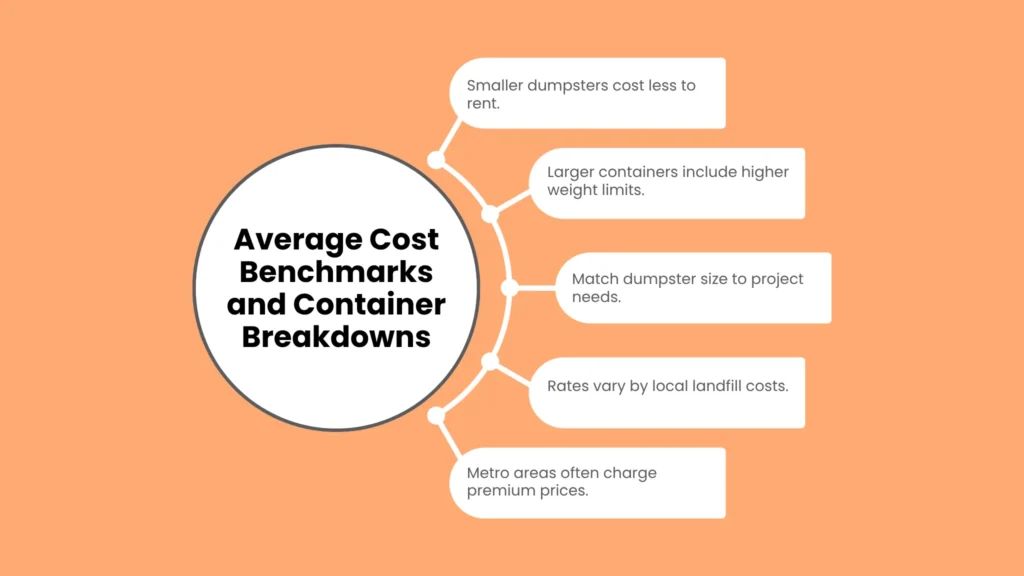
To give you a clear picture of the current marketplace, we compiled industry averages for standard roll-off container rentals. The table below outlines the standard dumpster rental pricing cost ranges and corresponding weight allowances.
2026 Average Rental Rates and Capacities
Based on available market data from real independent fleets, these figures represent national baseline averages. However, highly competitive metropolitan areas with steep landfill fees will often see rates trending toward the top end of these estimates.
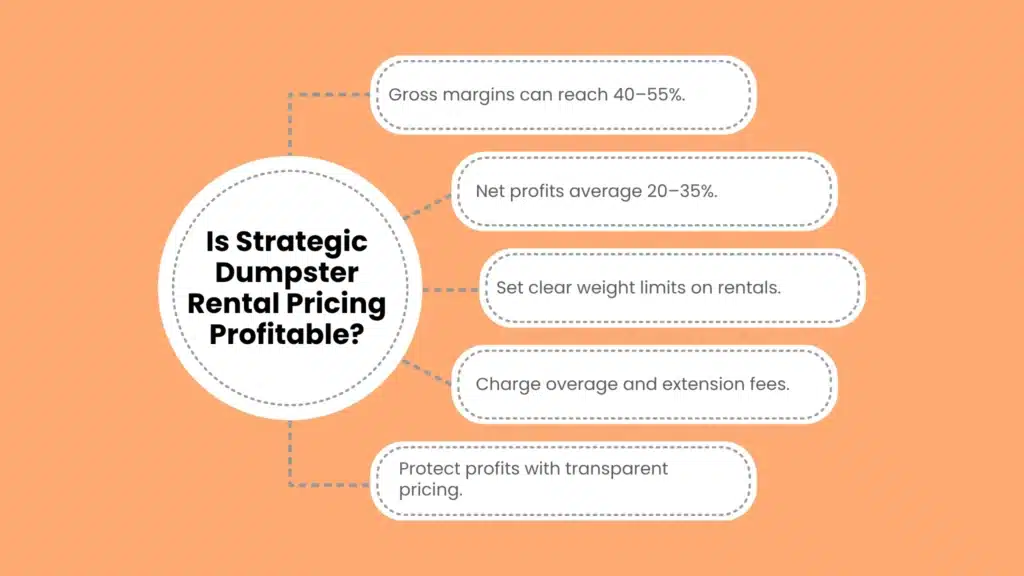
Is Strategic Dumpster Rental Pricing Profitable?
Many prospective owners wonder: is dumpster rental pricing profitable enough to offset the high costs of buying trucks and steel bins? The short answer is yes, provided you manage your variable metrics tightly.
Analyzing the Dumpster Rental Pricing Profit Margin
A healthy waste hauling operation should target a gross profit margin of 40% to 55% on individual drops. After accounting for fixed overhead expenses like business insurance, storage yard leases, and office software, the net dumpster rental pricing profit margin typically settles between 20% and 35% for the business owner.
To maximize these margins, successful haulers protect themselves from hidden expenses by enforcing strict ancillary fees.
Critical Profit Rule: Never offer unlimited weight to a customer. Always establish a clear weight ceiling on every contract and charge a distinct overage fee for every fraction of a ton over the limit.
Common Ancillary Fees to Protect Your Bottom Line
Overage Charges: Billing $65 to $95 per ton if the customer exceeds their container’s weight limit.
Dry-Run Fees: Charging $75 to $150 if your driver arrives to drop off or pick up a container but cannot access the space due to parked cars or locked gates.
Extension Fees: Applying a daily charge of $15 to $30 if a customer keeps a dumpster past their agreed-upon rental window.
Contamination Fees: Levying heavy penalties if a customer mixes prohibited hazardous items like wet paint, car batteries, or chemicals into a standard debris container. Locking these fees into a solid contract is just as important as setting them, our guide on managing risk in rental agreements covers exactly this.
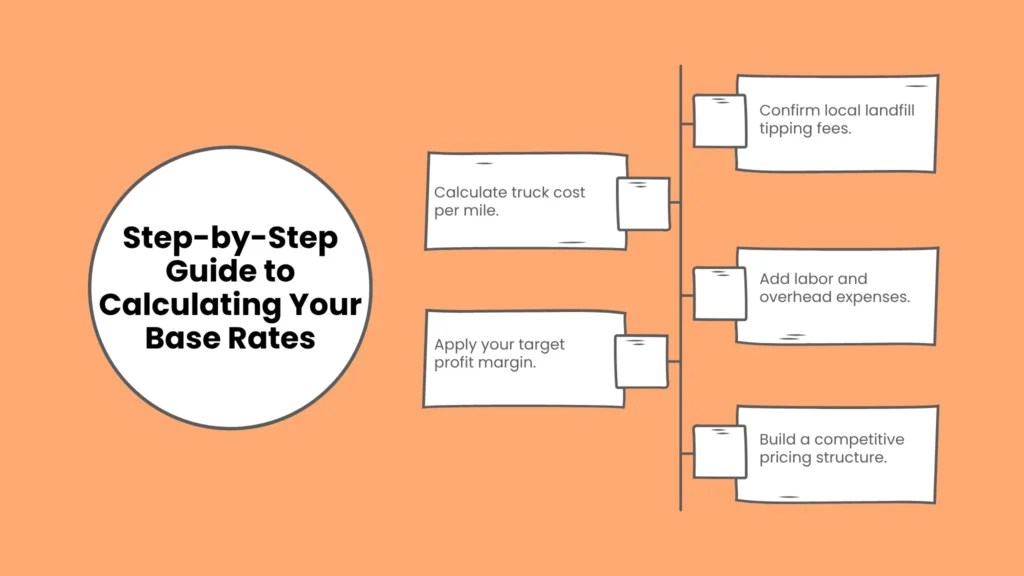
Step-by-Step Guide to Calculating Your Base Rates
To ensure you cover your operational expenses and hit your financial goals, follow this clear chronological order to construct your business rate card.
Frequently Asked Questions
What happens if a customer overfills a roll-off dumpster?
If a customer loads debris higher than the top rim of the container, your driver cannot safely transport the load down public highways. In this scenario, you should leave the dumpster on-site and charge the client a dry-run fee. The customer must remove the excess material before you schedule another pickup attempt.
How do I compete with large national waste management companies?
National brokers and major waste conglomerates often struggle with customer service and flexible scheduling. You can win local market share by offering fast delivery windows, transparent pricing with no hidden administrative fees, and personalized support for local roofing and remodeling crews.
Should I display my exact pricing directly on my website?
Displaying transparent baseline pricing for residential customers typically increases online booking conversion rates. However, you should include clear language stating that final quotes depend on the specific debris material and the job site’s distance from your yard. For commercial contractors, encourage them to call for custom high-volume quotes.
How do seasonal changes affect dumpster rental rates?
Demand for waste containers spikes significantly during the spring cleaning season and the summer construction boom. Many independent operators implement dynamic pricing, raising their baseline rates during peak summer months when equipment utilization is high, and offering promotional discounts during slower winter periods.