Startup Equity Splitting: How to Divide Ownership Fairly
Deciding on startup equity splitting is one of the earliest and most impactful choices co-founders face when building a company. On average, determining equity allocations takes two to four weeks of open discussion followed by legal documentation. The fairest approach evaluates actual cash investments, time commitments, intellectual property, and future risks through a structured framework.
Dividing ownership correctly protects co-founder relationships, aligns long-term incentives, and prepares your business for institutional venture capital. Before you even get to equity conversations, it’s worth reviewing how to pitch VC investors as a first-time startup founder, since investor expectations often shape how founders structure their cap table.
Understanding the Common Models for Startup Ownership
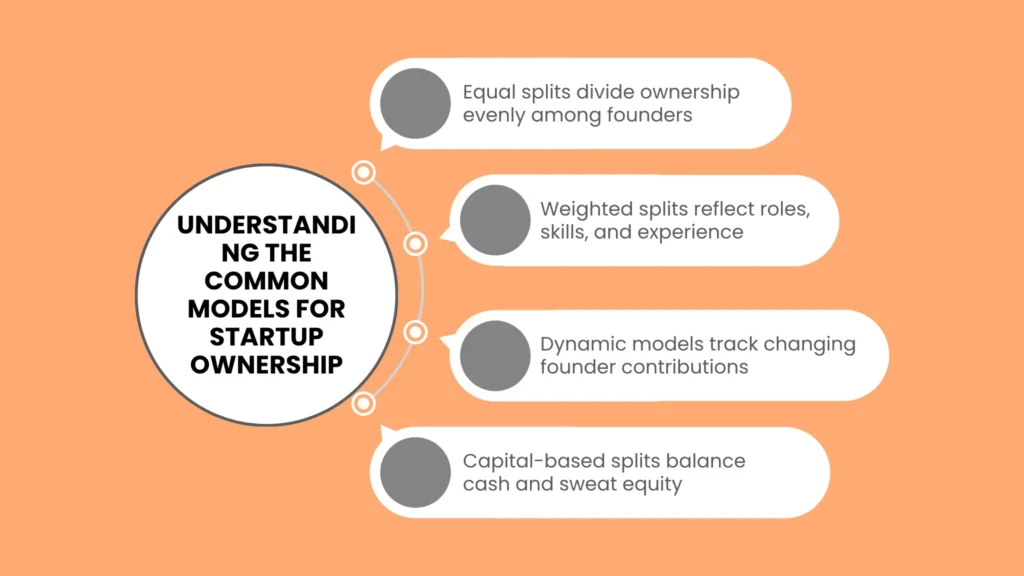
Founding teams generally choose between fixed equity allocations and flexible dynamic models. Selecting the right methodology depends on your team dynamics, commitment levels, and business stage.
1. The Equal Split Model
The equal split method divides ownership into identical percentages among all co-founders, such as a 50/50 split for two partners or 33/33/33 for three.
This strategy fosters immediate trust, signals mutual respect, and prevents early political friction. However, it can backfire if co-founders contribute vastly different amounts of effort, time, or capital as the company grows.
2. The Weighted or Role-Based Split Model
A weighted split allocates shares according to each founder’s role, professional seniority, and direct strategic value.
For example, a Chief Executive Officer with extensive industry experience might receive 40% of the equity pool. Meanwhile, a technical co-founder receives 35%, and an operational co-founder receives 25%. This model acknowledges variations in market replacement costs and executive accountability.
3. The Dynamic Split Model (Slicing Pie Framework)
Dynamic equity models allocate ownership continually based on real-time contributions. Developed by industry experts, the “Slicing Pie” framework converts unpaid labor, cash investments, equipment, and intellectual property into standardized point values.
Your relative percentage of ownership fluctuates dynamically until the business reaches a specific milestone, such as raising a formal Series A investment round or achieving steady cash flow.
4. The Capital vs. Sweat Equity Model
In many early ventures, one partner provides significant cash capital while another contributes full-time operational execution.
This framework separates financial backing from sweat equity. Cash investments earn a premium valuation or preferred stock features, while operational labor accumulates equity through monthly vesting milestones.
Comparison Table of Equity Distribution Methods
Evaluating the strengths and limitations of each method helps founding teams identify the best fit for their situation.
| Method | Best For | Core Advantage | Primary Drawback |
| Equal Split (50/50 or 33/33/33) | Full-time co-founders entering at the same stage | Simple, fast, and builds immediate trust | Creates resentment if workload diverges |
| Weighted / Role-Based | Teams with distinct experience levels and clear hierarchy | Rewards specialized skills and market value | Hard to rebalance if roles change later |
| Dynamic Split (Slicing Pie) | Pre-revenue startups with changing time commitments | Maximally fair, tracks actual real-time inputs | Requires detailed tracking of hours and cash |
| Capital-Based Split | Ventures where one founder funds initial runway | Clearly values financial risk and cash inputs | Can demotivate non-funded operational founders |
The Role of Vesting Schedules in Equity Allocation
No matter which distribution model you choose, you should always combine it with a formal founder vesting schedule. Vesting ensures that co-founders earn their equity over time rather than receiving their entire share upfront.
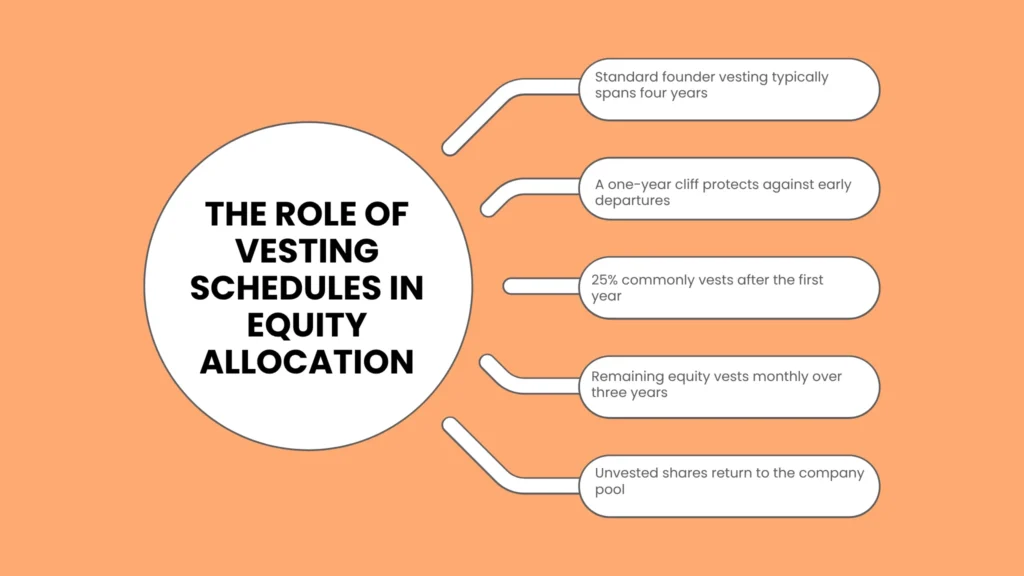
The industry standard structure is a four-year vesting schedule with a one-year cliff. Under this agreement, no equity belongs to a co-founder during their first 12 months of service. On the one-year anniversary, 25% of their total shares vest immediately. The remaining 75% vests in equal monthly increments over the following 36 months.
Vesting protects the company if a co-founder leaves early. Unvested shares return to the corporate equity pool, allowing the remaining team to hire a replacement without suffering excessive equity dead weight.
Core Requirements, Financial Costs, and Profit Margins
Managing ownership distribution effectively involves meeting legal standards, budgeting for legal fees, and tracking operational metrics.
Key Startup Equity Splitting Requirements
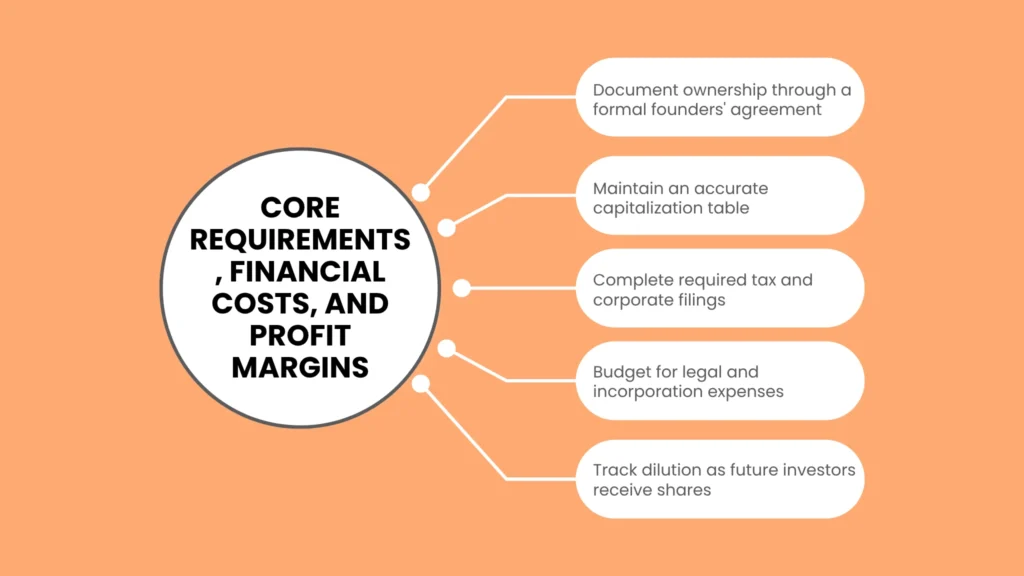
To formalize ownership without triggering future ownership disputes or corporate tax penalties, startups must meet several regulatory and administrative baseline standards:
Founders’ Agreement: A written legal contract defining ownership percentages, roles, voting rights, and departure terms.
Delaware C-Corp Incorporation: Institutional investors generally require startups to incorporate as a C-Corporation to support equity grants and stock option pools. For a full breakdown of choosing the right entity, see our guide on business structure for startups: LLC vs C-Corp.
Capitalization Table (Cap Table): An organized master ledger recording stock grants, share counts, ownership percentages, and option pools.
Section 83(b) Tax Election: In the United States, founders receiving unvested equity must file an 83(b) election with the IRS within 30 days of receiving their stock to avoid severe future income tax liabilities.
Analyzing the Startup Equity Splitting Cost Structure
While discussing equity percentages costs nothing, executing legal documents and setting up official corporate equity structures incurs direct financial expenses.
Legal Counsel Fees: Engaging specialized startup attorneys to draft custom Founders’ Agreements, stock purchase plans, and corporate bylaws typically costs between $1,500 and $5,000.
Incorporation and Filing Fees: State registration fees, corporate registered agent costs, and public filing requirements average $300 to $1,000 depending on your jurisdiction.
Cap Table Management Tools: Dedicated equity management platforms like Carta or Pulley often offer free tiers for early startups, but advanced features cost $500 to $2,000 annually as team size grows.
Based on estimated market averages, most founding teams spend between $2,000 and $6,000 in total transactional costs to establish a fully compliant ownership structure.
Operational Impact on Startup Equity Splitting Profit Margin
Allocating equity directly alters how company earnings, dividends, and future acquisition proceeds are distributed among shareholders.
Dividend Allocations: Profit distributions match your cap table ownership percentages. Maintaining an accurate equity breakdown ensures net profits are paid out correctly.
Future Dilution Management: When raising venture capital, external investors purchase new shares. This dilutes existing founder percentages equally unless anti-dilution provisions apply.
Operational Margins: Software and digital startups operating with gross margins above 75% generate strong free cash flow, making equitable profit sharing straightforward once fixed operating expenses are covered.
Is Startup Equity Splitting Profitable for Founding Teams?
Entrepreneurs frequently evaluate whether sharing equity with partners yields better financial outcomes than retaining 100% ownership as a solo founder. So, is startup equity splitting profitable over the long run?
The data overwhelmingly indicates that sharing equity with capable co-founders increases total financial returns. A solo founder holding 100% of a small business generating $100,000 in revenue captures less overall value than a co-founder owning 30% of a venture-backed company valued at $50 million. Dividing ownership attracts complementary executive talent, accelerates execution speed, and significantly expands long-term enterprise value.
Step-by-Step Guide on How to Split Startup Equity Fairly
Following a structured process prevents emotional misunderstandings and leads to a transparent ownership structure.
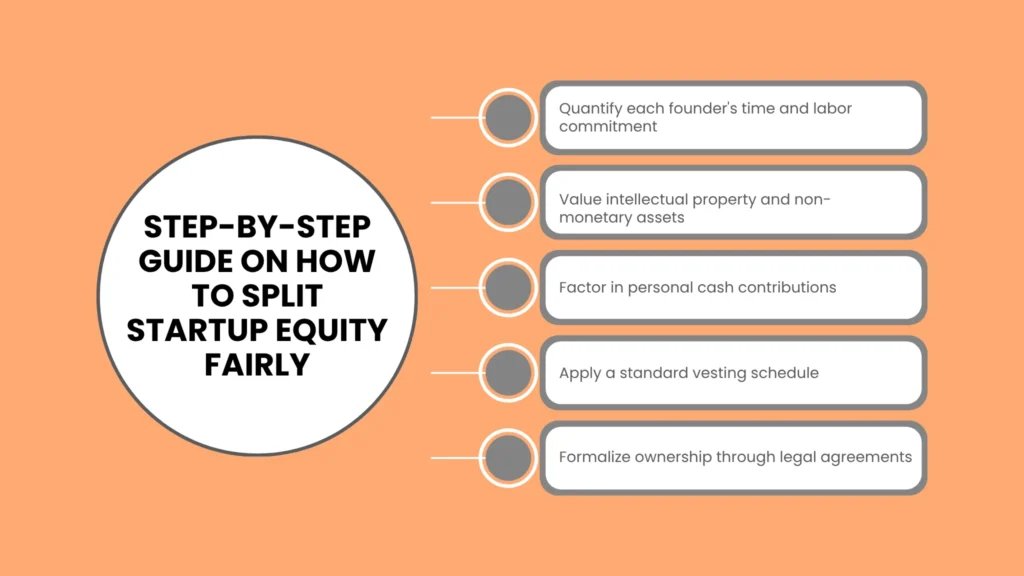
Step 1: Quantify Time and Labor Commitments
Begin by assessing each founder’s actual weekly time allocation. A full-time founder contributing 60 hours per week takes on significantly more risk than a part-time advisor working 10 hours per week while retaining a corporate job. Adjust equity shares to reflect this difference in personal commitment.
Step 2: Assign Value to Non-Monetary Assets
Evaluate tangible and intangible assets brought into the venture. This includes pre-existing software code, domain patents, industry relationships, technical expertise, and business strategy assets.
Step 3: Factor in Personal Cash Investments
Treat early personal cash contributions with high priority. Cash provided during the formation stage carries the highest risk. You can reflect cash investments by granting extra equity percentages or recording the funds as convertible promissory notes that convert during future funding rounds.
Step 4: Implement a Standard Vesting Schedule
Always attach a four-year vesting schedule with a one-year cliff to every founder’s stock grant. This protects all co-founders against early departures and proves long-term commitment to future investors.
Step 5: Draft and Sign Legal Agreements
Formalize your decisions with experienced legal counsel. Sign a comprehensive Founders’ Agreement, issue formal stock subscription agreements, and file your 83(b) tax forms on time.
Common Mistakes to Avoid When Splitting Ownership
Steering clear of frequent equity traps saves your business from costly litigation and investor rejection later on.
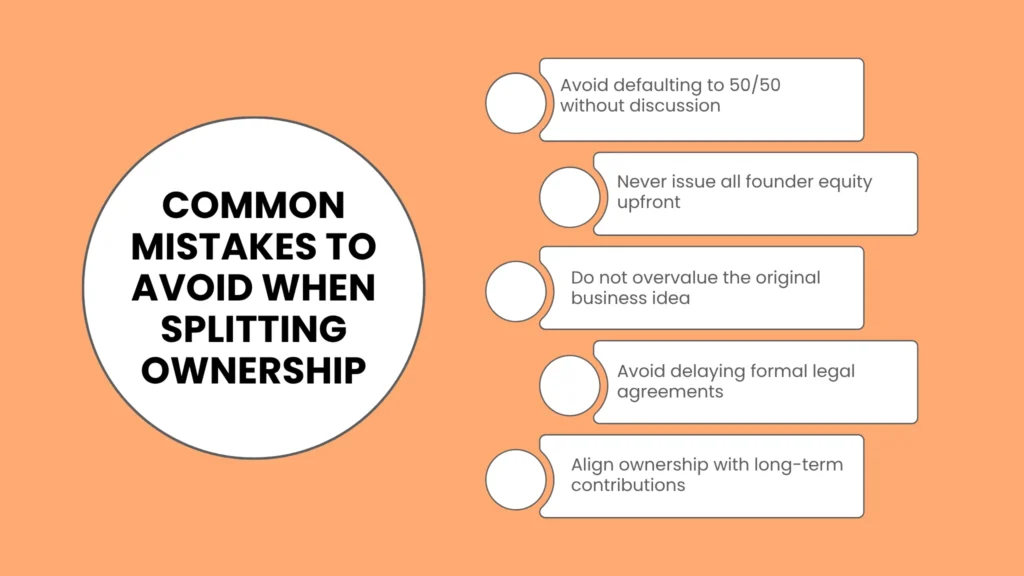
Splitting 50/50 Without Discussion: Defaulting to an even split just to avoid uncomfortable conversations often creates resentment when effort levels diverge over time.
Forgetting Vesting Provisions: Issuing 100% of stock upfront allows an early departing founder to walk away with a massive chunk of your company while leaving remaining founders to build the business.
Overvaluing the Initial Idea: Ideas themselves carry minimal value compared to long-term operational execution. Avoid giving away majority control to someone who merely proposed the concept.
Delaying Legal Formalization: Relying on verbal promises or informal chat records creates severe legal exposure once your startup generates meaningful revenue or receives investor term sheets.
Conclusion
Mastering startup equity splitting requires transparent conversations, objective evaluation of contributions, and proper legal agreements. Whether you adopt an equal allocation, a weighted role-based structure, or a dynamic framework like Slicing Pie, pairing your model with a four-year vesting schedule protects your venture and aligns team incentives.
By establishing a clear, fair ownership structure early, you lay the foundation for steady growth, strong founder relationships, and seamless investor financing. For more expert guides on business formation, legal frameworks, venture funding, and startup growth strategies, explore our founder resources at reliablestartup.
Frequently Asked Questions
What is the most common way to split startup equity between two co-founders?
The most common approach is an equal 50/50 split or a weighted split (such as 60/40 or 55/45) paired with a four-year vesting schedule and a one-year cliff. Weighted splits are typically used when one founder brings significantly more industry experience, initial capital, or full-time commitment.
What happens to equity when a co-founder leaves the company?
If a co-founder leaves, any unvested shares return to the company’s unissued equity pool. Any shares that have already passed their vesting milestones remain the property of the departing founder, unless the original Founders’ Agreement includes a corporate share buyback provision.
Should an idea stage founder get a larger share of startup equity?
An initial idea rarely justifies a majority equity stake on its own. While conceptualizing the business deserves credit, investor experience shows that execution, time commitment, and financial risk drive long-term business value. Most teams assign idea origin a small percentage premium rather than majority control.
How does future venture capital funding impact co-founder equity splits?
When a startup raises external capital from angel investors or venture capital firms, new shares are created. This process dilutes all existing co-founders proportionally. For instance, if an investor purchases 20% of the company, each existing co-founder’s ownership percentage is reduced by 20% of their previous holdings.