How to Start a Mortgage Startup Company With Little Capital
The real estate market is constantly evolving, and with it comes a massive opportunity for innovative entrepreneurs. You do not need millions of dollars in a corporate vault to enter the lending space. If you want to start a mortgage startup company with limited funding, focusing on the brokerage model allows you to launch successfully by matching eager borrowers with wholesale lenders while keeping your overhead incredibly low.
By acting as the bridge between home buyers and major financial institutions, you can build a highly profitable business from home. This comprehensive mortgage startup business guide breaks down the exact steps, regulatory requirements, and financial realities of launching your lean mortgage company.
Is a Mortgage Startup Company Profitable?
Before risking your time and limited capital, you want to know the bottom line: is mortgage startup company profitable as a business model? Based on available market data, financial services consistently rank among the highest-earning sectors.
A startup focusing on mortgage brokerage earns its revenue primarily through origination fees, which are typically estimated at 1% to 2% of the total loan amount. If your company closes $3 million in loan volume in a month, your gross revenue can easily reach $30,000 to $60,000.
Because a lean startup does not fund the loans using its own cash, the mortgage startup company profit margin is exceptionally high. Mature financial services and brokerage platforms often boast net margins north of 25%. When you operate digitally without a physical brick-and-mortar office, your early-stage profit margins can hover even higher during your first few months of operation due to low operational overhead.
Mortgage Startup Company Cost Breakdown
Launching a business on a budget means spending only on absolute necessities. You can skip the expensive commercial lease and corporate design agencies. Instead, your initial capital will go toward licensing, software, and your legal setup.
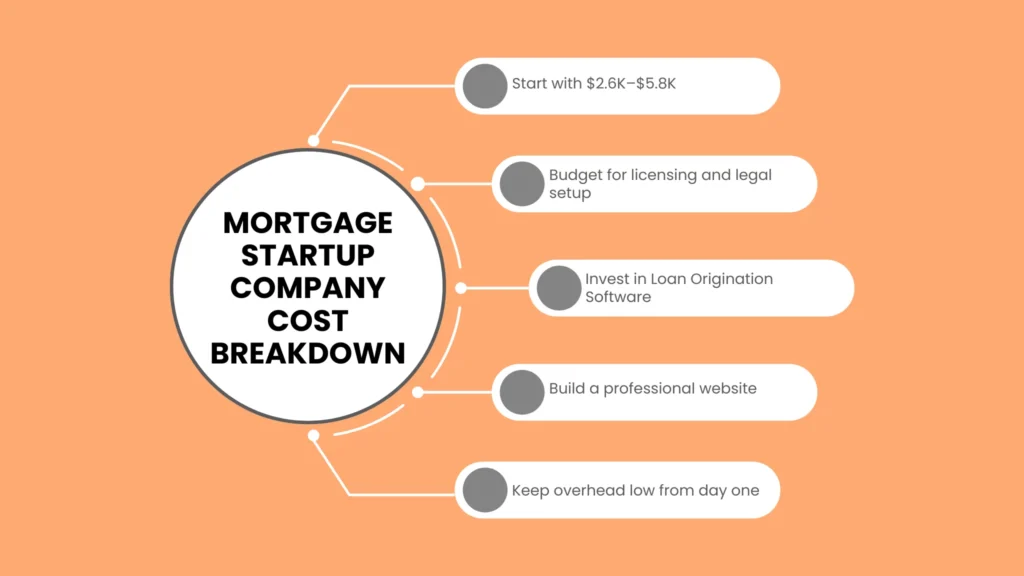
Here is an estimated look at the typical mortgage startup company cost when launching with a bootstrap budget:
| Expense Category | Estimated Cost (Low End) | Purpose |
| Licensing & NMLS Registration | $1,500 – $2,500 | Federal and state regulatory compliance |
| Surety Bond Insurance | $500 – $1,500 (annual premium) | Required bond based on a $10,000 to $50,000 coverage limit |
| LLC Formation & Legal Setup | $300 – $800 | State filing fees and basic legal operating agreements |
| Loan Origination Software (LOS) | $200 – $500 / month | Digital platform to process, track, and submit loans |
| Website & Digital Marketing | $100 – $500 | Professional domain, secure hosting, and basic brand tools |
| Total Estimated Initial Capital | $2,600 – $5,800 | Minimum capital needed to launch legally |
Core Mortgage Startup Company Requirements
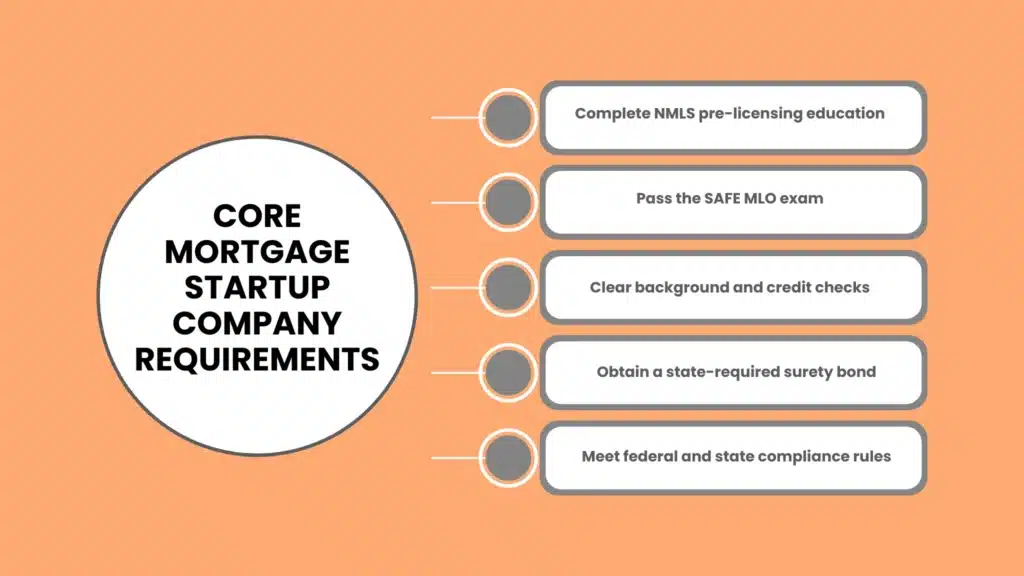
Compliance is non-negotiable in the mortgage industry. To protect consumers, state and federal governments enforce strict mortgage startup company requirements. To launch your business smoothly, you must check off these critical milestones:
1. Education and Testing
You must register with the Nationwide Multistate Licensing System (NMLS) and complete a minimum of 20 hours of pre-licensing education. This training covers federal lending laws, ethics, and consumer protection regulations. After completing the coursework, you must pass the SAFE Mortgage Loan Originator test with a score of 75% or higher.
2. Background Checks and Financial Responsibility
The regulatory authorities will review your personal history. You will need to submit fingerprints for an FBI criminal background check and permit a credit pull. While you do not need perfect credit, a history of gross financial negligence or active tax liens can delay your approval.
3. Securing a Surety Bond
States require mortgage brokerages to carry a surety bond to protect consumers against fraud or operational malpractice. The bond amount varies by state, but you only pay a small annual premium percentage based on your credit score.
Step-by-Step Guide to Launching with Little Capital

1. Form Your Legal Structure
Choose a business entity like a Limited Liability Company (LLC) to separate your personal finances from your startup. Register your entity through your state portal and obtain an Employer Identification Number (EIN) from the IRS for banking purposes.
2. Get Licensed and Bonded
Complete your NMLS education, pass your SAFE exam, and purchase your state-required surety bond. Submit your formal company license application through the NMLS portal alongside your personal background checks.
3. Partner with Wholesale Lenders
Reach out to wholesale mortgage lenders to establish broker agreements. These institutions provide the actual loan products and funding, allowing you to offer competitive conventional, FHA, and VA loans to your clients without risking your own capital.
4. Set Up a Cloud-Based Tech Stack
Avoid expensive corporate enterprise software. Instead, choose modern, cloud-based Loan Origination Software (LOS) and a lightweight Customer Relationship Management (CRM) platform to manage borrower data securely and efficiently from home.
5. Launch Low-Cost Marketing
Do not spend money on expensive paid ads. Focus on organic networking by building strong relationships with local real estate agents, divorce attorneys, and certified public accountants (CPAs) who can refer home buyers directly to you.
Developing Your Wholesale Lender Network
When running a lean mortgage startup, your wholesale lenders act as your product inventory. Without them, you cannot offer loans to potential buyers. Establishing relationships with reputable wholesale lenders is critical for your survival.
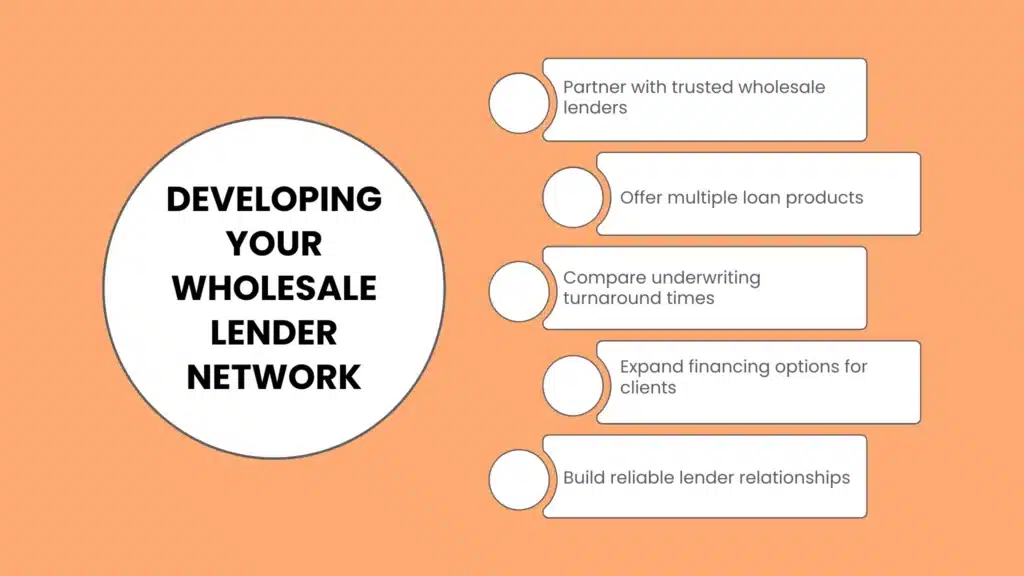
Look for lenders that offer a diverse array of loan products, including standard conventional loans, FHA loans, VA loans, and non-qualified mortgage (Non-QM) loans for self-employed borrowers. Having options allows you to help clients who might get turned away by traditional retail banks.
When initiating these partnerships, review their turnaround times for underwriting. A lender that takes weeks to review a file can damage your reputation with real estate agents. Aim to partner with nimble institutions that leverage automated underwriting systems to deliver fast pre-approvals and rapid conditional loan commitments.
Crafting a Modern Customer Acquisition Plan
To generate consistent loan volume without a massive advertising budget, you must master local relationship marketing. Paid digital ads can easily drain your bank account if you do not have advanced optimization skills. Instead, focus on building an organic ecosystem.
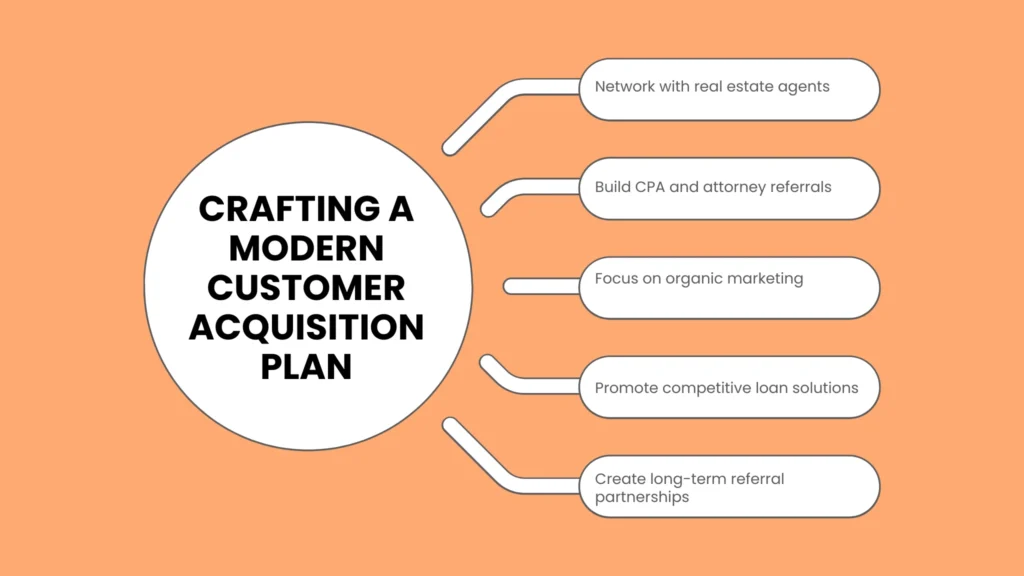
Real estate agents are your primary source of consistent referrals. Attend local open houses, introduce yourself, and explain how you can help their buyers close deals smoothly. Show them how your low overhead allows you to offer highly competitive pricing and low origination fees.
Do not overlook alternate professional networks. Financial advisors, family law attorneys, and accountants regularly work with clients going through major life transitions that require new financing. Position your startup as the go-to solution for complex or quick-turnaround mortgage scenarios.
Essential Technology Platforms for Lean Operations
Operating on a shoestring budget does not mean you should use outdated tools. In fact, relying on modern, secure cloud infrastructure allows a single entrepreneur to match the output of a traditional corporate office.
Your foundational tool will be a high-quality Loan Origination Software platform. This software allows you to securely collect borrower documentation, pull credit reports, and run automated underwriting scenarios. Look for vendors that offer pay-as-you-go pricing models tailored for emerging independent brokerages.
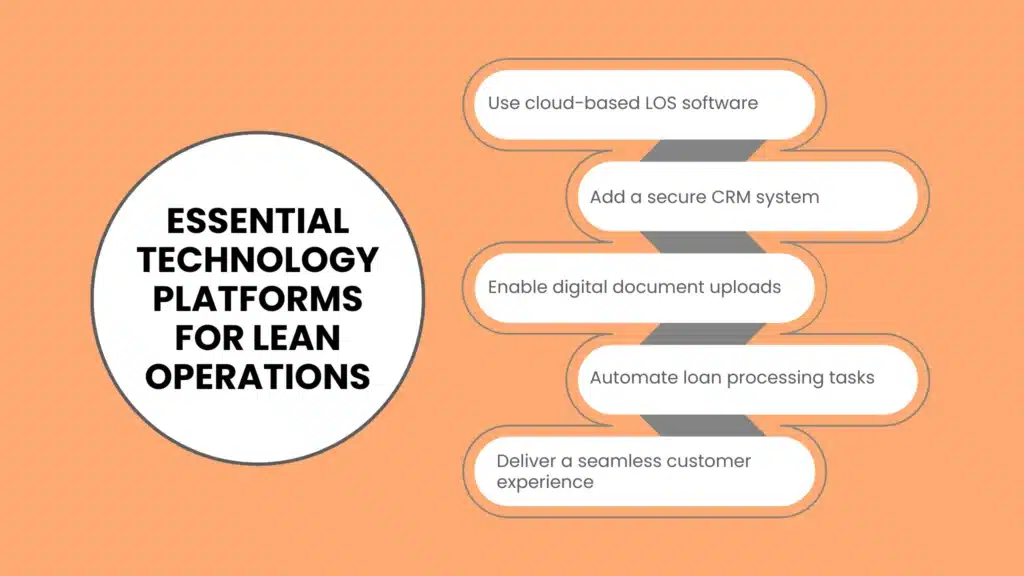
Additionally, invest in a compliant point-of-sale portal where borrowers can upload their financial documents via their mobile devices. Providing a seamless, modern application process builds intense client trust and sets your business apart from older institutions that still rely heavily on paper forms and physical scanners.
Navigating ongoing Regulatory Compliance
A single compliance mistake can destroy a young startup through severe fines or license revocation. You must remain vigilant about state and federal regulations, including the Truth in Lending Act (TILA) and the Real Estate Settlement Procedures Act (RESPA).
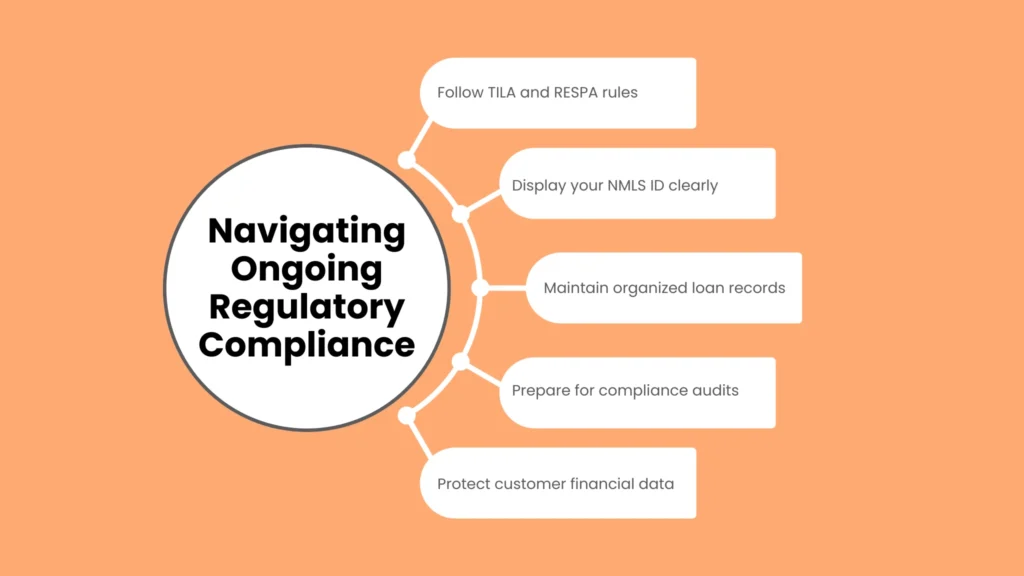
Ensure all advertising copy, social media profiles, and consumer communication display your NMLS unique identifier clearly. Maintain an organized digital archive of all loan files, fee disclosures, and client communications to ensure you are fully prepared for routine state audits.
If managing compliance becomes overwhelming while you focus on sales, look into compliance consulting firms that specialize in independent broker support. Many offer low-cost monthly retainer packages to review your marketing assets and ensure your operations remain completely above board.
Managing Your Personal Runway and Business Cash Flow
Starting a business with little capital means you must closely monitor your personal runway alongside your business accounts. It can take 30 to 60 days for your first set of loans to close and pay out commissions.
Ensure you have enough personal savings to cover your essential living expenses during this initial ramp-up period. Reinvest your first few commission checks directly back into the business to build a strong corporate cash reserve that covers annual software fees and surety bond renewals.
By maintaining strict control over your cash flow and avoiding unnecessary software subscriptions, your company can stay resilient during seasonal real estate slowdowns or unexpected shifts in regional market interest rates.
Growing Your Lean Startup Intelligently
To maintain your high mortgage startup company profit margin, you must resist the urge to scale your fixed costs too quickly. Do not rush out to lease a physical office space or hire full-time support staff during your first year.
Utilize fractional support instead. If processing loan files becomes too time-consuming, hire a contract-based, third-party processing company. These professionals charge a flat fee per closed loan, which is typically passed along as a custom closing cost to the borrower. This structure allows your operational costs to remain variable, meaning you only pay for processing help when you are actively generating revenue.
Focus on digital authority. A sleek, highly functional website that emphasizes security and clear communication will make your lean startup look just as credible as a legacy regional bank.
Conclusion
You do not need a massive bankroll to start a mortgage startup company. By embracing the mortgage broker model, setting up a secure cloud-based office, and focusing heavily on local relationship marketing, you can launch a highly profitable enterprise with minimal upfront capital. Success in this industry comes down to regulatory compliance, operational efficiency, and building deep trust with your clients.
For more actionable strategies on launching modern, low-capital business models and scaling your operations cleanly, explore our latest resources at reliablestartup.
Frequently Asked Questions
Can I start a mortgage startup company completely from home?
Yes, based on available data, most states allow mortgage brokers to operate entirely out of a home office, provided they maintain a secure digital environment for consumer financial data.
How do mortgage brokers get paid?
Mortgage brokers earn commissions either directly from the borrower as an origination fee or from the lender via a yield spread premium after a loan successfully closes.
How long does it take to get a mortgage company license?
The entire process generally takes between 60 to 90 days. This includes completing your 20 hours of pre-licensing education, passing the SAFE exam, and waiting for state regulatory review.
Do I need a degree in finance to start this business?
No, a college degree is not required. You simply need a high school diploma, the mandatory pre-licensing education, and a passing grade on the national SAFE exam.