Mobile EV Charging Business: Is It Worth Starting in 2026?
Electric vehicle adoption is accelerating worldwide, yet public charging infrastructure still struggles to keep up with daily consumer demand. EV drivers routinely encounter out-of-service charging stations, long queues during peak travel hours, or depleted batteries far from any stationary outlet.
Launching a mobile ev charging business in 2026 represents a high-demand, timely, and strategically sound entry point into the green transition. By bringing fast-charging capabilities directly to stranded drivers, corporate parking lots, residential complexes, and commercial fleet yards, mobile operators solve a critical infrastructure bottleneck without waiting for slow utility grid upgrades.
Starting a mobile charging service requires a meaningful upfront investment, but market demand can yield net profit margins between 15% and 30%. Below is a comprehensive look at the setup costs, operational requirements, revenue potential, and long-term viability of starting a mobile charging service in 2026.
What Is a Mobile EV Charging Business?
A mobile ev charging business delivers portable power directly to electric vehicles wherever they are parked. Rather than relying on traditional fixed grid installations that require site control, costly utility trenching, and complex zoning permits, mobile chargers operate out of specialized vans, utility trucks, trailers, or modular skid units.
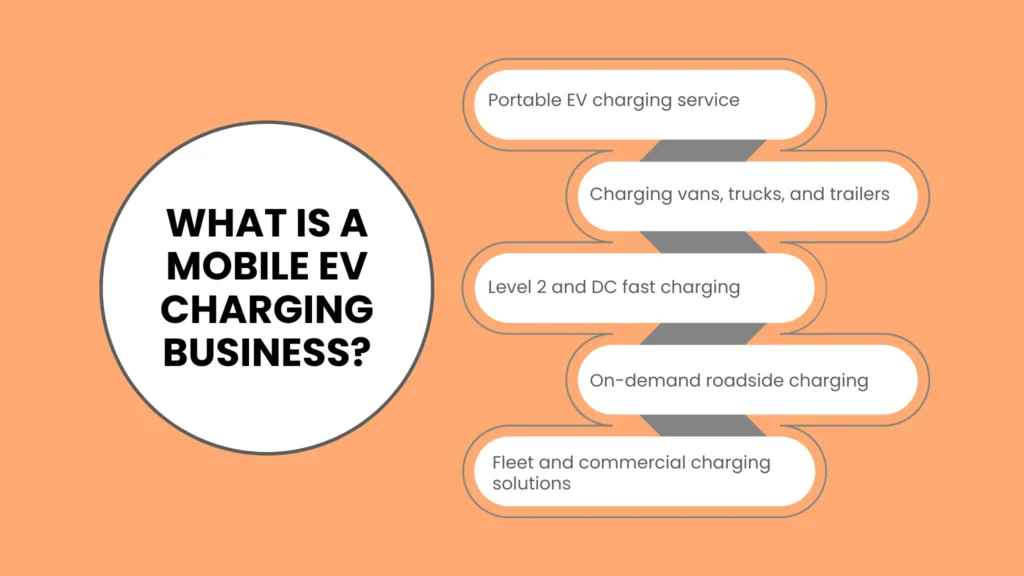
These mobile rigs house industrial-grade lithium energy storage systems paired with Level 2 or DC fast-charging outputs. When a driver or fleet manager requests power via a dedicated app or dispatch call, a technician travels to the vehicle, plugs in the charger, and delivers sufficient kilowatt-hours to get the driver to their destination or power an entire commercial fleet overnight.
Is Mobile EV Charging Business Profitable in 2026?
Analyzing overall ev charging business profitability shows strong upside for mobile operators. So, is mobile ev charging business profitable in today’s market? The short answer is yes: mobile power delivery can yield attractive, recurring cash flow when targeted at high-margin commercial contracts and emergency calls.
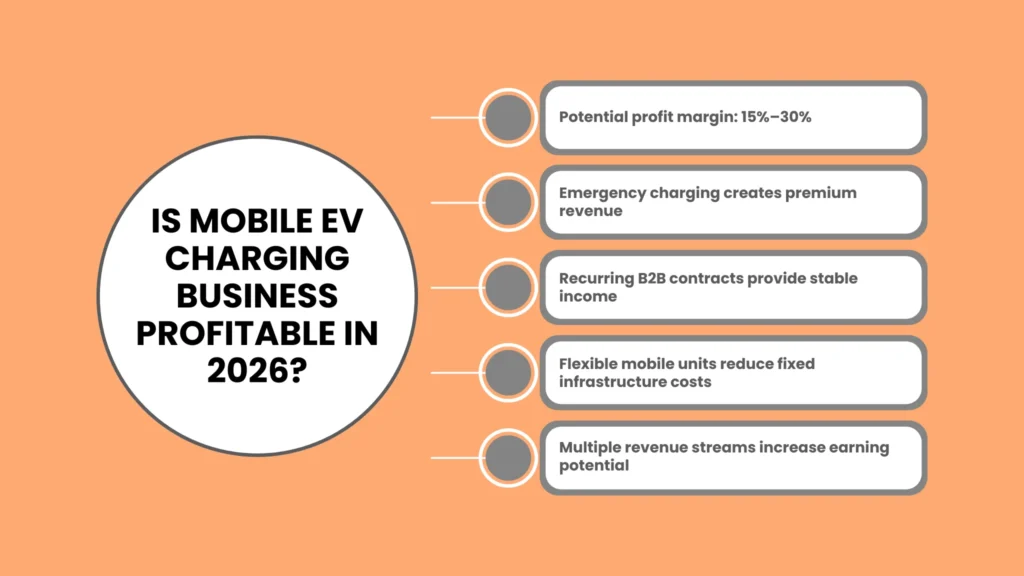
Unlike stationary charging plaza operators who face heavy real estate leases, high property taxes, and massive utility demand charges, mobile operators deploy flexible assets. If a particular neighborhood or corridor lacks demand, you can immediately shift your mobile units to high-density areas, corporate hubs, or major event venues.
An established operator can maintain a mobile ev charging business profit margin between 15% and 30% after accounting for technician labor, wholesale energy costs, vehicle upkeep, platform fees, and commercial insurance.
Core Revenue Streams
On-Demand Roadside Emergency Charging: Premium flat-rate emergency boosts provided to stranded motorists on highways, rural routes, or urban areas.
Commercial Fleet Charging-as-a-Service (CaaS): Scheduled off-duty or overnight power delivery for delivery vans, rideshare fleets, and municipal vehicles.
Corporate & Residential Subscriptions: Monthly retainer models with commercial property managers and office parks offering mobile charging as an amenity.
Event & Industrial Site Rentals: Daily flat-rate rentals for temporary outdoor gatherings, remote construction sites, and production locations without grid access.
Mobile EV Charging Business Cost Breakdown
Understanding your total mobile ev charging business cost is vital before purchasing equipment or securing loans. Startup expenses vary based on vehicle selection, onboard battery pack capacity, and charger speed.
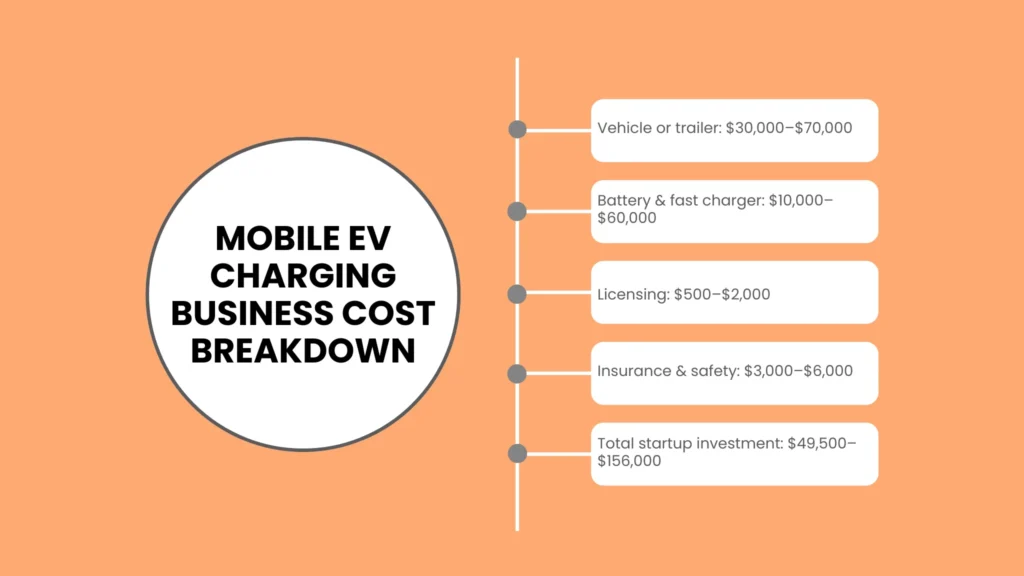
Setting up a single fully operational mobile charging van requires between $49,500 and $156,000. Larger industrial rigs featuring high-capacity DC fast-charging systems can cost up to $190,000 per unit.
Estimated Startup Capital Breakdown
| Expense Category | Estimated Cost Range | Key Details & Components |
| Service Vehicle or Utility Trailer | $30,000 – $70,000 | Heavy-duty cargo van, flatbed truck, or enclosed trailer. |
| Portable Battery Pack & Fast Charger | $10,000 – $60,000 | 30kW to 100kWh+ lithium energy storage system with DC output. |
| Business Registration & Licensing | $500 – $2,000 | Local business permits, environmental approvals, and transport filings. |
| Fleet Management & Billing Software | $1,000 – $3,000 | Dispatch routing, OCPP-compliant backend, and payment integration. |
| Commercial Insurance & Safety Gear | $3,000 – $6,000 | Auto liability, electrical hazard coverage, and technician protection gear. |
| Initial Working Capital | $5,000 – $15,000 | Wholesale energy, vehicle fuel/charging, and local marketing campaigns. |
| Total Estimated Initial Investment | $49,500 – $156,000 | Total capital required per operational mobile unit. |
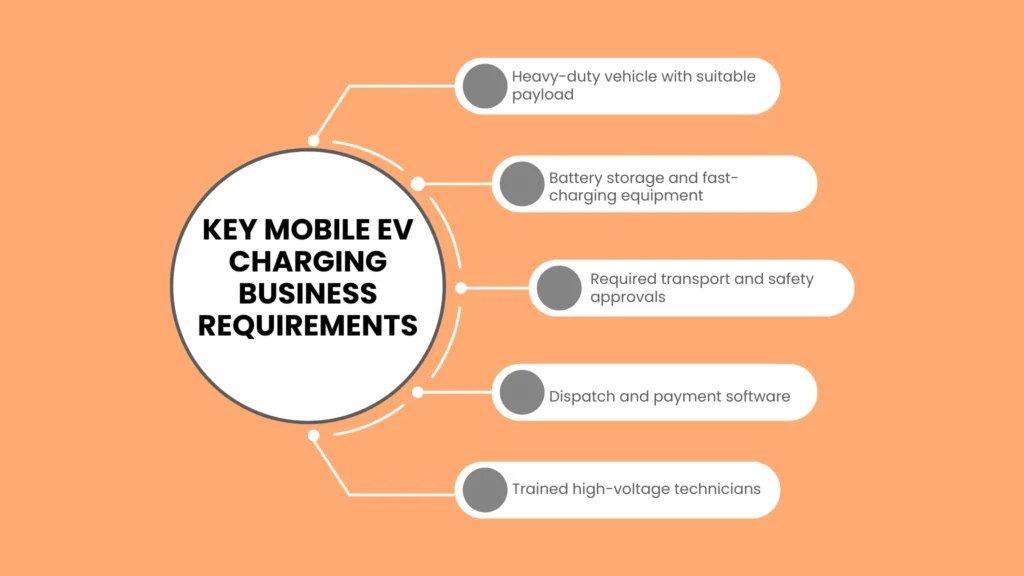
Key Mobile EV Charging Business Requirements
Launching and scaling a compliant mobile service requires meeting distinct technical, operational, and safety standards. Satisfying these core mobile ev charging business requirements protects your company from regulatory delays and operational safety issues.
1. Hardware Selection and Vehicle Payload
Mobile battery systems are heavy. A high-capacity lithium battery bank can weigh hundreds of pounds, requiring a vehicle chassis rated for heavy payloads. The rig must house appropriate mounting systems, cooling apparatus, and high-voltage DC fast-charging cables (30kW to 80kW+) capable of adding 15 to 30 miles of range in under 20 minutes.
2. Regulatory Approvals and Safety Standards
Transporting large energy storage systems on public roads involves regulatory oversight.
Hazardous material permits or localized battery transport notifications depending on state and municipal guidelines.
Department of Transportation (DOT) safety compliance for commercial vehicle fleets.
Specialized high-voltage safety certifications for field technicians handling live electrical gear.
3. Software Management and Dispatch Stack
Efficient dispatch technology keeps your vehicle routing costs low. Operators need modern fleet dispatching software to bundle service calls geographically, alongside an Open Charge Point Protocol (OCPP) payment platform to bill clients seamlessly per kilowatt-hour or session.
4. Skilled Operations Personnel
Your field technicians act as the face of your business. They must be trained in electrical safety protocols, emergency roadside procedures, customer service, and vehicle maintenance to ensure smooth daily operations.
Evaluating Market Demand in 2026
The commercial demand for mobile power solutions is driven by three main industry factors:
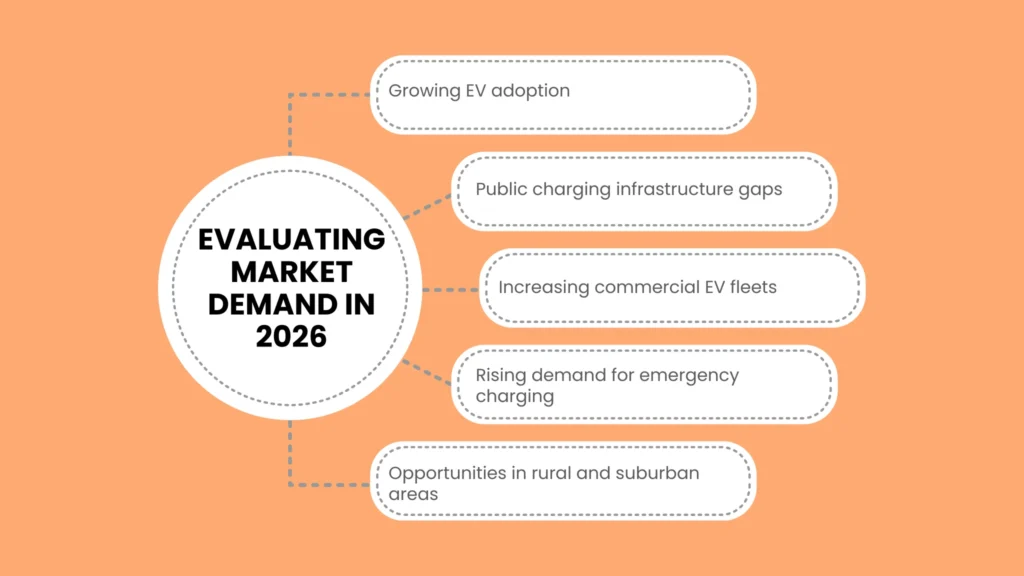
Fixed public charging plazas still experience downtime, broken connectors, and severe grid congestion during peak hours. At the same time, commercial fleets adopting electric delivery vans face long delays waiting for utility companies to install permanent fast-charging transformer upgrades at their depots. Mobile charging bridges this gap, allowing fleet managers to run normal operational schedules today.
Major Challenges and Strategic Solutions
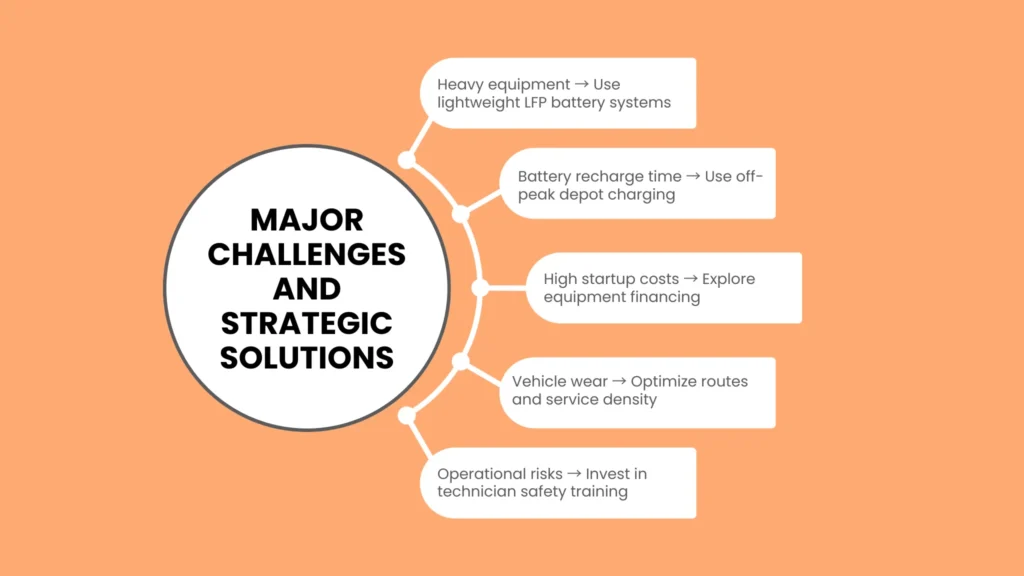
While market opportunities are expanding, running a mobile charging business comes with specific operational hurdles:
Challenge 1: Heavy Equipment and Payload Limits
High-capacity energy storage systems add substantial weight to your service vehicle, increasing tire wear and fuel consumption.
Solution: Use modular, lightweight lithium iron phosphate (LFP) battery systems designed for commercial transport to maximize energy density per pound.
Challenge 2: Recharging Mobile Battery Storage Rigs
When your mobile battery bank empties after servicing multiple vehicles, it needs quick recharging to get back on the road.
Solution: Establish industrial depot charging access or secure discounted off-peak commercial charging tariffs to recharge your mobile units at low wholesale rates overnight.
Challenge 3: Upfront Capital Expenditure
Buying utility vehicles, high-powered battery packs, and commercial insurance requires significant capital upfront.
Solution: Take advantage of clean energy equipment financing, commercial EV incentives, and government clean-tech business grants to lower direct startup costs.
Final Verdict: Is It Worth Starting in 2026?
Starting a mobile ev charging business in 2026 is a compelling operational move for forward-thinking entrepreneurs. The combination of rapid EV adoption, ongoing public charging station downtime, and expanding commercial electric fleets creates strong, continuous demand for portable power.
Long-term success relies on securing recurring B2B fleet contracts, picking reliable hardware, and keeping a close eye on route logistics and battery charging costs. By pairing emergency roadside calls with fixed subscription contracts, mobile operators can build a stable, high-margin green enterprise. For startup business plans, financial planning tools, and detailed operational growth models, explore more insights at reliablestartup.com.
Frequently Asked Questions
Is mobile ev charging business profitable in suburban or rural areas?
Yes, especially when you partner with roadside assistance organizations, insurance providers, towing fleets, and regional municipalities. Rural corridors often lack fixed DC fast chargers, making stranded EV drivers willing to pay a premium for mobile emergency power.
How long does it take for a mobile EV charging unit to break even?
Based on available industry data, most mobile charging operators reach full capital payback within 2 to 4 years. Payback periods depend on your daily asset utilization rate, local electricity costs, and proportion of high-margin corporate B2B contracts.
How fast can a mobile charger power an electric vehicle?
Modern mobile DC fast-charging units supply output power ranging from 30kW to 80kW+. This rate can add 15 to 30 miles of driving range in about 15 to 20 minutes, giving drivers enough power to reach their destination or the nearest stationary charger.
Do I need a specialized commercial driver’s license to operate?
Licensing requirements depend on your service vehicle’s Gross Vehicle Weight Rating (GVWR) and the total size of your onboard battery storage system. Standard cargo vans carrying compact mobile energy storage units generally require a standard driver’s license, though commercial endorsements add long-term operational flexibility.