
Best Pens: Top Picks for Writing, Drawing, and More
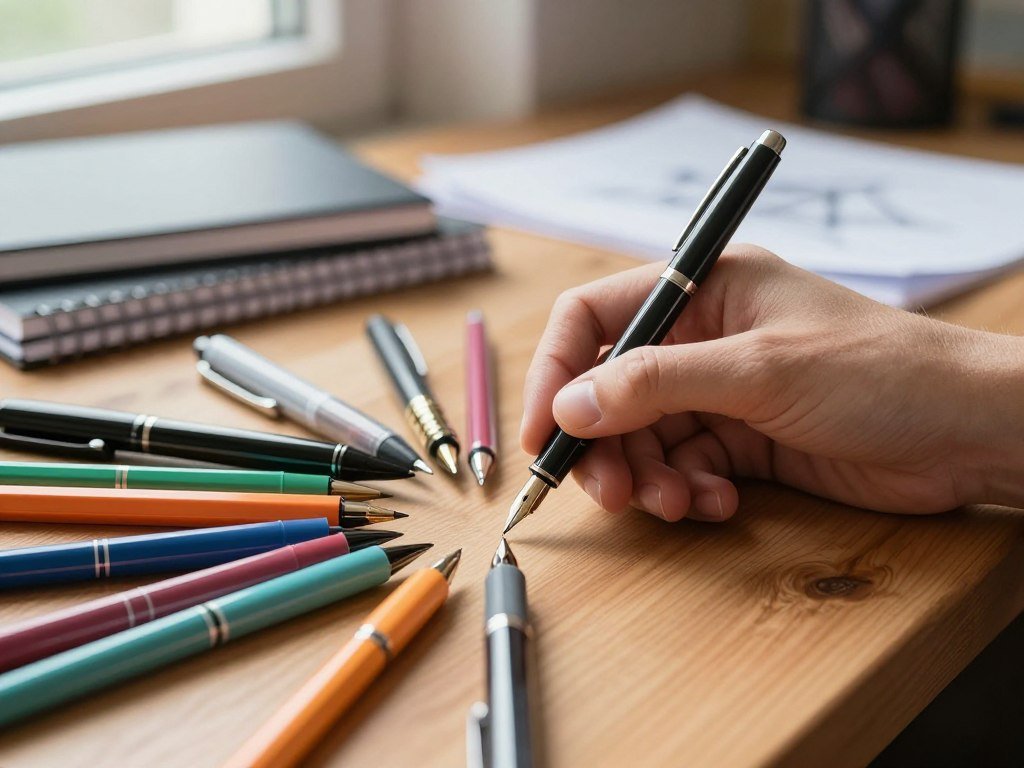
A pen that feels effortless for quick notes may be a poor fit for detailed drawing or long journaling sessions. Your choice affects comfort, line quality, upkeep, and how easily you can carry it. Cost matters, but it is only one part of the decision.
Hybrid ink is ballpoint-style ink formulated to write more smoothly and darkly than traditional oil-based ballpoint ink while still drying quickly. The term helps explain why some everyday pens feel different from older ballpoints, even when both use a rolling tip.
Use these recommendations as a shortlist for school, work, lists, drawing, journaling, or a gift. A few minutes holding a pen can tell you more than its finish or packaging. When possible, test it on the kind of paper you use most.
Comfort, line behavior, maintenance, and carry style all shape how useful a pen feels over time. Tip size and grip can change the experience, too. Start by matching the pen to the job you do most often, then narrow the choice by comfort and ink behavior.
Key Takeaways
- For routine notes, try a gel pen or hybrid ballpoint.
- Choose a fountain pen if you want refillable ink and a slower writing routine.
- Use a fineliner for controlled drawing and clear line work.
- Check grip comfort and tip size before choosing a pen for long sessions.
- Confirm the refill or filling system fits your habits before buying.
Which Best Pens Fit Different Writing Tasks?
For most people taking routine notes, a gel pen or hybrid ballpoint is the easiest place to start. Reliable daily pens like the Pilot G2, Pentel EnerGel, and Uni-ball Jetstream suit many common writing jobs.
Students usually benefit more from a dependable, replaceable pen than a showpiece that may get lost. The best writing pen for students is one that writes clearly, feels good, and is easy to replace at a reasonable price.

Fountain pens, gel pens, rollerballs, and ballpoints each use a different pen type and filling system. Your paper, tip size, and grip can change how each category feels, so a model that works for one person may not suit another.
Choose the pen type for the task, then check its maintenance and paper needs before you buy.
Gel ink gives you strong color and a smooth line for notes. A traditional ballpoint can be a practical choice when you need a low-fuss pen across varied surfaces.
For classes, notes and everyday lists
Many students keep a gel pen for regular notes and a ballpoint for forms or rough paper. Pilot G2 and Pentel EnerGel are familiar gel choices, while Uni-ball Jetstream uses hybrid ink.
Look for a price that makes replacing a lost pen painless. A pen with easy-to-find refills can also save you from changing your grip or writing feel every few weeks.
For creative work and deliberate writing
A fountain pen suits people who want refillable ink and a more deliberate writing routine. A fineliner is a better category for controlled drawing, where steady line weight matters more than fast note-taking.
Rollerballs make fluid lines, while gel pens offer many retractable everyday options. If you write on coated or glossy surfaces, test the ink on that paper before relying on it.
| Pen type | Ink behavior | Maintenance | Best-fit task | Practical tradeoff |
|---|---|---|---|---|
| Gel pen | Strong color, smooth line | Replace refill or pen | Notes and lists | Drying time varies |
| Ballpoint | Oil-based, often quick drying | Low; replace refill | Varied surfaces | Can feel less fluid |
| Rollerball | Water-based, fluid line | Watch paper and ink flow | Letters and journaling | May feather on absorbent paper |
| Fountain pen | Bottled or cartridge ink | Refill and clean as needed | Refillable writing routine | More upkeep than a ballpoint |
Which Gel Pens Suit Fast Notes and Color?
For a fine, dependable gel line, start with the Uni-ball Signo DX in 0.38 mm. That tip size balances clear detail with everyday writing comfort for many users.
Choose Pentel EnerGel 0.7 mm for smooth, vivid lines, or Sarasa Mark-On when highlighter smudging is your main concern. In one personal comparison, Mark-On smudged least right after writing and was the only tested pen without highlighter smudge after five seconds.

That test does not guarantee the same result with every paper, highlighter, or hand. The Uni-ball One 0.38 mm is another strong black-ink option, though its color refills may not suit people who want consistent color choices.
Fine tips and crisp lines
Pick a tip size based on the line you want, not just the number printed on the barrel. Fine tips can fit more writing into a small planner, while broader tips make notes look darker and fuller.
- Uni-ball Signo DX 0.38 mm for consistent fine writing.
- Zebra Sarasa Clip 0.4 mm for a sharp line.
- Pilot Juice Up 0.4 mm for a needle tip.
- Pilot FriXion Synergy 0.4 mm for erasable writing.
The Signo DX also comes in 0.28 mm and 0.5 mm. Zebra Sarasa Clip offers 0.3 mm and 0.4 mm options, while Pentel EnerGel’s 0.7 mm tip is a common shelf size.
Smudge resistance and erasable ink
For an erasable gel pen, Pilot FriXion Synergy lets you revise notes without crossing them out. Erasing changes the page, so it may not suit records that need to stay permanent.
Pentel Euro Needle and Clena offer 0.35 mm and 0.4 mm options, with fewer color choices. Sarasa Mark-On’s five-second highlighter test is a useful clue, but your paper can change the result.
If you highlight notes, let the ink dry for a few seconds and test the exact paper and highlighter combination first.
Which Ballpoint Pens Work Best for Daily Writing?
For smooth everyday ballpoint writing, try a Uni-ball Jetstream with a 0.7 mm tip. Its hybrid ink offers a darker, smoother feel than traditional oil-based ballpoint ink while keeping quick-drying behavior.
A traditional ballpoint such as the Bic Cristal is a simple, versatile choice for varied surfaces. Oil-based ink may feel less fluid than gel or rollerball ink, but it can work where wetter ink struggles.

The Bic Cristal is a low-fuss staple, while the Lamy Safari ballpoint has a triangular grip. The Ohto Horizon is a needlepoint ballpoint for a fine line.
Bic says the Cristal can write 2 km of lines, and more than 100 billion have sold since 1950. Those figures make it a familiar pen, though your hand and paper still shape the writing experience.
The Pilot Acro is another hybrid option. A Parker Jotter offers a refillable everyday body, which can be useful if you want to keep one familiar pen in rotation.
Ballpoint ink is not a cure for every writing problem. A pen can still skip or blot, and a poor fit between tip, paper, and grip can make your hand tire.
Try a few strokes before making a ballpoint your regular work pen. A darker line does not always mean less effort, especially if you press hard to keep the ink flowing.
The best ballpoint depends on the job: choose the Jetstream for smoother daily writing, or the Cristal for simple use across different surfaces.
Keep a compatible spare refill on hand if a familiar pen is part of your daily routine.
When Does a Rollerball Make Sense?
Pick a rollerball when you want a fluid line and do not mind using a pen that can feel wetter on the page. Its water-based ink often feels closer to a fountain pen than a traditional ballpoint.
A rollerball works well for letters and longer notes when your paper can handle a wetter line. Thin or absorbent paper may show ink through or let it feather beyond the line.

Fluid lines for letters and longer notes
A fluid rollerball can make letters and journal entries feel less like filling out a form. Gel pens may suit you better if you want a broad range of retractable options for everyday use.
Water-based ink can spread more on some paper, so the page matters as much as the pen. If you tend to write on thin notebook sheets, a drier ink may be easier to manage.
The Waterman Hemisphere is a refined rollerball option. The Baron Fig Squire is another rollerball format, with a different body design for people who prefer a less familiar shape.
Fine rollerball lines for precise writing
The Pilot Precise V5 is a fine-line rollerball offered in multiple ink colors and tip sizes. Its ink is described as quick-drying, and its narrow line can suit small handwriting or detailed notes.
A fine tip can feel less forgiving if you write with a heavy hand. Try a few lines at your usual pace instead of judging it by one careful stroke.
Waterman Hemisphere and Baron Fig Squire are options for readers who want a rollerball body with a more considered look. Match the body to your hand, and the ink to your paper.
If your paper is thin, test for show-through and feathering before choosing a wet-writing refill.
Best Pens for Fountain Pen Beginners
Choose the Platinum Preppy if your main goal is to try fountain-pen writing with a $7 pen. It offers a low-cost entry without asking you to start with bottled ink.
The Pilot Kakuno costs $5 more than the Preppy and gives beginners a slightly more substantial, playful option. The TWSBI ECO suits a new user who is ready for bottled ink and piston filling.
Fountain pens can use cartridges, converters, or built-in filling systems. The table compares four approachable models by filling approach and the kind of beginner they may suit.
| Model | Filling approach | Key design feature | Best-fit beginner |
|---|---|---|---|
| Platinum Preppy | Cartridge, converter, or eyedropper | $7 entry price | First fountain-pen trial |
| Pilot Kakuno | Cartridge or converter | $5 more than Preppy | New user wanting a playful design |
| Lamy Safari | Proprietary cartridge or converter | Interchangeable nibs, triangular grip | Beginner who wants a shaped grip |
| TWSBI ECO | Piston filler | $36.99 listed price | Beginner ready for bottled ink |
A low-cost first fountain pen
The Preppy can take a cartridge or converter, and it can also be converted for eyedropper use. Those options let you try different filling habits without choosing a built-in piston system first.
The Pilot Kakuno is a simple next step if you want a slightly more substantial feel. A Lamy Safari has interchangeable nibs and a triangular grip, which can help guide finger placement.
The Pilot Explorer is another option: it is full-size and lightweight, with a listed price of $25. The Kaweco Perkeo is listed at $17 for a reader who wants another cartridge-compatible starting point.
When to start with a piston filler
The TWSBI ECO uses a piston-filling system, which draws bottled ink into the pen. Its listed price is $36.99, making it a clear step up from the $7 Preppy.
- Platinum Preppy for the lowest-cost first try.
- Pilot Kakuno for a playful cartridge pen.
- Lamy Safari for interchangeable nibs and a shaped grip.
- TWSBI ECO for a built-in piston system and bottled ink.
Kaweco Sport comes in Classic, Skyline, Collection, AL-Sport, AC-Sport, Art Sport, and piston-filler versions. Check the exact version, since the name covers several formats.
If you are unsure about bottled ink, begin with a cartridge-compatible model rather than buying a piston filler by default.
Which Fountain Pens Are Worth Considering Under $100?
For a sub-$100 pen with interchangeable nibs, the TWSBI 580 is a strong place to start. Its replaceable nib units let you change the writing feel without buying another pen body.
The Opus 88 Koloro and Picnic models offer large-capacity Japanese-style eyedropper systems under $100. The TWSBI Diamond Mini suits someone who wants a compact pen that posts to full writing length.
Piston fillers and compact daily pens
Piston fillers draw bottled ink into a built-in reservoir, which can be appealing if you want to choose from bottled colors. The TWSBI 580 is one option, while the Diamond Mini gives you a compact body that posts for daily writing.
- TWSBI 580 for interchangeable nibs and piston filling.
- TWSBI Diamond Mini for a compact body that posts to full length.
- Opus 88 Koloro or Picnic for a large-capacity eyedropper system.
- TWSBI Vac Mini for pocket carry with a shutoff valve.
The Lamy Studio is another model to compare if you want a different body style. Lamy Safari and AL-Star share performance, but use different barrel materials.
Eyedropper and vacuum-fill options
The Opus 88 Koloro and Picnic use a Japanese-style eyedropper system with a large ink supply. The TWSBI Vac Mini has a shutoff valve that helps limit ink flow during pocket carry.
The TWSBI Vac700R uses a vacuum filling system. This filling approach may suit someone who wants bottled ink and a different mechanism from a piston filler.
The Safari and AL-Star use proprietary cartridges, and both can take a converter for bottled ink. That gives you a cartridge option for travel and bottled ink at home.
Each filling system solves a different routine. A large ink supply reduces how often you refill, while cartridges can be easier to carry and swap.
Check the filling method before buying, because cartridge convenience and bottled-ink capacity solve different needs.
Which Fountain Pens Earn a Place Above $100?
For a gold-nib pen around $200, the Pilot Custom 74 is a clear starting point. Its 14K nib pairs a familiar writing feel with a classic fountain-pen shape.
Choose by nib options, filling system, hand fit, and materials, not by nib material alone. A steel nib can still suit you better than gold if the grip and balance feel right.
Models around $100 to $200
The Pelikan M200 offers piston filling and a steel nib. The Leonardo Momento Zero is listed at $199 for many models, with a range of finishes to compare.
The Pilot Vanishing Point has an 18K nib and a retractable design. That format lets you use a fountain pen without a separate cap, though the clip position can affect how it fits your fingers.
Benu Euphoria and Talisman models offer another direction for a reader who values a bold look. Their role in a shortlist depends on whether distinctive materials matter more than a restrained design.
Models around $200 to $500
The Pilot Custom Heritage 912 offers 15 different 14K nib options. That broad choice can help writers who want a line beyond a standard fine or medium.
The Pilot Custom 823 is listed at $380 and uses vacuum filling with a large ink capacity. Sailor Pro Gear and 1911 Large models, along with the Platinum 3776 Century, are also worth comparing.
The Lamy 2000 comes in Makrolon and stainless steel. Its clean shape and fountain-pen format make it a strong option for regular writing, while personal fit still matters.
Try holding a pen with your usual writing grip. Nib material can shape a pen’s appeal, but a poor clip position or grip can outweigh the label.
Try the clip position and grip in person before choosing a retractable fountain pen.
What Pens Work Best for Drawing and Fine Lines?
For controlled line art, start with a fineliner whose tip size matches the line weight you want. A steady, narrow tip can make outlines, labels, and small details easier to control.
Use light strokes because plastic tips can wear or deform under repeated pressure. Sakura Pigma Micron is a widely available starting choice, while Kuretake Zig Cartoonist Mangaka stands out when tip firmness matters.
Fineliners for controlled line work
These pens give you a fixed tip size, which can help keep a drawing’s lines consistent. Compare the range of tip sizes and colors before choosing a set for a project.
- Sakura Pigma Micron for a broad, widely available choice.
- Kuretake Zig Cartoonist Mangaka for a firm, durable tip.
- Copic Multiliner for a range of sizes.
- Staedtler Pigment Liner for another fineliner option.
- Uni Pin for a choice that includes oil-based versions.
The Kuretake Zig Cartoonist Mangaka tip is noted for firmness and durability. That feel may help when you want a tip that resists bending during careful line work.
Choosing a tip that holds its shape
Tip size should match the marks you plan to make. A broad line may work for bold outlines, while a fine point can fit small details without crowding them.
Plastic tips may wear or deform if you press hard or drag them repeatedly across rough paper. Light strokes can help the tip keep its shape longer.
Price can matter if you draw often or need several sizes. Check the cost of individual pens as well as sets, especially when you only need one line width.
Do not assume every fineliner is archival or permanent. Ink behavior depends on the specific ink and surface, so test a mark before using it on a finished piece.
Test the pen on the actual paper before committing to a finished drawing.
Which Professional Pens Balance Polish and Practicality?
For a polished professional rollerball, choose the Waterman Hemisphere; for a refillable everyday ballpoint, choose the Uni-Ball Jetstream Prime. Those two picks suit different work styles without making one pen right for every desk.
The best professional pen depends on your work setting, preferred ink, and hand fit. A familiar gel pen may be practical in a busy office, while a fountain pen may suit slower, more personal writing.
The first five ranks offer distinct choices in rollerball, ballpoint, gel, and fountain-pen formats. Use the list as a starting point, not a measure of the greatest pen of all time.
| Rank | Model | Pen type | Practical use |
|---|---|---|---|
| 1 | Waterman Hemisphere Rollerball | Rollerball | Polished fluid writing |
| 2 | Uni-Ball Jetstream Prime | Ballpoint | Refillable daily writing |
| 3 | Parker Jotter Gel Ink Pen | Gel | Familiar everyday format |
| 4 | Pilot Vanishing Point Fountain Pen | Fountain pen | Retractable fountain-pen use |
| 5 | Ohto Horizon Gel Ink Ballpoint | Gel ink ballpoint | Fine everyday lines |
Top 10 pens in the world for professional use
Ranks 6 through 10 add familiar names and varied pen types. The full top 10 pens list is a useful way to compare working styles, not a rule for every professional.
- Montblanc Meisterstück Gold-Plated Classique Rollerball, rank 6.
- Pilot Metropolitan Rollerball, rank 7.
- Waterman Expert Ballpoint, rank 8.
- Parker Duofold Ballpoint, rank 9.
- Cross Townsend Ballpoint, rank 10.
Other professional picks across ink types
Ranks 11 through 25 include fountain pens, ballpoints, rollerballs, gel pens, and felt-tip options. The Lamy 2000 is another strong all-purpose fountain-pen contender, not a universal winner.
- 11. TWSBI ECO Fountain Pen; 12. Baron Fig Squire Rollerball; 13. Kaweco Sport Classic Fountain Pen.
- 14. Parker IM Rollerball; 15. Dayspring Pens Monroe Set; 16. Fisher Space AG7 Original Astronaut Space Pen.
- 17. Ohto Dude Ceramic Ballpoint; 18. Dayspring Pens Abingdon Rollerball; 19. Cross Classic Century Ballpoint.
- 20. Bic Cristal; 21. Cross Calais Ballpoint; 22. Platinum Preppy Fountain Pen.
- 23. Pilot Precise V5; 24. Uni-Ball Signo 207 Premier Gel Pen; 25. Prismacolor Premier Felt-Tip Pen.
The Cross Classic Century line has been in production since the 1930s and comes as a ballpoint, rollerball, and fountain pen. Match the pen’s refill and writing feel to the work you actually do, not just the formality of the desk.
Which Luxury Pens Make Thoughtful Gifts?
For a colleague or friend, a typical luxury-pen gift budget is $75-$200. For a milestone, the typical range is $200-$500, while executive or heirloom gifts often fall between $500 and $2,000 or more.
Choose a gift around the recipient’s writing habits, not the label alone. Their preferred ink type, refill needs, and comfort with a fountain pen can matter more than trim or brand prestige.
| Recipient or occasion | Typical budget | Practical gift consideration |
|---|---|---|
| Colleague or friend | $75-$200 | Pick an easy everyday format |
| Graduation or retirement | $200-$500 | Consider a lasting keepsake |
| Executive or heirloom gift | $500-$2,000+ | Match the recipient’s preferred pen type |
Gift budgets by relationship and occasion
A useful budget depends on the relationship and occasion. A colleague may appreciate a practical daily pen, while a retirement or graduation gift can carry more personal meaning.
Personalization can make a pen feel chosen for one person, but it should not outweigh fit and refill access. A pen that stays in a drawer is less useful than one the recipient enjoys using.
Executive designs with distinct finishes
These five designs bring different pen types and materials to a gift shortlist. Choose the format and finish that suit the person, rather than treating luxury as a single style.
- Cross Bailey Medalist, a rollerball with polished chrome and 23ct gold-plated appointments.
- Parker Sonnet Black Gold Trim, a fountain pen with black lacquer and gold-plated accents.
- Waterman Expert Black Lacquer Gold Trim, a rollerball.
- Caran d’Ache Ecridor Cubrik, a palladium-finish fountain pen with a hexagonal body.
- Faber-Castell Ambition Pearwood, with a pearwood barrel and polished metal accents.
The Cross Bailey Medalist pairs bright chrome with gold-plated details. The Parker Sonnet adds black lacquer and gold-plated accents in a fountain-pen format.
Confirm the recipient’s preferred writing mode before choosing a fountain pen, rollerball, or ballpoint as a keepsake.
Which Pens Feel Comfortable During Long Writing Sessions?
If your hand tires during long notes, begin by testing a wider, secure grip rather than choosing by appearance. A relaxed hold can reduce the urge to squeeze as you write.
Grip thickness, balance, tip pressure, and posture all affect comfort. The Uni-ball Signo 207 Premier is a gel option with a squishy grip, lightweight body, and low center of gravity.
The Pilot Dr. Grip is a ballpoint option with a double-layer grip and tip-weighted design. Some writers like the added support, while others prefer a slimmer body.
Try a pen with your normal hand position, not a tight grip chosen to control a slippery barrel. Small changes in posture and pressure can affect how long your hand stays comfortable.
Write a full page using your natural grip. If you squeeze harder because a pen feels too thin or slippery, try another grip shape instead.
Pilot Precise V5 comes in multiple colors and tip sizes, with quick-drying ink. A fine tip may feel scratchier to some writers, especially if they press firmly.
Long writing sessions can reveal discomfort that a few test strokes miss. Use familiar paper and your usual writing pace when judging a new pen.
Take a brief pause if your fingers start to tense. Stop and adjust your grip if discomfort persists instead of pressing harder to make the line darker.
Which Japanese Pen Brands Are Worth Knowing?
Pilot is the most versatile first brand to explore if you want one maker represented across several writing modes. Its range includes ballpoint, gel, rollerball, and fountain-pen models.
Start with Uni-ball for hybrid ballpoints or Zebra for gel pens. The right brand depends on the line, grip, and refill format that fit your routine.
Pilot for variety across writing modes
Pilot offers options across common pen types, which makes it useful if you want to compare writing modes from one maker. That variety does not mean every Pilot model will feel the same in your hand.
A writer who wants a quick, familiar ballpoint may choose differently from someone who enjoys fountain-pen ink. Let the task guide the category before comparing brands.
Uni-ball and Zebra for everyday ink choices
Uni-ball’s Jetstream line uses hybrid ink in a ballpoint format. Zebra Sarasa and Uni-ball Signo DX are gel-pen choices for people who prefer a smooth colored line.
MUJI has a following among readers who like minimalist styling and a straightforward everyday gel-pen format. Its simple look is part of the appeal, but comfort and ink feel remain personal.
For Sarasa versus MUJI, the better fit depends on grip and paper. Choose Zebra Sarasa Mark-On when highlighter smudging is your priority, then test both pens for feel.
A pen brand can help you find a category, but it cannot predict how the barrel sits in your hand. Choose by refill availability and the grip that feels natural, not by the brand name alone.
How Do Ink and Refills Affect the Final Choice?
Check the refill format before buying a new pen body if you already have an ink you like. A compatible refill can keep a familiar pen in use without changing its grip or balance.
Refill shapes are not interchangeable across every pen, even when two bodies look similar. Parker-style refills are a widely used ballpoint cartridge shape, with compatibility across products from dozens of manufacturers.
Many ballpoint bodies take replaceable refills, but the fit depends on the pen and refill shape. Check the model name or refill code before buying a replacement.
Fountain pens use cartridges, converters, or built-in filling systems. Bottled ink only helps if the pen’s filling system accepts it, and the same ink can behave differently with other paper or nibs.
Diamine, Robert Oster, Sailor, Pilot, and J. Herbin are fountain-pen ink brands to explore. Their colors and ink behavior can add choice, but they still need a compatible pen and paper.
Keep the model name or refill code with the pen so a replacement is easy to identify later.
A short note in your phone can help when the printed refill code wears off. Record the pen’s brand and model, plus the refill name if you know it.
Conclusion
The best choice is the pen that feels right for the work you do most often. Start with the writing task and hand comfort, then choose an ink type and maintenance level you will use.
A low-cost option can show whether a tip, grip, or ink suits you before you spend more on a premium finish or specialized nib. You do not need to solve every detail before your first test.
Pick one model to test on your usual paper, then keep it only if its line and grip suit your everyday writing.
FAQ
Which is the greatest pen of all time?
The Lamy 2000 is a strong all-purpose fountain-pen contender, but the best fit changes with your task and grip. Its design suits regular writing, though a retractable ballpoint may work better for forms or quick notes. Try the pen in your hand if possible, since clip position, balance, and grip shape can affect your comfort.
Which of these pens is the best?
The Uni-ball Jetstream is a strong choice for smooth daily ballpoint writing, Pentel EnerGel suits gel writing, and Platinum Preppy is a low-cost fountain-pen start. Each serves a different purpose, so your paper and preferred line matter. If you write mostly on forms, choose a ballpoint; for vivid notes, try gel ink; for refillable writing, start with the Preppy.
What is the best Japanese pen brand?
Pilot is the broad all-around option because it makes ballpoint, gel, rollerball, and fountain-pen models. Choose Uni-ball if you want a hybrid ballpoint, or Zebra for gel pens. A brand name cannot tell you how a grip feels, so compare the barrel and ink behavior before settling on one maker.
What are the top 5 pens in the world?
Five useful category picks are Uni-ball Jetstream, Pentel EnerGel, Platinum Preppy, Sakura Pigma Micron, and Waterman Hemisphere Rollerball. They cover everyday ballpoint writing, gel notes, fountain-pen use, drawing, and a polished rollerball. No single ranking fits every task, so choose the pen type that matches what you write or draw most often.
Why is Muji pen so popular?
MUJI pens appeal to many people because of their minimalist styling and straightforward everyday gel-pen format. The clean look suits readers who want a simple pen without extra decoration. Grip and ink feel are personal, though, so a plain barrel does not guarantee comfort. Try it on your usual paper before choosing it for daily notes.
Which pen is better, Sarasa or MUJI?
Zebra Sarasa Mark-On is the better starting choice when highlighter smudging is the main concern. MUJI may suit you more if you prefer a minimalist look and a simple gel-pen format. The better fit also depends on grip and paper, so try both with your usual highlighter and notebook before picking one for class or work.
About The Author


