Best Trolley for Zipline Smooth Ride Top Picks 2026

A smooth commercial zipline ride starts with a trolley that matches the cable, rider, operating speed, and brake system. For commercial operators, the right fit can support rider safety and a consistent course experience. The best trolley for zipline smooth ride is not simply the fastest or lightest model. Minimum breaking strength (MBS) is the minimum force a trolley is designed to withstand before it breaks, not its permitted working load.
Start with compatibility and safe operation, then compare ride features for your course selection. A mismatch can affect how the trolley travels and how it meets the brake system. Choose based on your actual line and rider setup, not appearance alone.
Key Takeaways
- Match the trolley to the cable and rider system.
- Check speed and rider-weight limits as separate controls.
- Confirm that the brake system is designed for the trolley.
- Use MBS as breaking strength, not as a working load.
- Inspect loading design and contact points for your operation.
Treat compatibility and safe operation as the first filters, then compare ride characteristics.
What Makes a Zipline Trolley Ride Smoothly?
The most important difference in a smooth-running trolley is whether its wheels roll on bearings or slide on bushings. Ball bearings roll with less contact friction, while bushings let a shaft slide against a sleeve. That difference can affect rolling feel, vibration, and wear over repeated trips.
Double-bearing arrangements spread the load across two bearing sets, which can support steadier rolling. A zip line trolley travels along the cable, but a conventional pulley stays in place while the cable moves through or over it. The terms describe different equipment, even when both use wheels.
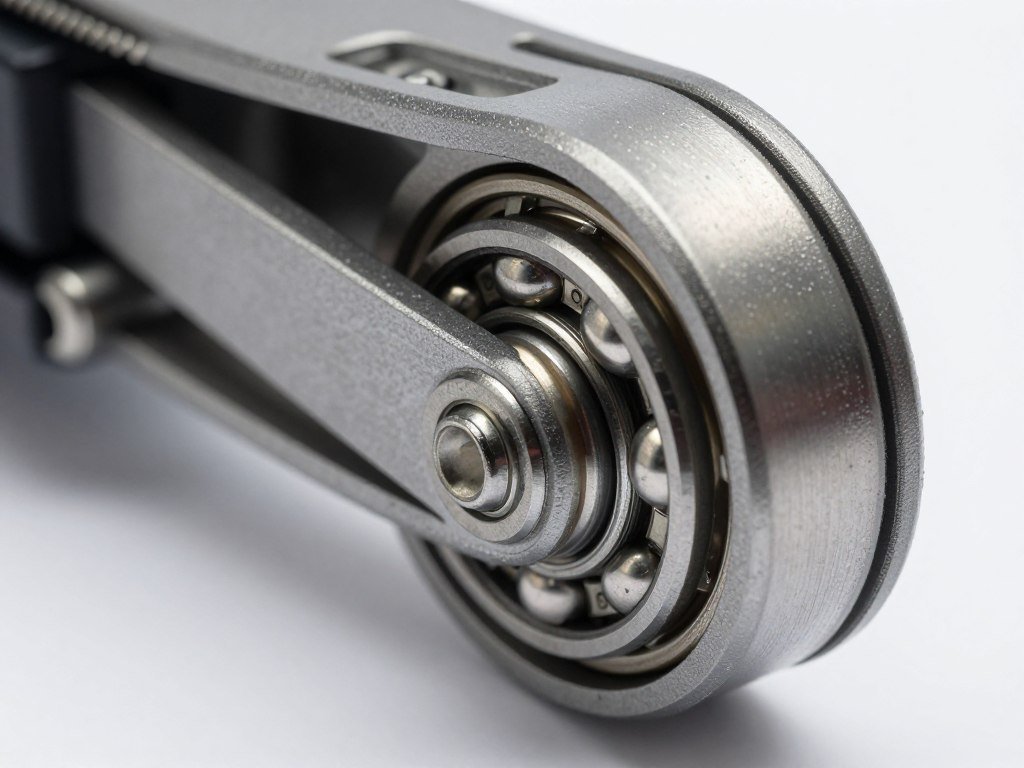
Bearings, bushings, and consistent rolling
Ball bearings use small rolling elements between the axle and wheel. This design reduces sliding contact compared with a bushing, but a bearing still needs to suit the trolley’s load and intended use. A smooth start does not prove that a unit suits a commercial line.
Two bearing sets can share force across more contact points than one set. That layout may help the trolley roll consistently under its intended load. Operators should compare the full design rather than treating bearing count as a quality score by itself.
Sheaves, wheels, and cable contact
Sheaves are the wheels that ride on the cable. Sizes of 1-1/2 inches and 2 inches are common, and axle sizes often match their design. A 1/4-inch axle is commonly paired with a 1-1/2-inch wheel; a 3/8-inch axle often pairs with a 2-inch wheel.
Before comparing models, confirm that the sheave groove is designed for the cable you actually use.
Wheel size and axle choice must fit the trolley hardware, not just look right beside the cable. A groove that does not suit the line can affect contact and stability.
Before comparing models, confirm that the sheave groove is designed for the cable you actually use.
Which Trolley Design Suits Each Zipline?
A low-volume course can prioritize simple handling, while a high-throughput operation needs durability and repeatable performance. Course volume helps you decide which trolley designs deserve a closer look. A unit built for one rider is not a multi-rider configuration.
Match the trolley’s design to both rider position and cycle frequency. Frequent commercial cycles put repeated demands on the gear, so easy service and sturdy construction matter. Lower-volume lines may place more value on simple handling and a lighter setup.

Low-volume and recreational lines
A lighter trolley can be easier to handle when staff load riders less often. The ISC Zippey Clip n Zip is designed for one person, which makes its use case clear. Do not treat a single-person design as permission to attach multiple riders.
A recreational line may also call for a straightforward rider position and fewer specialized course features. Still, the trolley must match the line, rider system, and braking plan. Simple handling does not replace those checks.
Commercial and specialty-course setups
For frequent dispatches, a rugged design that staff can service may suit operations better than a very light unit. A long wheelbase can matter when a course needs a particular feel or stability through its ride. The Robertson Zip Tour trolley has an 8-inch wheelbase and weighs 4.5 lb.
A prone, “Superman style” ride changes how the rider hangs beneath the trolley. Choose that form only when the course layout and rider system support it. The rider’s position can shape the equipment choice as much as the trolley’s frame.
Choose the rider position and operating volume before narrowing the hardware list.
How to Choose the Best Trolley for Zipline Smooth Ride
For a commercial single-rider line, start with the ISC Zippey Clip n Zip if its cable and operating conditions match. That is a starting pick, not a universal answer for every course. Its listed weight is 450g (1.0lb), and it is designed for one person.
Choose the model by its job in your system: a general single-rider trolley, a dedicated braking trolley, or a design with a specific bearing layout. The zipSTOP Double Sided Brake Trolley weighs 2.1 kg (4.6 lbs). EZ Clip and Micro Trolleys use four bearings per trolley, with seven balls in each bearing.
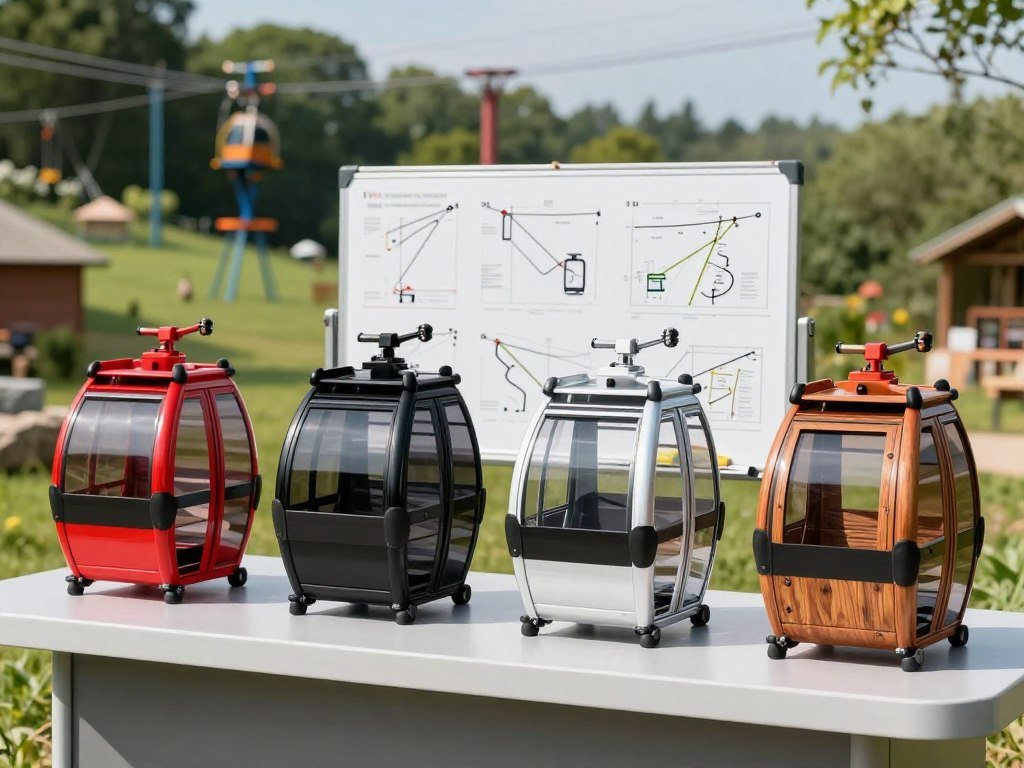
| Use case | Model | Selection fact | Weight |
|---|---|---|---|
| General single-rider candidate | ISC Zippey Clip n Zip | Designed for one person | 450g (1.0lb) |
| Braking trolley | zipSTOP Double Sided Brake Trolley | Dedicated brake trolley | 2.1 kg (4.6 lbs) |
| Four-bearing design | EZ Clip and Micro Trolleys | Four bearings per trolley, seven balls per bearing | Weight not listed |
| zipSTOP-compatible impact trolley | Head Rush Impact Trolley | Engineered for zipSTOP braking | 1.2 lb (544 grams) |
The zipSTOP Double Sided Brake Trolley is the dedicated choice for a brake-system role. For a four-bearing design, compare EZ Clip and Micro. The Head Rush Impact Trolley is engineered for zipSTOP braking and weighs 1.2 lb (544 grams).
Use the table to shortlist by operating role, not as a substitute for checking the full system.
How Do You Match a Trolley to Cable Diameter?
Cable diameter is a go-or-no-go check: the trolley’s sheaves must be made for the line on the course. Measure the actual cable, then compare it with the trolley’s stated range and cable type. A close visual match is not enough.
Check the manufacturer’s permitted cable type and diameter before installation. The ISC Zippey Clip n Zip fits steel cable diameters of 8-13mm. The zipSTOP Double Sided Brake Trolley is available for zip lines up to 3/4 inch (19mm).

| Trolley or component | Cable compatibility | Fit note |
|---|---|---|
| ISC Zippey Clip n Zip | Steel cable 8-13mm | Check cable diameter against stated range |
| zipSTOP Double Sided Brake Trolley | Lines up to 3/4 inch (19mm) | Verify line is within stated maximum |
| Adventure Parks Zipline Fun replacement wheels | Cable up to 3/16 inch | 1-1/2-inch wheels, set of 4, precision sealed bearings; not a complete trolley |
The replacement wheels are components, not a full zip line pulley or trolley. Their cable limit does not establish fit with every trolley frame. Check both the wheel design and the complete assembly before using replacement parts.
Do not assume a replacement wheel fits a complete trolley just because its cable limit looks suitable.
What Does a Trolley Speed Rating Tell You?
A trolley’s speed rating is a hardware limit, not a promise of the speed a rider will reach. Course conditions shape actual rider speed, including the line and how the course operates. The rating applies to the trolley or its bearings, not to every ride outcome.
Exceeding a bearing limit risks overheating or damage. A bearing may build heat when it runs beyond its rated conditions. Read an optimal range, a maximum, and an “over” threshold as different statements.
| Model | Stated speed | How to read it |
|---|---|---|
| ISC Zippey Clip n Zip | Optimal 40-50 mph; maximum recommended 64mph/103kph | Separate optimal operation from maximum recommendation |
| zipSTOP Double Sided Brake Trolley | Maximum 72 kph (45 mph) | Maximum, not a target |
| EZ Clip and Micro Trolleys | Up to 75 miles per hour | Stated running-speed rating |
| ISC ZipSpeed XTREME | Over 160kph (100mph) | Engineered for operation above this threshold |
| Head Rush Impact Trolley | Maximum 75 mph | Stated maximum operating speed |
The Zippey’s optimal range is not the same as its maximum recommendation. The zipSTOP trolley’s 72 kph (45 mph) figure is also a ceiling, not a speed goal. The ZipSpeed XTREME is engineered to operate above 160kph (100mph).
ABEC ratings run from 1, 3, 5, 7, or 9. Higher ratings indicate less tolerance for variation in bearing-component shape and surface. They do not predict the rider’s speed.
Set operating limits at or below the exact trolley’s stated maximum.
Which Trolley Materials Hold Up on Commercial Lines?
Commercial wear depends on the whole contact surface, not just whether the frame looks rugged. Material choices affect how wheels, sheaves, and side plates meet the cable. Different builds suit different lines, so no single material is best for every setup.
Steel side plates are commonly favored for longer, faster commercial lines. Aluminum side plates can wear if they contact the cable. That makes the contact path and clearance important, not just the frame material.
Wheels, sheaves, and cable wear
The ISC Zippey Clip n Zip has stainless steel wheels. The zipSTOP Double Sided Brake Trolley uses steel wheels with an aluminum alloy casing. Those details describe two different builds, not a ranking that applies to every course.
The zipSTOP trolley’s fourth sheave helps stabilize the trolley and maximize its life. Its added contact point is a design feature, but operators still need to assess how the full assembly meets their line. Cable contact can change wear over time.
Side plates, bearings, and noise control
EZ Clip and Micro Trolley bearings use a steel cage and metal shield. The bearing parts are only one part of the build. Side plates and the wheel path still matter where they could touch the cable.
The ISC ZipSpeed XTREME uses noise-dampening polyurethane tires and a Noise Reduction Anti-Rollback Cam. Those features are designed to reduce ride noise. A quieter run may matter when noise affects the course experience, but it does not replace fit checks.
Inspect any side plate or sheave that can touch the cable for wear before continued use.
How Should You Compare Strength and Rider-Load Ratings?
MBS tells you about a trolley’s breaking strength, while the rider-weight range sets a separate operating boundary. They are different limits, and neither can stand in for the full system’s working requirements. A high breaking figure does not equal a permitted rider load.
The ISC Zippey Clip n Zip has an MBS of 25kN (5620lbf), while the Head Rush Impact Trolley has an MBS of 17 kN (3,822 lbf). The zipSTOP Double Sided Brake Trolley sets a minimum rider weight of 15 kg (33 lbs) and maximum of 150 kg (330 lbs).
The Zippey is approved to EN 12278:2007. It comes with a factory-fitted finger guard and is listed as compliant with EN17109:202+A12024/B. These standards and listed compliance are distinct checks, not interchangeable labels.
The Head Rush Impact Trolley has a suitable rider weight range of 33-330 lbs (15-150 kg). Spring 2025 safety-accessory additions for the Zippey Clip’n’Zip Trolley and Anti-Rollback Cam use impact-modified nylon. They are designed to reduce finger-trapping risk.
Keep these four checks separate when reviewing strength and rider use:
- Confirm the minimum and maximum rider weight.
- Compare the trolley’s MBS with system requirements.
- Check the applicable product standard or listed compliance.
- Review finger guards and finger-trapping provisions.
Check every limit against the complete course system and its operating requirements.
Which Trolley Works With a Zipline Brake System?
For a braking setup, choose a trolley whose contact surfaces and design are intended for that brake system. Brake contact matters because the trolley may meet another device during normal use or an emergency stop.
Do not infer compatibility from appearance alone. The zipSTOP Double Sided Brake Trolley has a replaceable rear bumper surface designed to interface with an emergency arrest device, secondary brake, or other zip-system components it may contact.
The Head Rush Impact Trolley is engineered specifically for smooth and consistent impact braking with the zipSTOP Zip Line Brake system. That brake-specific design is a clearer fit than a trolley that merely rides on the same cable.
Review every part that can meet: the trolley, brake, emergency arrest device, and other contacting components. Their interaction depends on the full configuration, not one compatible-looking part.
Confirm compatibility for every component that could meet during normal use or an emergency stop.
How Do Loading and Rider Connections Affect Operation?
Loading should be a controlled, repeatable step that keeps the trolley secured to the rider system. Loading design affects how staff attach the rider and how quickly they can prepare the line. The selected method must fit the equipment and the course routine.
Check that each connection closes and suits the attachment point. Split side plates are commonly used for cable loading, while some trolleys use swinging side plates. Built-in-carabiner designs offer another approach, but their gate opening can limit which connectors fit.
Loading and unloading the trolley
The Petzl Trac P-24 has a built-in carabiner and is designed for one-handed loading. It can be loaded while remaining attached to the passenger. Its listed maximum cable diameter is 1/2 inch, and its weight is 14 oz.
The Petzl Trac P-24 has a small gate opening, which can make bulky connectors a poor fit. An inversion concern has also been described for this model. Assess its suitability for your exact rider setup rather than assuming one-handed loading settles the question.
Connection choices and rider orientation
Before dispatch, staff need a clear sequence that covers both the trolley and the rider’s body position. Use these four steps:
- Check the manufacturer’s loading method.
- Confirm the trolley is secured to the rider system.
- Verify that each carabiner gate closes.
- Check rider position and clearance before dispatch.
Check the gate opening when your operation uses bulky carabiners. A connection that cannot close fully is not ready for dispatch, regardless of the trolley’s loading style.
Train operators on the exact loading sequence used for the selected model.
What Should Operators Inspect and Maintain?
A trolley’s service life depends on both its construction and the conditions of the line. Bearings wear over time, and their lifespan can shift with use and environment. Cable smoothness, run distance, rider weight, environmental conditions, ambient temperature, and maintenance regime all affect suitability and bearing life.
Use the model-specific manual to guide inspection and replacement. The zipSTOP brake trolley manufacturer directs users to its Installation, Operation and Maintenance Manual for line-inspection and replacement details. Do not assume every axle can be rebuilt.
Bolted trolley axles can generally be rebuilt, while axles secured with grommets typically cannot. That difference affects repair planning. Before arranging service, identify how the axle is secured.
Commercial operations also benefit from clear daily checks and a written maintenance schedule. General fleet practices, such as regular rental fleet checks, can help teams build a routine, though they do not replace zipline-specific procedures.
- Inspect the cable and sheaves for visible wear or damage.
- Check the trolley for abnormal play or rough rolling.
- Follow the relevant manual for inspection and replacement.
- Confirm whether the axle design is serviceable before planning repairs.
Use the model-specific manual for inspection intervals and replacement decisions.
What Should You Verify Before Selecting a Trolley?
Before committing to a fleet, verify the trolley against the actual course and its operating plan. A small trial on the line can show whether a trolley suits that particular setup. ISC recommends trialing a small number of Zippey trolleys for this purpose.
Use five checks to complete the selection:
- Confirm cable material and diameter.
- Match the trolley and rider setup.
- Check speed and rider-weight limits.
- Confirm brake and emergency-arrest interfaces.
- Review applicable course requirements and operating procedures.
ASTM F2959 is the Standard Practice for Aerial Adventure Courses. Review the requirements that apply to your course, then make sure operating procedures reflect the selected gear and line.
Record the approved model and its compatible line and braking configuration in the course equipment documentation.
Keep the approval record specific enough for staff to identify the selected trolley and its permitted configuration. A product name alone does not describe the approved setup.
Conclusion
A smooth ride comes from matching the trolley to the demands of the course. System fit matters more than a speed-only purchase. Cable fit, rider setup, and brake compatibility shape whether a trolley belongs on a particular line.
Commercial operators should choose equipment that serves the actual course, then document the approved configuration. This gives planners and staff a clear basis for consistent use. A trolley that works on one line may not suit another.
Have the course operator and equipment provider confirm the final model-to-line and brake-system match before adding it to service.
FAQ
Does a higher trolley speed rating make a rider go faster?
No. A higher speed rating sets a hardware or bearing limit; it does not set the rider’s actual speed. Course conditions primarily shape how fast a rider travels. Line layout and operating conditions affect the ride, so choose a rating that suits the course without treating its maximum as a target.
Can I use any zipline trolley on a rope?
No. Use a trolley specifically rated for the rope type in your setup. A trolley made for steel cable is not automatically suitable for rope, even if the rope appears to fit its sheaves. Check the product’s permitted rope type and the full system requirements before putting it into service.
How many bearings should a zipline trolley have?
There is no single bearing count for every setup. EZ Clip and Micro Trolleys use four bearings per trolley, with seven balls in each bearing. The right bearing layout depends on the intended load and use. Compare the design and ratings for your course, rather than choosing by bearing count alone.
Is a higher MBS always safer?
No. MBS describes the minimum force a trolley is designed to withstand before it breaks, not its working-load limit. Rider limits, system requirements, and applicable standards remain separate checks. A higher MBS alone does not show that the trolley suits your line or rider setup.
Can I use a trolley with a zipSTOP brake?
Only use a trolley designed and approved for that brake setup. The Head Rush Impact Trolley is designed specifically for zipSTOP braking. The trolley, brake, and any components that may contact each other need to work as a system. Similar shape or cable fit does not prove brake compatibility.
How often should a commercial zipline trolley be inspected?
Follow the model’s operation and maintenance manual and your course’s inspection procedures. One interval does not apply to every trolley or system. Use the manufacturer’s instructions to set inspection and replacement practices, and account for the course’s use and conditions when managing equipment.
About The Author