Best Home Espresso Machine: Top Picks for Every Budget
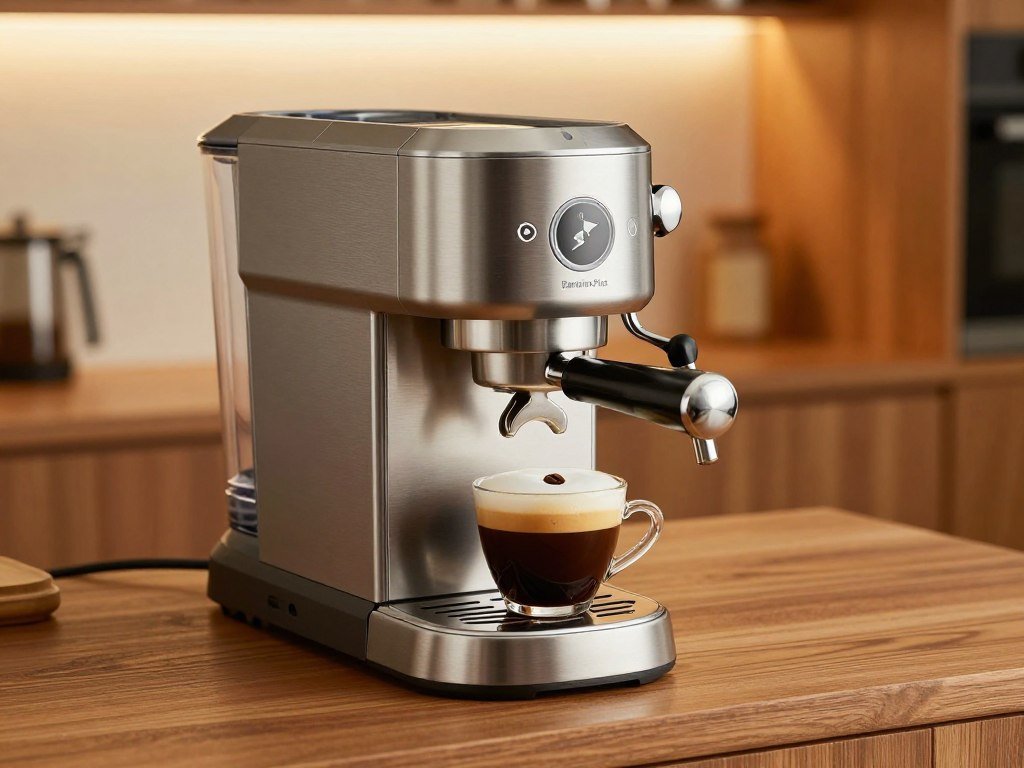
The Breville Bambino Plus is the best starting point for most buyers who want hands-on espresso without a bulky, complicated setup. Your choice also depends on your budget, favorite drinks, counter space, and how much work you want each morning.
This roundup covers compact semi-automatic models, machines with a built-in grinder, super-automatic espresso machines, and enthusiast options. A PID controller is a feedback control that adjusts heating to keep water temperature near a setpoint. Decide first whether you want to make each shot yourself or have the machine handle most of the work.
Key Takeaways
- The Bambino Plus is a strong starting choice for hands-on buyers.
- The Stilosa offers a low-cost way to try manual espresso.
- A built-in grinder saves counter space but ties two tools together.
- Super-automatic machines trade some control for push-button drinks.
- Enthusiast models offer more control and ask for more skill.
What Is the Best Home Espresso Machine for Most People?
For most home users who want to learn espresso without taking on a large machine, start with the Bambino Plus. It offers a compact, hands-on route to home espresso without the size or complexity of an enthusiast setup.
The best fit depends on the workflow you want to repeat, not the longest feature list. The Stilosa suits a very tight budget, while the Barista Express adds a built-in grinder. A super-automatic option handles more work, and the Bianca V3 gives experienced users more control.

| Pick | Best suited to | Main trade-off |
|---|---|---|
| Bambino Plus | Hands-on compact setup | Separate grinder may be needed |
| Stilosa | Lowest-budget manual entry | Basic feature set |
| Barista Express | Built-in grinder | Grinder and machine share one unit |
| Philips 4400 LatteGo | One-touch convenience | Less control over extraction |
| Bianca V3 | Enthusiast control | Requires skill and a larger budget |
Espresso extraction commonly targets 6-9 bars, and grind size and puck preparation affect the shot as much as the machine.
The same shortlist works for readers comparing espresso machines in 2025: the Bambino Plus remains the value-oriented hands-on option in this 2026 roundup, while the Bianca V3 is the high-control enthusiast choice. Those two serve very different routines.
A machine cannot fix every grind or puck-preparation problem. Fresh coffee and steady practice help you get more from any setup, especially when you adjust one part of your recipe at a time.
Use the table to narrow the shortlist to the workflow you will actually enjoy repeating.
Which Espresso Machine Type Fits Your Routine?
Choose a semi-automatic machine if you want to learn the steps, and a super-automatic model if a button press matters more than controlling each step. Your daily routine determines which workflow feels useful rather than fussy.
A single-boiler machine must switch between brewing and steaming, while a dual-boiler design can do both at once. That difference matters most when you make several milk drinks in a row.
Semi-automatic machines leave the shot in your hands
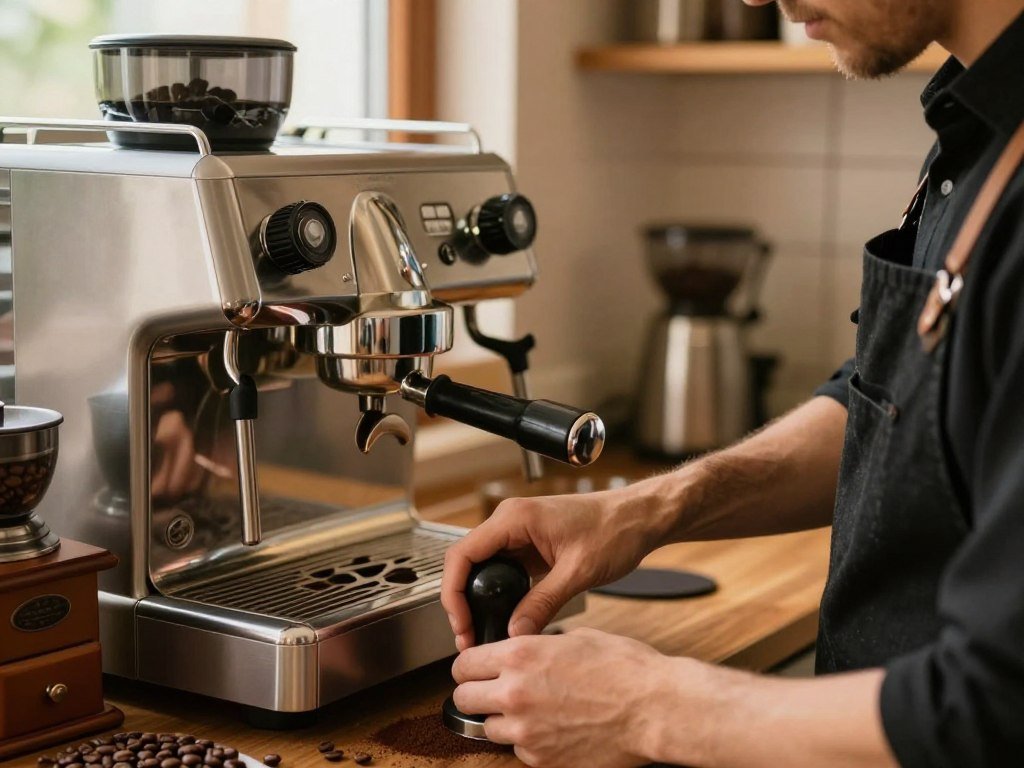
A semi-automatic espresso machine gives you control over dosing, tamping, and when to stop a shot. Espresso commonly extracts at 6-9 bars, but the grind and prepared coffee puck also shape the result.
This hands-on process takes practice. You may need to adjust the grind or dose when a shot runs too quickly or slowly. In return, you can change more parts of the brew and learn what affects the taste.
Super-automatic machines put convenience first
A super-automatic espresso machine handles more of the bean-to-drink process than a semi-automatic machine. Push-button controls can cover much of the work, though you give up some control over extraction.
Before choosing, think through these four checks:
- How much practice are you willing to put in?
- Do you prefer straight espresso or milk drinks?
- Would you rather have a separate or built-in grinder?
- How many drinks do you make back-to-back?
One cup may not make a boiler wait feel important. If you regularly make several milk drinks back-to-back, favor a workflow that avoids waiting between brewing and steaming.
Which Espresso Machine Is Best for Beginners?
The Bambino Plus is the easiest recommendation for a beginner who wants to learn espresso without taking on a long warm-up routine. It pairs a short wait with helpful guidance while still leaving room to practice.
It heats in three seconds and has a built-in PID thermometer, pre-infusion, and 9-bar brewing. In May 2026, the Bambino Plus lists at $499, with a 64-ounce water reservoir and a two-year warranty.

Pre-infusion wets the coffee puck before the full shot begins. That can help make extraction more even. Programmable single- and double-shot presets offer a simple starting point, while manual shot control lets you change the brew.
The milk options make the machine easier to approach. You can steam milk by hand or use automatic steaming with adjustable foam levels. The automatic setting saves effort, but manual steaming gives you more say over the texture.
Basket setups can differ by market. For US buyers, the included configuration may use a pressurized basket, which can be forgiving with pre-ground coffee. A single-wall basket may be a useful separate purchase if you want to learn unpressurized extraction.
The Bambino Plus is a strong first choice for someone who wants semi-automatic practice with helpful temperature and milk features. Coffee Kev’s guide also places the Bambino and Bambino Plus among manual-machine picks in the $300-$500 range.
Treat its automatic milk setting as a convenience, then practice manual steaming if you want more control over texture.
Is the De’Longhi Stilosa a Good Budget Espresso Machine?
The Stilosa is a low-cost way to try manual espresso if you are willing to work around a basic feature set. Its simple design keeps the entry price low, but it asks you to handle the brewing steps yourself.
The 15-bar figure is the pump’s rating, not a promise that espresso extracts at 15 bars. The EC-230 version has a 1-liter water tank, a 51 mm portafilter, and a stainless-steel boiler of about 150 ml.

In May 2026, the Stilosa lists at $89. Its vibration pump has a 15-bar rating, and the machine measures 8.27 × 10.43 × 12.01 inches, in width, depth, and height.
The steam wand works for frothing milk, but the US Panarello-style setup can make latte art harder. A Panarello wand helps create foam, while offering less control over the milk texture. The wand is removable if you prefer to change the setup.
There is no solenoid valve to release pressure after brewing. That means the machine can retain pressure in the coffee puck after a shot. A sudden release can send wet grounds outward, so give the pressure time to settle.
A capable grinder and practice can improve the result. Tom’s Guide found that the Stilosa could make technically good espresso, while noting that skill and grind quality affect the outcome. Its review also discusses the machine’s 51 mm basket and steam wand.
Wait for pressure to release before removing the portafilter, especially after a shot.
Which Built-In Grinder Espresso Machine Fits Your Budget?
The Barista Express is the most balanced built-in-grinder choice here if you want manual shot control and a single countertop unit. Its integrated setup keeps grinding and brewing together.
A built-in grinder saves counter space, but it ties the grinder and espresso machine to one product. With a separate grinder, you can upgrade that part without replacing the machine.
| Model | May 2026 listed price | Grinding and puck preparation | Milk workflow |
|---|---|---|---|
| Barista Express | $699 | Integrated grinder with 16 settings and manual tamping | Manual steam wand |
| Barista Express Impress | $899 | Integrated grinder plus automated tamping | Semi-automatic workflow |
| La Specialista Arte | $649 | Built-in grinder | Manual steam wand |
The Barista Express has a conical burr grinder, a 54 mm stainless-steel portafilter, and single- and dual-wall baskets. Low-pressure pre-infusion leads into 9-bar extraction. Its Thermocoil system uses PID control to deliver water at 200°F.
You can use volumetric one- and two-shot controls or manage the shot manually. Those choices make it a flexible espresso machine for someone who wants the convenience of a built-in grinder without losing shot control.
The Express Impress adds automated tamping to the Express design. La Specialista Arte offers another built-in-grinder route, with a manual steam wand. The grinder and puck workflow help distinguish these models more than their shared all-in-one layout.
Choose the Impress when assisted tamping is worth more to you than keeping the entry price lower.
Which Assisted-Tamping Machine Suits Milk-Drink Fans?
The Touch Impress fits buyers who want assisted tamping and an automatic steam wand, while the Maestro is the alternative with an automatic LatteCrema system. They are different models with distinct approaches to milk drinks.
The Touch Impress is a Breville model, while the La Specialista Maestro is made by De’Longhi. Compare their milk systems and controls before choosing based on brand or looks alone.
The Breville Barista Touch Impress lists at $1,449.99. It has a built-in grinder, assisted tamping, and an automatic steam wand. That mix suits you if you want help preparing coffee but still want a barista-style machine.
The De’Longhi La Specialista Maestro lists at $1,471.71. It combines a built-in grinder and smart-tamping station with De’Longhi’s automatic LatteCrema milk system.
These three points can guide your choice:
- Does assisted tamping appeal to you?
- Do you want an automatic milk system?
- Would guided controls help you feel at ease?
The Touch Impress pairs tamping assistance with an automatic steam wand. The Maestro pairs its smart-tamping station with LatteCrema. Neither is the same model as the Barista Express Impress, which offers assisted tamping in a different product line.
Match the milk system to the drinks you make most, rather than paying for automation you will rarely use.
What Does a High-Automation Espresso Machine Take Off Your Hands?
The Oracle Jet is the pick for buyers who want grinding, dosing, tamping, and milk texturing handled in one machine. Its high level of help cuts down on routine preparation.
The Oracle Jet automates four main tasks: grinding, dosing, tamping, and milk texturing. It still presents a barista-style workflow, rather than a single button taking you from beans to drink.
The Breville Oracle Jet lists at $3,499 in May 2026. It combines a built-in grinder with a touchscreen and ThermoJet heating system. PID temperature control helps manage brewing temperature.
That combination suits buyers who want an integrated espresso machine but do not want to handle each preparation step. The interface keeps the process visible, even as the machine takes on much of the work.
The high price makes sense only if reducing hands-on work and keeping an integrated setup are priorities. If you enjoy preparing each shot, some of that automation may have little value in your routine.
Consider how often you make espresso and milk drinks before paying for automated steps. A feature earns its place when you use it often, not just because it sounds impressive.
Pay for its automation only if those saved steps matter in your daily routine.
Which Super-Automatic Espresso Machine Is Right for Your Home?
Choose a super-automatic machine if push-button drinks matter more than controlling every part of extraction. It can make a quick bean-to-cup routine easier to repeat.
One-touch drinks reduce the steps you handle, but they also give you less hands-on control over extraction. That trade-off suits households that value speed and simple operation over adjusting each shot.
One-touch drinks for a straightforward routine
The Philips 4400 LatteGo uses one-touch controls and lists at $799 in May 2026. It suits a home where people want coffee and milk drinks without preparing each shot by hand.
Super-automatic espresso machines cover more of the brewing process than semi-automatic models. You give up some choice over the shot, but gain a simpler way to make drinks throughout the day.
Automatic models at different budgets
De’Longhi models offer several budget brackets, while the Philips fills a separate one-touch spot. The list below shows the intended use of each option, not a claim that every model costs the same everywhere.
| Model | Automatic-machine budget bracket | Use case |
|---|---|---|
| Magnifica S | Under $350 | Entry-level automatic option |
| Magnifica Evo Next | Under $1,000 | Mid-budget automatic option |
| Rivelia | Under $1,500 | Higher-budget fully automatic option |
| Philips 4400 LatteGo | $799 | One-touch operation |
The De’Longhi Magnifica S is the automatic-machine pick under $350. The Magnifica Evo Next fits under $1,000, and the fully automatic Rivelia fits under $1,500.
De’Longhi’s US site lists a three-year warranty for its machines. Confirm the warranty terms for the exact model and purchase before you decide.
Is a Manual Lever Machine Right for You?
A manual lever machine suits the espresso drinker who values direct control and does not need a built-in steam workflow. It makes the brewing process part of the appeal.
A lever machine is a good fit when you enjoy controlling extraction by hand and do not rely on machine-based milk steaming. It asks more of you than pressing a button or starting a semi-automatic shot.
The Flair 58 is a manual lever-style espresso maker introduced in 2021. It has an electronically heated brew head and a 58 mm portafilter. The heated head supports brewing, while the lever leaves pressure control in your hands.
This style suits espresso-focused users who welcome a slower, more involved cup. It also works for people who like learning how small changes affect a shot. The same hands-on nature can feel like a chore when you need coffee quickly.
Weigh these three points before choosing:
- Are you ready to buy and use a separate grinder?
- Do you want to control extraction manually?
- Is milk steaming essential to your usual drinks?
A lever machine does not provide the familiar steam-wand workflow. If you regularly make cappuccinos or lattes, choose a machine with a steam wand or plan for a separate milk solution.
Choose a lever only if the manual process sounds enjoyable on an ordinary weekday, not just appealing as a hobby.
Should You Choose a Gaggia Classic or a Rancilio Silvia?
Choose the Silvia for a traditional machine and strong milk-drink workflow, the Gaggia for a moddable lower-priced option, or the Apex V2 for built-in adjustments. The best match depends on how much setup you want to do.
The Rancilio Silvia has no PID as standard, while the Apex V2 offers adjustable temperature and pressure controls. That makes the Apex more appealing if you want to tune settings without modifying the machine.
Traditional machines and adjustable controls
The Gaggia Classic Evo Pro lists at $449 in May 2026 and is moddable. The Rancilio Silvia lists at $799 in May 2026. Buyers who enjoy familiar designs may prefer either, but the Silvia asks you to manage temperature without a standard PID.
The MiiCoffee Apex V2 offers adjustable PID temperature, adjustable pre-infusion, and external control over over-pressure-valve pressure. It has a 58 mm portafilter, a stainless-steel brewing boiler, and a thermoblock for steaming.
Its dedicated brew boiler and steaming thermoblock separate those tasks. The Apex V2 takes about 7 to 10 minutes to heat up, so its controls come with a warm-up period.
Compare the stock setup
| Model | May 2026 listed price | Stock temperature and pressure control | Best fit |
|---|---|---|---|
| Gaggia Classic Evo Pro | $449 | Moddable | Buyers who like modifying a machine |
| Rancilio Silvia | $799 | No standard PID | Buyers willing to manage temperature manually |
| MiiCoffee Apex V2 | Not stated | Adjustable PID, pre-infusion, external pressure control | Buyers who want more control out of the box |
These machines differ in how much control they offer before any changes. If you like adjusting gear, the Gaggia leaves room to modify. The Silvia suits a traditional setup, while the Apex gives you more settings from the start.
If you do not want to modify or temperature-manage a machine, prioritize adjustable controls that are already installed.
Is the Breville Dual Boiler the Enthusiast Pick?
The Breville Dual Boiler is the enthusiast pick for someone who wants deep control and frequent milk drinks without waiting between brewing and steaming. Its two-boiler design lets you brew and steam at the same time.
Separate brew and steam boilers reduce waits when you are making several drinks. You can pull a shot while steaming milk, instead of switching one boiler between those jobs.
The machine has adjustable PID temperature and programmable pre-infusion. These controls help you experiment with how heat and the start of extraction affect a shot.
That flexibility suits an espresso drinker who wants to test settings and make milk drinks often. If you usually make one quick espresso, the extra control may have less day-to-day value.
Coffee Kev’s guide names the Breville Dual Boiler as its manual-machine pick under $1,600. The machine asks for a larger investment than an entry-level model, along with enough interest to use its adjustments.
A dual-boiler espresso machine also takes up more of your setup budget than a basic model. Think about how often you make drinks for yourself or others, and whether simultaneous brewing and steaming will save useful time.
Consider this level of control only if you will use its adjustments often enough to justify a larger investment.
Which Professional Espresso Machine Is Best for Home?
The Lelit Bianca V3 is the best professional-style home pick here for an experienced user who wants hands-on flow control. It is a high-end home machine, not a commercial machine for café service.
The Bianca V3’s paddle lets you alter water flow during extraction. That control gives an experienced home user room to shape a shot by hand.
In May 2026, the Bianca V3 lists at $2,499. It has dual boilers, an E61 group head, and a rotary pump. The dual boilers support brewing and steaming at the same time.
The E61 group head is part of the machine’s design, while the paddle adds flow profiling. You can change how water moves through the coffee during extraction, rather than treating every shot as one fixed process.
For a serious home user seeking a professional espresso machine for the home, the Bianca V3 is the recommendation when manual flow profiling matters. It is also the best professional espresso machine for home use in this roundup for someone prepared to work with those controls.
That does not make it the right choice for every kitchen. A premium machine asks for a high budget and the skill to use its extra control. Its home role is different from the demands of café service.
Buy this class of machine for control you will use, not for the professional label alone.
Which Espresso Machine Makes the Best Cappuccinos at Home?
The Bambino Plus is the better fit for buyers who want to make cappuccinos and learn milk steaming, while a one-touch LatteGo-style machine favors convenience. Choose the workflow you enjoy, not just the drink name.
For latte art, a manual steam wand offers more control over milk texture than a system that simply makes foam. That control takes practice, especially as you learn to create a pitcher vortex.
The Bambino Plus offers both hands-on and automatic milk options in a compact machine. You can use its automatic setting for ease, then try manual steaming when you want to shape the milk yourself.
A LatteGo-style super-automatic is a simpler path to foamed-milk drinks. It suits you if quick, repeatable drinks matter more than changing the texture by hand.
A manual wand needs practice to make smooth, controlled milk. Foamy milk can work well in a cappuccino, but detailed latte art calls for more control over the pitcher vortex and the final texture.
The Bambino Plus and Philips LatteGo represent the hands-on and automated routes. Neither route is automatically better; the fit depends on whether you want to learn milk steaming or keep the process simple.
If latte art is part of the goal, choose a machine with a manual wand you can learn to control.
How Should You Budget for a Grinder and Accessories?
Reserve part of your setup budget for a grinder that can make fine, repeatable adjustments. Grind control can make the difference between a shot that runs too fast and one you can tune.
A grinder that cannot grind fine enough or make small adjustments can make dialing in a shot difficult. Consider the whole setup before spending your full budget on the espresso machine.
Prioritize grind quality before extras
Espresso needs a fine grind, but fineness alone is not enough. You also need small, steady changes so you can respond when a shot tastes off or flows too quickly.
The Baratza Sette 30 and Eureka Mignon Specialita are examples of standalone espresso grinders. A separate grinder lets you choose that tool on its own rather than tying it to an integrated machine.
If you are planning gear for a café, a coffee shop startup guide can help you think through commercial equipment needs. A home setup and a business setup have very different demands.
Choose baskets and tools for your workflow
Useful accessories include a basket that fits your machine, a tamper, a scale, and a milk pitcher if you steam milk. A scale helps you measure coffee and brewed espresso instead of relying only on guesswork.
The 58 mm portafilter is a common commercial standard, but smaller sizes can still make good home espresso. Buy tools that fit your own machine, rather than assuming every size works across brands.
Readers weighing equipment for a business can also use the coffee shop equipment planning advice to separate café needs from home gear.
Buy the accessories that match your machine’s portafilter and your actual brewing routine.
What Should You Check Before Buying an Espresso Machine?
Measure the full machine footprint and the space needed to lift out or refill its reservoir before ordering. Access matters as much as the listed width, depth, and height.
A machine that fits the counter can still be awkward if a cabinet blocks its water reservoir. Check the space above and around the body, not just the surface it rests on.
Measure the counter and refill access
The measurements below list width, depth, and height. Compare them with your usable counter space, including room to reach the controls and move the machine when needed.
| Model | Width | Depth | Height |
|---|---|---|---|
| Barista Express | 15.9 inches | 13.1 inches | 12.4 inches |
| Bambino Plus | 7.7 inches | 12.6 inches | 12.2 inches |
| Stilosa EC-230 | 8.27 inches | 10.43 inches | 12.01 inches |
The Bambino Plus has a 64-ounce water reservoir. The Bambino and De’Longhi Dedica EC685 are also small-machine options to consider when counter room is limited.
Check the warranty and maintenance routine
Before buying, check these four practical details:
- Warranty length for the exact model
- Access to local service
- Water quality needs and care instructions
- Room to remove and refill the reservoir
Care needs can differ by machine and by your water. Follow the model’s instructions for cleaning and descaling, and make sure you can reach parts that need regular care.
Check the exact model’s warranty and care instructions before you decide.
A clear route to refill the reservoir can save small hassles every day. Check the exact model’s warranty and care instructions before you decide.
Conclusion
For most people who want to learn espresso at home, the Bambino Plus is the most balanced place to start. It offers hands-on practice without demanding a large or complex setup.
The Stilosa is a practical choice when the lowest budget matters most. If you want push-button convenience, a super-automatic machine may suit your routine better.
Decide how much hands-on work you want, then check the space and grinder needs of the matching setup. Pick the workflow you will enjoy using every morning, then confirm the machine fits your counter and setup budget.
FAQ
Can a pressurized basket make decent espresso?
Yes, a pressurized basket can make a forgiving shot, especially with pre-ground coffee. It creates resistance that can help produce crema even when your grind is not finely tuned. A single-wall basket gives you more control when paired with a capable grinder. It also makes grind changes more visible in the taste and flow of each shot.
How often should you descale a home espresso machine?
A common rule of thumb is to descale about every 1-3 months, based on water hardness and how often you use the machine. Hard water can leave scale sooner, while softer water may slow buildup. Follow the care instructions for your specific model. Use the recommended descaling method, since some machines require a certain product or cleaning cycle.
Is a 15-bar pump too much pressure for espresso?
No, a 15-bar pump rating does not mean espresso brews at 15 bars. The rating describes the pump’s maximum pressure, while espresso extraction commonly targets about 6-9 bars. Grind size and puck preparation also affect the shot. A machine’s pump number alone cannot tell you how well it will make espresso in your kitchen.
Can an automatic milk frother make latte art?
An automatic milk frother can make textured milk, but a manual wand offers more control for detailed latte art. Latte art depends on creating a pitcher vortex and pouring milk with the right texture. An automatic system can make convenient drinks with foam, though it may not let you control each part of the milk process. Choose based on whether convenience or practice matters more.
Is a 54 mm portafilter worse than a 58 mm one?
No, a 54 mm portafilter is not automatically worse than a 58 mm one. The 58 mm size is a common commercial standard, but a 54 mm home portafilter can still make good espresso. Each size needs compatible baskets and accessories, so match your tools to your machine. Portafilter size alone does not decide the quality of the coffee in your cup.
Do you need a separate grinder for espresso?
No, you do not need a separate grinder if your machine has a capable built-in grinder. A separate grinder lets you upgrade that part without replacing the espresso machine. Either setup needs a grinder that can produce a fine grind and make small, useful adjustments. Choose the layout that suits your budget, counter space, and plans for future upgrades.
About The Author