Best Truck for Snow and Winter Driving: Top 10 Picks
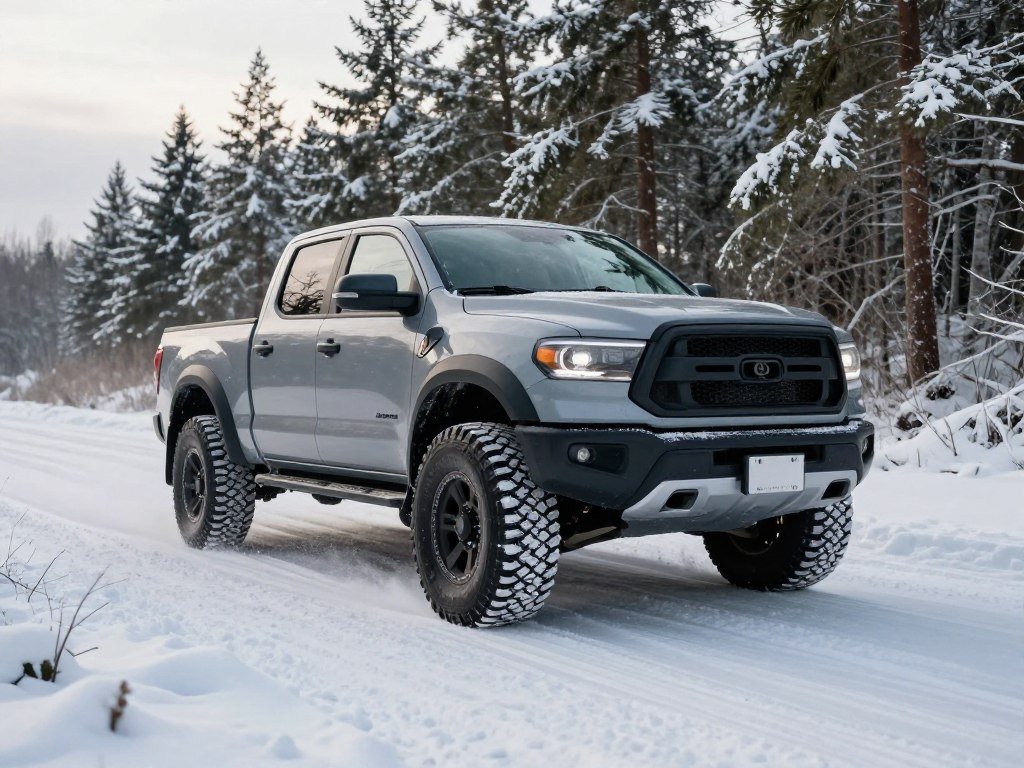
A winter-ready pickup starts with the right tires and drivetrain for the roads you actually drive, not just a rugged badge. Snow, ice, and changing weather can turn a familiar route into a challenge, especially when your truck carries work gear or tows a trailer. Confidence depends on tires, drivetrain, ground clearance, and safe driving working together.
Four-wheel drive (4WD) sends power to all four wheels to help the vehicle move on low-traction surfaces, but it does not shorten stopping distances. This article compares ten pickups for different routes and jobs, then looks at when an SUV may suit you better. Your daily commute, rural roads, and winter workload should shape the choice.
The best fit is the truck that meets your winter needs without adding capability you rarely use.
Key Takeaways
- Choose tires for the snow, ice, and road surfaces you face most.
- Match 4WD or AWD to your regular routes and work needs.
- Ground clearance matters when snow builds up beneath the truck.
- Electronic safety systems support control but cannot replace grip.
- Check payload and axle ratings before adding a plow or cargo.
- A used truck’s current condition matters more than its model year.
How to Choose the Best Truck for Snow and Winter Driving
Start by checking the tires and drivetrain, then decide whether clearance and winter controls match the snow you face. Start with grip, since tires affect how a truck moves, turns, and stops.
4×4 can improve the best truck for snow and winter driving on low-traction roads, but it cannot create grip or make a truck stop faster. High ground clearance helps keep the underbody from hitting deeper snow, while traction control and a locking differential address different traction problems.
| System or feature | What it helps with | Limitation |
|---|---|---|
| Ground clearance | Keeping the underbody above deeper snow | Does not add tire grip on ice |
| 4WD with locking differential | Sending power to wheels with traction | Does not shorten stopping distance |
| Traction control or Snow/Ice mode | Managing wheel spin and winter settings | Cannot overcome poor tires or excess speed |
A locking differential helps keep power moving when one wheel has less grip. Traction control can limit wheel spin, while selectable Snow or Ice modes adjust vehicle settings for winter conditions. These systems help in different ways, so one feature does not replace the others.
A practical setup starts with four basic checks:
- Suitable winter tires for your roads
- Adequate clearance for your usual snow depth
- Working traction and stability systems
- A drivetrain matched to the route
Four-wheel drive helps a truck move on slick roads, but it does not create tire grip or shorten its stopping distance.
Snow mode can soften power delivery or change other settings, depending on the truck. For extra guidance on driving smoothly in winter weather, see Car and Driver’s winter driving tips.
Treat every drive mode as a traction aid, not permission to keep normal speed on a slick road.
Which Truck Setup Fits Your Winter Roads?
A truck used mostly on cleared streets needs a different setup from one that must reach an unplowed rural road. For everyday winter conditions, AWD or a capable 4WD system can help manage changes in traction; tougher terrain calls for more clearance and control.
Plowed roads and everyday commuting
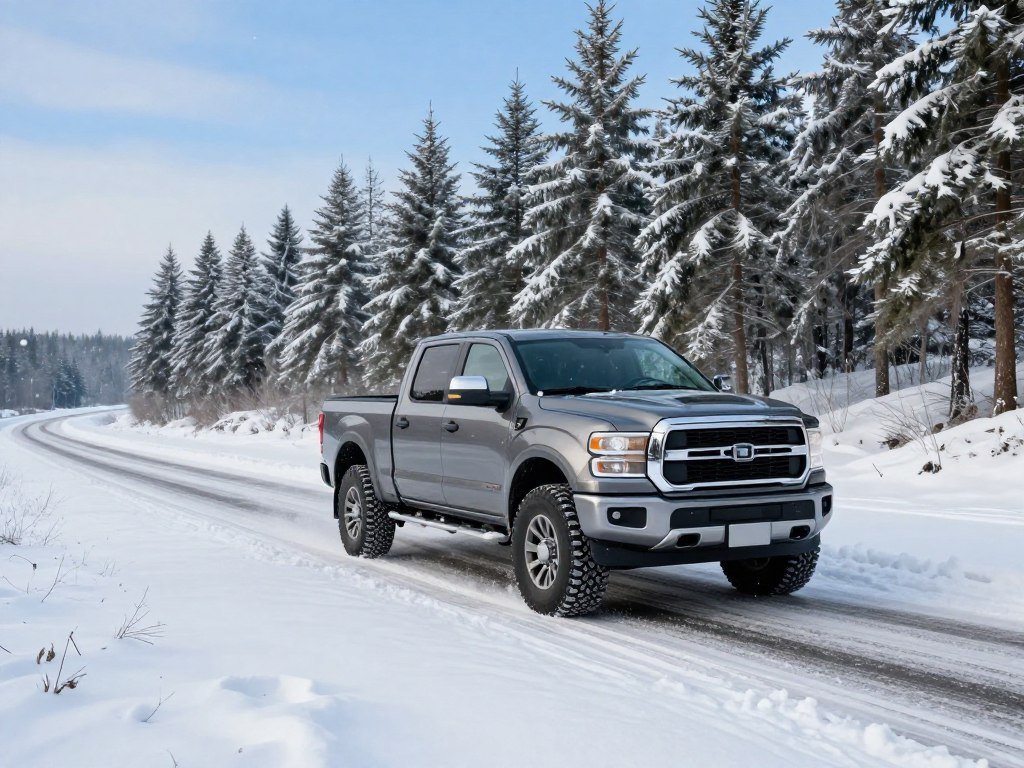
AWD suits many daily drives on plowed roads because it can distribute power as traction changes. A 4WD truck can also work well for commuting, though you may need to select the system based on the truck and road.
Winter tires still matter in both setups. They can improve grip in snow and ice, including when you brake or turn. A two-wheel-drive pickup with suitable winter tires may fit light snow on maintained roads, but it has less traction reserve when conditions worsen.
For a short commute on cleared streets, a smaller truck or AWD model may be easier to place in narrow lanes and parking spaces. Consider how often your route stays plowed, not just the weather forecast on your first drive.
Deep snow, steep routes, and remote roads
For deep snow, steep rural roads, or off-road work, 4WD is generally the stronger choice. Pair it with enough ground clearance to avoid packing snow beneath the truck, where it can leave the tires with less room to move.
Even a well-equipped truck has limits. Drivetrain alone cannot make up for poor tire grip or snow that reaches too high under the vehicle. If you work on remote roads, think about the full route, including steep turns and places where you cannot easily turn around.
Choose the truck for daily commuting, steep rural roads, or regular off-road work without adding a full load just to improve traction. Cargo must serve a real purpose and stay within the vehicle’s ratings.
Choose for the most difficult route you regularly drive, not the rarest storm you might encounter.
Which 10 Trucks Belong on a Winter Shortlist?
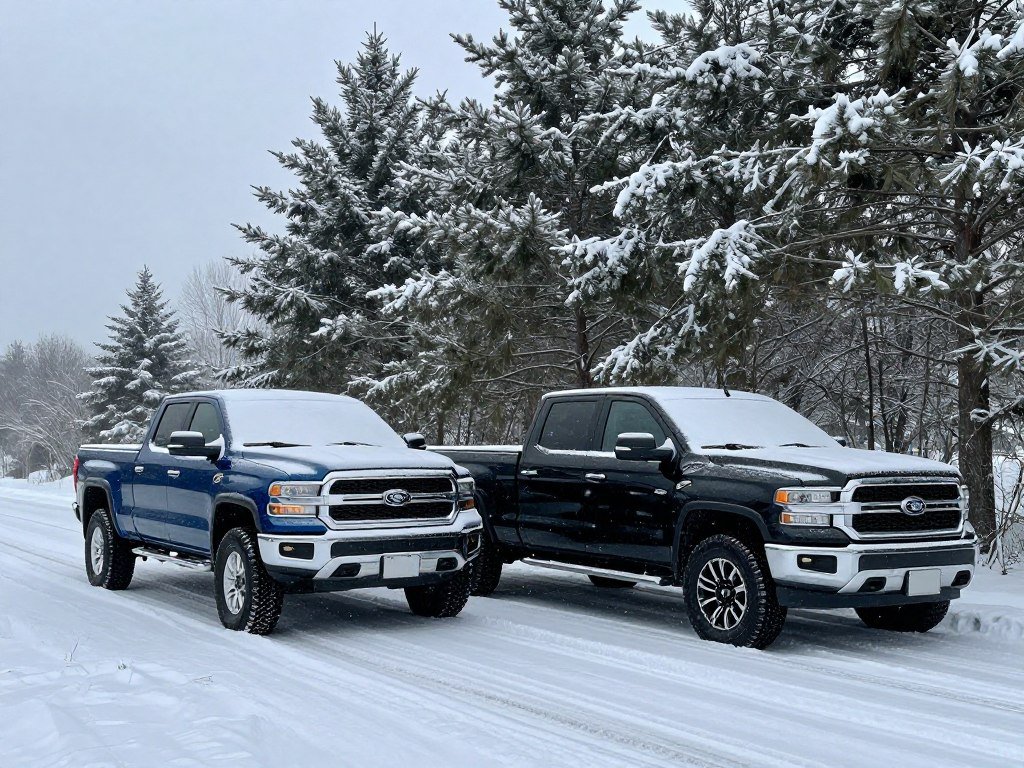
For a general-purpose winter pickup, start by comparing the Ford F-150, then consider a Tacoma if a smaller truck better fits your roads. Mixed winter use calls for a different truck than heavy plowing or narrow streets.
The best 4×4 truck for snow and ice depends on road width, depth of snow, and work needs. These ten trucks offer different sizes and equipment, but the trim and tires matter as much as the name.
Midsize trucks for narrower roads and lighter work
| Truck | Best fit | Winter-use detail |
|---|---|---|
| Toyota Tacoma | Smaller pickup and work-site use | 4WD work-site versatility |
| Ford Ranger | Drivers who want off-road options | FX4 Off-Road Package and Terrain Management System |
| Nissan Frontier | Drivers seeking a 4×4 midsize truck | Available 4×4 system |
| Jeep Gladiator | Uneven terrain and trail work | 4WD and high ground clearance |
| Honda Ridgeline | Everyday driving in changing weather | AWD |
The Tacoma is a sensible first comparison if a smaller pickup suits your streets and jobs. The Ranger’s off-road options give you settings for varied terrain, while the Frontier offers a straightforward 4×4 option.
The Gladiator’s clearance and 4WD may suit uneven routes, while the Ridgeline’s AWD fits everyday winter driving. For many people who do not need a traditional truck bed, the Ridgeline’s road-focused setup may be easier to live with.
Full-size trucks for broader capability and heavier jobs
| Truck | Best fit | Winter-use detail |
|---|---|---|
| Ford F-150 | Mixed winter driving and varied work | Snow and Deep Sand/Snow modes; available rear locker |
| Toyota Tundra | Drivers needing a full-size truck | Full-size pickup option for winter work |
| Ram 1500 | Drivers who want selectable settings | Four-wheel drive and selectable drive modes |
| Ford Super Duty | Plowing or heavy-work needs | 4WD capability |
| GMC Sierra | Drivers seeking full-size capability | 4WD and stability control |
The F-150 is a useful first comparison for mixed routes and work. A Super Duty may suit plow or heavy-work needs, but its size can be a drawback on narrow roads. A Tundra is another full-size option to weigh against your cargo and towing needs.
Final suitability depends on configuration and tires, not just the badge on the tailgate. Confirm the exact drivetrain and winter equipment on the trim you are considering, since model names alone do not establish capability.
Is a Tacoma or Tundra Better for Snow and Towing?
The Tundra is the better fit when your winter work requires more towing capacity, while the Tacoma suits lighter loads and a smaller pickup. Workload comes first: the right choice depends on what you tow and where you drive.
The 2026 Tacoma has a maximum tow rating of 6,500 pounds, while the 2026 Tundra reaches 12,000 pounds. The Tacoma can be easier to manage when smaller dimensions matter more than heavy towing.
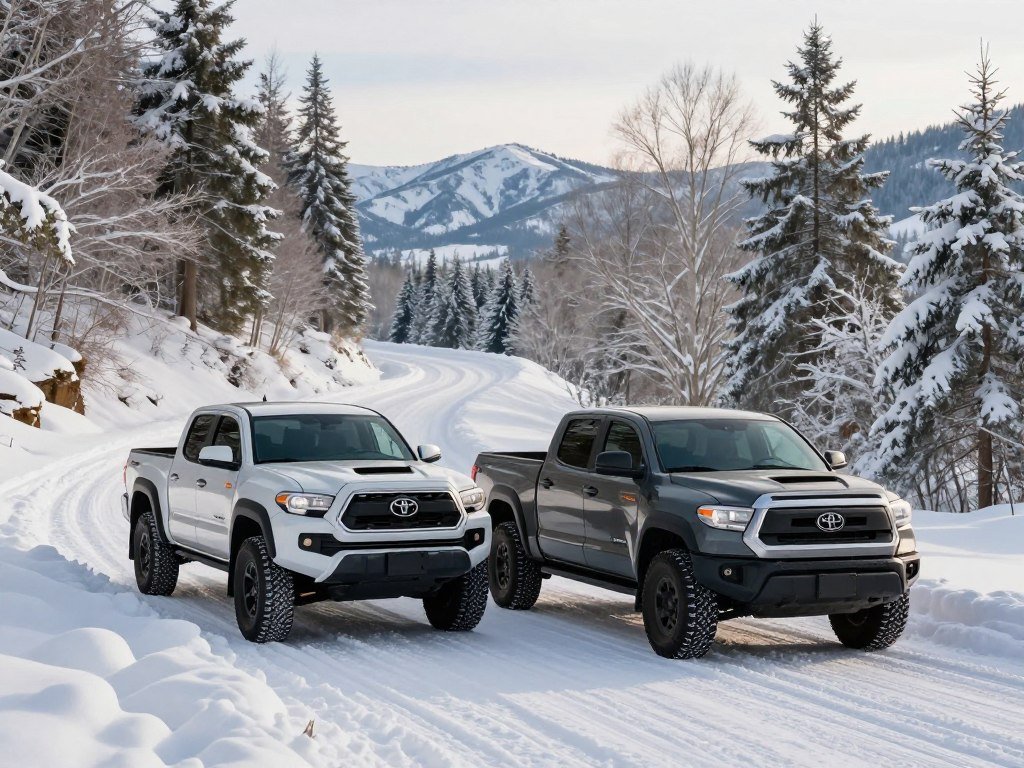
The 2026 Tacoma offers three engine choices:
- 2.4-liter i-FORCE turbo: 278 horsepower and 317 lb-ft of torque
- 2.4-liter i-FORCE MAX hybrid: 326 horsepower and 465 lb-ft of torque
- 2.4-liter i-FORCE manual: 270 horsepower and 310 lb-ft of torque
The 2026 Tundra has two engine choices:
- 3.4-liter twin-turbo V6: 389 horsepower and 479 lb-ft of torque
- 3.4-liter twin-turbo hybrid: 437 horsepower and 583 lb-ft of torque
Those engine choices suit different needs, but maximum ratings depend on configuration. The 2026 Tacoma and Tundra tow ratings do not guarantee that every winter road is safe for a loaded trailer.
A Tacoma may suit lighter work when a smaller truck is easier to park or turn around. The Tundra’s higher maximum tow rating makes it a stronger fit for heavier towing, provided the specific configuration can handle the load.
Compare the specific truck’s tow rating with the loaded trailer weight before choosing a configuration.
Can an SUV Be a Better Winter Vehicle Than a Truck?
An SUV can be the better winter vehicle when your priorities are passenger use and everyday roads rather than a truck bed. Passenger space may matter more than hauling bulky gear or towing a heavy trailer.
SUVs or the best truck for snow and winter driving depends on your need for a bed, towing, passenger use, and the actual winter route. An SUV can handle daily trips while giving passengers an enclosed cabin and useful cargo space.
The 2026 Subaru Crosstrek comes standard with AWD, and its Wilderness trim is aimed at off-road use. That combination may fit drivers who face rougher roads but do not need a pickup bed.
The 2026 Honda CR-V TrailSport adds off-road-oriented upgrades, including all-terrain tires. Those tires suit some mixed routes, though the model still serves a different role than a truck built for heavy towing or work cargo.
An SUV may be a better option if your winter trips mostly involve passengers, errands, and maintained roads. A pickup makes more sense when you often carry items that do not fit inside or need a truck’s work features.
Choose a pickup only when its cargo, towing, or work utility solves a real need.
Which Tires Work Best on Snow and Ice?
For icy roads, a dedicated winter tire such as the Bridgestone Blizzak DM-V2 is a more targeted choice than a mud tire. Ice needs grip from a tire made for cold conditions, not only deep tread.
The Three-Peak Mountain Snowflake rating, or 3PMSF, marks tires tested for severe-snow performance. M+S is not standardized and does not provide the same standardized basis for winter performance.
Winter tires for ice and packed snow
The Bridgestone Blizzak DM-V2 is an ice-focused truck winter tire with a cold-weather rubber compound and sipes, which are small tread cuts. It carries a 3PMSF rating but is not stud-ready.
Frequent ice and packed snow make a dedicated winter tire a strong choice. For mixed routes, severe-snow all-terrain tires can offer a useful compromise, though they are not the same as an ice-focused winter tire.
Severe-snow all-terrain tires for mixed routes
The Goodyear Wrangler Duratrac has wide lugs to clear snow, a 3PMSF rating, and stud-ready tread. Its listed warranty is 50,000 miles, excluding LT sizes. The Falken Wildpeak A/T3W is also 3PMSF-rated and stud-ready, with a 55,000-mile warranty.
The Nitto Exo Grappler is a truck-tire option for towing in snow, while the BFGoodrich All-Terrain T/A KO2 is a year-round pick. The Interco Super Swamper IROK is a mud tire for deep snow, but it lacks a 3PMSF rating and is not stud-ready.
| Tire | Best-use case | 3PMSF or stud status | Warranty |
|---|---|---|---|
| Goodyear Wrangler Duratrac | Mixed routes and snow | 3PMSF; stud-ready | 50,000 miles, excludes LT sizes |
| Falken Wildpeak A/T3W | Mixed winter use | 3PMSF; stud-ready | 55,000 miles |
| Nitto Exo Grappler | Towing in snow | Not specified | Not specified |
| BFGoodrich All-Terrain T/A KO2 | Year-round use | Not specified | Not specified |
| Interco Super Swamper IROK | Deep snow | No 3PMSF; not stud-ready | Not specified |
The 3PMSF test rating gives you a clearer sign of severe-snow performance than M+S alone. Check that all four tires have compatible winter capability, since mixing tires can upset predictable handling.
Which Safety Systems Matter on Slick Roads?
Electronic stability control can help correct a skid by applying the brakes, but it cannot restore grip that the tires do not have. Stability control responds when a vehicle starts to slide on slick surfaces or curvy roads.
Traction control limits wheel spin, while stability control helps manage a skid. Both systems support control, but neither replaces safe speed or tires suited to winter conditions.
Traction control can reduce power or brake a spinning wheel to help the truck move. Stability control can apply the brakes when the vehicle skids or slides. The systems work in different ways, so a truck may use both.
In iSeeCars’ rankings, the 2026 Toyota Tacoma is the safest midsize truck, with a safety rating of 8.0. The 2026 Ford F-150 ranks as the safest full-size truck, with a rating of 9.0.
iSeeCars calculates its truck safety scores by averaging ratings across five model years. Its truck safety rankings give useful context, but a ranking does not describe every version or every winter road.
Check the safety equipment on the exact trim and model year rather than assuming every version has the same systems.
How Should You Prepare and Drive a Truck in Winter?
A winter check before the first freeze can catch battery, tire, or visibility problems before a trip. Check early, while you still have time to fix a worn part.
Seven basic checks cover the truck’s main winter needs, from starting power to clear visibility. Make these part of your seasonal routine rather than waiting for the first heavy snow.
Check the truck before temperatures drop
Use this pre-winter checklist:
- Test the battery.
- Inspect the brakes.
- Check tire condition and pressure.
- Check coolant.
- Fill with winter-formula windshield washer fluid.
- Confirm the heater and defroster work.
- Inspect engine oil and wiper blades.
A weak battery may become more noticeable when temperatures fall, while worn wiper blades can make a snowy drive harder to see through. Take care of simple fixes before bad weather makes the trip urgent.
Adjust speed, load, and towing for winter roads
Snow and ice reduce traction, increase stopping distances, and affect towing performance. Slow down and leave more room to stop, especially near intersections or on hills.
Keep trailer weight properly distributed and within the truck’s rated capacity. A trailer that feels stable on a dry road may respond differently when the surface is slick.
Recheck tire pressure when the tires are cold and follow the vehicle’s placard for the correct setting.
Can You Use a Pickup for Snow Plowing and Towing?
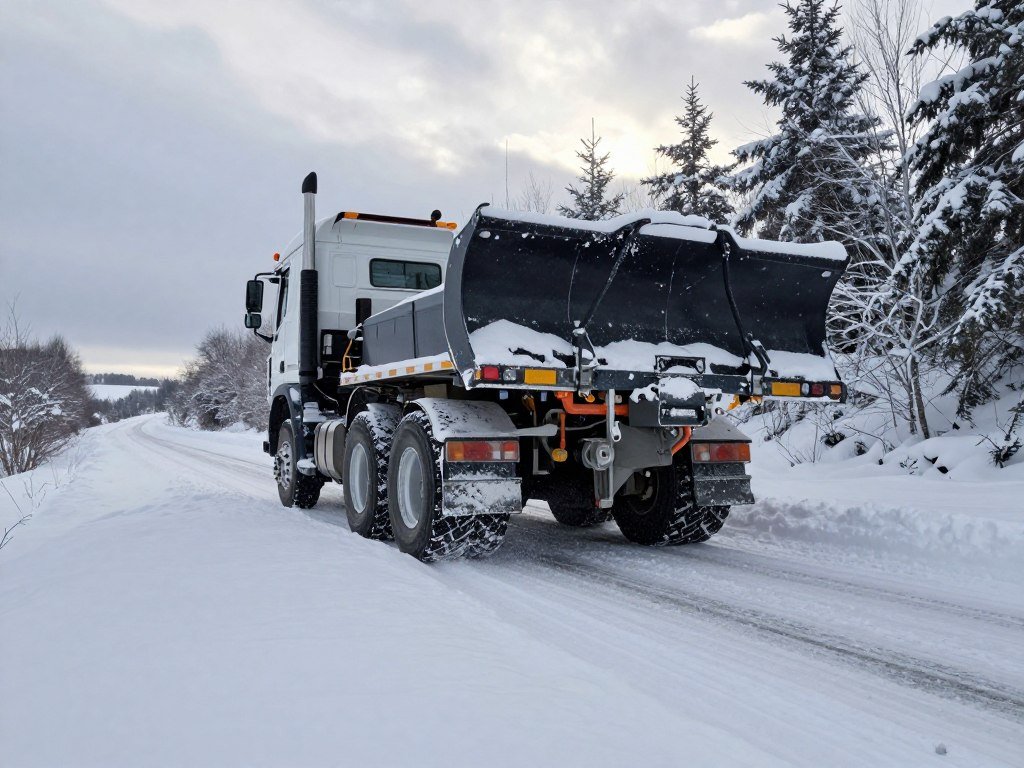
A pickup is suitable for plowing only when its approved equipment and weight ratings support the exact plow setup. Start with the ratings, not the truck’s size or engine badge.
Plow suitability depends on front axle rating, suspension capacity, an approved package, electrical fit, and payload. A plow must be approved for the truck and stay within its manufacturer weight limits.
| Truck class | Typical work role | Checks before fitting a plow | Key limit |
|---|---|---|---|
| Half-ton | Light plowing and general work | Axle rating, suspension, package, electrical fit | Payload and front axle rating |
| Three-quarter-ton | Heavier plowing and towing | Axle rating, suspension, package, electrical fit | Manufacturer weight limits |
| One-ton | Heavy work and large plows | Axle rating, suspension, package, electrical fit | Manufacturer weight limits |
Use this five-part plow checklist before choosing a setup:
- Front axle rating
- Suspension capacity
- Approved plow package
- Electrical system compatibility
- Payload rating
A gasoline engine typically warms faster in cold weather. Diesel engines provide strong torque for towing and heavy work, and a block heater may help in extreme cold.
Neither engine type is right for every truck job. For commercial hauling that needs a different vehicle, a dump truck business guide can help you weigh another work-truck option.
Confirm the loaded truck remains within its ratings after adding the plow, passengers, cargo, and trailer tongue weight.
What Should You Check Before Buying a Used Winter Truck?
On a used truck, condition and maintenance history matter more than a winter-ready badge. Look underneath, since salted roads can leave corrosion that a clean exterior hides.
A 2021 truck for snow and winter driving should be judged by its current drivetrain, tires, corrosion, and service history. Model year alone cannot show whether 4WD or AWD works as intended.
Review service records, vehicle history, title status, visible corrosion, and tire wear. Test the operation of 4WD or AWD, and watch for signs that the truck has not received regular care.
Compare these six ownership costs:
- Purchase price
- Fuel
- Winter tires
- Maintenance
- Insurance
- Likely repairs
Depreciation and resale value also affect the total cost of ownership. A low purchase price may not be a bargain if the truck needs major repairs or a new set of winter tires soon.
Inspect the underbody and test the drivetrain before committing to a truck that will face salted winter roads.
Test the drivetrain and inspect the underbody before committing to a truck that will face salted winter roads.
Conclusion
A capable winter truck is the one that fits your roads, workload, and budget while carrying tires suited to the conditions. The right 4WD or AWD setup depends on how often you face deep snow, steep roads, or mostly cleared streets.
Compare the exact vehicle configuration, including its tires and payload rating, before you buy. Arrange a test drive on a familiar route in ordinary conditions before winter weather arrives, so the truck feels known when roads turn slick.
Before choosing, compare the truck’s tire setup, drivetrain, and payload rating, then test-drive the configuration you plan to use.
FAQ
What’s the best car for snow?
An AWD vehicle with winter tires is a strong choice for everyday snowy roads. AWD can help send power to wheels with grip as traction changes, while winter tires help with braking and turning. Choose a pickup instead when you need an open bed, towing capacity, or work features that an SUV cannot provide.
Is a Tacoma or Tundra better in snow?
The Tacoma suits smaller, lighter-duty use, while the Tundra’s 12,000-pound maximum towing capacity favors heavier towing. For snow, the best fit still depends on the truck’s configuration, tires, and route. A smaller pickup may be easier on narrow roads, while a full-size truck can support heavier work when its ratings allow.
Do 4×4 trucks do well in snow?
Yes, 4WD can help a truck move through deep snow and steep terrain. It does not make the truck stop faster or guarantee grip on ice. Tires and safe stopping distance remain essential, so slow down when roads become slick and leave more room between vehicles.
Which 4×4 truck is best for snow conditions?
The best 4×4 truck depends on your route and job. Compare the F-150 for mixed use, the Tacoma for a smaller pickup, and the Super Duty for heavy work. Then check the exact drivetrain, winter equipment, and tire setup. Road width and snow depth can change which truck feels practical.
Do winter tires matter more than 4WD?
Both matter, but winter tires provide grip for braking and turning that 4WD alone cannot supply. 4WD helps send power to the wheels when you accelerate, while tire tread and rubber compound affect contact with snow and ice. Match all four tires to the winter conditions you face most.
Can I add weight to a pickup for winter traction?
Do not exceed the pickup’s payload or axle ratings to add weight. Any cargo must be secured and placed according to the truck owner’s guidance. Extra weight does not replace suitable tires, and an overloaded truck can affect handling. Check the door placard and owner’s manual for your truck’s limits.
About The Author