Find the Best Dentist Close to Me for Quality Care

The best local fit is a dentist whose services, availability, and approach match your needs, not simply the closest office. A dependable provider can care for your smile, explain treatment and costs, and help your family feel at ease. An in-network dentist is a dentist contracted with your insurance plan to provide covered services under its network terms.
Choosing well can make it easier to keep up with dental care and get help when a concern comes up. Start with the care you need most, then compare nearby offices against that priority.
Key Takeaways
- Match the dentist’s services to the care you need.
- Check that the office is accepting new patients.
- Confirm the dentist’s license with the state dental board.
- Ask the office and insurer about network status and costs.
- Call ahead if you need urgent or same-day care.
How to Choose the Best Dentist Close to Me
For a routine checkup, a licensed general dentist accepting new patients is usually the most practical first choice. The best dentist close to me is one whose services and hours fit your needs, not just your address.
Confirm current availability with the office, because online listings may be out of date. A general dentist is the usual starting point for routine family care. A specialist may suit a specific need, such as orthodontic treatment.
Call before traveling to confirm that the office is accepting new patients and has an appointment time that works.
Find an Office Taking New Patients
To find a dentist near me who is accepting new patients, check local office listings, then call to ask about openings. Some listings do not reflect current availability. A direct call can also tell you whether the office can see each family member.
Use this short checklist to compare offices:
- License status with the state dental board
- Services offered for your needs
- New-patient availability
- Distance from home and office hours
- Ability to accommodate your needs
Match Services and Access to Your Needs
Ask whether the dentist provides the care you need or refers patients elsewhere. For routine family care, a licensed general dentist can often see adults and children, but age ranges differ by office.
Some offices offer same-day, Saturday, or walk-in appointments. Availability depends on the office and schedule, so ask about the specific time you need. If getting there is hard, check whether the office can meet access needs, such as a ground-floor entrance or language support.
A practical choice should work for your schedule as well as your dental needs. Call before traveling to confirm that the office is accepting new patients and has an appointment time that works.

What Credentials and Training Should You Check?
A dentist’s active state license is the first credential to verify. State licensure shows that a dentist met the rules to practice in that jurisdiction.
A license, dental degree, and clinical assessment are separate parts of a dentist’s qualifications. Nearly all states require a D.D.S. or D.M.D. from a university-based dental program accredited by the Commission on Dental Accreditation.
All U.S. dental licensure jurisdictions require applicants to pass the Integrated National Board Dental Examination (INBDE). Launched in August 2020, it replaced NBDE Part I and Part II. Most jurisdictions also require a clinical assessment, though state boards differ on which assessments they accept.
Check the dentist’s license through the relevant state dental board. The board can confirm whether the license is active and may provide public details about its status. This check applies even if the dentist has practiced for many years.
Ask the office about training relevant to the treatment you are considering. A dentist may have extra training for certain procedures, while another may refer those cases to a specialist. Years in practice can add context, but they do not replace a license check or a discussion of your planned care.
Match any extra training questions to the treatment you are considering instead of assuming every dentist provides every specialty service.

Which Services Can a General Dentist Provide?
A general dentist can often provide preventive care as well as treatment to repair or replace teeth. The right services depend on your oral health and the dentist’s assessment.
Common services span prevention, repair, cosmetic changes, and tooth replacement. A dentist can explain which treatment fits the problem and whether a referral is needed.
Preventive and Restorative Care
Preventive care aims to protect teeth and spot problems early. Restorative treatment repairs damage or treats disease. Examples include:
- Exams and cleanings
- Sealants and fillings
- Root canals and crowns
For tooth decay, the American Dental Association’s tooth decay treatment guideline supports approaches that preserve healthy tooth structure when possible. A dentist can assess the decay and discuss the options for your tooth.
Cosmetic Care and Tooth Replacement
Cosmetic services may change how teeth look, while tooth replacement fills spaces left by missing teeth. Options can include:
- Whitening and veneers
- Implants and bridges
- Complete or partial dentures
Other common services include scaling and root planing, a deep cleaning for gum disease, and extractions. A pediatric dentist close to home may be more suitable when a child needs care tailored to children. Confirm age ranges and services with the office.
Waiting to have a tooth pulled can allow pain or infection to worsen, but extraction is not automatic. A dentist must assess the tooth before recommending treatment. Ask the dentist which options preserve the tooth and which address the problem if it cannot be saved.
How Can You Assess the Office and Care Team?
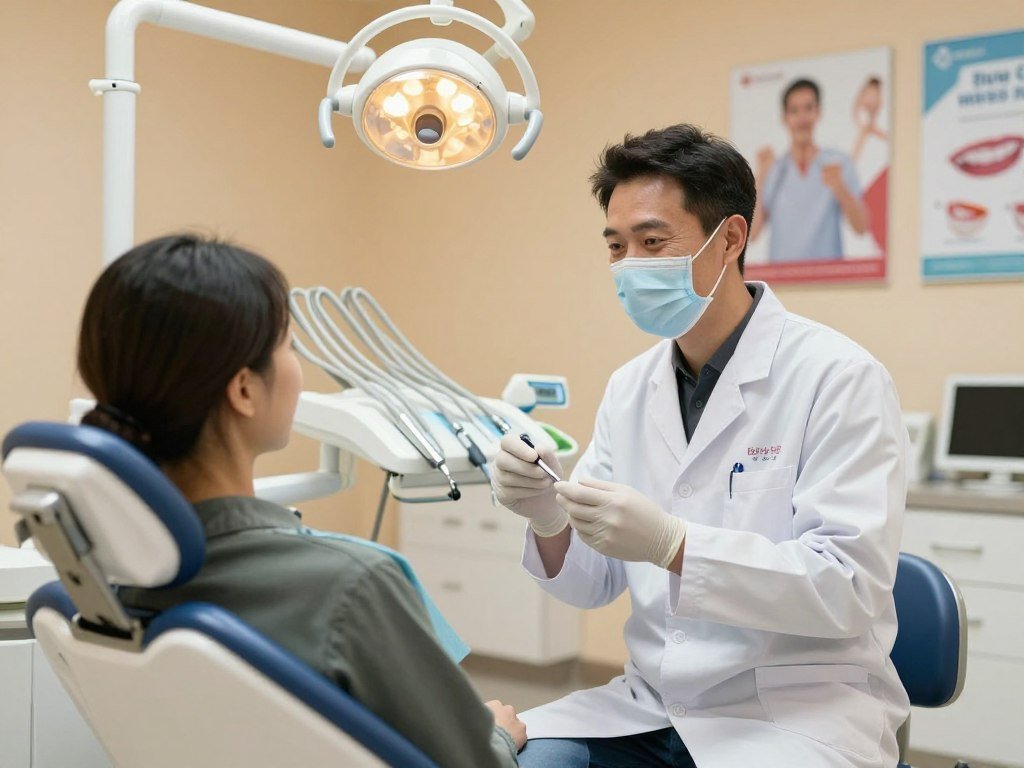
A comfortable visit starts with a team that listens, explains what it is doing, and gives you time to ask questions. Clear communication can help you understand the care being offered.
The team should explain procedures in plain language and discuss options before treatment. Notice whether staff listen to your concerns and answer questions about billing without rushing you.
Public reviews can offer clues about the office experience. Look for repeated, specific comments about scheduling, explanations, or staff responses. A high rating alone does not prove clinical quality, and one review may not reflect a typical visit.
The care team should be willing to talk through questions and treatment choices. The American Dental Association’s MouthHealthy guidance encourages patients to discuss concerns with their dentist. You can ask what a procedure involves, what other options exist, and what may happen if you wait.
Routine preventive visits are often scheduled about every six months. Your dentist may suggest a different interval based on your oral-health needs, including gum health and past decay. Before booking, note one concern you want the dentist or staff to address during the visit.

How Do Insurance Networks and Cost Estimates Work?
Confirm network status with both the insurer’s directory and the dental office before scheduling treatment. Two checks can help you avoid relying on an outdated provider listing.
An estimate is a planning tool, not a promise of what your plan will pay. Delta Dental Find a Dentist can help members locate listed providers, but the office should confirm current participation and new-patient status.
Check the Network Before You Book
Compare the insurer’s listing with details from the office and your plan documents. The insurer’s directory may show a provider as in-network, but it may not show whether that office has an open appointment.
| Check | Best place to check | What to confirm | Limitation |
|---|---|---|---|
| Insurer directory | Plan website or directory | Listed network status | May not confirm appointment availability |
| Dental office | Office staff | Current participation and appointment availability | Staff confirmation is not a final benefit decision |
| Plan documents | Member plan documents | Coverage terms, exclusions, and preauthorization or referral rules | Claims are processed under the plan |
Treat Estimates as Planning Tools
Delta Dental’s Cost Estimator groups geographic areas by the first three digits of a ZIP code. Its cost figures are estimates, not guarantees of payment or benefits.
Actual costs may be higher or lower than an estimate. If Cost Estimator information conflicts with your Delta Dental plan’s coverage details, the plan documents control.
Use an estimate to prepare questions, then ask the insurer or office to clarify your plan’s specific coverage.
Where Can You Find Lower-Cost Dental Care?
Start with a Federally Qualified Health Center if you need a sliding-scale fee, or a dental school clinic if reduced-rate care is available nearby. Both options may help when regular dental care strains your budget.
Federally Qualified Health Centers can provide dental services regardless of your ability to pay. They offer fees on a sliding scale based on income. Dental school clinics may charge reduced rates, and many limit charges to the cost of materials and equipment used.
| Option | Who it may help | Payment or coverage detail | What to confirm |
|---|---|---|---|
| Federally Qualified Health Center | People seeking care regardless of ability to pay | Sliding-scale fees based on income | Available services and local eligibility steps |
| Dental school clinic | Patients open to care in a teaching setting | Reduced rates; many limit charges to materials and equipment | Available services and how appointments work |
| ACA marketplace child dental coverage | Families seeking coverage for a child under 18 | Participating insurers must offer children’s dental coverage | Plan benefits and costs |
The Affordable Care Act marketplace requires participating insurers to offer dental coverage for children under age 18. Review the plan’s benefits and costs to see how that coverage fits your family’s needs.
For a dentist near me that accepts Medicaid, contact your state Medicaid agency and the dental office. Adult Medicaid dental benefits and participating providers vary by state, so confirm both before arranging care.
Ask for the expected out-of-pocket amount before agreeing to treatment.
What Should You Do Before Booking an Appointment?
Before booking, tell the office whether you need routine care, a specific treatment, or urgent help. A clear description helps staff decide what kind of appointment may fit.
Call to confirm the service, availability, network status, and likely patient costs. Some offices offer same-day or Saturday appointments, six-day schedules, or walk-ins, but access varies by office.
Keep these details ready when you call:
- Describe your main concern and when it began.
- Ask whether the office accepts new patients and provides the needed service.
- Confirm network participation and likely patient costs.
- Ask which records, medication information, or forms to bring.
If severe symptoms suggest an emergency, seek emergency assistance rather than waiting for a routine appointment.
Call the office to confirm same-day, Saturday, or walk-in access before you travel. If a dental or medical emergency needs immediate help, seek appropriate emergency assistance, such as calling 911.
Have a list of your medicines and allergies ready if the office asks for them. A family member can help describe symptoms if pain makes it hard to focus during the call.
Conclusion
A good dental relationship begins with care that fits your health needs and makes you comfortable asking questions. A clear explanation of treatment can help you feel more at ease during a visit.
The right office should offer the care you need, communicate in a way you understand, and fit your schedule. You should also know what you may pay before treatment begins.
For your family, a dependable dentist can support a steady routine and help protect each smile over time. Choose one office that meets your priorities and call to ask about its next available appointment.
FAQ
Do all dentists have to be board certified?
No, board certification is not a universal requirement for dentists to practice. Dentists must meet their state’s licensure rules, which include passing the INBDE. A dental license and board certification are different credentials. Board certification may show added training or qualification in a specialty, but it does not replace the state license required to practice.
What’s the difference between a dentist and orthodontist?
A general dentist provides broad oral-health care, while an orthodontist specializes in correcting tooth and jaw alignment. Orthodontists complete additional specialty training after dental school. A general dentist may spot a bite or alignment concern during a checkup and refer you to an orthodontist. Orthodontists use treatments such as braces or clear aligners to guide teeth.
What can the ER do for tooth pain?
An emergency department can assess serious symptoms and help stabilize pain or infection, but it usually cannot provide definitive dental treatment. ER staff may check for signs that an infection is spreading and offer medicine or other urgent care. A filling, root canal, or other lasting dental fix usually requires a dentist after emergency evaluation.
What stops tooth pain immediately?
No home measure reliably stops every cause of tooth pain immediately. An over-the-counter pain reliever may help if it is safe for you and you take it as directed. Do not place aspirin directly on a tooth, because it can harm the gum tissue. Severe or worsening pain needs prompt dental advice, especially with swelling or fever.
Will they pull an infected tooth in the ER?
Usually, an ER focuses on evaluation and stabilization rather than pulling an infected tooth. Staff can assess urgent symptoms and help manage pain or signs of spreading infection. A dentist or oral surgeon generally provides definitive treatment, which may include extraction or another approach. The right step depends on an exam and the condition of the tooth.
What are signs of sepsis from a tooth infection?
Fever or chills, confusion, rapid breathing, or a fast heart rate can signal a serious emergency. Sepsis is a life-threatening response to infection, and symptoms can worsen quickly. Seek emergency care or call 911 if these signs appear with a tooth infection. Do not wait for a routine dental appointment when severe symptoms may be present.
Why won’t my dentist pull my infected tooth?
Infection alone does not determine whether a tooth can be extracted. A dentist may need to assess the tooth, nearby tissues, and imaging before choosing treatment. A root canal or other care may save the tooth, while extraction could require a referral. The dentist may also judge that another approach is safer based on your health and the infection.
About The Author