What Are Foundation Models in Generative AI Explained
A chatbot that drafts an email and an image tool that turns a prompt into artwork may feel like separate technologies, but both can draw on broadly capable AI. These tools can help with everyday work, creative projects, and tasks that once needed special software or expert skills.
Knowing what sits behind a tool makes it easier to judge whether it fits the task you have in mind. This beginner’s guide explains what foundation models can do, how developers adapt them, where people use them, and what limits to keep in view.
Key Takeaways
- A foundation model is a broad base that can support different applications.
- Developers adapt models for specific jobs with prompts or extra training.
- Some models work with language, while others process images, audio, or mixed inputs.
- Generative AI creates content, while predictive AI estimates future outcomes.
- A fluent AI response can still be wrong or incomplete.
- Check a tool’s task, data practices, and output before trusting it.
What Are Foundation Models in Generative AI?
A foundation model is an AI system trained for broad capabilities that can be adapted to more specific tasks. Reusable is the key idea: one base may support several tools instead of serving only one fixed job.
A downstream task is a specific job a pretrained model is adapted to perform, such as classifying customer feedback or drafting support replies. Stanford’s Center for Research on Foundation Models coined the term in August 2021 for models trained on broad data and adapted across tasks.
A broad base can support many jobs, but broad capability does not mean equal skill at every job.
A reusable base for many tasks
Think of a foundation as a starting point, not a finished product for every user. A developer can build different applications around the same base, with each application shaped for its own users and goals.
For example, a company could adapt one base to sort customer feedback and another application to draft replies. The two tools may share a model, yet their prompts, data, and user interfaces can differ.
Machine learning systems find patterns in data and use them to produce outputs, such as decisions or predictions. You can learn more about machine learning applications in fields such as healthcare, retail, and finance.
How broad capability differs from narrow AI
A narrow AI model is built for a particular purpose. A bank’s loan-default model, for instance, predicts whether a loan may go unpaid; it is not a chatbot model.
A narrow system may suit a well-defined job better than a broad base. Its design focuses on one task, while a foundation model may be adapted for a range of downstream tasks.
Check whether a system is reusable across tasks or built for one defined job before assuming it can serve as a general-purpose base.
How Do Foundation Models Differ From LLMs and Generative AI?
The terms overlap, but each points to a different feature: broad adaptability, language focus, or content creation. Content creation is the defining function of generative AI.
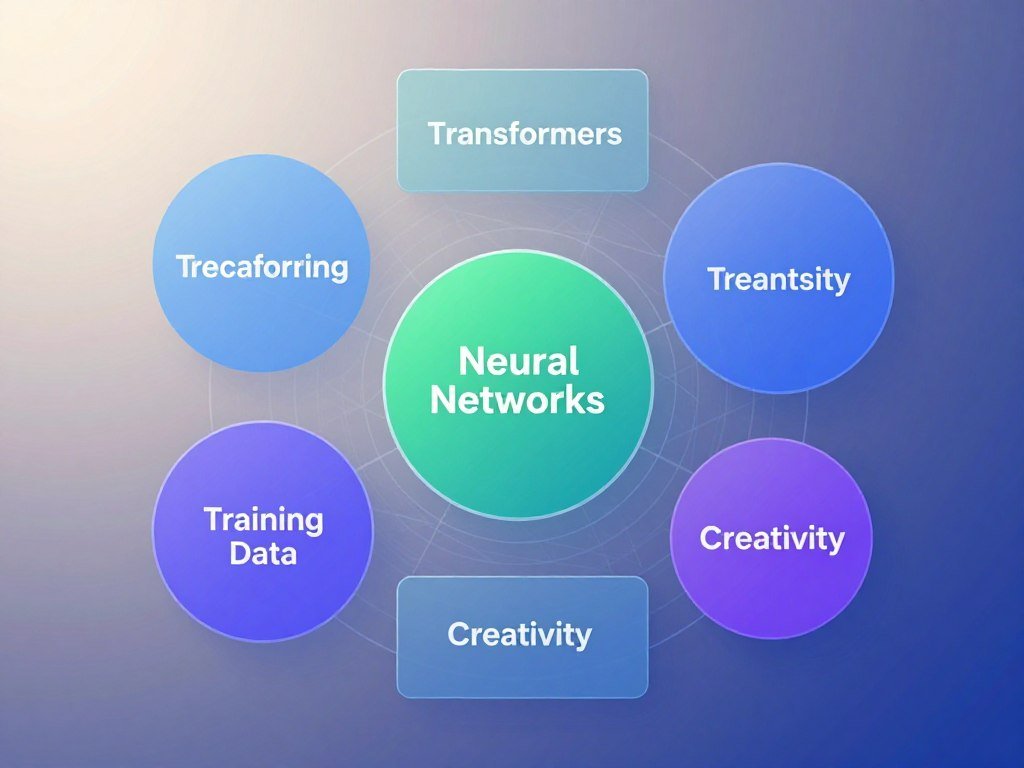
Foundation model, large language model, and generative AI are related labels, not interchangeable names for the same thing. Their categories can overlap without forming a strict hierarchy.
| Term | What it describes | How it relates to the others |
|---|---|---|
| Foundation model | A broad-capability AI base | May handle language or non-language tasks |
| Large language model | An AI system focused on language | Can also be a foundation model |
| Generative AI | A system that creates content | Can use a foundation model or LLM |
Foundation models and language models
Large language models, or LLMs, focus on language. They can work with text, answer questions, or draft content, while foundation models may also focus on images or other inputs.
BERT, GPT, and T5 show different approaches to language modeling. Some models suit tasks such as understanding text, while others can generate language in response to a prompt.
The word “large” has no established size threshold for LLMs. It describes a common trend, not a precise line that separates one kind of model from another.
Generative AI describes what a system does
A key feature of generative AI is that it creates new content, such as text, images, code, or audio. Its main goal is content creation, unlike systems built mainly to classify items, group data, or choose actions.
GPT-4 can generate language, while Midjourney and Stable Diffusion generate images. Copilot can generate code, and VALL-E can generate audio.
Large language models and foundation models can support generative AI, but the labels describe different features. Treat “large” as a descriptive trend in model size, not as a technical cutoff that separates LLMs from other systems.
How Does a Foundation Model Learn?
A language model can learn by repeatedly predicting which token is likely to come next in a sequence. Token means a piece of text, such as a word or part of a word.
The training objective depends on the model and its data, so not every foundation model learns the same way. A language model may predict tokens, while a diffusion model learns to remove noise from images.
Preparing broad training data
Before training, developers prepare examples the model can process. Text may be split into tokens, while images need a representation suited to visual information.
Useful data checks include:
- Coverage of the subjects the model is meant to handle.
- Data quality, including checks for errors and duplication.
- Suitable representation for each input type, such as text or images.
Gaps in the examples can leave the model with weak patterns for certain topics. Repeated or poor-quality data can also shape what the model learns.
Learning from a training objective
A training objective gives the model a goal for each example. In next-token prediction, the model sees part of a sequence and tries to guess the token that follows.
Image diffusion works differently. The model learns to denoise an image, step by step, so it can later turn noise into a new image.
Transformer architecture is common in text models, but not every foundation model uses a transformer. Some systems use other designs suited to their data and goals.
Updating model parameters
Model parameters are numbers that shape how inputs become outputs. During training, mathematical optimization adjusts those numbers based on how well the model meets its objective.
Researchers can train large models with specialized systems and careful planning. Stanford’s Levanter training system is designed for scalable, reproducible foundation-model training.
Better training examples cannot guarantee a correct answer, since the training objective teaches patterns rather than a universal test of truth.
How Is a Foundation Model Adapted for a Specific Task?
A developer can often guide a pretrained model with instructions before deciding whether its parameters need to change. Prompting is the lightest approach because it supplies directions at use time.
Prompting changes the instructions, fine-tuning changes model parameters, and PEFT changes only part of those parameters. Fine-tuning uses task-specific data to shape a model for a particular downstream task.

Prompting guides a model at use time
A prompt can state the task, set limits, and provide examples of a useful response. The model’s parameters stay the same; the directions help it apply its existing patterns to the request.
For instance, a support team might ask a model to reply in plain language and use a short format. If the directions are clear and the model already handles the task well, no extra training may be needed.
Fine-tuning changes model parameters
Fine-tuning continues training with task-specific data. It can help adapt a model to a specialized style or repeated job, though preparing suitable examples takes effort.
A developer might use an API, which gives an application access to a hosted model, or work with a local copy. The right option depends on how the application needs to run and what access the developer has.
PEFT updates a smaller part of a model
Parameter-efficient fine-tuning, or PEFT, updates a smaller portion of a model’s parameters. It can adapt a model without changing every parameter.
These approaches do not have to be used in the same order for every project. Fine-tuning is not required for each application, and the simplest method that meets the task can be enough.
Start with prompting when instructions are enough, then test a more involved adaptation only if the task still needs it.
What Types of Foundation Models Are There?
A model’s type often reflects the information it works with, such as text, images, audio, or several input types together. Multimodal means a model can process more than one kind of information.
Model categories can overlap, so they do not form one fixed, mutually exclusive list. A system might handle text and images while also fitting a language-focused category.
| Model type | Typical input | Common capability | Example task |
|---|---|---|---|
| Language | Text | Read or generate language | Draft a support reply |
| Vision | Images | Analyze visual details | Describe an image |
| Audio | Speech or sound | Process or generate audio | Turn text into narration |
| Multimodal | Text and images | Work across input types | Answer a question about an image |
Language and vision models
Language models work mainly with text. Vision models work with images, such as a photo someone wants described or checked for visual details.
Audio models can process spoken language or create speech from text. For narration, an AI voice generator can turn a script into spoken audio that you can preview and revise.
These labels describe the information a model handles, not every job it can perform. A vision system might identify objects, while another could help create an image.
Multimodal models combine input types
A multimodal model can work across text, images, audio, video, or sensor data. It may take in more than one type and use their relationships to respond to a task.
A multimodal LLM is an LLM extended to handle non-text inputs alongside text. It is one part of the broader multimodal model family, which can include systems that do not focus on language.
A set is misleading if it treats overlapping categories as a single fixed taxonomy. Classify a system by both what it can process and what it is built to do, rather than forcing it into one exclusive category.
What Can Foundation Models Do?
A single foundation model can support a specialized application, while other broad models can work beyond language altogether. Applications shape a model for a particular user-facing task.
A product interface and its underlying model are not necessarily the same thing. An application can add instructions, task-specific data, and controls around the model a user interacts with.
Examples of generative AI applications include:
- ChatGPT for conversational text. The original version used GPT-3.5, adapted with chat-specific data.
- Midjourney or Stable Diffusion for image generation.
- Copilot for code generation.
- VALL-E for audio generation.
These tools show how a model can help create different kinds of content. To explore visual workflows, see this guide to AI image generation, including prompt-based images and editing.
Generated images can include details that look convincing but are inaccurate, so check them before using them in a project.
Foundation models can also support tasks outside familiar chat tools. DeepMind’s Gato was designed for work that included controlling a robot arm and playing video games.
Those examples show why a chatbot alone cannot stand for every capability. A model may be part of a product, but the product’s features also depend on its design and intended use.
Match the application to the task and input you actually need, rather than judging capability from a familiar chatbot alone.
How Do Generative and Predictive AI Differ?
Generative AI creates content, while predictive AI estimates what may happen next from historical patterns. Different outputs point to different goals.
Generative AI makes new content; predictive AI forecasts outcomes from data. A task can also use both in sequence, with a forecast first and a generated explanation afterward.
| System | Primary aim | Typical output | Example |
|---|---|---|---|
| Generative AI | Create content | Text, images, audio, code, or video | Draft an email |
| Predictive AI | Estimate future outcomes | Forecast or risk estimate | Forecast sales |
| Combined workflow | Forecast, then explain | Estimate plus generated text | Illustrative workflow: forecast demand, then explain the estimate |
Generative AI creates new content
Generative systems can produce text, images, audio, software code, or video in response to prompts. Their output is new content shaped by patterns learned from data.
A system that drafts a product description creates text, even if the prompt includes product facts. Its main job is to form content that fits the request.
Predictive AI forecasts outcomes
Predictive AI uses patterns in historical data to estimate future outcomes. It can forecast sales or demand, detect fraud, or help optimize logistics.
Forecasting and content creation answer different needs. A sales forecast estimates a future result, while a generated explanation puts information into words.
Choose the approach by the output the task needs: new content, a forecast, or both in sequence.
What Are the Benefits of Foundation Models?
Reusing a pretrained base can save a development team from starting a separate model project for every related task. Transfer learning applies patterns learned in one task to another.
A pretrained base gives developers a starting point for downstream work instead of requiring a new model from scratch for every application. Its value depends on whether the learned patterns fit the new job.
Practical benefits include:
- Reuse of learned patterns that can help with related work.
- A starting point for several downstream tasks.
- Less need to build a separate model from scratch for each application.
For example, a team may adapt a broad base for several language tasks rather than build each tool independently. Machine learning also supports separate areas such as natural language processing, computer vision, and audio processing.
The same base will not suit every use. A specialized model may be a better fit when a task is narrow, well defined, and needs a focused design.
Favor reuse when tasks share useful patterns, but retain a specialized approach when the job is narrow and its requirements are distinct.
What Challenges Affect Foundation Model Reliability?
A fluent answer can still be fabricated or wrong, especially when a prompt leaves important information unclear. Plausible wording is not proof that a response is true.
Generative models can produce likely-sounding content without checking whether each claim is true. That gap can make them risky in healthcare, finance, legal work, and regulatory work.
Hallucinations and accuracy
An AI hallucination is an incorrect or made-up output presented as fact. Sparse or unclear information can leave a model with weak clues, yet it may still form a confident reply.
Generative models learn patterns that help them produce plausible outputs; that process does not verify claims against truth. The NIST Generative AI Risk Management Profile covers risks such as false outputs, privacy impacts, and harmful bias.
Data quality and privacy
Training data can have gaps, errors, or bias. These problems can affect which patterns a model learns and how well it handles people or topics that appear less often.
Input data raises its own privacy questions. A user may share personal or sensitive details in a prompt, so the system’s data practices matter as much as its written response.
The data challenge generative AI faces includes gaps and bias in training examples, plus questions about the information users enter. These issues can shape both output quality and privacy risk.
Interpretability and responsible use
One challenge related to the interpretability of generative AI models is explaining how complex operations and probabilistic generation led to a particular output. A result may be easy to read, yet hard to trace to a clear reason.
The primary goal of ethical AI development is to deliver useful outcomes while reducing harm through fairness, accountability, and appropriate human oversight.
Use these practical checks:
- Verify outputs that could affect a person’s health, money, rights, or safety.
- Assess whether the training or input data fits the task.
- Provide human review for high-stakes decisions.
Keep a qualified person responsible for decisions in healthcare, finance, legal work, or regulatory work.
How Does Grounding Help Generative AI?
Grounding gives a model relevant external information to use when forming an answer. External information can help connect a response to material beyond patterns learned during training.
Retrieval-augmented generation (RAG) supplies relevant data at response time without retraining the model. It gives the model material to use when answering a question.
Connect responses to external information
Grounding links a language model’s response to outside data. That data could come from documents or another information store the application can access.
For example, a workplace assistant could retrieve the current vacation policy before answering an employee’s question. The response can then use the policy text available to the system.
RAG does not change the model’s stored parameters. Instead, it finds relevant material when the user asks a question and supplies it as context.
Retrieval-augmented generation supplies relevant data
RAG can help an application use information that changes, such as a current policy document. Developers can update the information store without retraining the model for each change.
The method improves the information available during a response, but it does not ensure the model interprets that material correctly. The retrieved text may also be out of date or unrelated to the question.
Check whether the retrieved material is current and relevant before relying on a grounded answer.
How Do Apple’s Foundation Models Work?
Apple’s third-generation Foundation Models use five models split between on-device and server-based operation. That split lets different models handle different kinds of work.
Two models run on devices, and three server-based models run on Private Cloud Compute. The lineup includes language and multimodal capabilities, along with image generation and editing.
| Model | Deployment | Main role or capability |
|---|---|---|
| AFM 3 Core | On-device | Dense model with 3 billion parameters |
| AFM 3 Core Advanced | On-device | 20 billion parameters; activates 1 to 4 billion at a time |
| AFM 3 Cloud | Server-based, Private Cloud Compute | Cloud model for Apple applications |
| ADM 3 Cloud (Image) | Server-based, Private Cloud Compute | Image generation and editing, including Image Playground |
| AFM 3 Cloud Pro | Server-based, Private Cloud Compute | Cloud model for more advanced tasks |
On-device models
AFM 3 Core is a dense on-device model with 3 billion parameters. AFM 3 Core Advanced has 20 billion parameters and uses a sparse design.
Depending on the request, AFM 3 Core Advanced activates 1 to 4 billion parameters at a time. It is natively multimodal and supports expressive voices and higher-accuracy dictation.
Server-based models
The server-based models are AFM 3 Cloud, ADM 3 Cloud (Image), and AFM 3 Cloud Pro. They run on Private Cloud Compute.
ADM 3 Cloud (Image) supports image generation and editing, including Image Playground. The latest models add audio, image understanding, long-context reasoning, and visual generation capabilities.
Private Cloud Compute does not store or share user data, including with Apple.
Training data and privacy
Apple’s training data includes publicly available information, licensed or purchased third-party data, open-source data, dedicated-study data, and synthetic data.
Private personal data and user interactions are not used to train Apple’s foundation models. A model provider’s training practices and processing choices can differ.
When evaluating any model provider, check where processing happens and what data may be used for training.
Conclusion
A foundation model is best understood as a reusable starting point, not a guarantee that every application will be suitable or accurate. Its usefulness depends on the task, the data, and the application built around it.
Before using a tool, write down the job you need done, which inputs it may use, your privacy limits, and how you will check the output. Test a tool on a small, representative example and verify its result before relying on it for important work.
FAQ
How many foundational AI models are there?
There is no fixed count of foundational AI models. New models and model families appear over time, and a model is different from a broad category such as language or vision. One family may include several versions or specialized models. A count also depends on whether you mean individual models, product offerings, or research families.
Is ChatGPT a generative model?
Yes, ChatGPT is a generative model because it creates text in response to prompts. The original version used GPT-3.5 adapted for chatbot use. ChatGPT is a product interface, while GPT-3.5 is the model behind that original version. Products can change the models and features they use over time.
Are large language models a subset of foundation models?
Many large language models are foundation models, but the terms do not form a strict hierarchy. “Large language model” describes a language-focused system, while “foundation model” points to broad capability and adaptability. The categories overlap, and their boundaries are not exact. Some foundation models focus on inputs beyond language.
What are the 5 main AI models?
There is no universally accepted set of five main AI models. People classify systems by input type, purpose, or capability, and those groups can overlap. For example, a system might process text and images while generating content. A useful classification names the system’s inputs and its intended job.
Who owns the data a foundation model was trained on?
Ownership depends on where the training data came from, its licenses, and the terms that apply. Training sets may combine public, licensed, open-source, or synthetic material, each with different rules. Do not assume one party owns every item in a training set. Check the model provider’s documentation for its data sources and terms.
About The Author