Rental Contract Clauses That Actually Protect You
Signing a lease or equipment agreement without ironclad terms is one of the quickest ways to lose money, compromise property, and end up in endless disputes. Whether you are leasing real estate, vehicles, or commercial tools, a standardized document rarely provides full protection.
To safeguard your financial interest and minimize liability, your agreement must include clear, enforceable provisions tailored to your operational risks. Here is a comprehensive breakdown of the vital rental contract clauses every owner and manager should implement.
The Anatomy of an Ironclad Rental Agreement
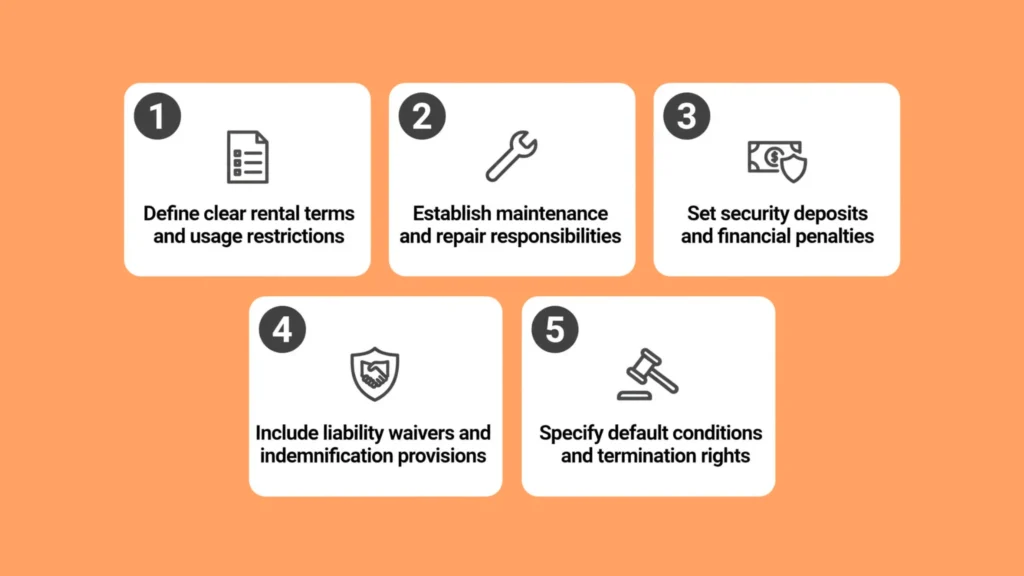
A solid rental contract does more than outline payment dates and property descriptions. It sets clear boundaries for use, defines consequences for non-compliance, and determines who carries the financial burden when things go wrong. These considerations are particularly important when establishing a rental business, where asset protection and customer responsibilities directly affect profitability.
When drafted correctly, these terms act as a preventive risk management strategy. They establish mutual clarity from day one, leaving little room for misinterpretation if legal enforcement becomes necessary. A complete risk protection strategy balances three core pillars:
Scope and Operations: Covers strict usage limitations, routine maintenance obligations, and standard operational rules.
Financial Defenses: Establishes security deposit handling, late return penalty structures, and fee audits.
Legal Risk Control: Enforces liability waivers, indemnification terms, and clear default mechanisms.
Key Rental Contract Clauses to Include
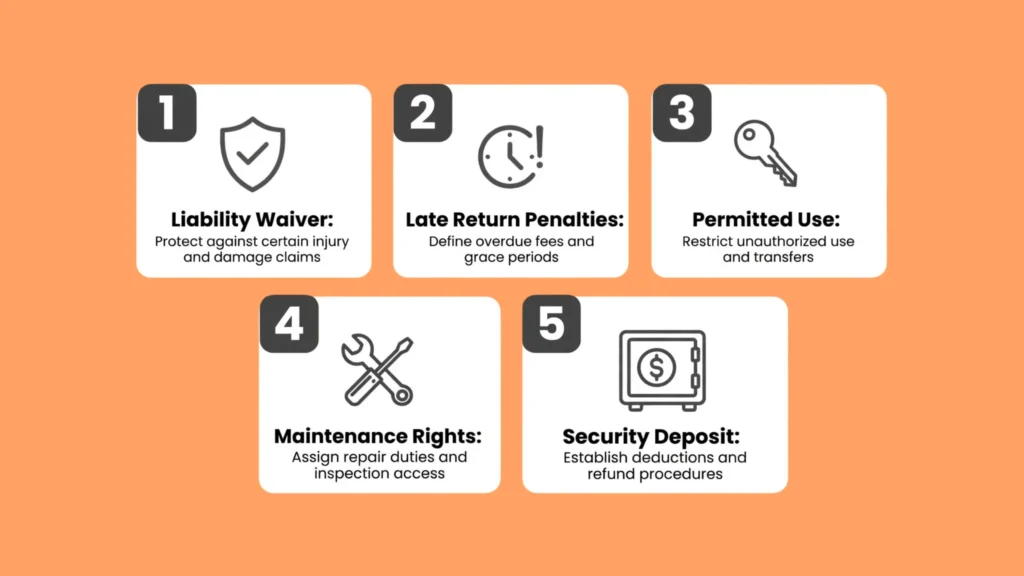
1. Liability Waiver and Hold Harmless Provisions
A liability waiver rental clause shifts responsibility away from the owner if a tenant or user suffers injury, loss, or property damage while using the rented asset.
Without a well-worded indemnification clause, property owners risk getting drawn into costly lawsuits caused by third-party negligence. Combining these protections with appropriate rental property insurance can further protect investments against unexpected damage, financial losses, and liability claims.
This provision ensures the renter defends and holds you harmless against external claims, legal costs, and settlement fees arising from their use of the asset.
2. Clear Late Return Penalty Structure
Unscheduled delays disrupt operations and lead to lost revenue. A defined late return penalty clause sets precise expectations and escalating financial consequences for overdue assets.
Rather than relying on vague warnings, state exact figures and timeframes:
Grace Periods: Define whether a grace period exists, such as fifteen minutes for equipment or three days for residential property.
Tiered Fee Schedules: Outline daily or hourly penalty rates that accumulate until the asset is fully returned or recovered.
Default Definitions: Specify the exact point at which an unreturned asset moves from overdue to a contractual default or conversion claim.
3. Permitted Use and Restrictions
Never assume a renter will handle an asset responsibly. A permitted use clause establishes precise parameters on how, where, and by whom the asset can be operated. These restrictions become especially important in a peer-to-peer rental business, where multiple independent owners and renters share responsibility for rented assets.
Common restrictions to include:
Prohibiting sub-leasing or transferring possession to unauthorized third parties.
Restricting geographic boundaries, mileage, or off-road operation for vehicles and equipment.
Enforcing compliance with local laws, zoning regulations, and safety standards.
4. Maintenance, Repair, and Inspection Rights
Who fixes an asset when it breaks down? Without an explicit maintenance clause, disputes over wear and tear versus tenant negligence are inevitable.
A thorough agreement requires the renter to maintain the asset in good working condition, handle routine upkeep, and report damage immediately. Additionally, include an inspection clause granting you reasonable access to review the asset’s condition during the agreement term.
5. Security Deposit and Damage Deductions
A security deposit clause outlines how funds are collected, held, and applied toward unpaid fees or repairs.
To make this clause effective, specify:
Acceptable reasons for deductions, including excessive dirtiness, physical damage, or missing components.
The timeline and procedure for returning the remaining deposit post-inspection.
The owner’s right to pursue additional funds if damages exceed the initial deposit amount.
6. Default and Early Termination
You need a reliable mechanism to end the agreement quickly if the renter breaches key obligations. An early termination clause permits you to revoke possession without unnecessary delays.
Triggers for default typically include non-payment, unauthorized alterations, criminal activity on the premises, or failure to maintain required insurance coverage.
Protection Levels Across Agreement Types
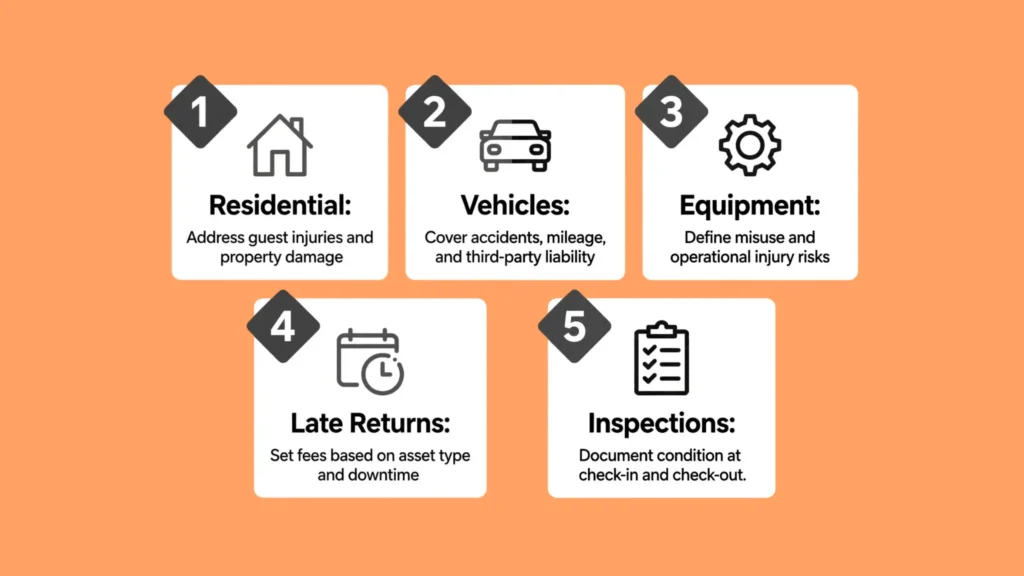
Different types of assets require distinct levels of contractual security. Customizing your rental agreement template clauses to match specific risk profiles ensures comprehensive protection.
Liability Waiver Clauses
Residential Real Estate: Focuses on guest injuries, slip-and-fall hazards, and personal property loss.
Vehicle and Fleet Leasing: Focuses on traffic accidents, collision damages, and third-party liabilities.
Commercial Equipment: Focuses on operational injuries, mechanical misuse, and job-site hazardous conditions.
Late Return Penalties
Residential Real Estate: Relies on fixed daily late rent charges applied after a designated grace period.
Vehicle and Fleet Leasing: Uses hourly or daily overage rates combined with administrative recovery fees.
Commercial Equipment: Applies daily standby rates or lost revenue compensation for downtime.
Inspection Terms
- Residential Real Estate: Requires twenty-four to forty-eight hours advance written notice prior to entry, particularly when managing properties in a short-term rental business.
Vehicle and Fleet Leasing: Performed immediately at check-in and check-out, often supported by telemetry tracking.
Commercial Equipment: Reserves on-site access rights for routine maintenance audits and usage checks.
Common Mistakes When Drafting Rental Agreements
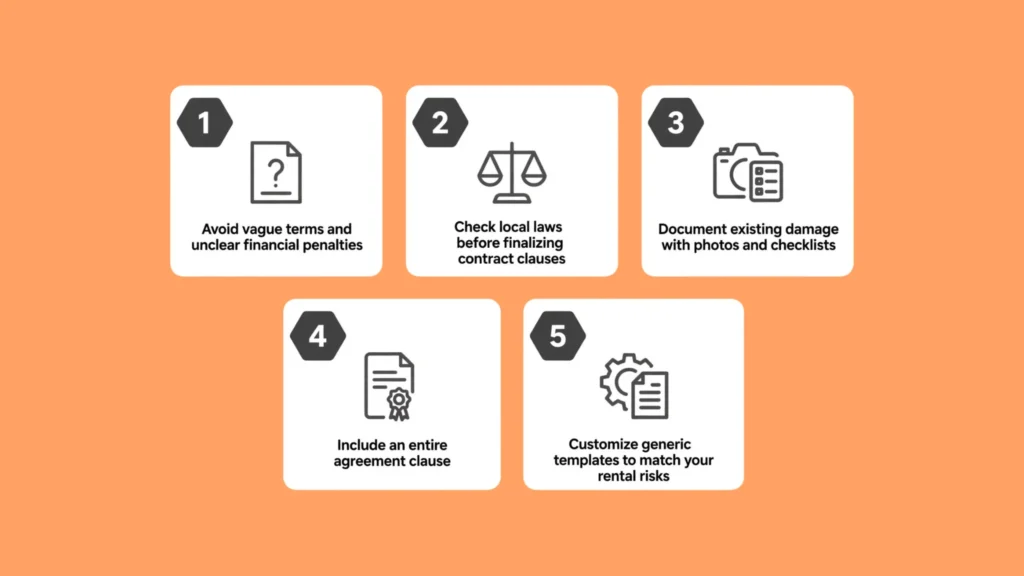
Using Vague Language: Terms like reasonable condition or prompt return invite subjective disagreements. Use exact timelines, objective standards, and explicit dollar amounts wherever possible.
Ignoring Local Regulations: Consumer protection and landlord-tenant laws vary widely by jurisdiction. Clauses that violate local statutory caps or mandatory notice periods can render the entire agreement void.
Failing to Document Pre-Existing Condition: A strong damage clause is ineffective if you cannot prove the asset’s condition before the rental began. Always pair your contract with signed inspection checklists and photo evidence.
Omitting Integration Clauses: An integration or entire agreement clause ensures that verbal promises made before signing do not override the terms set forth in the written contract.
Frequently Asked Questions: Rental Contract Clauses
What makes a liability waiver clause legally enforceable?
A liability waiver is generally enforceable if it is written in clear, unambiguous language, prominently displayed in the contract, and complies with local state laws. Waivers typically protect against ordinary negligence, but they rarely cover gross negligence, intentional misconduct, or illegal acts.
Can I charge any amount for a late return penalty?
No. Late penalties must be reasonable estimates of the actual financial harm caused by the delay rather than purely punitive damages. Charging exorbitant fees that far exceed normal operational losses may result in a court striking down the clause as unenforceable.
Are generic rental agreement template clauses safe to use?
Templates serve as a helpful starting framework, but they are rarely sufficient on their own. Standard forms often omit specific operational risks, localized legal requirements, or customized usage rules unique to your business model.
How do I handle pre-existing damage in a rental agreement?
Include a mandatory joint inspection clause. Document all existing scuffs, dents, or functional defects on an itemized condition sheet signed by both parties prior to handing over possession.
What happens if a tenant refuses to sign an updated contract clause?
Existing contracts cannot be changed unilaterally mid-term unless the original agreement allows for specific operational updates. Any material change to lease terms typically requires mutual assent through a signed addendum or renewal contract.
Final Thoughts: Rental Contract Clauses
A comprehensive rental contract does not just mitigate risks when problems arise; it sets professional boundaries that prevent misunderstandings from happening in the first place. By incorporating robust liability waivers, explicit late return penalties, defined usage rules, and clear maintenance expectations, you create a solid framework that safeguards your assets and guarantees operational continuity.
Review your contracts regularly, update provisions to align with changing laws, and ensure your wording is precise, fair, and legally sound.
About The Author