The SBA Loan Process From Application to Funding
Securing expansion capital is one of the most transformative milestones for any growing company. When conventional bank financing falls short, government-backed loans step in to offer competitive interest rates and extended repayment terms. Understanding the sba loan process helps you navigate each stage with clarity, confidence, and peace of mind.
While government loan programs offer generous borrowing limits, the application journey requires thorough preparation, documentation, and patience. The entire path from pulling together your initial financial records to receiving funds in your bank account involves distinct phases where both your lender and federal underwriting teams review your business’s financial health.
The SBA loan process guides small business owners through pre-application preparation, lender underwriting, government authorization, and final funding. Applicants must meet specific eligibility rules, gather three years of tax returns, and submit comprehensive financial statements. While standard timelines range from 60 to 90 days, staying organized speeds up approvals and protects long-term company growth.
Key Takeaways
Standard SBA funding timelines range between 60 to 90 days
Preferred lenders fast-track approvals through delegated underwriting authority
Organized financial statements prevent costly application administrative delays
Meeting core debt service coverage ratios ensures loan approval success
What Is the SBA 7(a) Program and How Does It Work?
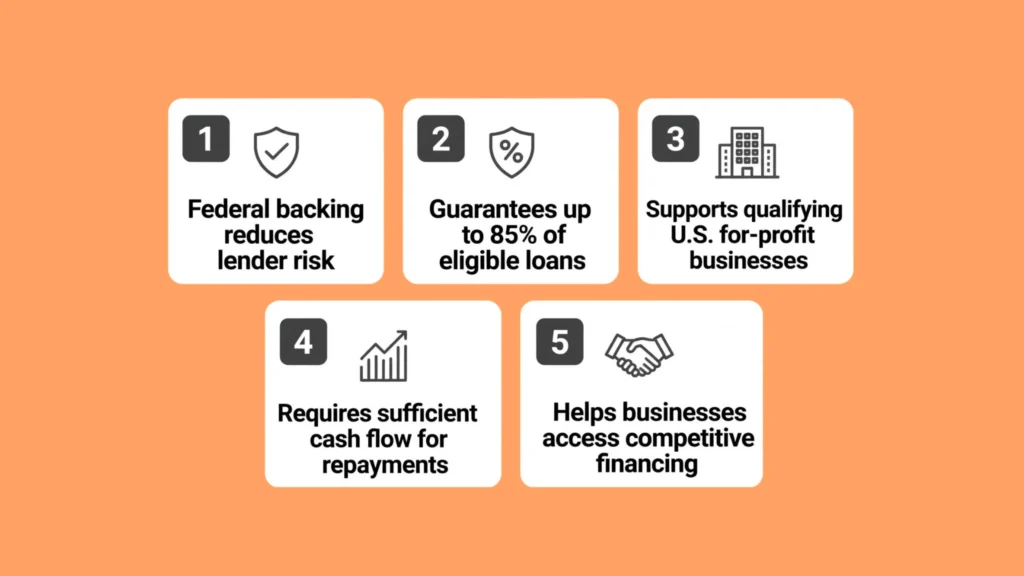
Have you ever wondered why banks hesitate to fund small businesses even when revenue is growing fast? Traditional lenders often worry about collateral deficits or limited operating track records. The Small Business Administration solves this challenge by guaranteeing up to 85% of loans issued by participating financial institutions. This federal backing reduces lender risk, unlocking larger funding limits and lower interest rates for business owners.
Understanding core sba 7a requirements is essential before submitting your formal application file. Your company must operate as a for-profit entity within the United States, demonstrate an inability to secure conventional credit on reasonable terms, and show sufficient cash flow to cover debt payments. Partnering with experienced advisory services like reliablestartup.com ensures your business meets foundational eligibility standards before approaching lenders. Exploring different business funding options can also help entrepreneurs identify suitable financing sources when launching or expanding their companies.
To see how an application moves toward final disbursement, consider the typical approval flow. First, you gather required tax filings and financial statements. Next, your preferred lender reviews your file and submits it for federal authorization. Once authorized, closing documents are executed, and funds are deposited directly into your commercial checking account.
Essential SBA Loan Documents You Need to Gather
Gathering your paperwork is often the most labor-intensive part of applying for a government-backed loan. Organizing complete sba loan documents beforehand reduces back-and-forth requests with underwriters and keeps your timeline on track.
Preparing accurate financial projections also helps communicate your company’s expected revenue, expenses, and future growth potential. Missing a single required schedule or outdated profit-and-loss statement can freeze your file for weeks.
Creating a dedicated digital record folder simplifies sharing records securely with your loan officer. Having these core financial records organized guarantees your application moves into underwriting without friction.
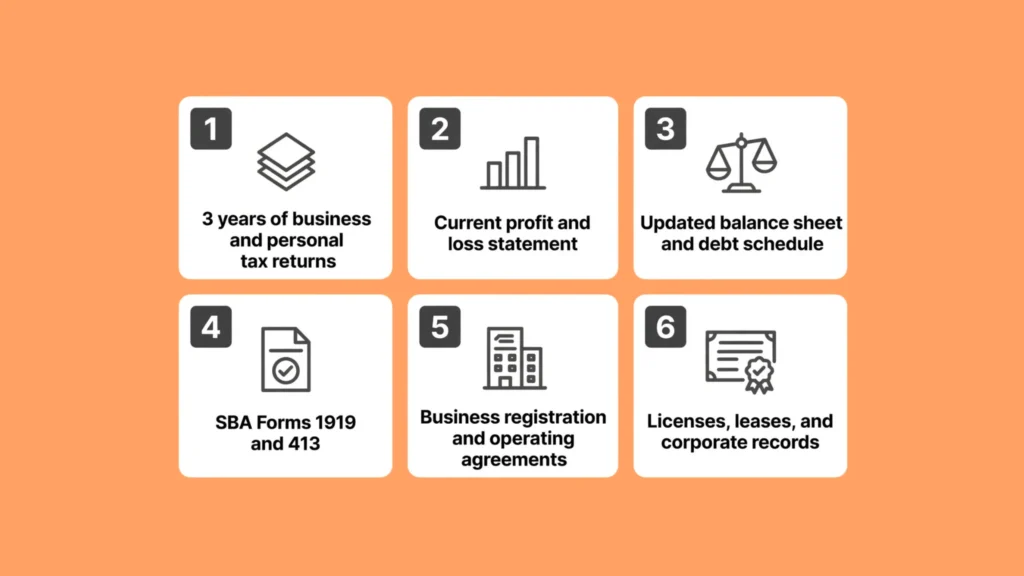
Federal Tax Records: Three complete years of signed business and personal tax returns for all owners with 20% or more equity.
Financial Statements: Year-to-date profit and loss statement, current balance sheet, and a detailed business debt schedule.
SBA Application Forms: Completed Borrower Information Form 1919 and Personal Financial Statement Form 413.
Corporate Formation Records: Entity registration certificates, operating agreements, business licenses, and commercial real estate leases.
Understanding the Realistic SBA Loan Timeline
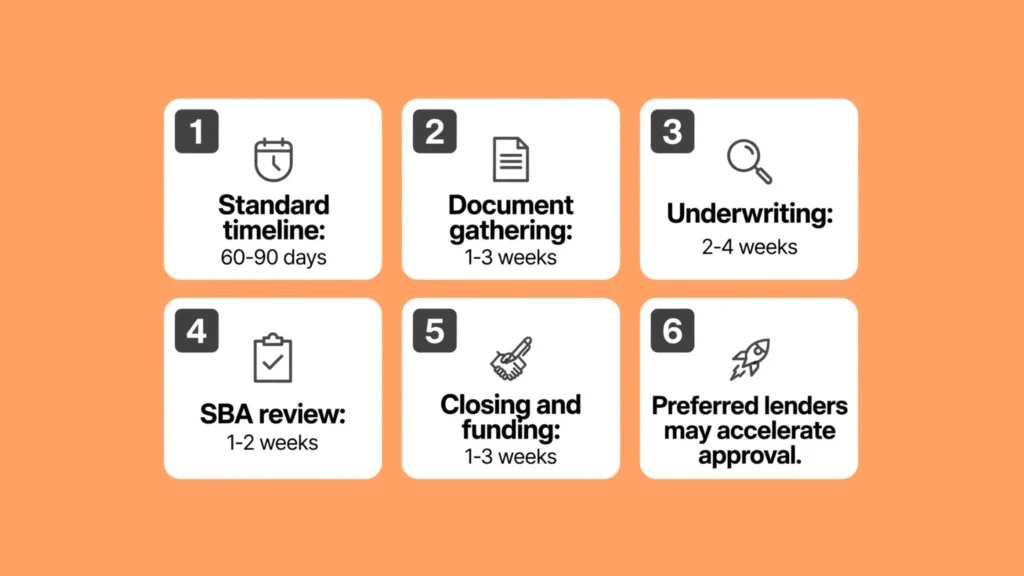
Managing your expectations around the sba loan timeline prevents operational cash flow strains while waiting for funds. While fast alternative lenders advertise same-day decisions, government-guaranteed financing requires thorough review to secure low interest rates.
The overall turnaround time depends heavily on your lender’s internal processing systems and whether they hold Preferred Lender Program (PLP) status. PLP lenders possess delegated authority to approve loans in-house, cutting weeks off the federal authorization stage.
| Loan Phase | Standard Lender Timeframe | Preferred Lender (PLP) Timeframe |
| Document Gathering & Pre-Screen | 1 to 3 weeks | 1 to 2 weeks |
| Underwriting & Credit Approval | 2 to 4 weeks | 1 to 2 weeks |
| SBA Government Review | 1 to 2 weeks | Immediate (Delegated Authority) |
| Closing & Fund Disbursement | 1 to 3 weeks | 1 to 2 weeks |
Step-by-Step Breakdown of the SBA Loan Process

Following a clear roadmap ensures you stay proactive during every phase of underwriting. Each stage brings your company one step closer to securing capital.
Step 1: Pre-Qualification and Document Assembly
Begin by calculating your business debt service coverage ratio to confirm cash flow supports new loan payments. A well-structured business plan also helps demonstrate your company’s financial goals, operational strategy, and ability to repay borrowed funds.
Step 2: Lender Underwriting and Credit Review
Your lender analyzes credit history, evaluates available business collateral, and verifies operating revenue. Utilizing setup support from reliablestartup.com helps format financial projections cleanly, giving credit committees total confidence in your business stability.
Step 3: SBA Authorization and Loan Commitment
Once the lender approves your file, they submit the complete application package for federal guarantee processing. Upon review, the agency issues a formal loan authorization detailing binding interest rates and repayment terms.
Step 4: Closing, Verification, and Disbursement
Review and sign final legal notes, security agreements, and insurance compliance forms. After final closing checks are completed, the lender wires funds directly into your business bank account.
Common Mistakes That Delay SBA Loan Approvals
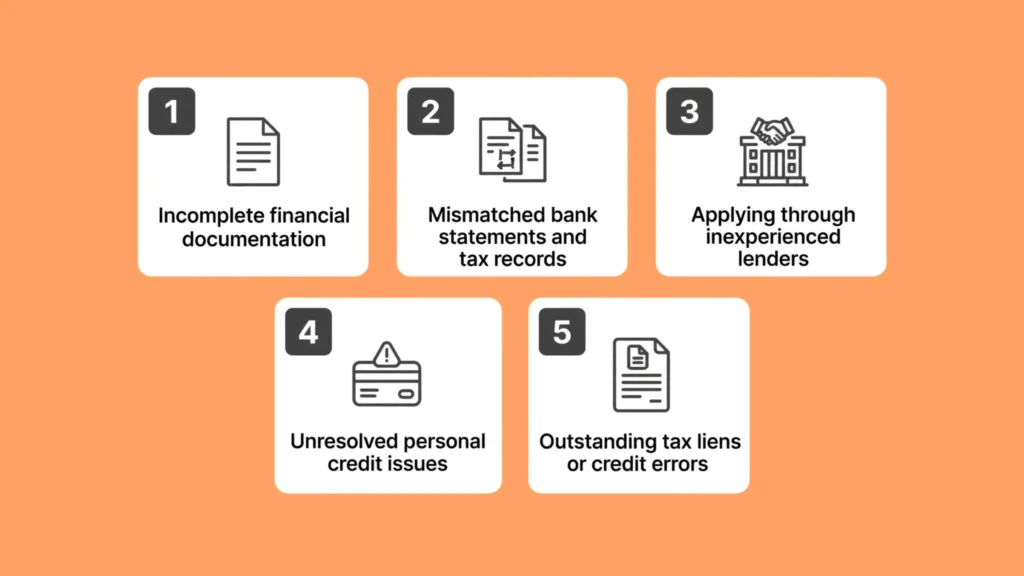
Many qualified entrepreneurs encounter frustrating delays simply because of administrative mistakes during application setup. Recognizing these obstacles early helps protect your funding schedule. Submitting incomplete financial packages is the leading cause of underwriting stalls. Sending mismatched bank statements or missing tax return schedules forces officers to pause processing until corrected records arrive.
Another frequent trap is applying with non-preferred lenders who lack experience with federal loan structures. Working with lenders unfamiliar with government programs leads to repeated file revisions and longer review cycles. Finally, failing to address negative personal credit entries early can cause unexpected pauses. Resolving tax liens or credit errors before applying ensures your application proceeds through credit reviews smoothly.
How to Speed Up Your SBA Loan Application?
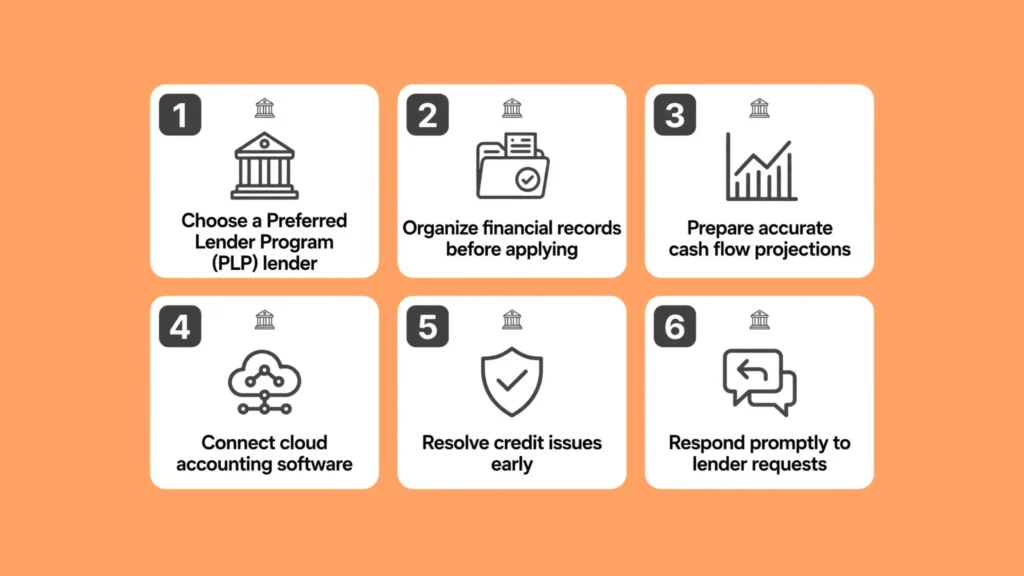
Accelerating your approval timeline comes down to proactive organization and choosing the right lending partner. Taking deliberate steps early reduces administrative friction at every turn. Work exclusively with active Preferred Lender Program financial institutions. These experienced lenders make final credit decisions internally, skipping redundant secondary review procedures.
Connect your cloud accounting software directly with your lender’s portal to streamline financial verification. Automated document imports eliminate manual entry errors and help underwriters review cash flow trends quickly.
Guidance from business advisors like reliablestartup.com ensures your application file matches exact lender expectations before submission. Streamlining document management lets you focus on business growth while your loan moves toward funding.
Frequently Asked Questions
What credit score do I need for an SBA 7(a) loan?
While the SBA sets no official minimum credit score, most lenders require a personal credit score of 680 or higher to qualify for favorable terms.
How long does it take to get SBA loan funds disbursed?
The standard timeline takes between 60 to 90 days from initial application to final bank account deposit, depending on lender efficiency.
What documents are required for an SBA loan application?
You need three years of business and personal tax returns, current financial statements, SBA forms 1919 and 413, entity documents, and a debt schedule.
Can I get an SBA loan for a brand new business startup?
Yes, startups can qualify for SBA financing, though lenders usually require strong industry experience, a solid business plan, and a 10% to 15% equity down payment.
Conclusion
Navigating government-backed financing is a rewarding strategy that unlocks long-term capital for your company. By understanding required eligibility rules, organizing your paperwork, and working with top preferred lenders, you can manage the application journey smoothly. Staying prepared protects your business timeline and positions your brand for long-term commercial success.
About The Author