E Waste Recycling Business: Where the Money Actually Is
Key Takeaways
Real revenue sources in the e-waste industry
Essential steps for an electronics recycling startup
High-value metals found in printed circuit boards
Navigating R2 certification requirements for growth
Practical business registration and compliance tips
Ever wondered what happens to the millions of old smartphones, discarded laptops, and obsolete office servers retired every single year? Most people assume discarded gadgets are just junk, but seasoned operators know that launching an e-waste recycling business opens the door to a massive urban mining opportunity, one of the most promising climate-focused ventures today. Scrap electronics contain incredible concentrations of precious metals, reusable components, and high-purity industrial materials that make processing them remarkably lucrative.
Understanding regulatory hurdles and securing proper operational standards like an official R2 certification gives your agency a massive edge when bidding for high-paying corporate disposal contracts. If you need help structuring your business entity, filing initial paperwork, or getting your legal foundation set up, platforms like reliablestartup.com can streamline your registration process so you can focus on building your client relationships.
An e waste recycling business generates profit through two primary streams: IT asset disposition (ITAD) refurbishing and raw material recovery. Circuit boards, copper wiring, and whole devices yield significant revenue when properly collected and processed. By launching a structured electronics recycling startup, achieving voluntary industry credentials like R2 certification, and targeting corporate clients, founders build a high-margin, scalable enterprise.
Understanding E Waste Material Value
The true earning potential of electronic scrap comes down to fundamental chemistry and board-level components. High-grade electronics contain a far higher concentration of precious metals per ton than raw ore mined directly out of the ground. Understanding how to assess e waste material value allows you to price your buying quotes accurately and maximize your profit margins on every single haul.
Breaking Down High-Value Components
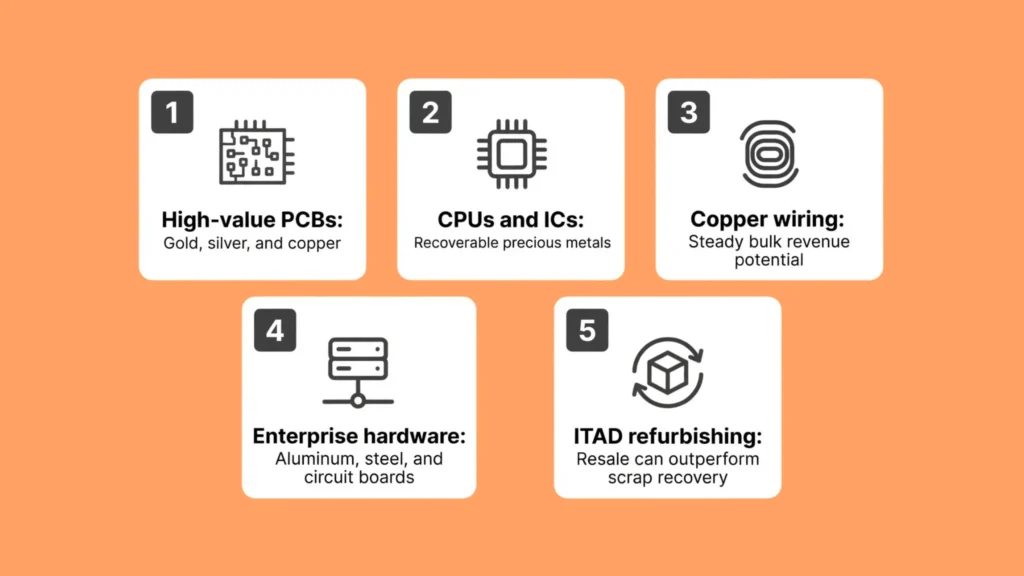
Printed Circuit Boards (PCBs): Green motherboards, RAM sticks, and server boards carry gold-plated connectors, silver solder, and high-purity copper tracks.
Integrated Circuits and CPUs: Older computer chips contain significant amounts of gold and precious metals encased in ceramic or plastic housings.
Copper Transformers and Cabling: Heavy power supply units, insulated wires, and motor coils provide steady bulk revenue through copper recovery.
Telecom and Server Racks: Enterprise hardware yields high-grade aluminum, clean steel casings, and dense motherboard material.
Revenue Streams: Refurbishing vs. Scrap Recovery
The absolute highest profit margin in this industry comes from reuse rather than destroying devices for raw metals. Testing, wiping data, and reselling a working two-year-old laptop generates far more immediate cash than shredding it for aluminum and copper. Smart operators divide incoming inventory into two piles: working gear for resale and dead hardware designated for material destruction.
| E-Waste Stream Category | Primary Material / Device Type | Relative Profit Potential | Processing Effort Required |
| High-Grade ITAD | Enterprise Servers, Recent Laptops, Networking Gear | Extremely High | Moderate (Testing & Data Wiping) |
| High-Grade Scrap | Server PCBs, Telecom Boards, Desktop RAM | High | Low (Sorting & Bailing) |
| Mid-Grade Scrap | Household PC Towers, Game Consoles, Office Printers | Moderate | Moderate (Manual Disassembly) |
| Low-Grade / CRT Scrap | Tube Televisions, Old Monitors, Alkaline Batteries | Negative to Low (Disposal Fee Required) | High (Specialized Hazardous Handling) |
The Strategic Importance of R2 Certification
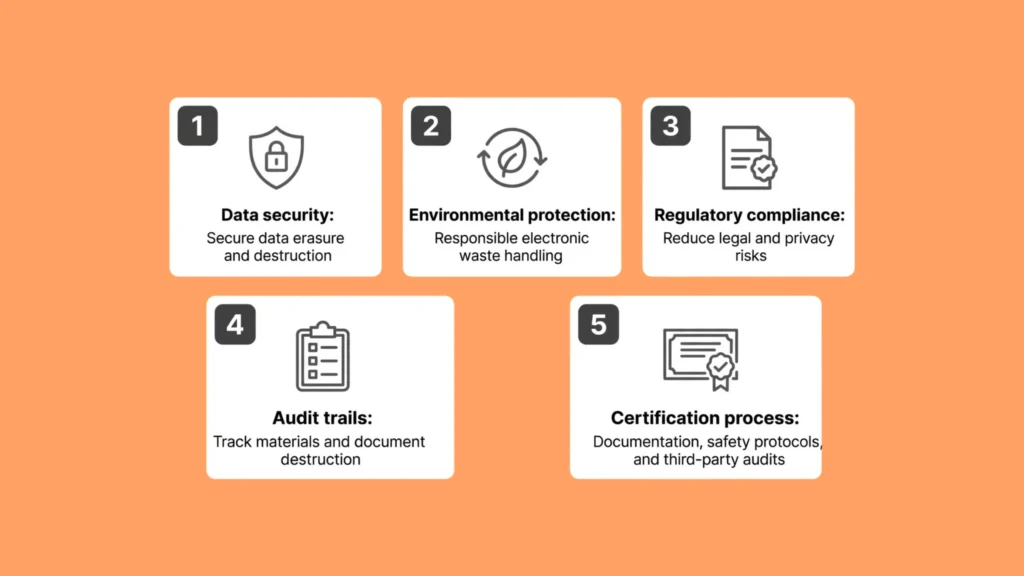
If you want to secure lucrative B2B contracts with banks, hospitals, and school districts, having an recognized operational standard is essential. Corporate clients care deeply about data security and environmentally sound disposal. Holding an official R2 certification proves that your facility follows strict international standards for data sanitization, worker safety, and downstream material tracking.
Why Enterprise Clients Demand Certified Partners
Complete Data Security: Guarantees that hard drives, solid-state drives, and flash storage undergo military-grade sanitization or physical destruction.
Environmental Protection: Prevents hazardous electronic waste from being dumped illegally in overseas landfills.
Regulatory Compliance: Protects corporate clients from severe privacy violations and environmental lawsuits.
Transparent Audit Trails: Provides clients with clear certificates of destruction and detailed chain-of-custody tracking.
Navigating the Certification Process
Achieving this standard requires an upfront investment of time and capital, but it shifts your business from a basic junk hauler into a premium IT asset disposition company, a strong fit among IT business startup ideas. You will implement robust documentation, establish safety protocols, and undergo a two-stage third-party audit. Once certified, your business stands out instantly against unaccredited competitors, allowing you to charge management fees rather than picking up junk for free.
Steps to Launch an Electronics Recycling Startup
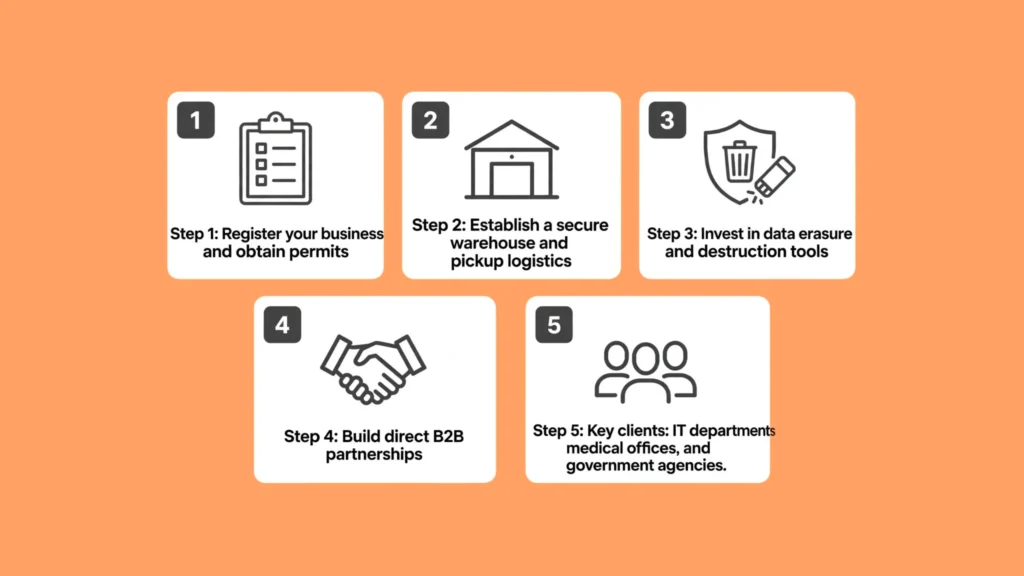
Starting your operation systematically keeps your overhead low while establishing long-term commercial credibility. Following a proven blueprint protects your startup capital and accelerates profitability. You can streamline your initial business formation and state compliance by using reliablestartup.com, ensuring your business structure is legally sound right from the start.
Step 1: Secure Your Business Entity and Permits
Form a legal business structure like a Limited Liability Company (LLC) or C-Corporation to shield your personal wealth. If you are new to the process, this guide to starting a business step by step covers the basics. Apply for federal EIN tax numbers and local commercial operating permits. Check with your local state environmental agency to register as an official electronic waste handler or collector before taking in inventory.
Step 2: Establish Your Facility and Logistics
Lease a secure warehouse space equipped with loading docks, heavy-duty floor scales, forklift access, and climate-controlled storage for data drives. Secure a commercial box truck to handle client pickups safely and efficiently. Ensure your facility features high-definition security cameras and restricted access zones to protect sensitive corporate storage devices.
Step 3: Invest in Core Processing Tools
High-grade data erasure software compliant with federal sanitization standards.
Hard drive degaussers and physical shredders for high-security data destruction.
Pneumatic teardown stations, power screwdrivers, and manual sorting bins.
Commercial pallet jacks, gaylord boxes, and industrial wrapping equipment.
Step 4: Build Direct B2B Partnerships
Reach out directly to IT directors, corporate chief technology officers, medical offices, and municipal government agencies, using tactics like LinkedIn social selling to start conversations. Offer free initial computer recycling drives or discounted data destruction services to secure your first major accounts. Position your enterprise as a complete solution provider that handles logistics, data security, and environmental compliance seamlessly.
Marketing and Scaling Your E Waste Venture
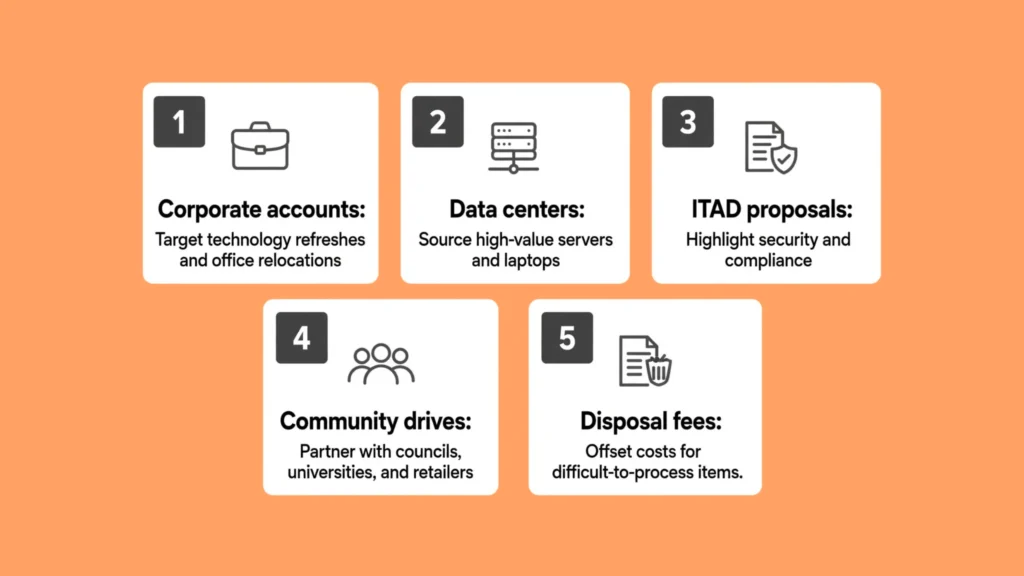
Building a reliable flow of inbound electronics is the single most vital operational challenge your business will face. Without steady inventory, processing equipment sits idle and revenue stalls. Diversifying your sourcing channels keeps your warehouse full of high-grade, profitable material week after week.
Sourcing High-Yield Corporate Accounts
Target businesses undergoing technology refreshes, office relocations, or data center upgrades. Corporate liquidations often yield hundreds of identical, high-spec servers and laptops that carry tremendous resale value. Creating a dedicated IT asset disposition proposal detailing your data security policies makes closing enterprise deals straightforward.
Community Collection Drives and Local Sourcing
Partner with local city councils, universities, and retail centers to host weekend community e-waste collection events. While consumer electronics contain a mix of low-grade scrap, these events yield tons of copper wire, desktop towers, and vintage equipment containing high gold content. Charging small drop-off fees for difficult items like CRT monitors covers your disposal costs while keeping profitable items free to process.
Conclusion
Building a successful e waste recycling business requires balancing efficient material sorting, strict data security, and active corporate salesmanship. By recognizing true e waste material value, pursuing important credentials like R2 certification, and building a reliable electronics recycling startup model, you position your brand for sustainable, long-term profits.
Taking the time to establish your legal structure and operational guidelines early ensures client trust and seamless compliance. Focus on securing corporate partnerships, maximizing device reuse, and tapping into the highly lucrative world of urban metal recovery.
Frequently Asked Questions
What is an e waste recycling business?
It is a company that collects, refurbishes, or breaks down discarded electronic devices to recover reusable components and valuable raw metals.
How do e-waste recyclers actually make money?
They profit by reselling refurbished electronics, recovering high-value metals from circuit boards, and charging corporate clients data destruction fees.
What is R2 certification?
It is a global voluntary standard for responsible electronics reuse and recycling that focuses on data security, environmental safety, and material tracking.
Is an electronics recycling startup hard to run?
It requires careful logistics, knowledge of e waste material value, and compliance, but offers strong profit margins with proper planning.
Do I need insurance for e-waste recycling?
Yes, robust general liability, environmental impairment liability, and data breach insurance are essential to protect your company from operational risks.
About The Author