Best Dentist Near Me Find Trusted Dental Care Today

A good local match is a practice whose services, location and appointment access fit your needs. In Rochester Hills, patients can compare offices by the care they provide, how easily you can reach them, and how they explain treatment. A dental savings plan is a membership arrangement that offers discounted fees at participating dentists, rather than dental insurance.
The best fit depends on the care you need, your schedule and your budget. A label such as “best” does not prove quality or guarantee that a practice can provide a specific treatment. Check services, appointment access, communication and payment details before you decide.
One office may work well for routine family visits, while another may list a service you need. Your choice should also account for travel time and how comfortable you feel asking questions. A clear plan for those needs can make the first call easier.
Key Takeaways
- Match the office to the treatment you need.
- Check location, access and communication before booking.
- Confirm a clinician provides any specialty treatment you need.
- Compare written estimates and plan details before non-urgent care.
- Call the office to check current appointment availability.
Before booking, decide which matters most to you: routine family care, a particular treatment, urgent access or help understanding costs.
How to Choose the Best Dentist Near Me in Rochester Hills
For a family seeking general and cosmetic care, Rochester Hills Family Dentistry is a relevant place to start, while Great Expressions is worth calling if you need to ask about a walk-in opening. These are service-based matches, not a verified ranking of local dentists.
Confirm the clinician, service and appointment opening directly, especially when you need a specialty treatment. A general dentist may provide many kinds of care, but services can differ by practice and doctor.

Match the practice to the care you need
Rochester Hills Family Dentistry describes its practice as family and cosmetic dentistry. Great Expressions Rochester Hills lists walk-ins when openings are available, so call before making the trip. These details can help you form a shortlist, but they do not confirm that a specific clinician can perform your treatment.
Ask about the exact procedure, who will provide it and whether the location handles that appointment type. A “doctor dental” listing or a broad service label alone does not explain the clinician’s experience with your specific need.
Check access, credentials and communication
Rochester Modern Dentistry offers communication by phone, text, email or through a family member, based on patient preference. Ask how the office handles appointment changes and treatment questions. Clear answers can help you judge whether its approach suits you.
- Services offered for your specific treatment
- Current appointment availability
- Active Michigan state license
- Insurance or payment fit
Education and experience matter, but a short directory listing cannot settle every question about a doctor’s training. Confirm any specialty treatment directly with the practice, then use the Michigan license lookup to check the clinician’s status.
Treat a directory match as a starting point, not proof of quality or a promise that the office can provide your treatment.
Verify a dentist’s active Michigan license through the state licensing lookup before scheduling.
Which Rochester Hills Dental Practices Offer the Services You Need?
The local options differ most in the treatment areas they list, so start by matching those services to your care needs. The table shows listed services, not a rating of skill or results.
Confirm the specific treatment and clinician with the office before treating a listing as a match. A listed service may not be available for every patient or appointment type.
| Practice | Listed treatment areas | Useful fit to verify | Question to ask before booking |
|---|---|---|---|
| John L. Aurelia, DDS, PLLC | Invisalign; TMJ/TMD treatment | Alignment or jaw-related care | Does the clinician assess my specific concern? |
| Rochester Modern Dentistry | Endodontics; emergency dentistry | Endodontic or urgent care | Is the appointment type available at this location? |
| Rochester Hills Family Dentistry | Implant placement and restoration | Implant-related care | Does the practice handle both parts of treatment? |
| Great Expressions Rochester Hills | Root canals; extractions | Care involving these procedures | Which clinician would assess my tooth? |
| Hillstream Dental | Dental implants; sedation | Implant or sedation questions | What sedation options fit my planned care? |

Use the listed area as a prompt for a focused call, rather than as proof that treatment will be right for you. For example, a practice that lists endodontics may still need to assess the tooth and your health before setting a plan.
Travel distance can also affect whether a location works for repeat visits. “Miles away” alone does not show traffic, parking or whether an office can fit your appointment into your day.
Call to confirm that the specific clinician and appointment type you need are available at the location you plan to visit.
What Can a General Dentist Treat?
A general dentist can often coordinate routine checkups and a range of restorative care, but the exact services depend on the practice and clinician. The scope of care may include prevention, family visits and some procedures that repair teeth.
A general dentist may coordinate care or refer you to a specialist when a treatment needs focused training or equipment. Ask about the clinician’s role before a complex procedure.

Routine and family care
Preventive care can include exams, cleanings and checks for changes in your mouth. Great Expressions lists exams, X-rays, fillings, cleanings, fluoride treatments and oral cancer screenings. The exact visit may depend on your health history and the doctor’s assessment.
John L. Aurelia, DDS, PLLC lists family dentistry for patients of all ages. When choosing a practice for a family, ask how it handles visits for different ages and needs. The label “family dentistry” does not replace a conversation about your care.
Regular visits can also give you time to ask about changes in your teeth or gums. Share new pain, sensitivity or other concerns during the exam, even if they seem small.
Restorative and cosmetic treatment
Restorative treatment aims to repair or replace damaged teeth. John L. Aurelia, DDS, PLLC lists crowns and bridges, implants and TMJ/TMD appliances, along with cosmetic dentistry, whitening and Invisalign.
Invisalign is a clear aligner treatment for moving teeth. An orthodontist is a dental specialist focused on tooth and jaw alignment. A general dentist may offer aligner care, refer you to an orthodontist or explain which approach fits your needs.
Not every general dentist provides dental surgery or every cosmetic service. Treatment also depends on the clinician’s training and the condition of your teeth. Ask how the proposed care fits your exam findings before agreeing to it.
Ask who will perform a complex procedure and whether the practice will coordinate any specialist referral.
How Should You Compare Location and Travel Time?
A nearby office is not automatically the easiest one to reach at the time you can attend. Actual travel time depends on the route, traffic and time of day, not just the miles away shown on a map.
Check the route and access before committing to repeat visits, especially if treatment may require more than one appointment. Parking and building access can matter as much as distance.
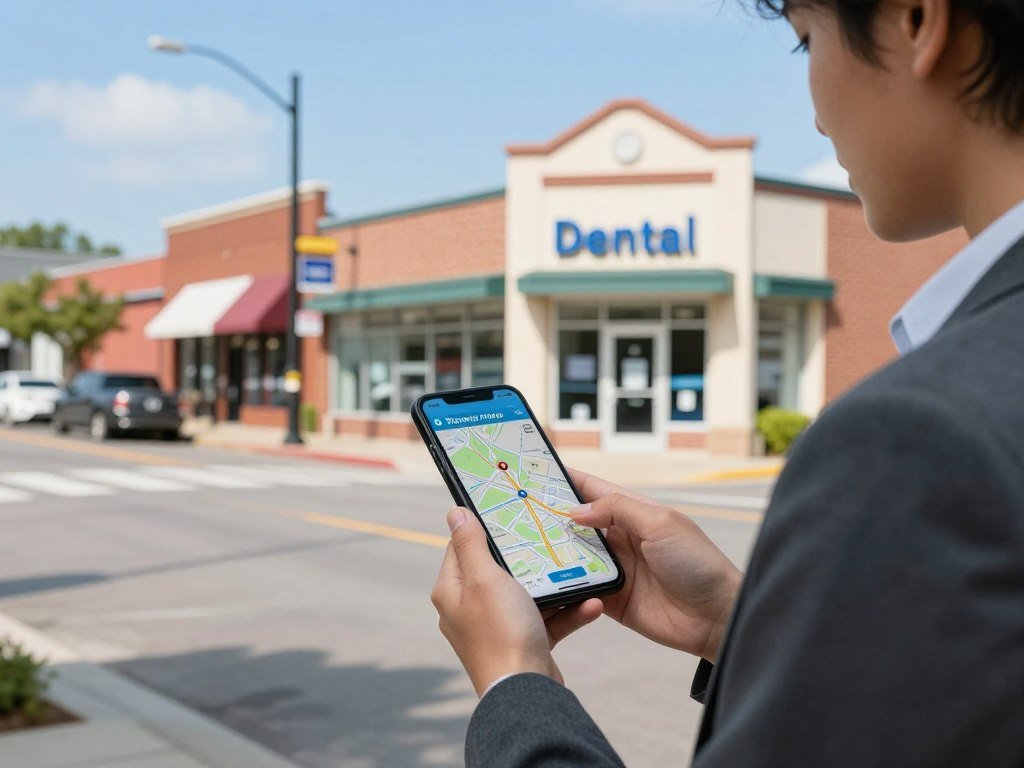
Rochester Hills Family Dentistry is at 480 West Tienken Road, Rochester Hills, Michigan. Great Expressions is at 1428 N. Rochester Road, Rochester Hills, Michigan 48307. John L. Aurelia, DDS, PLLC is at 804 N Main St #201A, Rochester, Michigan 48307.
These addresses sit in the Rochester Hills area or nearby Rochester. Compare each one with your home, work or school route. Rochester Road may be convenient for one patient but less practical for another, depending on traffic and the time of an appointment.
If you need frequent visits, consider how easily you can make the trip on a weekday. Check parking, entrance access and any mobility needs before booking. A short drive on a map may still involve a difficult turn or a crowded lot.
Use a map to compare distance, then check the route at the time you expect to travel. If you rely on a ride or public transit, include that time in your choice.
Check the route at your likely appointment time and make sure the address matches the specific office you booked.
What Happens at a First Dental Appointment?
A first visit usually begins with scheduling and forms, then moves into an examination and a discussion of next steps. The exact sequence depends on the practice, your needs and the reason for your appointment.
Bring the details the clinician needs to understand your health and dental history. You can ask for a pause if you need more time to follow an explanation.
Before you arrive
When you call, explain whether you are a new patient and what kind of appointment you need. Ask how long to allow and whether the office wants records sent before your visit. A few details prepared in advance can make check-in easier.
- Medical and dental history
- Medication list
- Insurance card or plan details
- Questions or prior records related to the visit
Bring notes about a concern that is hard to describe from memory. If another office has recent records or images, ask whether they can be shared with the new practice.
During the first visit
Great Expressions lists a new-patient process that includes scheduling, paperwork, check-in, X-rays, periodontal charting, a comprehensive exam and a customized treatment plan. This is that office’s listed process, not a promise that every dental visit follows the same steps.
The clinician may explain what they see and discuss possible next steps. Ask what each recommendation is meant to address, which parts are urgent and what can wait. You can ask the doctor to pause and clarify the plan.
Write down unfamiliar terms or ask for them in plain language. A useful discussion should leave you clear about the proposed care, the next appointment and any follow-up you need.
Ask for a written treatment plan and cost estimate before agreeing to non-urgent work.
What Can You Do for Dental Pain Before Seeing a Dentist?
Trouble breathing or swallowing with dental pain needs emergency medical attention. Spreading facial swelling or fever combined with facial swelling also calls for urgent emergency care.
An emergency room can assess dental pain and treat urgent complications, but it cannot restore a tooth with a filling or root canal. For less urgent pain, call a dentist for prompt assessment instead of delaying care.
Go to emergency care for any of these warning signs:
- Difficulty breathing or swallowing
- Spreading facial swelling
- Fever combined with facial swelling
An emergency room can assess the problem, manage pain and address a spreading infection. It can also evaluate possible life-threatening complications. These steps can help protect your health while you seek dental care.
Emergency staff do not provide restorative dental care such as fillings or root canals. A dentist must assess the tooth and decide what treatment it needs. Do not assume that pain relief means the underlying dental problem is fixed.
For pain without those warning signs, contact a dentist promptly and describe what you feel. Tell the office when the pain began and whether it has changed. The Cleveland Clinic’s dental emergency guide also explains when to seek emergency care.
If symptoms suggest a life-threatening emergency, call 911 rather than waiting for a routine dental appointment.
How Much Do a Molar Root Canal and Crown Cost in 2026?
A molar root canal commonly costs $1,200-$2,000 in 2026 before the crown is added. A crown commonly costs $900-$2,500 as a separate charge, and combined treatment can total about $2,500-$4,000.
The root canal and crown are separate items in a treatment estimate. Case complexity and the final treatment plan affect the amount a dentist charges.
| Item | 2026 common estimate | What it includes |
|---|---|---|
| Molar root canal | $1,200-$2,000 | Root canal before a crown |
| Dental crown | $900-$2,500 | Crown, separate from root canal |
| Combined treatment | About $2,500-$4,000 | Root canal plus crown |
A difficult case can cost more than the common root canal range. The condition of the tooth and the treatment the dentist recommends affect the final estimate. Ask which services are included in each line item.
Compare the dentist’s treatment estimate with your plan documents. A cost estimator can help you plan, but it does not guarantee what an insurer will pay. The final benefit can depend on plan rules and how the procedure is processed.
Look for separate charges for the root canal, crown and any related service. If the written estimate uses a code you do not recognize, ask the office to explain what it covers.
Confirm that the written estimate separates the root canal, crown and any other planned procedure.
How Can Dental Insurance Change Your Out-of-Pocket Cost?
A root canal benefit of 50%-80% does not mean the plan will pay that share of every dollar billed. In 2026, a patient with dental insurance may pay $600-$1,200 out of pocket for a molar root canal.
Deductibles, annual maximums, network status and procedure coding can change your share. The dentist’s treatment estimate is the stated charge before benefits, not a promise of what the plan will pay.
An insurer may base a dental cost estimate on geographic areas defined by the first three ZIP-code digits. That estimate can differ from the dentist’s stated charge. A Delta Dental estimator, for example, can help show expected costs, but the plan documents govern benefits.
A deductible is the amount you may need to pay before certain benefits apply. An annual maximum limits what the insurer pays during the plan year. Network rules can also affect the allowed charge and your share.
Procedure coding matters because the plan processes a claim using the code submitted for treatment. The code and the terms in your plan can affect how the insurer classifies the service. Ask the office what code it expects to use.
Some plans require preauthorization or a referral before care. A pre-treatment estimate can show how the plan expects to handle a proposed service, but it is not a guarantee of final payment.
Request a pre-treatment estimate and verify the remaining annual maximum with the insurer before scheduling planned work.
How Do Aetna Medicare Advantage Dental Benefits Work?
Start by checking your exact Aetna Medicare Advantage plan, because the dental network and covered services differ by plan type. Aetna plans commonly use the Aetna Dental PPO network, which members can check for participating dentists.
Use your Evidence of Coverage to confirm services and costs. This plan document describes coverage and costs for your specific benefits.
| Plan type | Dentist access | Member check |
|---|---|---|
| HMO | May require in-network dentists | Confirm the dentist is in network |
| PPO | May allow any licensed U.S. dentist | Check network and member cost |
| HMO-POS | May allow any licensed U.S. dentist | Review plan rules for the service |
Routine oral exams, cleanings and X-rays are covered. Coverage for fillings and extractions varies by plan, so do not assume the same benefit applies to every Aetna member.
In-network care usually lowers out-of-pocket costs. Plans may set frequency limits, such as two cleanings per year. Some also cap plan payments with a yearly allowance.
A PPO or HMO-POS plan may allow visits to any licensed dentist in the United States, while an HMO may require an in-network dentist. The word “may” matters: the exact rule depends on your plan and service.
Check whether the dentist accepts your particular plan, not just Aetna in general. Then compare the proposed treatment with the benefit details and any service limits in your document.
Confirm both the dentist’s network status and the treatment’s coverage in your Evidence of Coverage before booking.
Are Dental Discount Plans or Insurance Better for Your Needs?
A dental savings membership may suit someone who wants a discounted participating-provider fee without an insurance waiting period, while insurance may suit someone whose covered services and limits match planned care. The better fit depends on the rules and providers you can use.
A savings plan offers discounts for an annual fee, while insurance pays benefits under written terms. Insurance may include deductibles, waiting periods and maximums.
How dental savings plans work
A dental savings plan charges an annual membership fee for discounted fees at participating dentists. These plans have no waiting periods or annual limits, but you pay the provider directly under the plan’s discount rules.
Cigna Dental Access is a savings program, not insurance. Discounts vary by provider and service, and members pay providers directly. Cigna Dental Savings Program discounts are listed as up to 40%, with no waiting period.
For “discount dental plans near me,” the key is whether a nearby dentist participates in the specific program. Plan reviews or a name alone cannot tell you the fee for your procedure.
How Cigna plan terms differ
Cigna Dental Vision Hearing 3500 has a $2,000 lifetime maximum for implants and a 12-month waiting period. For “best dental discount plan for implants,” compare the implant lifetime maximum and waiting period, not just the plan name.
Cigna Dental 1000 has a $1,000 annual maximum for eligible restorative services, a $50 individual annual deductible, and six-month basic and 12-month major service waiting periods. Cigna Dental 1500 has a $1,500 annual maximum, a $50 individual annual deductible, and 50% orthodontic coverage up to a $1,000 lifetime maximum.
Cigna basic and major service waiting periods vary by state. Some Class 2 and Class 3 waiting periods may be waived with at least 12 months of qualifying prior coverage and no more than 63 days since it ended.
Cigna Dental Access is not the same as Cigna insurance. Check participating dentists and current written terms instead of relying on star ratings or “Preferred Network Access by Cigna reviews.”
Compare the dentist’s participation, the exact covered procedure and the out-of-pocket amount before enrolling.
How Can You Make Dental Care More Affordable?
Affordability planning starts with the full treatment plan, not just the price of the first appointment. A complete estimate helps you compare care choices and see where costs may fall.
Ask for an itemized estimate and compare the options before you agree. In 2026, simple tooth extractions are estimated at $150-$500, while one implant restoration is estimated at $3,000-$6,000.
Those are separate procedures, not interchangeable prices. An extraction may lead to a separate decision about replacing the tooth, with its own treatment and cost.
Use these four steps to plan:
- Request an itemized estimate for the full treatment.
- Ask whether treatment can safely be staged over time.
- Compare the payment options the practice lists.
- Check whether your dentist participates in your plan or savings membership.
Great Expressions accepts CareCredit and offers office payment plans. Hillstream Dental lists an in-house dental savings plan and CareCredit financing. These are options listed by the practices, not a promise of approval or specific terms.
Other routes may help if private care does not fit your budget. The American Dental Association’s affordable dental care guide points to dental schools, community health centers, Medicaid and CHIP for eligible families.
A dental plan may lower some costs, but its rules still matter. Compare the dentist’s participation and the services the plan covers before making a choice.
Ask for any financing terms in writing, including the total repayment amount, before accepting a payment plan.
Is a Root Canal Better Than an Extraction?
A root canal preserves a treatable tooth, while an extraction removes it and may create a separate replacement decision. A dentist must assess whether the tooth is restorable and stable before recommending either option.
A root canal treats infected pulp while retaining the tooth. Extraction removes the tooth, leaving a separate decision about replacement. The tooth’s condition can change which treatment is possible.
| Option | What happens to the tooth | Key decision point |
|---|---|---|
| Root canal | Infected pulp is treated; tooth remains | Can the tooth be restored and stay stable? |
| Extraction | The tooth is removed | Can it be saved or supported? |
| Replacement after extraction | A separate replacement decision | Which replacement, if any, fits the patient? |
A fracture or extensive decay can leave too little tooth structure to support a crown. Severe bone loss can also prevent a tooth from staying stable. In those cases, root canal treatment may not be feasible.
A root canal-treated tooth can remain functional for many years, including 20 years or longer in some cases. No lifespan is guaranteed, and ongoing dental care matters.
Ask the dentist to explain the exam findings behind the recommendation. Treatment of infected pulp may save a tooth, but only if enough sound structure remains and the tooth can stay supported.
The replacement decision after extraction is separate from removing the tooth. It may depend on your mouth, health and preferences, so ask what the next step would involve.
Ask the dentist to explain whether the tooth can support a crown and what replacement would involve if it cannot be saved.
What Credentials Should You Check Before Choosing a Dentist?
A state license is the basic legal check, while board certification is not required of every general dentist. Dentists need an active state license to practice, but a license alone does not show whether a clinician has focused training for a specific procedure.
A Doctor of Dental Surgery and a Doctor of Dental Medicine are dental degrees. Specialist training and certification are separate checks from the degree a dentist holds.
Robert Trecapelli received a Doctor of Dental Surgery degree from the University of Detroit Mercy School of Dentistry in 2015. Great Expressions lists him as a general dentist. Those facts describe his education and listed role, not the quality of any specific treatment.
For a specialty procedure, ask about training that relates to the care you need. A dentist may also explain whether another clinician will handle part of the treatment. The term “doctor dental surgery” refers to a degree, not a guarantee of a particular outcome.
You can also check a clinician’s license status and any disciplinary-action reports through Michigan’s licensing portal. Review the name carefully so you do not confuse clinicians with similar names.
Verify the clinician’s current Michigan license and ask about relevant specialty training for the procedure you need.
How Can You Judge a Practice’s Communication and Comfort?
A comfortable appointment starts with being able to ask questions and understand the proposed treatment. Clear communication should cover the expected steps, alternatives and anything you still want explained.
Ask what support the practice can offer before you book. A listed service does not mean every option will suit every visit or patient.
Look for clear treatment explanations
A useful explanation should say what the clinician recommends and why. It should also cover the expected steps and any alternatives. You should have time to ask questions before agreeing to treatment.
Rochester Modern Dentistry offers communication by phone, text, email or through a family member, based on patient preference. Ask which method the office can use for appointment updates and treatment discussions.
If a term or step is unclear, ask the clinician to explain it in plain language. You can also ask who to contact if a question comes up after the visit.
Ask about support for dental anxiety
Hillstream Dental lists IV sedation and says its team can adjust the sedative amount to the patient and treatment plan. That listing does not explain what a specific visit will involve.
Ask what sedation involves, who administers it and what instructions apply before and after treatment. Find out whether you need someone to accompany you or follow other directions from the office.
Tell the office about anxiety or communication needs when scheduling so staff can confirm what support is available.
How Do You Book and Confirm a Local Dental Appointment?
A quick call can confirm whether a practice has the appointment type and opening you need. Current availability can change, so do not rely on an old listing for hours or walk-in access.
Confirm four details before you set the visit: new-patient status, appointment type and clinician, current hours or walk-in openings, and insurance participation with expected cost.
Great Expressions Rochester Hills lists weekday hours from 7 a.m. to 6 p.m., depending on the day, and is closed Saturday and Sunday. It accepts walk-ins when openings are available. Call (248) 651-1594 to ask about its current schedule.
- Is the office accepting new patients?
- Which appointment type and clinician can see you?
- What are the current hours, and is a walk-in opening available?
- Does the office participate in your plan, and what may you owe?
John L. Aurelia, DDS, PLLC lists (248) 243-6044. Rochester Hills Family Dentistry lists (248) 652-7770. Ask the office to confirm its current number and location when you call.
Have your preferred dates ready, along with a brief description of the care you need. That helps staff check the right appointment type and clinician, rather than offering an opening that does not fit.
Keep the appointment confirmation and any written estimate together so you can refer to them before the visit.
Write down the appointment date, time and office address when staff confirms them. Keep the appointment confirmation and any written estimate together so you can refer to them before the visit.
Conclusion
A strong local choice is one you can reach, communicate with and afford for the care you actually need. The practice should fit the treatment, your schedule and the way you prefer to discuss care.
Before non-urgent work, check that the proposed service fits your plan and ask for a written estimate. Clear details can help you decide whether to proceed, ask more questions or compare another option.
Call your preferred office to confirm availability and request a written estimate for the planned care.
FAQ
Do all dentists have to be board certified?
No, board certification is not required of every general dentist, but dentists need a state license to practice. A license confirms the legal basis to work in that state, while board certification reflects a separate credential. Ask about training related to the procedure you need, since a general dentistry license does not show every area of advanced experience.
What’s the difference between a dentist and orthodontist?
An orthodontist is a dentist with specialty training focused on tooth and jaw alignment. A general dentist provides broader primary oral care, including routine exams and other services offered by that practice. Some general dentists offer aligner treatment, while others may refer patients to an orthodontist for an alignment concern.
What can the ER do for tooth pain?
An ER can assess dental pain, manage pain and address spreading infection or life-threatening complications. Emergency staff cannot provide restorative dental care such as fillings or root canals. Seek emergency help for trouble breathing or swallowing, spreading facial swelling, or fever with facial swelling. For less urgent pain, contact a dentist promptly.
How to afford a dentist?
Request an itemized estimate and compare insurance, participating-provider discounts, staged treatment and the practice’s payment options. Ask whether care can safely be divided into steps, and check each plan’s rules before enrolling. Dental schools and community health centers may offer lower-cost care. Eligible children may also have dental benefits through Medicaid or CHIP.
What are the new dental charges for 2026?
A molar root canal commonly costs $1,200-$2,000 before a crown, which commonly costs $900-$2,500 separately. Together, the two procedures can total about $2,500-$4,000. A complex case can cost more, and the dentist’s written treatment estimate should show each planned service as a separate charge.
Is $2000 a lot for a root canal?
$2,000 is at the upper end of the common 2026 molar root canal range before a crown. Difficult cases can cost more, and a crown is usually a separate charge. Ask for an itemized written estimate so you can see what the amount covers and compare it with your plan details.
Why don’t dentists like doing root canals?
Dentists do perform root canals, but a complex tooth or case may call for referral to an endodontist. A tooth may not be suitable if a fracture, decay or bone loss leaves it unable to support treatment. Ask who will perform the procedure and why the clinician recommends that approach.
Is it better to just pull a tooth or get a root canal?
A root canal may preserve a restorable, stable tooth, while extraction may be appropriate when the tooth cannot be restored or supported. A dentist must assess the tooth before recommending either choice. Extraction also leaves a separate decision about replacement, which may involve another procedure and its own treatment plan.
About The Author