Semi Absentee Franchise Ownership: Does It Really Work?

Yes, semi absentee franchise ownership works if you treat it as an active leadership role. However, it is not a completely hands-off investment. Most successful owners spend 10 to 20 hours per week guiding a general manager, reviewing finances, and driving local growth. As a result, they can keep their full-time careers while building business equity.
Many aspiring entrepreneurs want extra income without leaving a steady corporate salary. Therefore, a semi absentee franchise offers an appealing middle ground. Still, confusing this model with effortless, passive franchise income is a fast way to lose money. Understanding the daily reality, financial trade-offs, and management demands will help you decide if this path fits your goals.
What Is a Semi Absentee Franchise?

A semi-absentee franchise is a business model where you hire a full-time general manager to run daily operations. Your manager handles customer service and front-line staffing. Meanwhile, you act as a strategic executive rather than working behind the counter.
In this structure, you remain responsible for the business’s overall health, legal rules, and financial success. Specifically, your weekly tasks usually include:
Manager Supervision: First, you hold weekly meetings with your general manager to review key sales goals, staffing needs, and daily problems.
Financial Oversight: Next, you check profit-and-loss reports, manage payroll budgets, track supply costs, and approve big vendor bills.
Local Marketing: In addition, you build community partnerships, oversee local online ads, and attend local business events.
Strategic Planning: Finally, you look for growth opportunities, plan for future locations, and ensure the team follows brand rules.
Semi-Absentee vs. Absentee Franchise Ownership
Industry terms often blur the line between semi-absentee and full absentee franchise ownership. However, the two models work very differently in real life.
| Feature | Owner-Operator | Semi-Absentee Ownership | Full Absentee Ownership |
| Weekly Time Commitment | 40 to 60+ hours | 10 to 20 hours | Under 5 hours |
| Primary Role | Daily work and direct staff management | Executive oversight and manager coaching | High-level money decisions and board review |
| Leadership Structure | Owner acts as the general manager | Full-time general manager | Multi-level managers or regional director |
| Typical Buyer Profile | First-time buyers leaving a day job | Working professionals keeping a day job | Experienced multi-unit owners or investment groups |
| Brand Availability | Open across almost all franchise brands | Open in select, systems-driven brands | Rarely allowed for first-time, single-unit buyers |
Most franchise brands ban true absentee ownership for new buyers. Simply put, brands know that single locations often struggle without an active owner watching the culture and cash flow.
The Truth About Passive Franchise Income
Many sales pitches highlight the dream of passive franchise income. Consequently, new buyers often think they can buy a territory, hire a manager, and collect easy monthly checks. In truth, no small business is truly passive, especially during its first year.
Even in a well-run manager run franchise, the launch phase takes heavy owner work. For instance, you must find commercial space, oversee construction, finish brand training, and hire your first team. During the first six to twelve months, you will likely spend 25 to 30 hours a week setting up operations. Only after things stabilize can you step back to a normal schedule.
Once the business matures, cash flow often becomes steady and frees you from daily tasks. Even so, you must stay ready to step in if a manager quits or local sales drop.
Which Industries Work Best for a Manager Run Franchise?

Not every business idea fits a semi-absentee model. For example, concepts that need special owner licenses, custom price quotes, or tight labor budgets rarely support a full-time manager’s pay.
Instead, the best semi-absentee brands share simple, repeatable services, steady repeat sales, low product waste, and strong profit margins. Common sectors include:
Boutique Fitness and Wellness: Membership studios, such as Pilates or recovery centers, use automatic billing and certified trainers. Therefore, a studio manager can easily run schedules and keep members happy.
Personal Care Services: Hair salons, waxing studios, and massage brands rely on simple booking software and commission-based staff. As a result, inventory and daily tasks stay easy to manage.
Home and Commercial Services: Cleaning, restoration, and property care brands often use central call centers for booking. Meanwhile, a field manager supervises work crews and checks job quality.
Pet Care and Boarding: Dog daycare, grooming, and boarding centers benefit from repeat visits and clear shift schedules.
B2B Services: Staffing agencies, sign shops, and business coaching brands run during normal weekday hours. Thus, owners avoid the late-night and weekend staff headaches common in food and retail.
On the other hand, sit-down restaurants and complex retail stores are very hard to run semi-absentee as a single unit. Food waste, high staff turnover, and slim profit margins leave very little cash for extra management pay.
Financial Realities and Trade-Offs
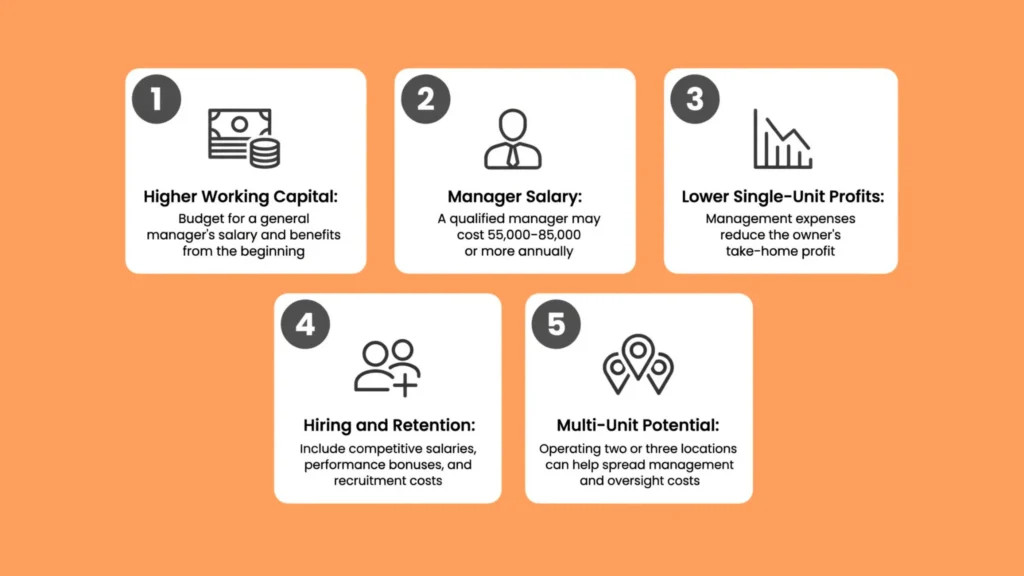
Choosing a semi-absentee path directly changes your startup budget and long-term profits. Before you sign a Franchise Disclosure Document (FDD), consider how hiring a manager affects your numbers.
Higher Working Capital Needs
Because you do not work the floor, you must pay a general manager’s salary and benefits from day one. Often, this starts before the business breaks even. Therefore, you need extra cash reserves to cover management pay during the early months.
Lower Single-Unit Profit Margins
In an owner-operated store, your own work replaces a manager’s salary and boosts your take-home cash. In contrast, paying $55,000 to $85,000 or more per year for a good manager lowers your net profit on one location.
To make the math work, many semi-absentee owners plan from day one to open two or three locations. That way, they spread their oversight across multiple income streams.
Hiring and Retention Costs
Your business is only as strong as your general manager. Accordingly, you must budget for fair base pay, performance bonuses, and hiring fees to prevent costly manager turnover.
How to Succeed as a Semi-Absentee Franchisee
Owners who succeed in this model rely on clear systems, steady communication, and smart leadership. Rather than micromanaging, follow these proven steps:
Check the Brand’s Track Record: First, ask the brand what share of their owners run semi-absentee stores. Then, call current semi-absentee owners to ask how many hours they actually work and how fast they made a profit.
Hire for Leadership First: You can easily teach a smart leader how to use a cash register or booking tool. However, you cannot easily teach work ethic, ownership, or people skills. Look for managers who have led teams and managed budgets before.
Tie Manager Pay to Business Goals: Pair a fair base salary with quarterly bonuses linked to clear numbers. For example, reward net profit, customer retention, labor control, and online reviews. When the store wins, your manager should win too.
Keep a Strict Weekly Schedule: Never go weeks without checking in on your store. Instead, hold a weekly meeting with your manager using a simple scorecard that tracks sales, labor costs, new leads, and customer feedback.
Control the Bank Accounts: Delegate daily store tasks, but never give up control of your money. Always keep sole power over bank transfers, payroll approval, vendor setup, and card statements to prevent theft and spot waste early.
Common Mistakes to Avoid

Even skilled corporate managers make mistakes when they buy their first franchise. Avoiding these common traps protects both your cash and your free time:
Underestimating the Launch Phase: Some buyers assume they can work just 10 hours a week during the grand opening. Unfortunately, this often leads to messy staffing and slow early sales. Plan to use vacation days or flexible work hours during your launch window.
Promoting the Wrong Person: Promoting your best front-line worker into a manager role without leadership training often fails. Without proper skills, they may struggle to hold peers accountable, which stalls growth.
Skipping Financial Checks: Trusting a manager blindly without matching daily sales reports against bank deposits creates big financial risks. Always verify your own numbers.
Picking a Brand Without Room to Grow: If one store yields modest profit after paying a manager, you will want room to expand. Buying open territories nearby lets you scale into stronger wealth over time.
Frequently Asked Questions
How many hours a week does a semi absentee franchise require?
Most established semi-absentee franchises take 10 to 20 hours per week. However, expect to spend 25 to 30 hours per week during the build-out, hiring, and grand opening stages before settling into a normal schedule.
Can I keep my full-time job while owning a semi-absentee franchise?
Yes, keeping a full-time job is the main reason buyers pick this model. Still, your day job must allow enough flexibility to attend brand training, take daytime vendor calls, and step in if a manager leaves.
How much money can you make with a semi-absentee franchise?
Earnings vary widely based on the industry, market size, startup costs, and how well your manager controls expenses. Because you pay a full-time manager’s salary, single-store profits are lower than in an owner-run store. Consequently, many semi-absentee owners open multiple units to boost income.
What is the difference between absentee and semi-absentee franchise ownership?
Semi-absentee owners work 10 to 20 hours per week managing their general manager, checking finances, and guiding local marketing. On the other hand, true absentee owners spend almost no time on the business and rely on regional directors. Most franchise brands do not allow true absentee ownership for first-time buyers.
Are semi-absentee franchises harder to get approved for by franchisors?
Yes, some brands are stricter with semi-absentee buyers because they want active, engaged owners. Usually, you will need more liquid cash, a higher net worth, and a clear plan for hiring a strong general manager.
How do I find a good general manager for my franchise?
Start hiring well before your doors open using job boards, local retail or service networks, and structured interviews. Look for leaders who have managed budgets and teams before. Furthermore, offer a pay package that rewards both profit and happy customers.
Final Thoughts
Semi-absentee franchise ownership works well for focused professionals who want to build business equity without quitting their day jobs. Ultimately, success comes down to picking a systems-driven brand, saving enough cash to fund a manager from day one, and keeping a steady weekly routine. When you treat the role as an active leadership job rather than a hands-off shortcut, a manager-run franchise can become a rewarding asset.
About The Author