How Much Can You Make Owning a Pool Cleaning Business? Revenue & Profits Explained
An independent owner-operator can expect to earn between $60,000 and $120,000 per year running a single-vehicle pool route, with room to expand into a multi-truck operation generating upwards of $250,000 to $500,000 in gross revenue. The primary driver of how much can you make pool cleaning business owners depends heavily on route density, recurring monthly service contracts, and offering high-margin equipment repairs. Because pool maintenance relies on automated, recurring billing, this service model provides exceptional cash flow stability year-round.
Demand for dependable pool maintenance continues to climb in suburban and warm-weather markets. Whether you plan to operate as a solo technician or scale a multi-route fleet, this guide breaks down real-world earnings, operating expenses, setup costs, and growth strategies for pool route owners.
Pool Service Business Income Potential Explained
Understanding your true pool cleaning business income requires looking at both recurring maintenance services and one-off repair jobs. Pool route income is structured around monthly recurring revenue (MRR), giving you predictable cash flow compared to traditional seasonal contracting.
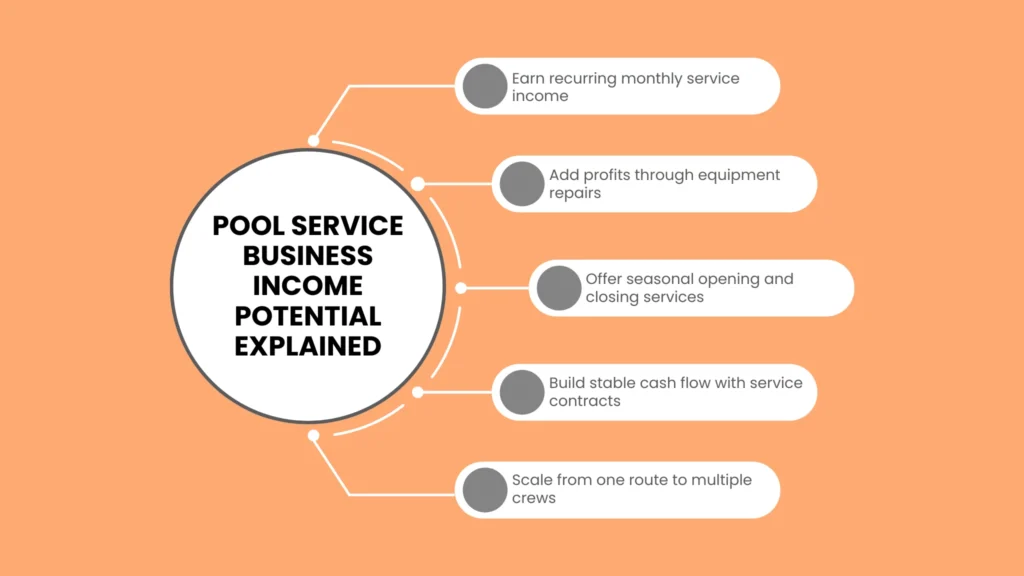
Pool maintenance income comes from three core streams:
Weekly Service Contracts: Standard skimming, vacuuming, wall brushing, basket emptying, and water chemistry testing ($120 to $250 per pool, per month).
Seasonal Openings & Closings: Deep cleaning, cover installation, and shock treatments for seasonal markets ($250 to $500 per service).
Equipment Repair & Upgrades: Replacing pumps, filter grids, salt cells, and automation systems ($100 to $150 per hour plus equipment markup).
By combining regular maintenance contracts with equipment repairs, a solo technician can comfortably manage a route of 60 to 80 pools per week while preserving time for higher-margin repair work.
Key Requirements to Start a Pool Maintenance Business
Meeting basic can you make pool cleaning business requirements ensures your operation runs legally, safely, and efficiently from day one.
1. Water Chemistry and Service Certification
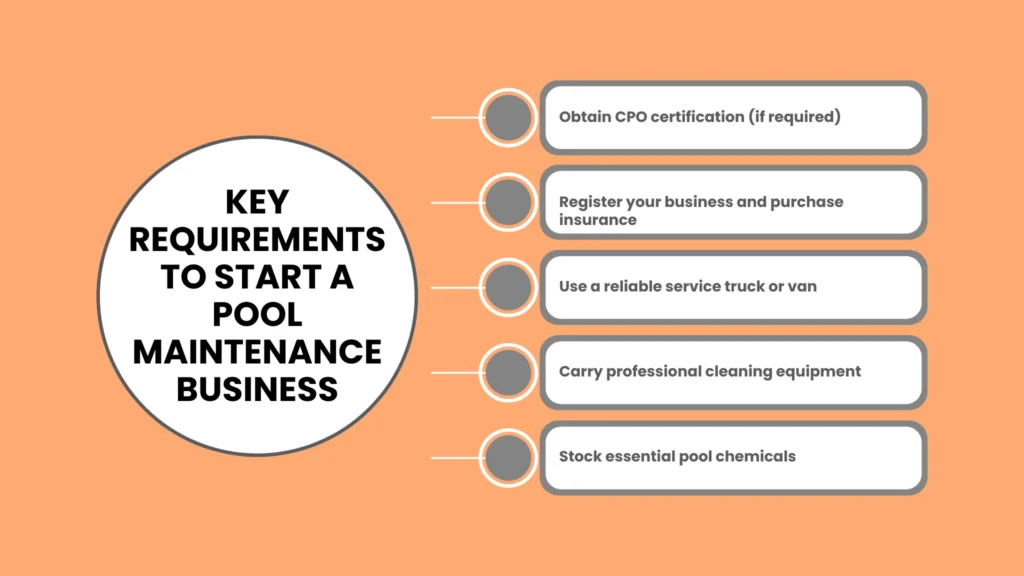
While not strictly required in every state, earning a Certified Pool/Spa Operator (CPO) designation through the National Swimming Pool Foundation (NSPF) builds immediate trust with clients and lowers insurance premiums. Some states, like Florida and Texas, require specific contractor licenses for handling electrical equipment or structural pool repairs.
2. Commercial Vehicle and Transport
You need a reliable pickup truck or service van equipped with a hitch receiver and custom bed rack to transport chemicals, pole attachments, and water testing gear safely. Many technicians use specialized hitch-mounted pool vacuum systems (like Hammerhead or Power Vac) to clear debris rapidly.
3. Business Licensing and Commercial Insurance
Register your company as an LLC to shield your personal assets. Secure general liability insurance carrying a minimum $1,000,000 coverage limit. Make sure your policy explicitly includes a “pop-and-float” endorsement, which covers accidental pool shell damage caused by improper draining.
Startup Cost Breakdown for New Owners
Starting a pool route requires relatively modest capital compared to other home service industries. Your initial can you make pool cleaning business cost outlay varies based on whether you buy an existing route or build one from scratch.
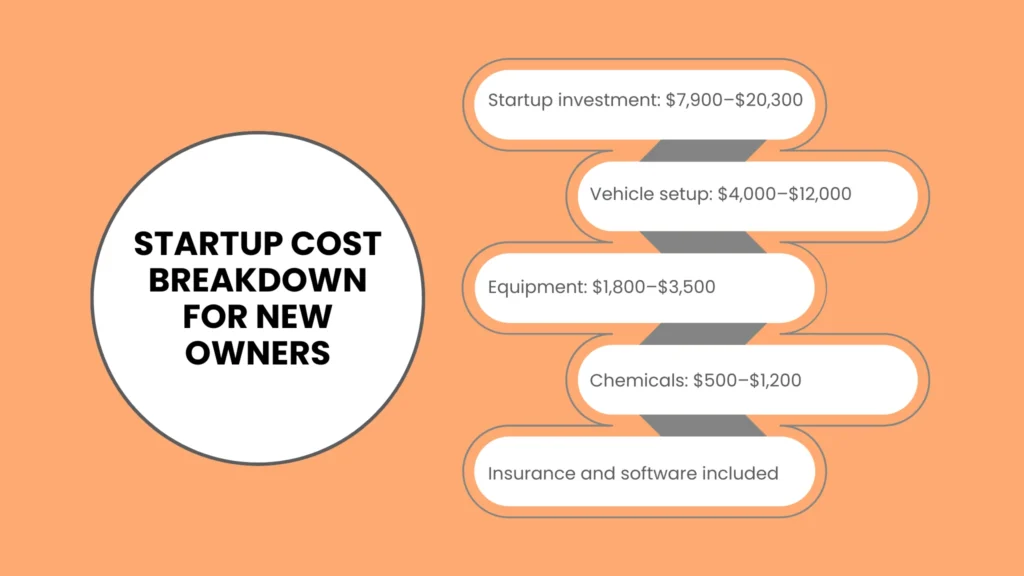
Based on industry data, the table below outlines estimated setup and ongoing operational costs for starting a solo pool route:
| Expense Category | Startup Cost Range (Estimated) | Ongoing Monthly Cost (Estimated) | Notes & Details |
| Service Vehicle / Truck Setup | $4,000 – $12,000 | $350 – $600 | Late-model truck, bed liner, and hitch setup |
| Professional Vacuum & Testing Gear | $1,800 – $3,500 | $100 – $250 | Portable vacuum system, poles, nets, test kits |
| Initial Chemical Stock | $500 – $1,200 | $300 – $800 | Chlorine, acid, shock, cyanuric acid, algaecides |
| Business Registration & CPO License | $300 – $800 | $0 (Renewal fees) | LLC registration, CPO course, local permits |
| Commercial Liability Insurance | $1,200 – $2,500 | $100 – $220 | Pop-and-float and chemical transport coverage |
| Software & Merchant Fees | $100 – $300 | $60 – $150 | Route management software and card processing |
| Estimated Totals | $7,900 – $20,300 | $910 – $2,020 | Excludes buying an established pool route |
Starting organically by signing up your first 20 clients keeps startup debt low while allowing you to refine your daily route density.
Profit Margins: Is a Pool Cleaning Business Profitable?
When assessing this home service niche, new operators frequently ask: is can you make pool cleaning business profitable in competitive suburban areas?
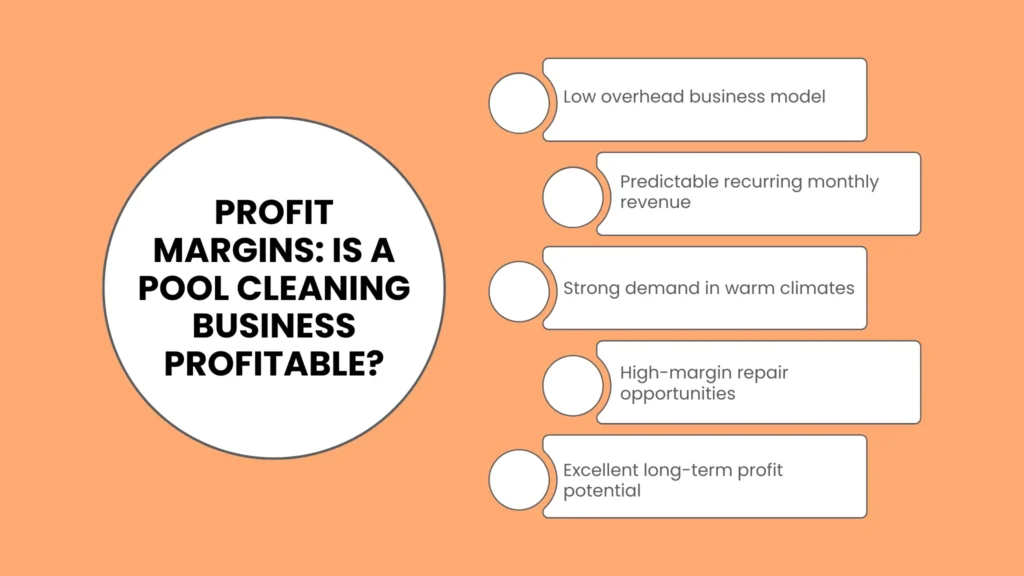
Yes, pool route ownership is exceptionally profitable due to minimal fixed physical overhead, low administrative expenses, and recurring monthly subscriptions.
Calculating Your Operating Margins
A solo technician can maintain an estimated can you make pool cleaning business profit margin ranging between 40% and 65% after covering fuel, chemicals, replacement tools, and insurance.
Here is a typical monthly revenue and expense scenario for an established single-person route:
Active Pool Route Size: 70 pools
Average Service Fee: $160 per pool / month
Monthly Recurring Service Revenue: $11,200
Average Monthly Repair Work Revenue: $2,500
Gross Monthly Income: $13,700
Monthly Operating Expenses (Chemicals, Fuel, Insurance, Software): $4,200
Estimated Net Monthly Profit: $9,500 (Net Margin ~69% before owner wages and taxes)
Concentrating your client accounts in specific zip codes reduces travel time between stops, allowing you to clean more pools per hour while cutting fuel expenses.
Step-by-Step Blueprint to Build Your Pool Route
Launching a successful route requires organizing your service workflow before taking on clients.
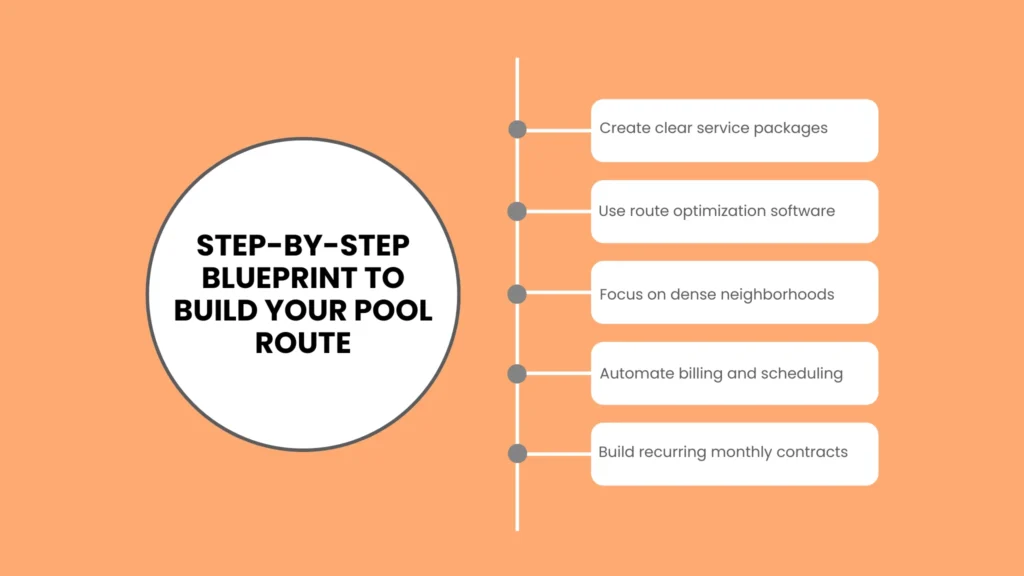
Step 1: Establish Standardized Pricing Tiers
Create clear service packages instead of quoting custom rates for every yard. Offer a basic “Chemical-Only” package, a standard “Chem & Brush” tier, and a “Full Service” package that includes weekly vacuuming, filter washing, and skimmer basket clearing.
Step 2: Use Route Optimization Software
Adopt specialized route management software (such as Skimmer, PoolBrain, or Jobber) from day one. These platforms generate efficient driving routes, send automated SMS arrival notices to homeowners, capture water chemistry logs, and process credit card billing automatically on the first of each month.
Step 3: Build Tight Neighborhood Density
Avoid accepting pool clients scattered across opposite ends of town. Focus your marketing on three to four dense, higher-income neighborhoods. Servicing five pools on a single street is far more profitable than driving ten miles between isolated service calls.
Effective Marketing Strategies to Acquire Pool Clients
To fill your route quickly, combine direct community engagement with local search visibility.
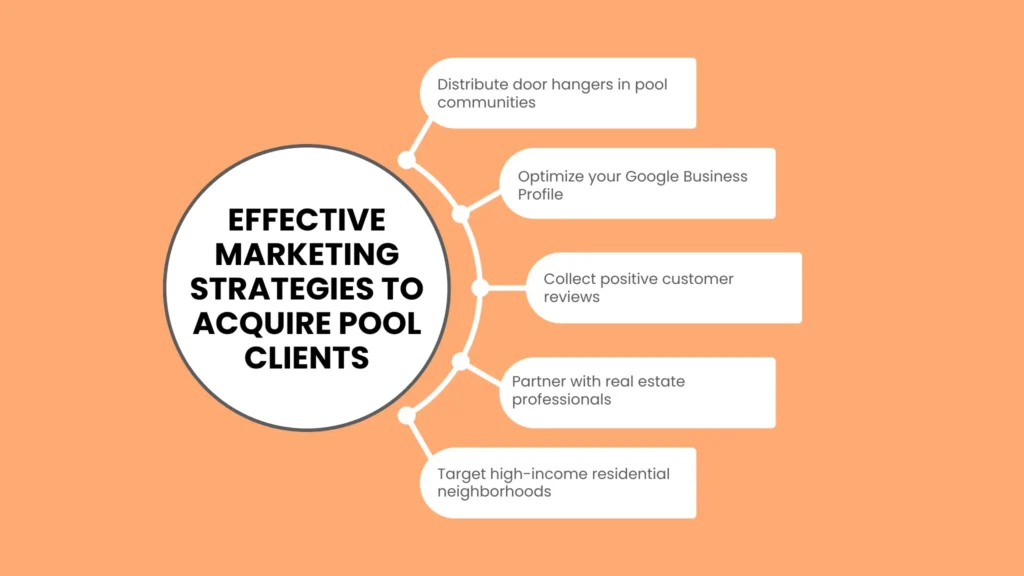
Door-Hanger Campaigns in Pool-Dense Neighborhoods: Use aerial map tools to target neighborhoods with visible backyard pools. Distribute professional door hangers offering a free first month’s chemical balancing with a 6-month contract.
Optimize Your Google Business Profile: Ensure your company appears when local homeowners search for “pool maintenance near me” or “pool service in [City Name]”. Collect reviews from your initial clients to boost local ranking.
Network with Real Estate Agents and Home Inspectors: Connect with local realtors who manage rental properties or negotiate home sales. They regularly need pre-sale pool inspections and immediate cleanups for neglected properties.
Conclusion
Determining how much can you make pool cleaning business owners comes down to your ability to build route density, maintain recurring service contracts, and deliver reliable service. With low initial equipment overhead, high profit margins, and predictable monthly recurring revenue, operating a pool service company provides a proven path toward financial independence.
As you build your service business, having a professional, high converting digital presence is critical for attracting recurring residential clients. For custom web development, digital branding, and online marketing tailored to growing home service brands, visit reliablestartup to launch your platform with confidence.
Frequently Asked Questions
How many pools can one person service per day?
An experienced solo operator using a portable vacuum system can clean 10 to 14 pools per day, depending on pool size, landscaping debris, and travel distance between houses. Over a 5-day workweek, a single technician can maintain 50 to 70 pools cleanly.
Is buying an existing pool route better than building one from scratch?
Buying an established pool route provides immediate monthly cash flow from day one, but routes typically sell for 10 to 12 times their monthly gross revenue. Building a route organically takes longer but requires significantly less initial capital and allows you to select client locations directly.
What is the biggest ongoing expense in a pool cleaning business?
Liquid chlorine, shock, balancing chemicals, and vehicle fuel represent your largest ongoing variable operating expenses. Buying bulk chemicals from wholesale distributors rather than retail suppliers protects your profit margins against price spikes.
Can a pool business operate year-round in cold climates?
In northern or cold-weather regions, pool businesses pivot during the off-season by charging for winterization packages, off-season cover inspections, snow plowing, or commercial pressure washing to maintain income throughout winter months.