Handyman Business Licensing and Insurance by State: Your Ultimate Guide

Key Takeaways
State license limits and thresholds
Required handyman insurance coverage options
State-by-state legal threshold limits
Simple registration steps by location
Staying legally compliant every year
Ever wondered if you could turn your home repair skills into a real, money-making enterprise without running into state troopers or county tax collectors? Jumping into minor repairs around the neighborhood seems simple enough until someone asks if you have a valid handyman business license or proof of coverage. The truth is that staying completely legal depends heavily on where you live, what kind of work you do, and how much money you charge per project.
Starting out on your own feels exciting, but navigating local paperwork often stops great craftspeople in their tracks before they even place their first quote. In most states, you do not need full general contractor credentials for minor fixes, painting, or simple patch jobs. However, nearly every single region sets a strict dollar limit often called a contractor licence threshold that caps how much a job can cost before you must hold official trade credentials.
Starting a minor repair venture requires understanding local rules, dollar limits, and insurance needs. Most states allow basic fixes without a full trade permit as long as the total project cost stays under the state’s specific handyman business license limit. Carrying proper general liability coverage protects your assets, while staying within handyman legal limits ensures your trade stays legally sound and fully compliant everywhere you operate.
Understanding Handyman Legal Limits and Rules
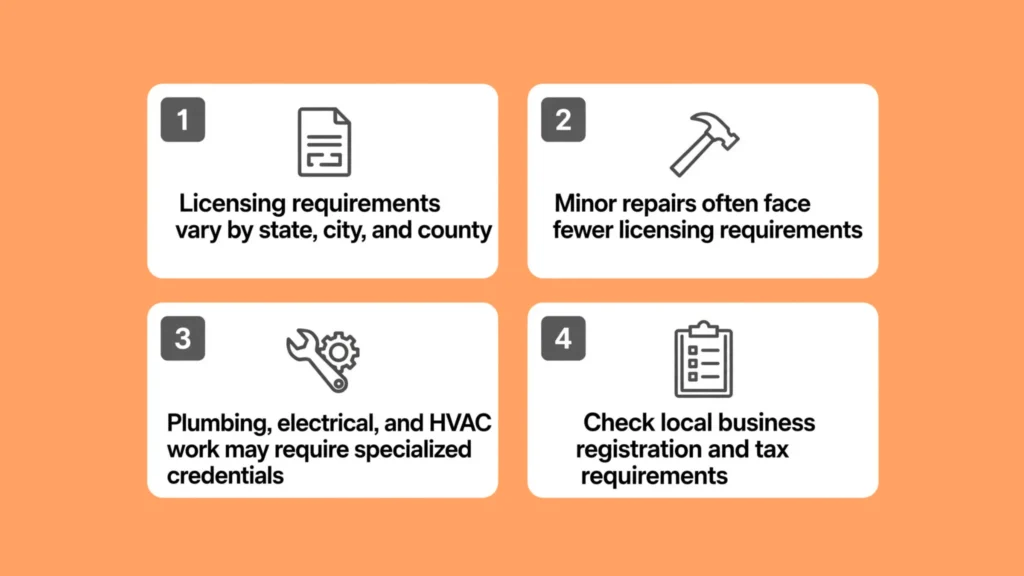
Every state approaches home repairs differently, creating a wide mix of rules across the country. What passes for a simple weekend fix in one town might require an official trade registration just two miles away in the next county.
Understanding your local handyman legal limits is the absolute first step before taking on paid work. These limits usually dictate the maximum amount of money you can charge for labor and materials combined on a single job.
Why State Boundaries Change Everything
States split trade work into distinct categories to protect homeowners from poor craftsmanship and unsafe structural changes. Small cosmetic touch-ups rarely hurt a home’s structural integrity, which is why minor taskers face far fewer hurdles than heavy builders.
When you stick to small tasks like assembling furniture, fixing cabinet doors, or hanging curtain rods, state agencies generally leave you alone. Once you touch high-risk trades like plumbing, electrical wiring, or HVAC systems, the legal landscape shifts instantly. If you want to move into one of those trades, read this guide to starting a plumbing business first.
The Role of Local Municipalities
Even if your state government does not require a formal trade document, your local city or county clerk definitely might. Local authorities often demand basic general business registrations or tax certificates just to operate legally within city boundaries. Checking with your municipal city hall ensures you do not get slapped with unexpected local fees while working in town. Never assume that state-level freedom means total city-level clearance.
What Is a Contractor Licence Threshold?
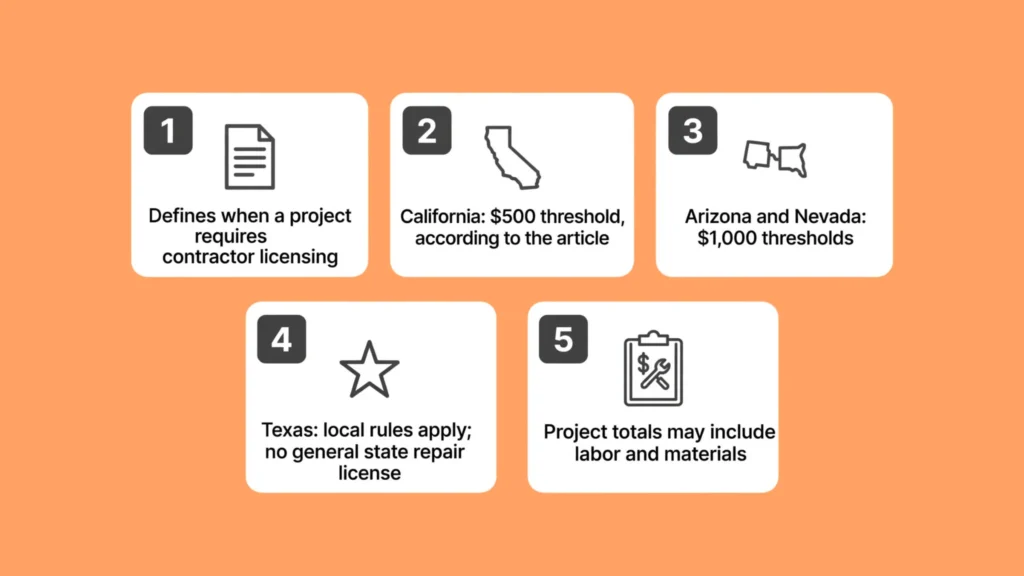
The single most important rule in the fix-it world is the contractor licence threshold. This rule defines the exact dollar value where a project stops being a quick patch job and officially becomes contractor work. If your total quote including both your labor and all materials used exceeds this legal dollar limit, you must hold a full trade credential to legally accept the job.
| State | Small Repair Dollar Threshold | License Required Above Threshold? |
| California | $500 | Yes (General Building / Specialty) |
| Arizona | $1,000 | Yes (Commercial / Residential) |
| Nevada | $1,000 | Yes (General Contractor) |
| Florida | Varies by trade (No major structural) | Yes (Certified / Registered) |
| Texas | No state limit (Local rules apply) | No state repair license |
| New York | Local city limits apply | Varies by municipality |
How Thresholds Are Calculated
Many new business owners make the mistake of splitting a large job into smaller invoices to bypass the official dollar threshold. Regulators know this trick well, and state boards actively penalize taskers who split single projects into multiple smaller receipts.
The total price includes every dollar spent on materials, equipment rentals, helper pay, and your personal time. If a deck rebuild costs $1,200 in materials and $800 in labor, the total project value is $2,000, easily triggering licensing rules in places like California or Nevada.
Exploring Handyman Insurance Requirements
Working with power tools and entering someone’s living space inherently involves physical risk. Accidents happen to even the most careful workers, making proper coverage an absolute necessity rather than an optional expense. Having robust handyman insurance shields your personal savings from devastating lawsuits if a pipe bursts or a heavy fixture falls off a wall after you leave.
Essential Types of Coverage
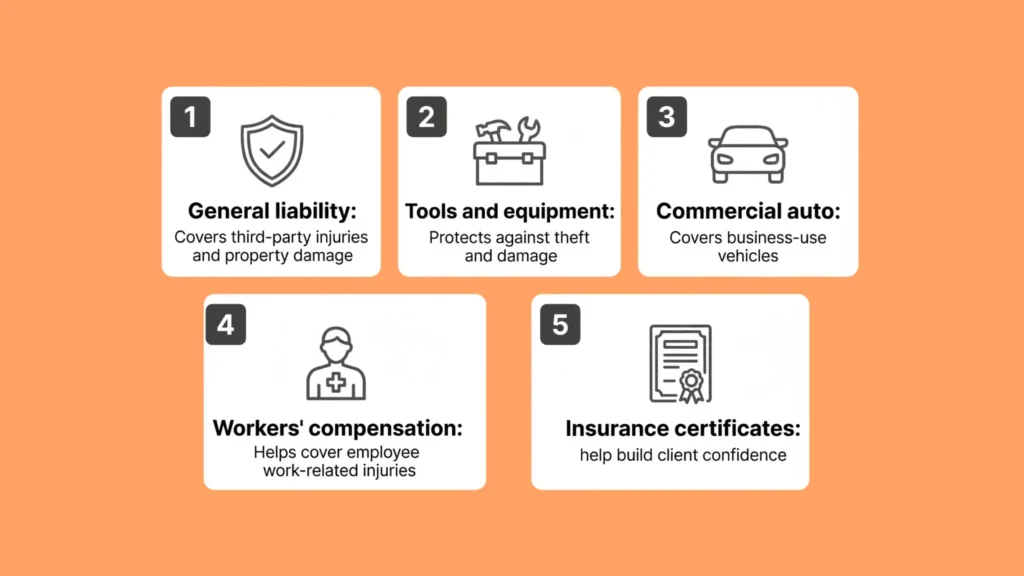
General liability protection covers third-party bodily injury and accidental property damage caused by your ongoing work.
Tools and equipment coverage reimburses you if expensive drills, saws, or ladders get stolen from your work vehicle.
Commercial auto policies cover vehicles used specifically to haul tools, materials, and crew members between job sites.
Workers’ compensation provides medical payment coverage and lost wage replacement if an employee gets hurt on duty.
Building Trust with Clients
Homeowners feel dramatically safer hiring someone who presents a formal certificate of insurance alongside their price estimate. It demonstrates that you run a legitimate commercial operation and take full accountability for your work. Many corporate clients, commercial property managers, and retail stores will not even let you set foot on their grounds without active commercial liability coverage.
State-by-State Licensing Guide
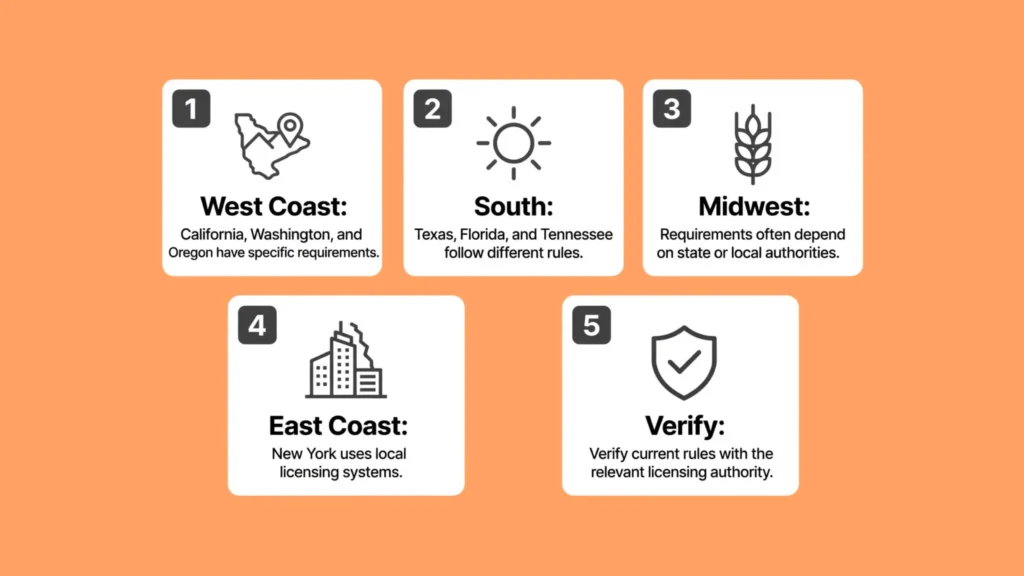
Because rules differ across state lines, breaking down regional expectations helps you figure out where your business stands legally.
West Coast Rules
California maintains some of the strictest trade laws in the country. Any job totaling $500 or more in labor and materials combined requires a state specialty or general contractor credential. Washington requires all repair professionals to register as general or specialty contractors with the Department of Labor and Industries, regardless of project cost. Oregon similarly requires registration with the Construction Contractors Board for almost all paid structural improvements.
Southern Region Breakdown
Texas takes a very relaxed approach at the state level, requiring no specific state credential for basic handyman services. However, trade work like plumbing, electrical installations, and air conditioning repairs always require specialized trade cards.
Florida relies heavily on local county boards, though state registration becomes mandatory if you touch structural components, roofing, or major building systems. Tennessee sets a strict $25,000 threshold before major contractor credentials are required, making it very friendly for small fix-it operators.
Midwest Expectations
Illinois handles most trade rules through individual cities rather than a single sweeping state board. Chicago, for instance, has its own strict registration tiers and building code mandates. Ohio does not issue a general handyman business license at the state level, leaving oversight to local building departments. Michigan requires a Maintenance and Alterations Contractor credential if you perform specific structural or trade jobs like tile, masonry, or carpentry.
East Coast Regulations
New York leaves trade regulation entirely up to local governments, meaning New York City, Nassau County, and Westchester County each run separate licensing systems. Pennsylvania requires any home improvement professional doing more than $5,000 in annual business to register with the State Attorney General’s office. Georgia allows minor repair providers to work freely as long as individual project costs remain under $2,500.
Steps to Obtain Your Handyman Business License
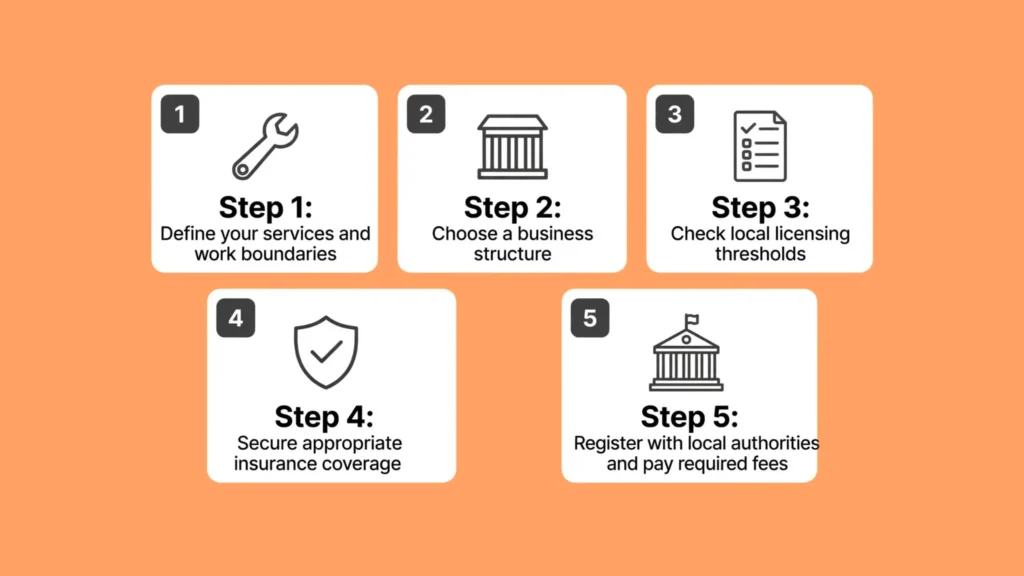
Setting up your trade operations the right way prevents legal roadblocks down the line. Following a clear plan makes the registration process simple and quick. Before you buy tools or insurance, build a financial model for a startup so you know your real costs. You can streamline your entire entity setup with reliablestartup to make sure your name filings, EIN creation, and basic structure are totally sound.
Step 1: Define Your Scope of Services
Write down a clear list of every service you plan to offer customers. Be specific about what you will touch and what you will intentionally avoid. Excluding trade work like main panel electrical fixes or gas line plumbing keeps you comfortably inside safety zones.
Step 2: Choose Your Business Structure
Decide whether to operate as a simple sole proprietorship or register a formal Limited Liability Company (LLC). If this is your first company, this guide to starting a business step by step covers the basics. Forming an LLC creates a clear boundary between your personal wealth and your business debts. An LLC structure gives customers confidence and limits your personal vulnerability if a dispute arises.
Step 3: Check Local Dollar Limits
Research your state’s exact contractor licence threshold to know how much you can charge per customer invoice. Write this limit down and keep it in mind every time you estimate a job. Never guess these figures, because state enforcement agencies conduct frequent sting operations on unlicensed work.
Step 4: Secure Proper Coverage
Contact a qualified commercial insurance broker to get quotes tailored to your daily service activities. Pick an active policy that provides adequate liability limits for your area. Keep digital and printed copies of your insurance certificates ready to show prospective customers on demand.
Step 5: Register with Local Authorities
Submit your registration paperwork to your county clerk or city business division. Pay any required local licensing fees to get your official tax certificate or operating permit. Display your license number clearly on your work van, website, social media pages, and project invoices.
Common Risks of Operating Unlicensed
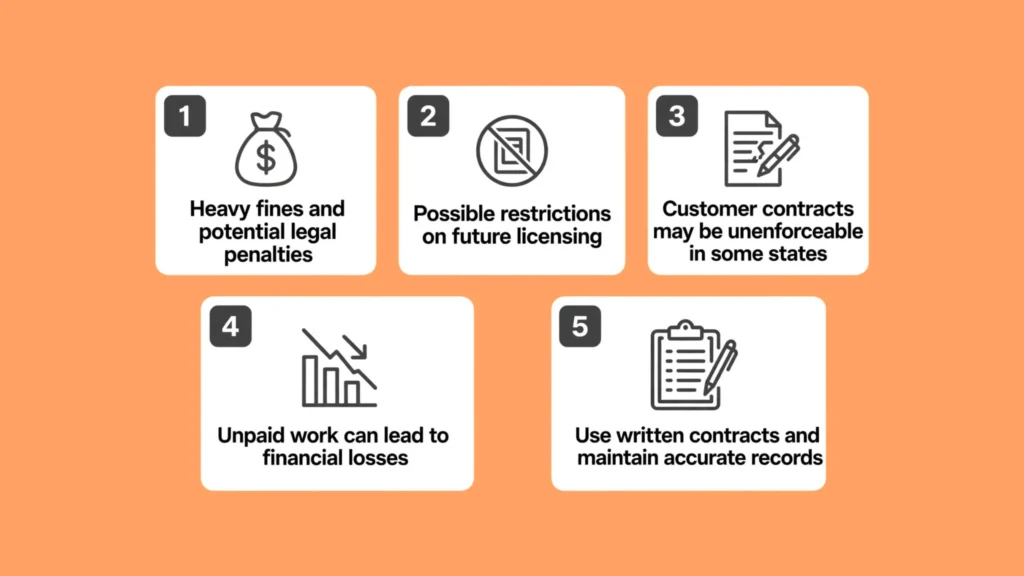
Working outside the law might seem like a quick way to save money, but it carries immense risk that can instantly destroy your growing venture. State licensing boards routinely monitor online marketplace posts, social media ads, and job site lawn signs to catch illegal operators.
Heavy Financial Fines
State regulatory agencies issue massive civil fines to people performing work beyond their legal authority. First-offense fines can easily top thousands of dollars, completely wiping out your hard-earned profits. Repeat violations often result in criminal misdemeanor charges, legal injunctions, or permanent bans from obtaining official credentials later.
Unenforceable Customer Contracts
In many states, an unlicensed trade worker has no legal right to collect payment in court if a client refuses to pay. Judges regularly dismiss lawsuits brought by individuals who exceeded their legal limits without proper credentials. That means you could spend weeks completing a major project only to receive zero compensation without any legal recourse.
Protecting Your Business Beyond Licensing
Getting your paperwork sorted is just the first step in building a sustainable trade brand. Long-term protection requires smart daily habits and clear boundaries. Using platform tools at reliablestartup.com can streamline your legal documents so you never miss important state filings or annual compliance dates.
Using Written Contracts
Always provide clients with clear written estimates that break down job details, material expenses, and projected completion times. Having both parties sign a written contract prevents misunderstandings about job scope. Explicitly state in your contracts that you perform handyman services within state legal limits and do not offer specialized general trade work.
Keeping Detailed Records
Store digital copies of every invoice, material receipt, insurance payment, and client message. Organized records make tax filing easier and protect you during financial audits, and they feed directly into sound financial planning for business owners. Keeping exact records proves you never split invoices to artificially stay under your state’s contractor limit.
Conclusion
Building a successful trade venture comes down to balancing great craftsmanship with strict compliance. Knowing your local rules, understanding state limits, and carrying reliable coverage keeps your venture safe and profitable.
Taking the time to handle your legal foundation early gives your clients confidence and keeps state regulators off your back. Protect your investment, stay within your legal limits, and build a trade enterprise that lasts for years to come.
Frequently Asked Questions
What is a handyman business license?
It is a basic registration or local permit that lets you legally offer small home repair services.
How much does handyman insurance usually cost?
Basic general liability coverage generally costs between $30 and $90 per month depending on location.
What is a contractor licence threshold?
It is the maximum dollar limit a job can reach before requiring a general contractor license.
Can I do plumbing work as a handyman?
In most states, you can only perform minor fixes like replacing faucet washers or unclogging sinks.
Do I need insurance if I work alone?
Yes, because accidental property damage or injuries can still cause massive personal financial loss.
About The Author