Best Meditation Cushion for Sitting Comfort: 7 Top Picks
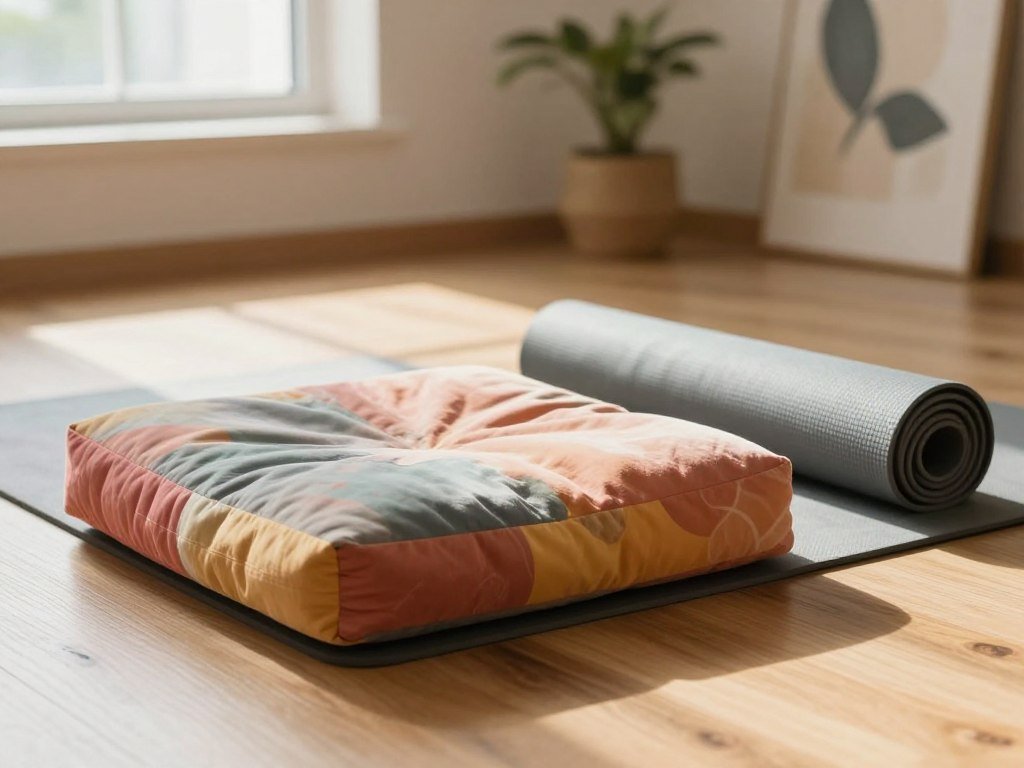
A stiff or low seat can turn a quiet meditation into a session spent shifting around. A meditation cushion, also called a zafu, is a meditation seat cushion that elevates the hips for floor sitting.
Discomfort can pull your attention from your practice, especially when your hips or knees press against a hard floor. The best meditation cushion for sitting comfort depends on how you sit, your hip flexibility, and how much floor padding your body needs.
Here are seven picks, from round and crescent seats to supportive chair options. You’ll also find practical ways to choose a shape and setup that feels steady.
Key Takeaways
- Choose a seat that suits your sitting position and hip flexibility.
- A zafu raises your hips; a zabuton pads the floor beneath you.
- Adjustable buckwheat hulls let you change a cushion’s fill.
- Try chair-based meditation if sitting on the floor is uncomfortable.
- Begin with a short sit, then adjust your setup as needed.
The best starting point is the seat that lets you sit steadily without making discomfort the focus.
How to Choose the Best Meditation Cushion for Sitting Comfort
For a beginner with tight hips, a taller, adjustable zafu is a useful first fit to test. Start with support, not a forced pose: a raised seat can help your hips settle above your knees.
Zafus typically range from 5 to 9 inches high, while crescent cushions usually rise 5 to 7 inches at their highest point. A zafu 8 inches or higher may suit people with tight hips or existing knee problems.
Choose a height that lets your knees rest lower than your hips without strain. A seat that feels wobbly may be too high for your position.
Beginners with tight hips can try a taller zafu first. A more flexible sitter may prefer a shorter one. An adjustable fill makes small changes easier.
Best Meditation Cushion for Beginners
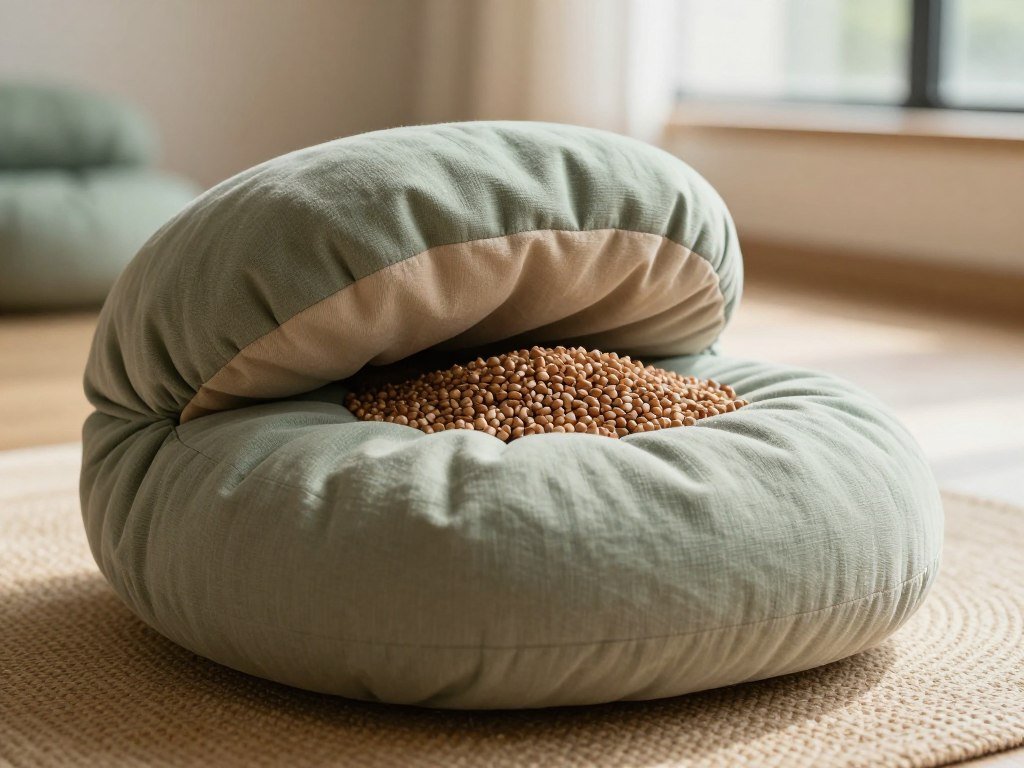
An adjustable zafu is a practical first meditation cushion because you can remove or add buckwheat hulls to change its height and firmness. It is a simple way to test what works before choosing a fixed seat.
Some simple zafus cost about $30 or $40, while options with added features can approach $100. Zafu height and price ranges give you a useful starting point when comparing seats.
Match Height and Filling to Your Body
Buckwheat hulls feel firm and moldable, kapok is lighter and softer, and foam gives consistent support. Your hips and spine should feel supported, not perched on top of the cushion.
A high seat can feel unstable when it does not match your sitting position. Check your knees before settling on a height, and lower the fill if you feel unsteady.
Before choosing a height, check whether your knees can rest lower than your hips without strain.
Which Cushion Type Matches Your Sitting Position?
A zafu lifts the hips, while a zabuton pads the knees and ankles against a hard floor. Choose by position: cross-legged sitters often use a zafu, while kneeling sitters may prefer a bench.
A zafu-and-zabuton set cushions floor contact but does not support your back. A common zafu diameter is 12 to 14 inches, with round, crescent, V-shaped, and square cushions offering different places to rest your legs.
Floor Cushions and Kneeling Options
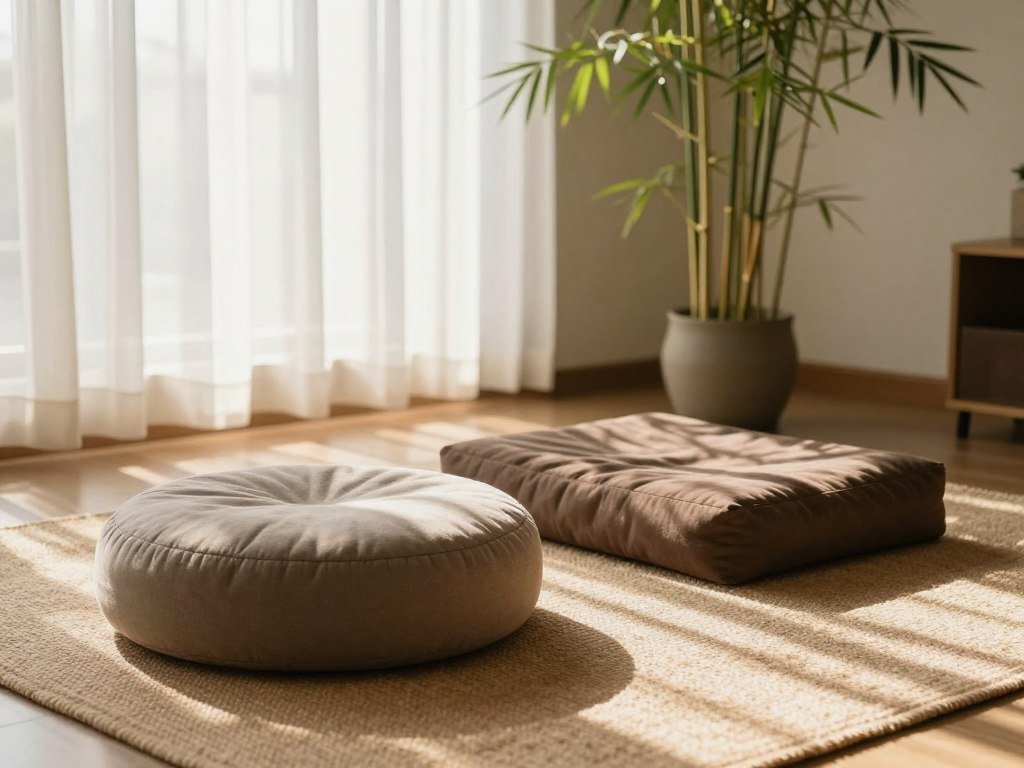
Round bolsters and square cushions give you a broad base, while a crescent cushion leaves more room for your feet near your body. A zabuton adds a flat layer beneath a seat, helping cushion your knees and ankles.
A kneeling meditation bench can suit Seiza, but shin numbness may start after 20 to 30 minutes. A portable tripod meditation stool folds to backpack size, though it has no back support.
The common zafu size range can help you judge whether a round seat will fit your space and sitting style.
Ergonomic Seats Beyond the Floor
An ergonomic meditation seat can also be a chair-based option if you do not want to sit on the floor. You can place a zafu on a sturdy chair or use a chair made for meditation.
These three beginner-friendly positions offer different ways to settle in:
- Easy Pose, sitting cross-legged on a cushion.
- Kneeling Seiza, with a bench or cushion between your legs.
- A zafu placed on a sturdy chair.
If you kneel, try the position briefly before committing to a long sit, since shin pressure can build over time.
7 Meditation Cushions for Different Comfort Needs
The Natural Fiber Meditation Cushion is the highest-scoring option here, with a Zen Score of 9 out of 10. For a long Vipassana sit, the Waterglider Zafu Meditation Pillow is the strongest fit based on its hour-long sitting test.
Waterglider testers sat for an hour without leg numbness or much repositioning. The January 2026 review assessed 30 models, with more than 40 hours of in-person testing and over 48 hours of research.
Reviewers also analyzed more than 625 reviews and consulted five experts. Each tested cushion had a real-life sitting test of at least an hour, with 60-minute sessions checking back, hip, and knee support.
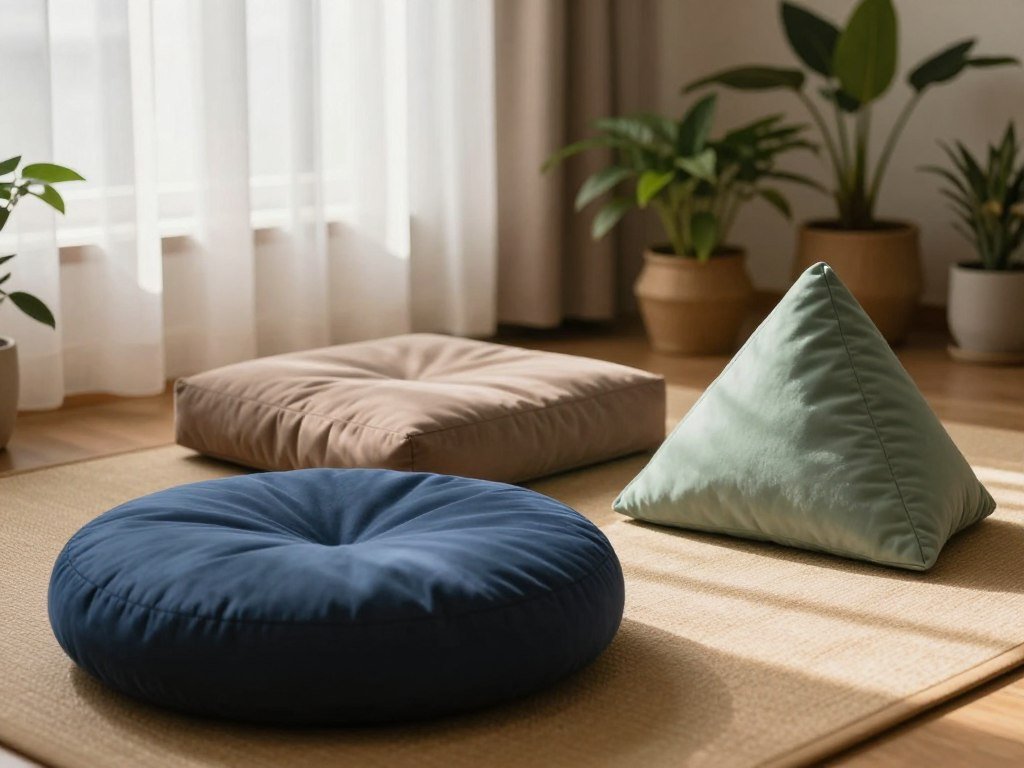
Best Meditation Cushion for Vipassana
The Natural Fiber Meditation Cushion earned the top score. Its kapok fill felt softer and more body-conforming than the tested buckwheat cushions, with support around the pelvic region.
| Pick | Shape or fill | Comfort evidence | Standout feature |
|---|---|---|---|
| Natural Fiber Meditation Cushion | Kapok-filled seat | Zen Score 9/10 | Soft, body-conforming feel for sitters who prefer kapok |
| Waterglider Zafu Meditation Pillow | Adjustable buckwheat hulls | Zen Score 8/10; hour sit without numbness or much shifting | Organic cotton cover; U.S.-grown hulls |
| Mindful Modern Crescent Meditation Cushion | Crescent; adjustable buckwheat | Zen Score 8/10 | Inner-case zipper and carrying handle |
The tested cushion scores separate these five tested models from the product descriptions for the Maji and Alexia seats.
Other Picks by Shape and Support
The Mindful Modern’s crescent shape lets your feet sit closer to your body. Its adjustable fill can suit a sitter who wants to change the cushion’s feel.
The Crescent Wedge earned a Zen Score of 7 out of 10. Testers found comfortable sitting and upright spinal alignment for about 30 minutes, not an hour.
| Pick | Shape or fill | Comfort evidence | Standout feature |
|---|---|---|---|
| Crescent Wedge Meditation Cushion | Wedge; buckwheat hulls | Comfortable alignment for about 30 minutes | Washable 100% cotton cover; uncrushed hulls |
| Cosmic Wedge Meditation Cushion | Slanted wedge; kapok or buckwheat | Buckwheat version lasted about 28 minutes before leg numbness | Side extensions add room beside the seat |
| Maji Sports Om Zafu | 16.14 x 10 x 2 inches | Product description, not part of the tested models | 100% cotton twill cover; turns on its side for kneeling |
| Alexia Meditation Seat | Shaped seat with back support | Product description, not part of the tested models | Designed to support hips, knees, feet, and sitting bones |
The Crescent Wedge suits shorter sits, while the Cosmic Wedge may fit someone who likes a slanted seat. The Maji’s low profile and side-lying kneeling option offer a different shape for floor practice.
Match the pick to your actual sitting position, especially if a cross-legged shape crowds your feet.
What Helps With Knee Pain or the Need for Back Support?
If knee discomfort is the main issue, test more hip elevation before assuming a softer cushion will solve it. Fit matters: a setup may need 4 to 8 inches of hip lift, depending on your flexibility.
A chair is the clearest option when you need back support. The Alexia Meditation Seat has built-in back support and a shape designed for the hips, knees, feet, and sitting bones.
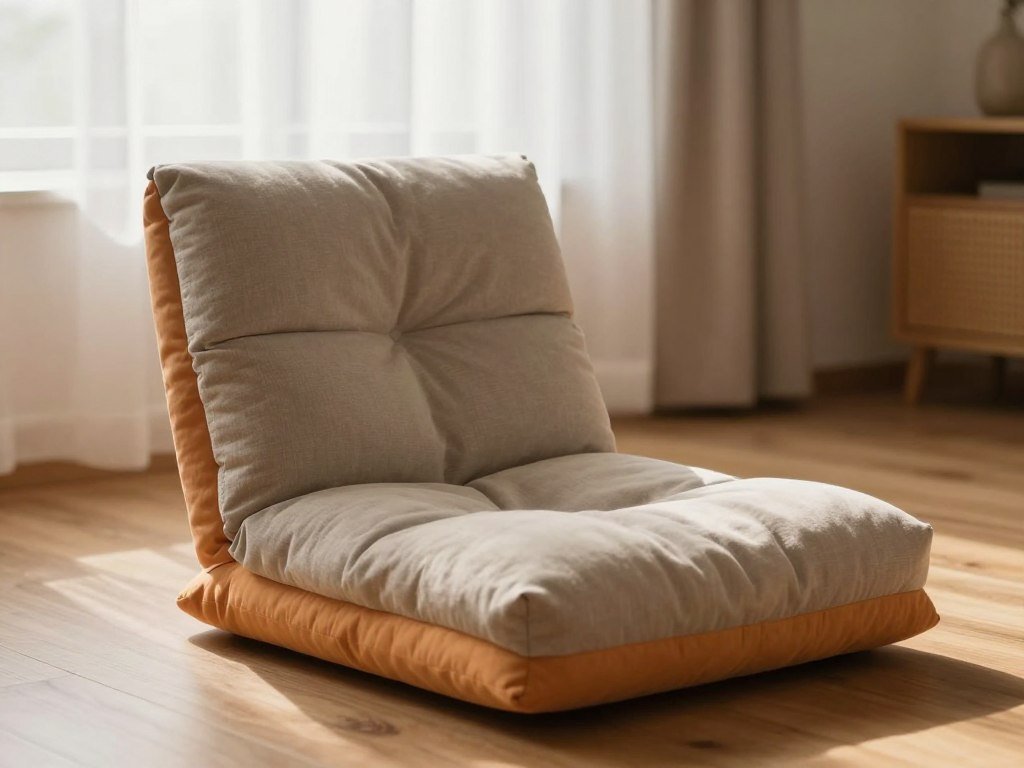
Best Meditation Cushion for Bad Knees
Extra hip elevation may help you find a position that feels less strained, but the right amount varies with flexibility. A zafu or shaped seat can lift your hips without asking you to kneel.
A kneeling bench is another option, but pressure on the shins can lead to numbness after 20 to 30 minutes. Test the position before using it for a full session.
Meditation Chairs With Back Support
The Pipersong Meditation Chair has a backrest, wheels, and an adjustable design for desk work or meditation. The Friends of Meditation Extra Large Relaxing Buddha Meditation and Yoga Chair has adjustable back support, a detachable meditation block, a washable removable cover, and a foldable frame.
The Friends of Meditation Vipassana Meditation Chair pairs back support with an extra hip-lift cushion. The BackJack Floor Chair has a steel inner frame, cotton canvas cover, and lightweight portable design.
An adjustable-back floor chair can recline from upright to about 45 degrees and fold to under a few inches thick. Choose a chair if holding your torso upright is tiring, and make sure its seat keeps you stable.
Are Outdoor Meditation Cushions a Good Fit?
An outdoor cushion is most useful when its fabric is made to handle water and stains. Water resistance helps with outdoor use, though it does not mean a cushion can stay wet without care.
Let the cushion dry before storing it after damp conditions. Water resistance depends on fabric construction and use, and some finishes can wear down with sun, rubbing, or cleaning.
Outdoor Cushion Materials and Use
DharmaCrafts outdoor meditation cushions use water- and stain-resistant fabrics. These materials can suit a patio or another dry sitting spot, but they still need care after exposure to moisture.
A fabric’s weave, finish, and coating affect how it handles water. Sailrite’s guide to performance fabrics explains why water-resistant and waterproof materials are not the same.
Outdoor Cushion Options and Prices
The Sunbrella® Outdoor Buckwheat Hull Zafu is listed from $113.00 USD. The Sunbrella® Outdoor Zabuton is listed from $163.00 USD.
The Sunbrella® Outdoor Zafu Zabuton Set is listed from $233.00 USD. The set pairs hip elevation with padding beneath the knees and ankles.
The Sunbrella® Outdoor Travel Meditation Cushion is listed for $157.00 USD. Check the care instructions and store the cushion dry between outdoor sessions.
How Can You Sit Comfortably for a Full Session?
Start by sitting on the forward third of the zafu, with your sit bones supported. Let your legs settle toward the floor rather than pulling them into a forced pose.
Keep your torso comfortably upright without bracing or straining. A steady posture gives you room to notice discomfort and make a small change before it takes over your practice.
- Sit on the forward third of the zafu so your sit bones have support.
- Let your legs drop naturally toward the floor.
- Keep your torso comfortably upright.
Beginners can start with 5 to 10 minutes, then adjust the position as it feels familiar. Folded blankets can serve as a temporary height adjustment if your seat feels too low.
If pain or numbness keeps pulling your attention away, change position rather than trying to endure it.
A little movement does not mean you failed at sitting still. If pain or numbness keeps pulling your attention away, change position rather than trying to endure it.
Conclusion
A comfortable seat should help you focus on the practice, not on managing your body. The right setup supports your preferred posture and feels steady; it does not need extra parts or a fancy design.
Before building a longer routine, test a cushion or folded blanket for a short sit. Adjust its height or position until your body feels supported without strain.
Try one setup for a short sit today, then adjust the height or position until it feels steady.
FAQ
Can I use a regular pillow instead of a meditation cushion?
Yes, a regular pillow can work if it stays firm enough to lift your hips rather than compressing flat. Try it during a short sit first, since many bed pillows soften under your weight. A folded blanket can also give you a firmer temporary lift. Check that the seat feels stable and does not tilt as you settle.
What is the difference between a zafu and a zabuton?
A zafu raises your hips, while a zabuton is a flat mat that cushions your knees and ankles. You can use a zafu on its own or place it on a zabuton for more padding beneath your legs. The mat does not lift your hips, and the cushion does not cover as much floor area.
How do I know if a zafu is too high?
A perched or wobbly feeling can mean your zafu is too high. You may also feel that your weight rests on the cushion’s top instead of settling through your hips. Try removing some fill or switching to a shorter seat. Your knees should rest lower than your hips without strain for a steady floor position.
Is kapok or buckwheat better for long meditation sessions?
Buckwheat hulls feel firm and moldable, while kapok is softer and lighter. Neither filling suits every sitter, so your preferred feel and sitting position matter. Buckwheat can be adjusted in some cushions, while kapok gives a softer, more body-conforming feel. Try the seat for a short sit before making it part of a longer routine.
Can a meditation cushion stop my legs from going numb?
No cushion can guarantee that your legs will not go numb. A better fit may help you sit with more support, but numbness can still develop during a session. Change position if it appears instead of trying to push through it. You can also shorten your sit and see whether a different leg position feels better.
How should I clean a buckwheat meditation cushion?
Follow the cover’s care instructions and keep the buckwheat hull filling dry rather than washing it. If the cover comes off, clean it as directed on its label. Avoid soaking the hulls, since the filling needs to stay dry. After outdoor use or damp exposure, let the cushion dry before putting it away.
About The Author