Best SUV for Snow: Top Picks for Safe Winter Driving

A snowy commute can turn an ordinary drive into a test of traction, visibility, and confidence. The best SUV for snow needs to suit your daily drive, not just look ready for bad weather. Icy streets, freshly plowed highways, and the occasional unplowed road each ask something different of your vehicle. A confident winter ride depends on more than a drivetrain badge. You also need a clear view, steady control, and room for the people or gear you carry. The right choice is the one that fits your real routes and winter habits.
This guide helps you compare vehicles by how you drive, how much space you need, and how often snow disrupts your plans. It also explains which details matter when you compare new and used models. A vehicle that feels calm on a plowed road may not suit a rough route after a storm. Think about your usual routes and how often you face unplowed roads before choosing what capability you need.
Key Takeaways
- The Subaru Outback is a balanced pick for everyday winter driving.
- The Subaru Forester is a compact-SUV choice for snow and ice.
- The Ford Bronco suits rougher routes and demanding winter travel.
- The Kia Telluride X-Pro adds winter hardware and three-row seating.
- Tires, underbody clearance, and space matter alongside the drivetrain.
- Match the vehicle to the roads you drive most often.
Best SUV for Snow: Which Picks Fit Different Drivers?
For most drivers who split time between plowed roads and winter commutes, the Subaru Outback is the most balanced starting point. Its mix of everyday comfort and winter capability makes it a practical choice for changing road conditions. Deeper snow calls for a different fit, especially if your routes stay rough after storms.
Daily snow and ice usually favor an AWD vehicle with the right tires, while demanding routes may call for 4WD. The table matches five models to common driving needs, rather than treating one SUV as right for everyone.
| Model | Best-fit driver | Winter use | Practical compromise |
|---|---|---|---|
| Subaru Outback | Mixed daily commuter | Plowed roads and winter trips | Longer than a compact SUV |
| Ford Bronco | Rough-route driver | Deeper snow and tough roads | More off-road focused |
| Jeep Grand Cherokee | Driver wanting terrain settings | Snow with selectable modes | Trim choices change equipment |
| Kia Telluride X-Pro | Three-row family | Snow with family passengers | Larger footprint than a compact |
| 2026 Honda Passport | Midsize cargo user | Winter roads and cargo trips | Two-row seating |
For a best SUV for snow and ice, start with your usual route: a daily plowed-road driver has different needs from someone crossing deep snow. Families may put passenger and cargo space first. The top five best SUVs in snow here cover those distinct needs, rather than offering five versions of the same vehicle.
A “worst” winter choice is better judged by risk factors: 2WD when AWD or 4WD is needed, poor tires, or too little clearance.
Calling whole brands or models the worst SUVs in snow can hide those risks. The same SUV may be equipped in very different ways, and worn tires can weaken an otherwise capable vehicle. Match the pick to the snow you actually encounter, not the most extreme trip you might take once a year.

Which compact SUV handles snow and ice well?
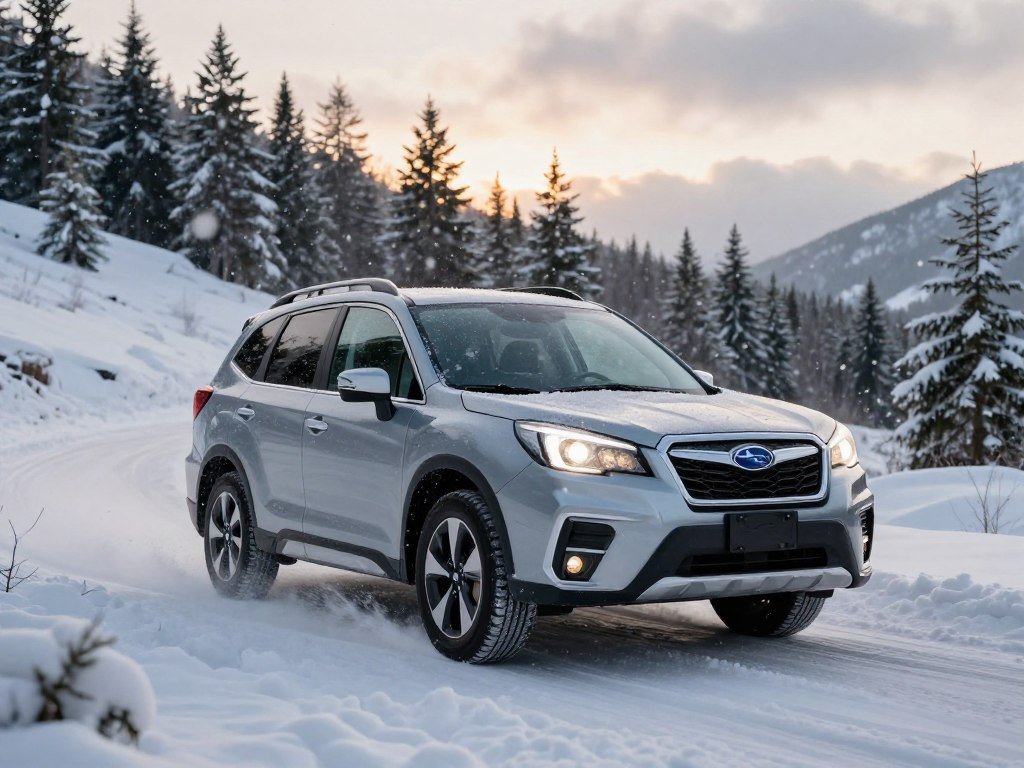
The Subaru Forester is the compact-SUV pick for snow and ice, while the larger Outback suits drivers who want more room. Both offer all-wheel drive as standard equipment. The Outback is a strong everyday snow choice because its AWD is designed to keep power going to all four wheels.
Subaru’s system works in the background, but available X-MODE adds settings for low-traction conditions. Equipment can vary by model and trim, so the badge alone does not tell you every feature.
Subaru Outback and its standard AWD
Subaru Symmetrical All-Wheel Drive continuously sends power to all four wheels. The system monitors traction and shifts power toward the wheels with the most grip. That can help the vehicle respond when one wheel loses traction on snow or ice.
The horizontally opposed Boxer engine sits low in the vehicle. Subaru designs this layout for a low center of gravity and balanced weight distribution. Available X-MODE adjusts throttle response and torque distribution for snow and other low-traction conditions.
Symmetrical AWD comes standard on most Subaru models, including the Outback, Forester, Crosstrek, Ascent, and Legacy. The 2026 Outback has a listed new price range of $34,995-$47,995, with a gently used estimate near $33,955. Check the specific model year and trim for the AWD and X-MODE equipment you want.
Forester and Crosstrek for compact-SUV shoppers
The Forester and Crosstrek are among the Subaru models with standard AWD. The Forester is the best small SUV for snow and ice in this group, thanks to its compact footprint and useful cabin space. It is smaller than the Outback, which can make it easier to place on narrow streets or in tight parking spots.
The Crosstrek offers another compact option if you want a smaller vehicle for daily use. A hybrid version is also available in the lineup, giving shoppers a hybrid choice. Compare the cargo area and seating you need before choosing between these two smaller models.
Which 4WD SUV is best for deep snow?
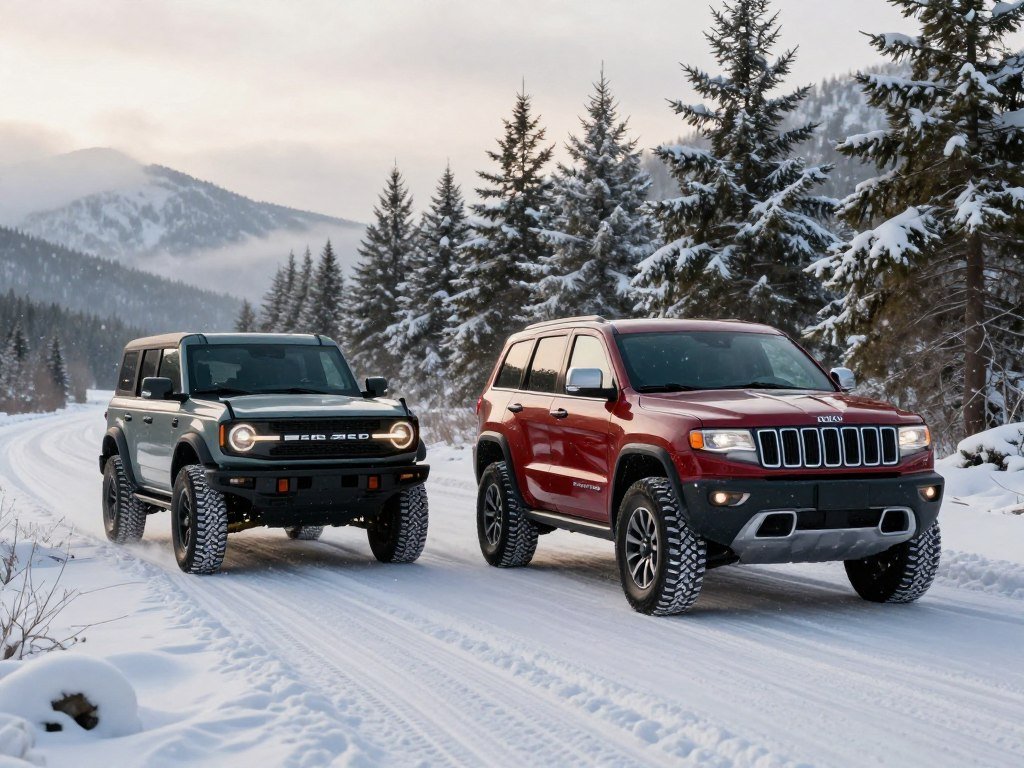
For a driver who regularly faces rough, snowy roads, the Ford Bronco is the most direct 4WD-oriented pick in this group. The Bronco fits drivers who want a vehicle focused on rough routes, rather than only commuting on cleared roads. For mixed winter use, the Jeep Grand Cherokee offers another path with terrain settings.
The Bronco is the pick for demanding routes, while the Grand Cherokee suits drivers who want selectable terrain modes. Neither is best for every snow depth or road condition. Your route, selected trim, and available drive modes shape the better choice.
Ford Bronco for rougher routes
The Ford Bronco is built around rough-road use and is the more 4WD-focused option here. That makes it a strong answer to what is the best 4WD SUV to buy for rougher, more demanding routes. A driver who often meets unplowed roads may value that focus more than a softer daily ride.
Winter driving still asks for smooth inputs and a careful pace. A 4WD badge does not make snow-covered roads predictable, and it cannot replace judgment. Equipment and operating features can differ across Bronco trims.
Jeep Grand Cherokee for adjustable terrain settings
The Jeep Grand Cherokee offers Terrain Select drive modes, letting you choose a setting for the surface under the tires. That can suit drivers who want one SUV for winter travel and a range of other road conditions. The exact modes and 4WD setup depend on the trim.
The Grand Cherokee L adds a third row or extra cargo space compared with the standard Grand Cherokee. It can be a better fit when people or gear take priority over a smaller footprint. Confirm that the exact Bronco or Grand Cherokee trim has the 4WD equipment you need before you buy.
What makes the Honda Passport a winter-ready midsize SUV?
The 2026 Honda Passport is a compelling midsize choice, with a starting price of $46,545 and an AWD system improved for that model year. Its torque-vectoring i-VTM4 AWD can direct power to individual wheels. That control helps the Passport manage traction when road surfaces change.
Snow mode is tuned for snowy roads, while Mud and Sand settings target different loose surfaces. The Passport also uses Intelligent Traction Management modes, giving drivers a way to select a setting for conditions they face.
Honda’s Pilot uses an i-VTM4 system with two clutch packs that can engage separately. It offers up to seven drive modes. The HR-V, CR-V, and CR-V Hybrid have available Real Time AWD with Intelligent Control System and a Snow mode.

Honda’s winter systems cover several vehicle sizes and styles:
- Available Real Time AWD with Intelligent Control System on the HR-V, CR-V, and CR-V Hybrid.
- Snow mode on the HR-V, CR-V, and CR-V Hybrid.
- Passport i-VTM4 with Snow, Mud, and Sand modes.
- Pilot i-VTM4 with separate clutch packs and up to seven modes.
The Honda CR-V is a smaller option if you do not need the Passport’s midsize space. The Blind Spot Information System with Cross Traffic Monitor can help with visibility around nearby vehicles. It does not replace careful driving, especially when snow limits what you can see.
Confirm which AWD and traction-management features come on the exact Honda trim you are considering.
Which three-row SUV offers the best winter mix?
The Kia Telluride X-Pro is a strong family pick for winter conditions, while the Palisade XRT adds similar rough-weather hardware to a comfort-focused cabin. Both suit families who want three rows and some added winter support. The best fit depends on how you use the third row and how much cargo travels with you.
Choose between family comfort and full-size space by checking how passengers, cargo, and towing needs fit together. A larger SUV can carry more people, but its size may be harder to manage on tight roads.
Telluride X-Pro and Palisade XRT for family comfort
The Telluride X-Pro combines all-terrain tires, enhanced suspension, multi-terrain modes, and one inch of extra ground clearance. Those features make it a family SUV with added hardware for rougher winter conditions. Its three rows can help when you travel with children or other passengers.
The Hyundai Palisade XRT adds tow hooks, all-terrain tires, enhanced drive modes, and one inch of extra ground clearance. It is another option for drivers who want a comfort-focused cabin with winter-minded features. The two models make a close match for families weighing comfort and road capability.
Tahoe and Sequoia for full-size space
The Chevrolet Tahoe has three rows and a shorter wheelbase than the larger alternatives discussed here. That can matter if you want full-size room but also need to turn or park in tighter places. Check how much cargo remains when every seat is in use.
The Toyota Sequoia has a 9,000-pound towing capacity. Its third row needs to be folded to fit average-sized cargo, so passenger space and luggage can compete. Ask yourself these four questions before settling on a full-size model:
- How many passengers ride with you most days?
- How much cargo do you carry with all seats in use?
- Do you need the SUV’s towing capacity?
- Does its size suit your regular roads and parking spots?
Test cargo space with the third row in the position your family will use most often.
Are hybrid SUVs reliable enough for winter driving?
The Honda CR-V Hybrid and Subaru Forester Hybrid are strong reliability candidates, each scoring near the top of its own category. Consumer Reports’ 2026 reliability survey drew on data from about 380,000 vehicles. That result speaks to reliability, not how well a vehicle grips snowy roads.
Predicted reliability is useful for long-term ownership, but it is not a snow-performance score. The survey found that most hybrid cars, minivans, SUVs, and trucks had average or better predicted reliability.
The 2026 brand reliability scores used model data from 2023 through 2025, plus some early 2026 data when samples were large enough. The CR-V Hybrid and Forester Hybrid stood near the top of their own vehicle categories. That can help you compare likely dependability within those groups.
The survey does not rank hybrid cars or SUVs by snow traction, stopping ability, or winter safety. A hybrid can be a practical vehicle in cold weather, but its tires and equipment still matter. Compare predicted reliability separately from winter grip, since a dependable vehicle still needs suitable tires and equipment.
Which luxury SUV is best for snow?
The Volvo XC90 is the luxury choice here if you need extra seating and cargo room for winter trips. Current XC90 models are AWD, which makes them a strong option for shoppers seeking a larger luxury SUV. Used listings need a closer look, since some older versions have front-wheel drive.
Check the individual XC90’s drivetrain, because not every used model has AWD. Comfort and space can make winter trips easier, but they do not replace suitable tires or winter-ready equipment.
Extra seating can help when you bring family or friends along, while the cargo area leaves room for winter gear. Those needs can make the XC90 a good luxury fit for longer trips. Its size may feel less convenient if your regular route includes narrow streets or small parking spaces.
Current models are AWD, but some older used XC90s are front-wheel drive. Check the drivetrain on any used XC90 by its exact model year and vehicle listing.
AWD vs. 4WD: Which suits winter roads?
For most drivers switching between cleared roads and ordinary winter commutes, AWD is the easier system to live with. AWD is generally always active or engages on its own when a wheel slips. 4WD can suit deeper snow or rougher routes, depending on its design.
AWD usually fits mixed roads, while 4WD can help in deep snow or mud when the system supports the right mode. Some 4WD systems require you to switch out of 2WD. Read the instructions for your exact vehicle before using a selected mode.
| System | How it engages | Best-fit winter use |
|---|---|---|
| AWD | Usually active or automatic | Mixed roads and changing traction |
| 4WD | May require driver selection | Deeper snow or rougher routes |
| Buying rule | Match depth, pattern, and setup | Choose for your usual winter roads |
AWD can be simpler when your drive moves between wet pavement, packed snow, and cleared roads. 4WD can be a better fit when deeper snow or rough ground is a regular challenge. The right choice depends on your driving pattern and the vehicle’s exact configuration.
Check the owner’s manual for the operating limits of the specific AWD or 4WD system.
What winter features matter beyond the drivetrain?
A capable drivetrain cannot make up for tires that have lost their grip or an underbody that drags through packed snow. About seven inches of underbody clearance is a general starting point for winter and muddy conditions. It is not a promise that a vehicle can pass through deep snow.
Dedicated winter tires can outperform an AWD SUV fitted with worn all-season tires. Tires are the only part of your vehicle that touches the road, so their condition matters on ice, snow, and slush.
All-terrain tires can suit mixed winter and muddy use, while winter tires are designed for grip in cold weather. Car and Driver’s winter driving advice also notes that AWD and 4WD help with acceleration, not turning or stopping.
Use this checklist when you look at a vehicle:
- Compare underbody clearance with the snow depth on your usual roads.
- Check tire type and tread condition.
- Look for heated mirrors or defrosters and clear sightlines.
- Choose easy-to-clean mats and surfaces for salt, slush, and mud.
Choose tires for the temperatures and roads you actually drive, and check local chain requirements before a storm.
How should you compare winter SUV prices and used options?
Compare the full listed range and the used vehicle’s condition, not just the lowest new starting price. A lower price can still leave you with a poor winter fit if the vehicle lacks the equipment you need. Used condition matters as much as the model name.
Used estimates below cover vehicles about three years old with fewer than 40,000 miles. They are approximate, so inspect the vehicle itself rather than treating a listing price as its full value.
| Model | Listed new price | Approximate used price | Used estimate condition |
|---|---|---|---|
| Subaru Outback | $34,995-$47,995 | About $33,955 | About 3 years, under 40,000 miles |
| Jeep Grand Cherokee | $36,495-$79,150 | About $38,500 | About 3 years, under 40,000 miles |
| Ford Bronco | $39,995-$51,475 | About $36,000 | About 3 years, under 40,000 miles |
| Kia Telluride X-Pro | $36,390-$53,685 | About $29,000 | About 3 years, under 40,000 miles |
| Volvo XC90 | $62,345-$70,945 | About $55,200 | About 3 years, under 40,000 miles |
The Hyundai Palisade XRT lists at $39,435-$54,560, while the Chevrolet Tahoe lists at $60,400-$80,400. The Toyota Sequoia lists at $64,025-$84,435. The 2026 Honda Passport starts at $46,545.
A used SUV is a winter-ready bargain only when its condition and equipment match its price.
Plan for ownership costs beyond the sticker price. Check these three items:
- Fuel economy for your usual trips.
- Tire replacement needs and cost.
- Insurance and maintenance costs.
For a 2021 SUV, check the exact drivetrain, model condition, and tire condition instead of relying on an old model-year ranking. Get an inspection and confirm the vehicle’s equipment before treating a used listing as a winter-ready bargain.
Conclusion
A confident winter choice starts with matching your usual roads to the right vehicle and tires. Your best SUV for snow should have a drivetrain, tires, and underbody clearance suited to the roads you travel. It also needs enough passenger and cargo space for your daily life.
Think about the snow you face most often, not a rare trip that demands more capability. A vehicle that fits your regular commute may be easier to live with than a larger model built for tougher terrain. Winter safety depends on using the right equipment with care.
Before you buy, test-drive the exact configuration and confirm its drivetrain and winter equipment.
FAQ
What is the #1 most reliable SUV?
The Honda CR-V Hybrid and Subaru Forester Hybrid are strong candidates, each near the top of its category for predicted reliability. Consumer Reports’ 2026 survey drew on about 380,000 vehicles, including recent model years. That ranking can help you compare likely dependability, but it does not measure snow traction, braking, or winter safety. Check the vehicle’s equipment separately.
Which SUV has the highest ground clearance?
The Ford Bronco is the clearance-focused off-road pick in this group. Exact underbody clearance depends on trim, so compare the published figure for the vehicle you want with typical snow depth on your routes. Clearance does not tell you how well tires grip ice, and a high vehicle can still get stuck in deep or packed snow.
Are suburbans good in snow?
A Chevrolet Suburban with 4WD and suitable winter tires can handle snow. Its large size may make narrow or rough roads less convenient, especially after a storm. Check the exact vehicle’s drivetrain and tires, then consider where you park and how much room your regular routes offer. A full-size SUV needs space to turn and stop safely.
Which SUV has the best AWD system?
The Subaru Outback is the all-round AWD pick here, with power sent to all four wheels and traction-based adjustments. Its system monitors grip and shifts power toward wheels with better traction. Available X-MODE adds settings for low-traction conditions. Equipment varies by model and trim, so compare the exact configuration rather than assuming every Outback has the same features.
Which AWD SUV is the best value for money?
The Subaru Outback is a strong value choice for everyday winter use, with a listed new price range of $34,995-$47,995. Its mix of daily comfort and standard AWD can suit drivers who do not need a large three-row vehicle. Families needing more seats or cargo room may find another SUV fits better, even if its starting price is higher.
Is it better to have 4WD or AWD?
AWD suits most mixed winter commutes, while 4WD can fit deeper snow or rougher routes. AWD often engages automatically as traction changes. Some 4WD systems ask the driver to select a mode, and their limits vary. Choose based on the roads you use and how often snow remains deep or unplowed, not on the drivetrain label alone.
What is the downside of AWD?
AWD can add purchase and maintenance complexity, and it cannot fix worn tires or add underbody clearance. It may help a vehicle accelerate on slippery roads, but it does not create more grip for turning or stopping. That means an AWD SUV still needs suitable tires and a careful pace when roads are icy or snow-covered.
Do I need 4 snow chains on an AWD?
No, you do not automatically need four chains on an AWD vehicle. Approved chain placement varies by vehicle and AWD system, so follow the owner’s manual and local chain rules. Some vehicles limit chain use or require chains on specific wheels. Check those instructions before a storm, since the wrong setup can damage the vehicle.
About The Author