Tyre Shredder Maintenance and the Cost of Wear Parts
Effective tyre shredder maintenance is the single most important factor in controlling operating expenses and maximizing uptime in a tyre recycling facility. Because end-of-life tyres contain high-tensile steel belts, thick bead wires, and abrasive vulcanized rubber, industrial shredders operate under extreme mechanical stress.
Without a structured maintenance routine, wear parts degrade rapidly, leading to sudden breakdowns, inflated shredder blade replacement costs, and unscheduled production halts.
For plant managers and operators, understanding the relationship between routine upkeep and consumable expenses is essential. While wear parts represent an unavoidable operational cost, disciplined inspection schedules, proper hardfacing, and smart downtime planning can dramatically extend component lifespans and protect profit margins.
For operators planning their own facility, understanding the machinery requirements and setup process for a small tyre recycling plant is equally important for building an efficient operation.
Why Tyre Shredding Accelerates Component Wear
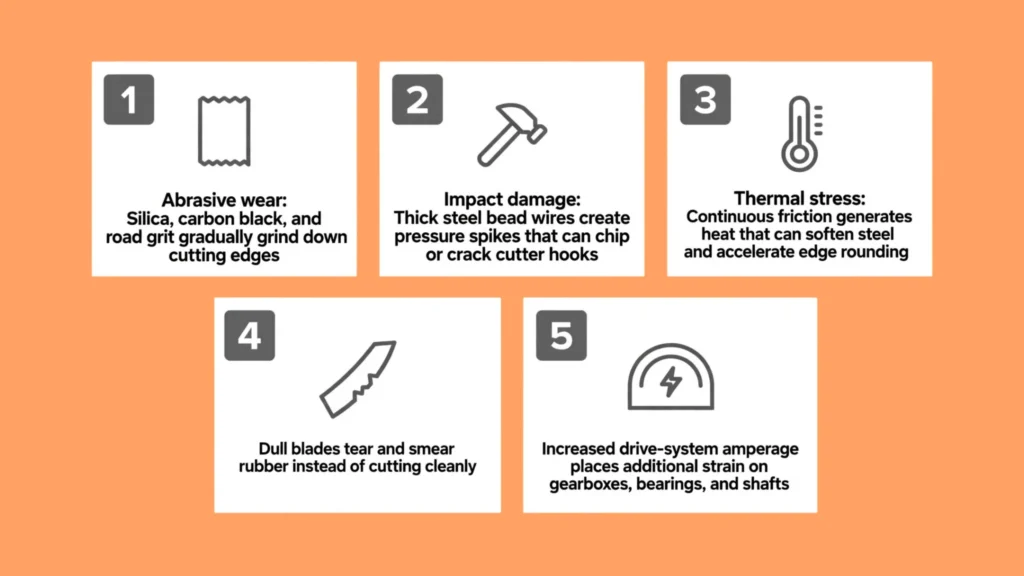
Tyres are engineered to survive tens of thousands of miles of friction, impact, and heavy loads. Processing them requires a machine capable of shearing through steel wire bundles while absorbing continuous shock loads. This environment creates three primary forms of mechanical degradation:
Abrasive Wear: Silica, carbon black, and embedded road grit act like sandpaper against cutting edges and chamber walls during every rotation.
Impact and Fatigue: Thick steel bead wires especially in off-the-road (OTR) and commercial truck tyres create localized pressure spikes that can chip, crack, or deform cutter hooks.
Thermal Stress: Continuous friction generates significant heat within the cutting chamber, which can soften improperly tempered steel and accelerate edge rounding.
When cutting edges dull, the shredder stops shearing rubber cleanly and begins tearing or smearing it.
These equipment-related problems are among the operational difficulties discussed in our guide to challenges in the tyre recycling industry, including high processing costs and machinery limitations.
This forces the hydraulic or electric drive system to draw higher amperage, placing extra strain on gearboxes, bearings, and shafts.
Core Wear Parts and Their Replacement Costs
Budgeting accurately requires knowing which components wear out fastest and what drives their replacement expenses.
Since equipment maintenance and blade replacement directly affect operating expenses, understanding tire recycling business profitability can help operators evaluate their long-term financial performance.
While exact figures vary based on machine throughput, rotor width, and regional steel prices, wear parts generally fall into predictable cost tiers.
Shredder Blades and Cutter Discs
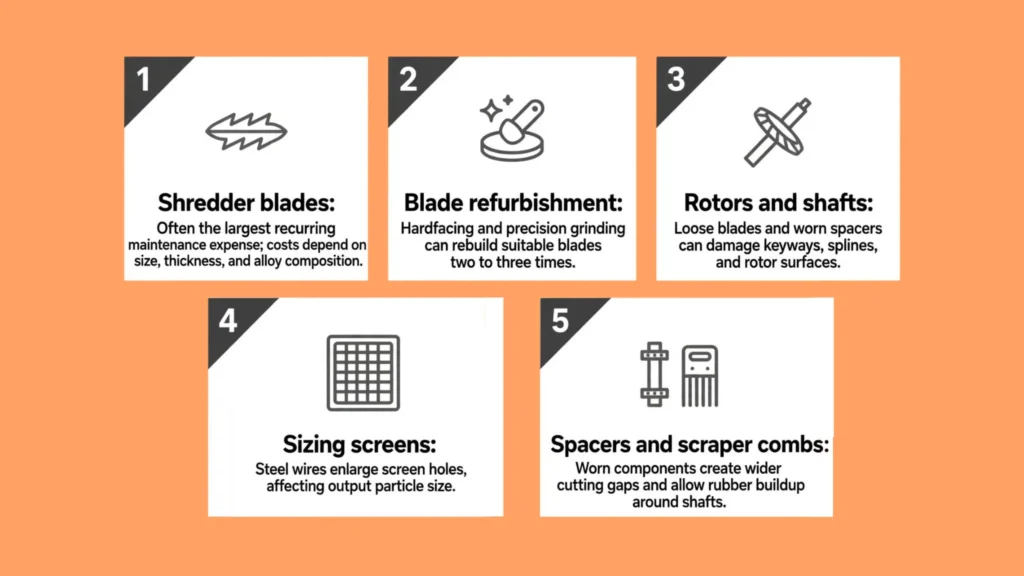
Blades are the primary consumable in any primary or secondary tyre shredder. Shredder blade replacement cost is typically the largest recurring maintenance expense in a recycling plant.
Cost Drivers: Prices depend on blade diameter, thickness, alloy composition (such as D2, H13, or specialized tool steels), and whether the cutters are solid discs or replaceable bolt-on tips.
Resharpening vs. Replacement: Many solid hook blades can be removed, surface-ground, and rebuilt using hardfacing welding wire two to three times before they lose structural integrity. Rebuilding a blade set typically costs a fraction of purchasing a brand-new set, provided the base metal has not cracked.
Rotors and Shafts
Rotor wear occurs more slowly than blade wear, yet it carries a much higher financial penalty if neglected. In dual-shaft and single-shaft shredders, the rotor body and hexagonal or keyed shafts endure immense torsional forces.
Keyway and Spline Damage: If blades become loose due to improper torque or worn spacers, they shift on the shaft, rounding off corners and damaging keyways.
Rotor Body Erosion: In single-shaft granulators and rasp bars, the rotor drum itself wears down around the blade pockets. Repairing or replacing a damaged rotor often requires specialized machining and extended facility shutdowns.
Screens, Spacers, and Scraper Combs
Secondary components keep the cutting chamber functioning efficiently and maintain uniform output chip size.
Sizing Screens: Perforated screens control particle size in rasp mills and granulators. High-tensile steel wires rapidly enlarge screen holes, requiring periodic rotation or replacement to maintain material specifications.
Spacer Rings and Cleaning Fingers: Spacers maintain tight tolerances between opposing cutters. When spacers wear thin, gaps widen, allowing rubber strips to wrap around the shaft rather than shearing cleanly. Scraper combs (cleaning fingers) prevent material buildup and must be replaced once their tips wear away.
Comparison of Wear Part Maintenance Strategies
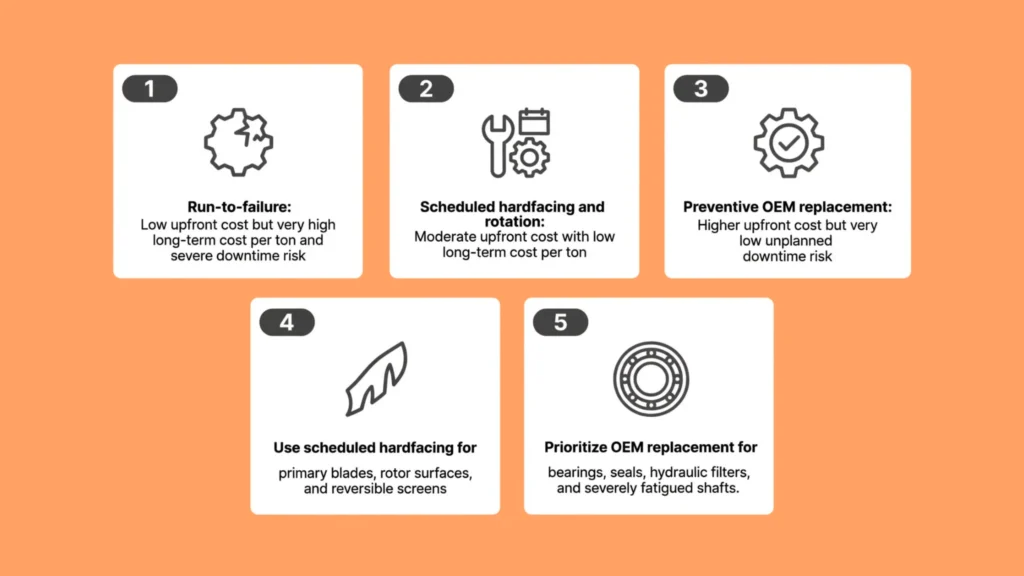
Choosing between running parts to failure, rebuilding them, or replacing them on a fixed schedule directly impacts your cost per ton processed.
| Strategy | Upfront Cost | Long-Term Cost per Ton | Risk of Unplanned Downtime | Best Used For |
| Run-to-Failure | Low | Very High | Severe | Non-critical components only; never recommended for shredders |
| Scheduled Hardfacing & Rotation | Moderate | Low | Low | Primary shredder blades, rotor surfaces, and reversible screens |
| Preventive OEM Replacement | High | Moderate | Very Low | Bearings, seals, hydraulic filters, and severely fatigued shafts |
Essential Tyre Shredder Maintenance Checklist
A consistent preventive maintenance program catches minor wear before it cascades into major mechanical failure. Dividing tasks by frequency keeps the workload manageable for maintenance crews.
Daily Inspections (Every Shift)
Check Chamber for Foreign Objects: Inspect the feed hopper and cutting chamber for tramp metal, stones, or solid steel debris that can shatter cutter teeth.
Monitor Operating Temperatures and Pressures: Record hydraulic oil temperatures, gearbox heat levels, and motor amperage. Sudden spikes usually indicate dull blades or binding material.
Verify Automatic Lubrication Systems: Ensure grease lines to main bearings and seals are pressurized and dispensing properly.
Weekly Maintenance
Inspect Blade Gaps and Cutting Edges: Measure the clearance between opposing blades. Tight tolerances are critical for clean shearing; excessive gaps signal worn spacers or dull hooks.
Check Fastener Torque: Vibration loosens bolts on replaceable cutter tips, screen cradles, and wear plates. Re-torque fasteners according to manufacturer specifications.
Clean Cooling Systems: Blow out dust and rubber crumb from hydraulic oil coolers and electric motor vents to prevent overheating.
Monthly and Quarterly Servicing
Perform Hardfacing Touch-Ups: Apply wear-resistant weld overlays to high-wear zones on rotor bodies and blade faces before base metal erodes.
Sample Hydraulic Fluid and Gear Oil: Send oil samples for laboratory analysis to detect microscopic metal shavings—an early warning sign of bearing or gear tooth wear.
Inspect Seals and Bearings: Check main shaft seals for rubber dust intrusion, which can quickly destroy expensive spherical roller bearings.
Smart Downtime Planning for Wear Part Replacements
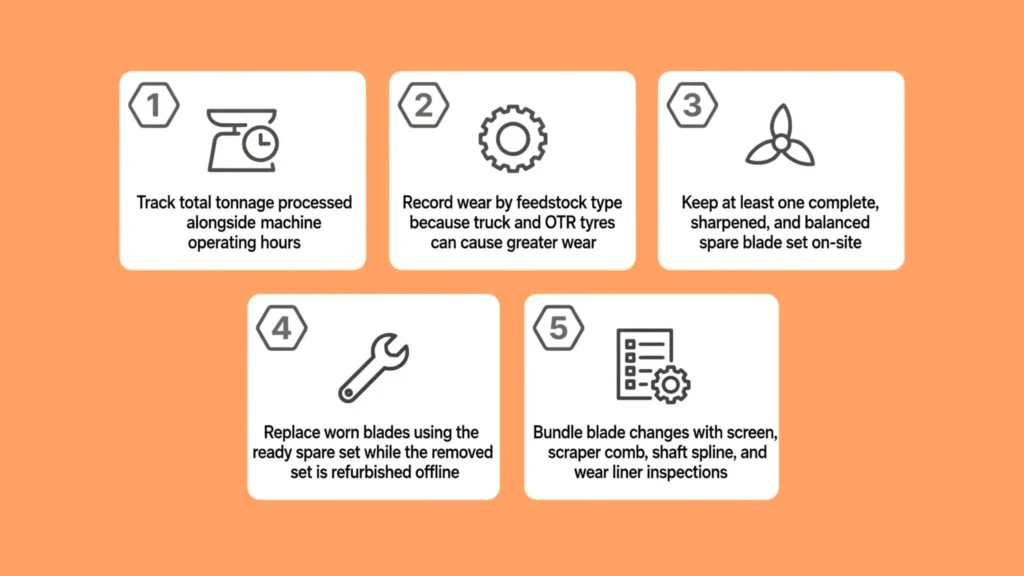
Even the best-maintained shredder must eventually stop for blade swaps and major servicing. Effective downtime planning turns disruptive breakdowns into predictable, efficient pit stops.
1. Track Tonnage Processed, Not Just Hours
Operating hours alone do not tell the full story. Shredding clean passenger car tyres causes far less wear than processing dirty commercial truck tyres or steel-heavy OTR tyres. Log both machine hours and total tonnage by feedstock type to accurately forecast when blades will reach their wear limit.
2. Keep a Ready-to-Install Spare Blade Set
Waiting days or weeks for blade grinding or shipping halts revenue. Maintain at least one complete, sharpened, and balanced spare blade set on-site. When a changeout is due, your team can swap the worn set for the ready set in a single shift, then refurbish the worn blades offline while production resumes.
3. Bundle Maintenance Tasks
Whenever the cutting chamber is opened for a blade change, schedule concurrent tasks that require the same lockout/tagout access. Replace worn scraper combs, flip or swap sizing screens, inspect shaft splines, and replace wear liners during the same maintenance window.
Common Mistakes That Inflate Wear Part Costs
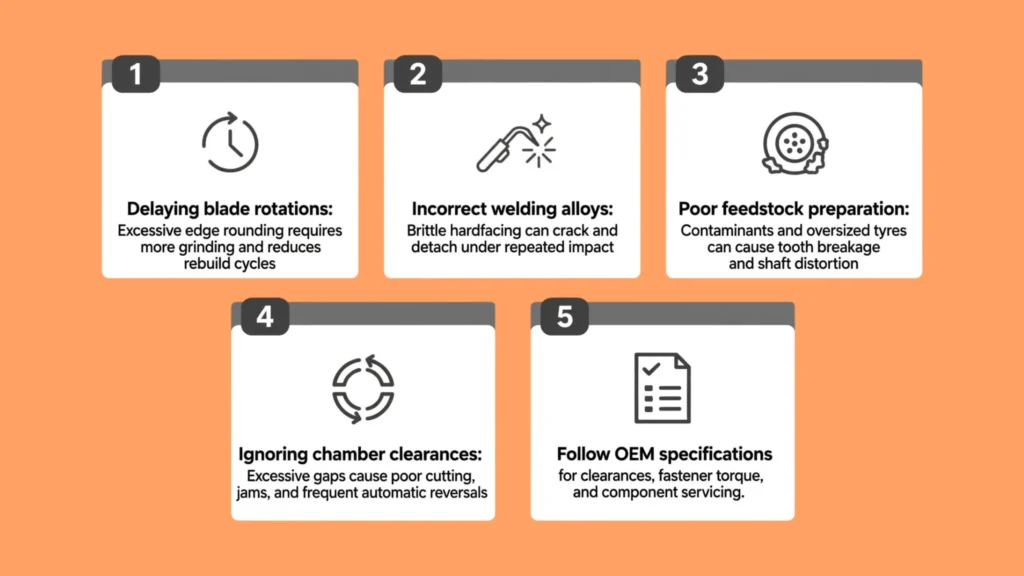
Avoiding a few widespread operational errors can save thousands of dollars annually in premature part replacements:
Delaying Blade Rotations: Running dull blades for “just one more week” rounds off the cutting edge so deeply that twice as much metal must be ground away during resharpening, drastically reducing the total number of rebuild cycles.
Using Incorrect Welding Alloys: Applying overly hard, brittle hardfacing wire to high-impact zones causes the weld to crack and flake off under shock loads, taking chunks of the base blade with it.
Ignoring Feedstock Preparation: Failing to remove heavy contaminants or feeding oversized OTR tyres into a machine rated only for passenger tyres leads to immediate tooth breakage and shaft distortion.
Neglecting Chamber Clearances: Allowing gaps between knives to drift beyond OEM tolerances causes tyres to fold and jam, triggering frequent auto-reversals that heat up hydraulic systems and stress drive couplings.
Frequently Asked Questions
How long do tyre shredder blades typically last?
Blade lifespan depends heavily on tyre type, contamination levels, and steel alloy quality. On average, a set of primary shredder blades may process anywhere from 1,500 to 4,000 tons of passenger and truck tyres before requiring resharpening or hardfacing. With proper rebuild cycles, a single blade set can often be refurbished two to three times before full replacement is needed.
Can worn tyre shredder blades be repaired instead of replaced?
Yes. Most industrial tyre shredder blades are designed to be rebuilt. Technicians clean the worn edges, apply specialized hardfacing weld layers to restore the original geometry, and precision-grind the faces and hooks. Rebuilding is cost-effective as long as the blade body has no structural cracks and retains sufficient thickness.
What causes uneven rotor wear in a tyre shredder?
Uneven rotor wear is usually caused by inconsistent feeding such as dumping material continuously onto one side of the hopper or by failing to replace individual chipped blades promptly. When one section of the rotor stops cutting effectively, adjacent blades and rotor surfaces absorb disproportionate impact and friction.
How can I reduce shredder blade replacement costs?
You can lower shredder blade replacement costs by implementing pre-shredding inspection to remove tramp metal, maintaining strict blade-to-blade clearances, resharpening edges before severe rounding occurs, and keeping a spare blade set in rotation so refurbishments can be scheduled without rushing.
What are the early signs that shredder wear parts need attention?
Key warning signs include a noticeable drop in throughput (tons per hour), higher motor amperage draw, increased frequency of automatic shaft reversals, ragged or torn rubber shreds instead of clean cuts, and elevated hydraulic oil temperatures.
Final Thoughts
Managing a profitable tyre recycling operation requires treating tyre shredder maintenance as a core production discipline rather than a reactive repair task. Cutting corners on daily inspections or pushing worn blades past their service limits inevitably drives up shredder blade replacement costs and risks severe rotor wear.
By tracking tonnage accurately, maintaining spare wear part inventories, and executing disciplined downtime planning, operators can keep their machines cutting cleanly, safely, and economically year-round.
About The Author