Biohazard and Trauma Scene Cleaning: Certification and Reality
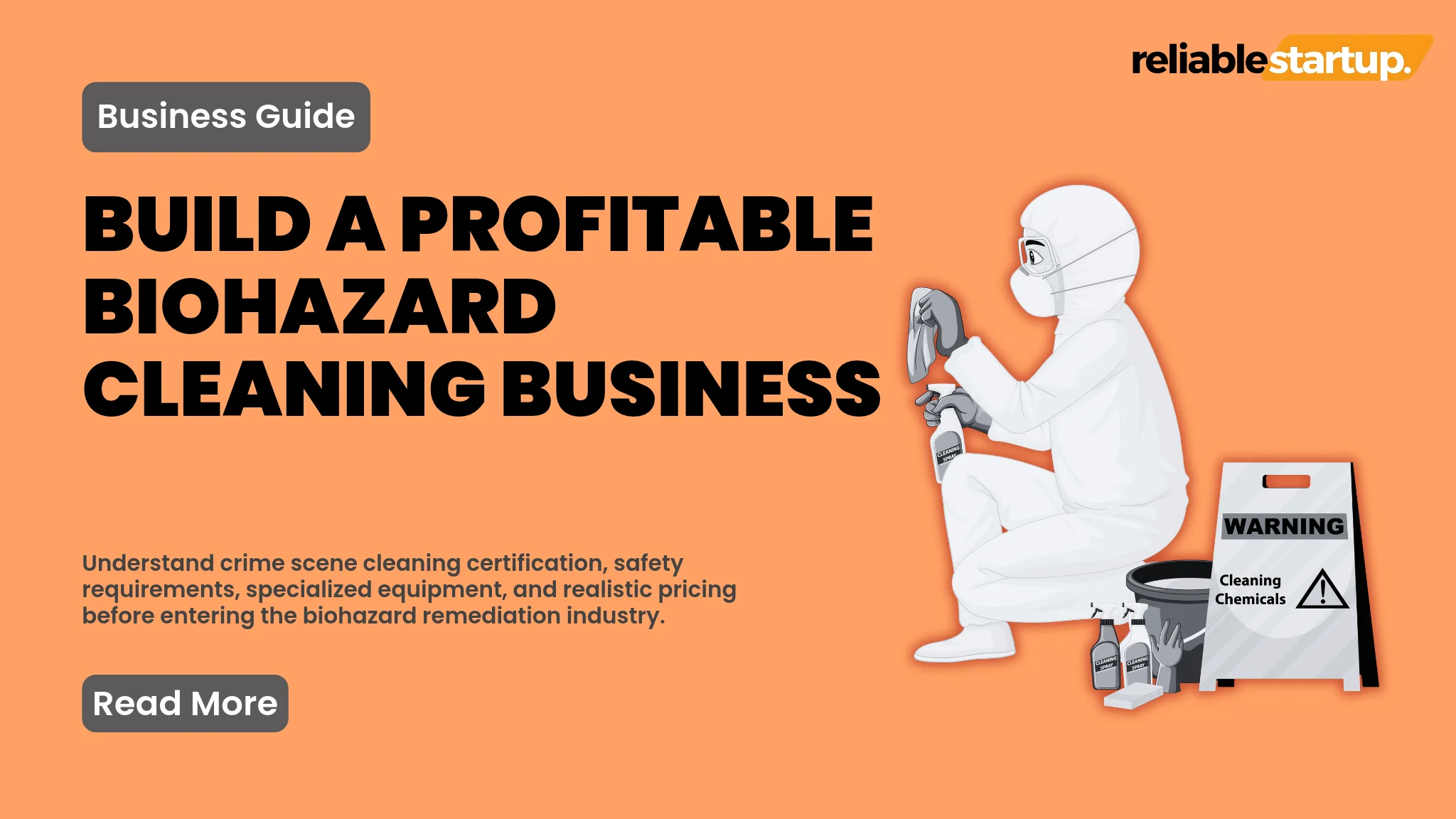
Starting a biohazard cleaning business requires specialized regulatory compliance, strict safety protocols, emotional resilience, and strategic pricing far beyond standard janitorial work.
While often romanticized in media as a fast track to high profits, trauma scene cleanup is a demanding emergency response profession governed by federal bloodborne pathogen laws, state medical waste mandates, and sensitive client interactions.
Understanding the gap between industry myths and day-to-day operations is essential before investing in equipment or training. Whether you are evaluating this niche as an entrepreneur or expanding an existing restoration company, knowing the exact certification rules, operational realities, and pricing structures will determine your long-term viability.
What Does a Biohazard Cleaning Business Actually Do?
A biohazard cleaning business specializes in the remediation, decontamination, and safe disposal of biological and chemical hazards that pose severe health risks to humans.
Unlike standard residential or commercial cleaning services, technicians in this field restore properties affected by infectious materials, bodily fluids, and hazardous substances back to a safe, habitable condition. Entrepreneurs exploring specialized opportunities can also explore these niche cleaning business ideas to understand other profitable cleaning markets.
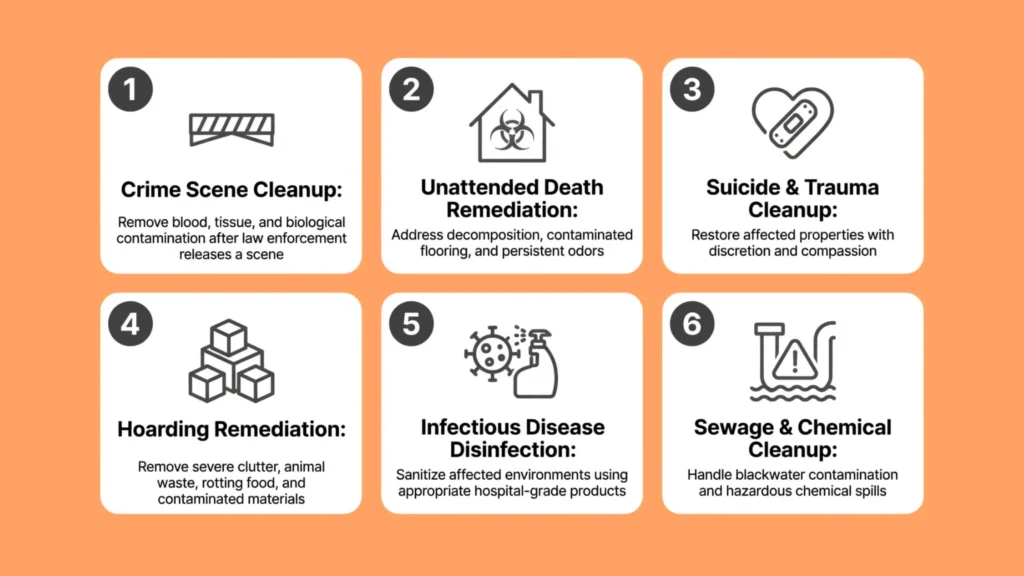
Common services provided under the umbrella of trauma scene cleanup include:
Crime Scene and Violent Incident Cleanup: Removing blood, tissue, and forensic fingerprint dust or tear gas residue after law enforcement releases a scene.
Unattended Death Remediation: Cleaning and deodorizing properties where an individual passed away days or weeks prior, involving advanced decomposition and structural fluid penetration.
Suicide and Self-Harm Cleanup: Discreet, compassionate restoration of residential or commercial spaces following a traumatic loss.
Hoarding and Gross Filth Remediation: Clearing severe clutter combined with animal waste, rotting food, mold, or pest infestations.
Infectious Disease Disinfection: Hospital-grade sanitization following outbreaks of pathogens such as MRSA, C. diff, or viral contagions.
Sewage Backups and Chemical Spills: Extracting blackwater contamination or neutralizing hazardous industrial and household chemicals.
Law enforcement agencies, paramedics, and coroners do not clean up scenes once their investigations conclude. Property owners, landlords, or grieving families are legally and financially responsible for hiring qualified professionals to handle the aftermath.
The Reality Behind Trauma Scene Cleanup
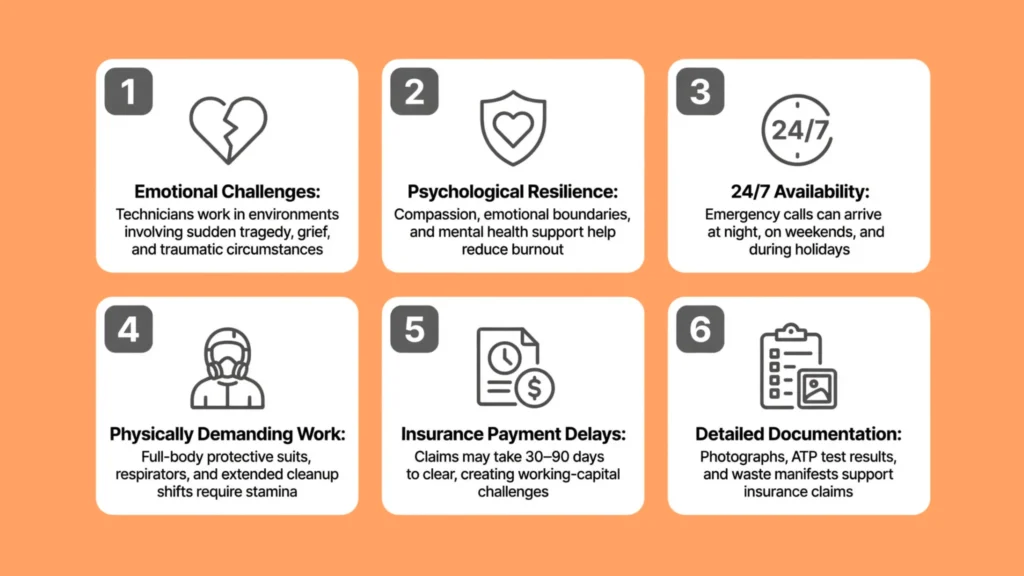
Online forums and social media frequently portray crime scene cleanup as an easy way to earn six figures with minimal startup costs. In reality, running a biohazard remediation company involves intense physical, psychological, and logistical challenges that filter out unprepared operators quickly.
Emotional and Psychological Toll
Technicians routinely enter spaces marked by sudden tragedy, grief, and extreme conditions. You are not just cleaning a room; you are interacting with families experiencing the worst day of their lives.
Maintaining composure, practicing active empathy, and establishing healthy psychological boundaries are mandatory skills. Without proper mental health support and realistic expectations, burnout and secondary traumatic stress occur rapidly.
Unpredictable 24/7 On-Call Schedules
Tragedies and biohazard emergencies do not follow a nine-to-five schedule. Most calls arrive late at night, on weekends, or during holidays.
Building a reputation with local police departments, property managers, and insurance adjusters requires answering the phone immediately and mobilizing a crew within hours. Missing calls usually means losing the job to a faster competitor.
Intense Physical Conditions
Remediation work is physically grueling. Technicians wear full-body Tyvek suits, double layers of chemical-resistant gloves, steel-toe boots, and full-face respirators for hours at a time often in poorly ventilated homes without functioning air conditioning.
Tasks frequently involve tearing out soaked carpet, subflooring, drywall, and insulation before deep chemical disinfection even begins.
Remediation work is physically grueling. Technicians wear full-body Tyvek suits, double layers of chemical-resistant gloves, steel-toe boots, and full-face respirators for hours at a time, often in poorly ventilated homes without functioning air conditioning.
Tasks frequently involve tearing out soaked carpet, subflooring, drywall, and insulation before deep chemical disinfection even begins. Entrepreneurs considering this industry should understand the operational demands before deciding to start a specialty cleaning business.
Complex Insurance Billing and Cash Flow Delays
While biohazard pricing yields high gross invoices, getting paid takes patience. Most residential trauma scene cleanup jobs are covered under homeowners or renters insurance policies.
However, insurance adjusters scrutinize every line item, requiring detailed photographic documentation, ATP (adenosine triphosphate) swab test results, and waste manifests. Payments commonly take 30 to 90 days to clear, meaning new business owners need sufficient working capital to cover payroll, disposal fees, and supplies in the meantime.
Crime Scene Cleaning Certification and Legal Requirements
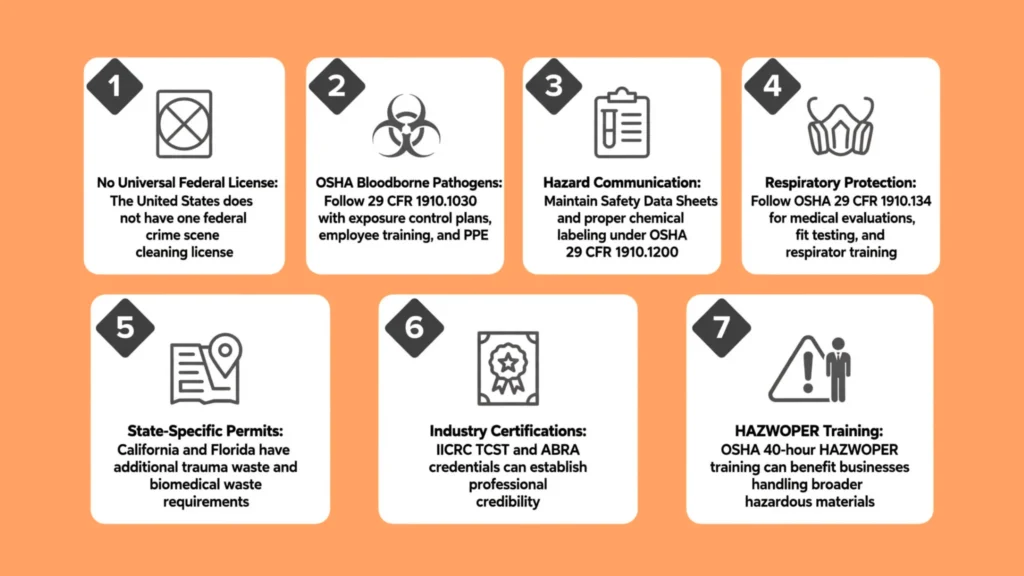
A common misconception is that a single federal license certifies someone as a crime scene cleaner. In the United States, there is no universal federal “crime scene cleaning license,” but operating legally requires strict compliance with overlapping federal safety standards, environmental laws, and state-specific registrations.
Mandatory Federal Compliance (OSHA & EPA)
Every biohazard cleaning business must adhere to Occupational Safety and Health Administration (OSHA) regulations before sending a single technician into the field:
OSHA Bloodborne Pathogens Standard (29 CFR 1910.1030): Requires a written Exposure Control Plan, annual employee training, Hepatitis B vaccination availability, engineering controls, and strict personal protective equipment (PPE) protocols.
OSHA Hazard Communication Standard (29 CFR 1910.1200): Mandates Safety Data Sheets (SDS) for all chemical disinfectants and proper container labeling.
OSHA Respiratory Protection Standard (29 CFR 1910.134): Requires medical evaluations, fit testing, and training for workers wearing respirators.
EPA & DOT Regulations: Disinfectants must be EPA-registered hospital-grade virucides and bactericides, and transporting regulated medical waste across public roads requires Department of Transportation (DOT) compliance or a licensed medical waste hauler.
State-Specific Licensing Rules
While many states rely on federal OSHA compliance and general business registration, several states enforce strict statutory requirements for trauma waste practitioners. For example:
California: Requires registration as a Trauma Scene Waste Management Practitioner through the California Department of Public Health (CDPH), along with specific training and transport permits.
Florida: Regulates biomedical waste generators and transporters under the Florida Department of Health, requiring annual permits and strict storage protocols.
New York and Texas: Enforce specific medical waste tracking, packaging, and disposal regulations through state environmental and health agencies.
Always check your state’s Department of Health and Environmental Protection agency before launching operations.
Industry-Recognized Certifications
Even where not mandated by statute, professional crime scene cleaning certification establishes credibility with insurance carriers, municipal agencies, and commercial clients. Reputable credentialing bodies include:
IICRC (Institute of Inspection Cleaning and Restoration Certification): Offers the Trauma and Crime Scene Technician (TCST) certification, widely recognized by property insurance companies.
ABRA (American Bio-Recovery Association): Provides certified bio-recovery technician credentials and enforces strict ethical and operational standards.
OSHA 40-Hour HAZWOPER: Valuable for companies handling broader hazardous materials, chemical spills, and industrial decontamination.
Understanding Biohazard Pricing and Profit Margins
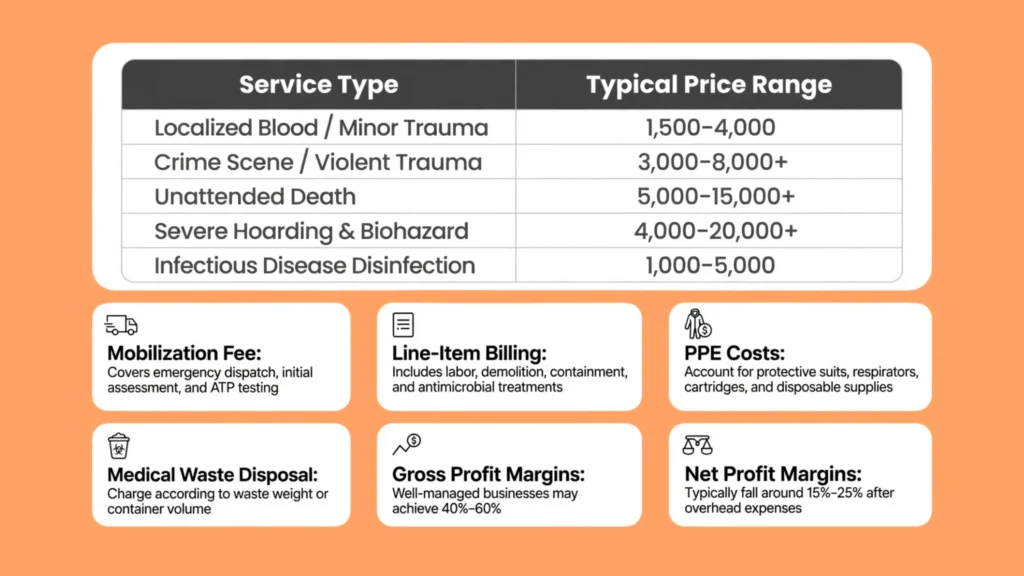
Biohazard pricing differs dramatically from standard house cleaning because invoices reflect specialized labor, regulatory liability, structural demolition, expensive PPE, and regulated medical waste disposal.
Typical Job Cost Ranges
While total costs depend on the severity of contamination, square footage, and structural damage, industry averages typically fall into the following ranges:
| Service Type | Typical Price Range | Primary Cost Drivers |
| Localized Blood / Minor Trauma | $1,500 – $4,000 | Surface disinfection, PPE, minimal waste disposal |
| Crime Scene / Violent Trauma | $3,000 – $8,000+ | Multi-room contamination, drywall/carpet removal, documentation |
| Unattended Death (Decomposition) | $5,000 – $15,000+ | Subfloor removal, odor neutralization, extensive bio-waste volume |
| Severe Hoarding & Biohazard | $4,000 – $20,000+ | Dumpster rentals, multi-day labor, pest/waste remediation |
| Infectious Disease Disinfection | $1,000 – $5,000 | Facility square footage, electrostatic spraying, ATP verification |
How Biohazard Jobs Are Quoted
Most established companies avoid flat hourly quotes because unexpected fluid migration beneath baseboards or subfloors can double the workload once demolition begins. Instead, professionals use a structured pricing model:
Base Mobilization and Assessment Fee: Covers emergency dispatch, initial safety evaluation, and ATP surface testing.
Line-Item Remediation Billing: Many insurers require estimates built in Xactimate (industry-standard restoration estimating software), pricing labor, demolition, containment barriers, and antimicrobial treatments per square or linear foot.
PPE and Consumables: Billed per technician shift, accounting for disposable suits, respirators, cartridges, and heavy-duty biohazard bags.
Regulated Medical Waste Disposal: Priced by weight or per biohazard box/tub, reflecting fees charged by licensed medical waste incinerators or autoclaves.
Realistic Profit Margins
Gross profit margins in a well-managed biohazard cleaning business often range between 40% and 60%, significantly higher than standard janitorial margins of 10% to 20%. However, high fixed overhead—including specialized commercial liability and pollution insurance, 24/7 staffing readiness, vehicle maintenance, and compliance audits—reduces net profit margins to roughly 15% to 25% once administrative costs are factored in.
Essential Steps to Launch a Biohazard Cleaning Business
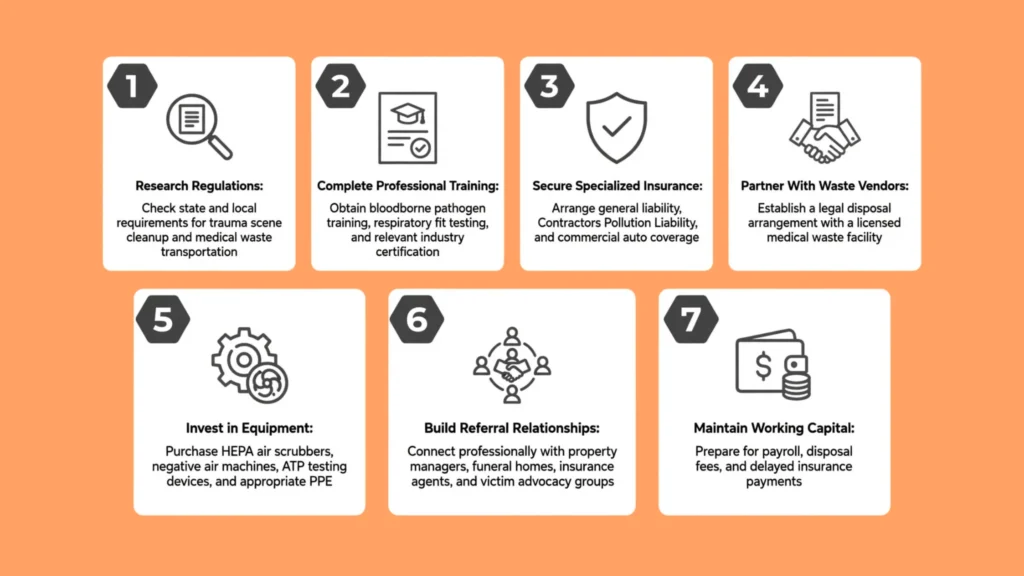
If you are prepared for the operational demands, launching a compliant company requires methodical preparation rather than rushing to buy equipment.
Research State and Local Regulations: Confirm whether your state requires dedicated trauma scene practitioner permits or medical waste transporter licenses.
Complete Core Training and Certification: Obtain OSHA Bloodborne Pathogens training, respiratory fit testing, and an industry credential such as the IICRC TCST.
Secure Specialized Insurance: Standard general liability policies may exclude biohazard and pollution claims, so you must purchase commercial general liability paired with Contractors Pollution Liability (CPL) and commercial auto coverage. Before choosing a policy, review this guide to cleaning business insurance to understand common coverage options and business protection requirements.
Partner with a Licensed Medical Waste Disposal Vendor: Establish an account with a certified medical waste incinerator or autoclave facility so you have a legal chain of custody for bio-waste from day one.
Invest in Proper Equipment and Containment Gear: Purchase HEPA air scrubbers, negative air machines, hydroxyl generators or ozone machines (for unoccupied odor control), ATP luminometers, commercial extractors, and ample PPE.
Build Ethical Referral Relationships: Introduce your business professionally to local property managers, funeral homes, victim advocacy groups, insurance agents, and municipal departments without engaging in insensitive “ambulance chasing.”
Common Mistakes New Operators Make
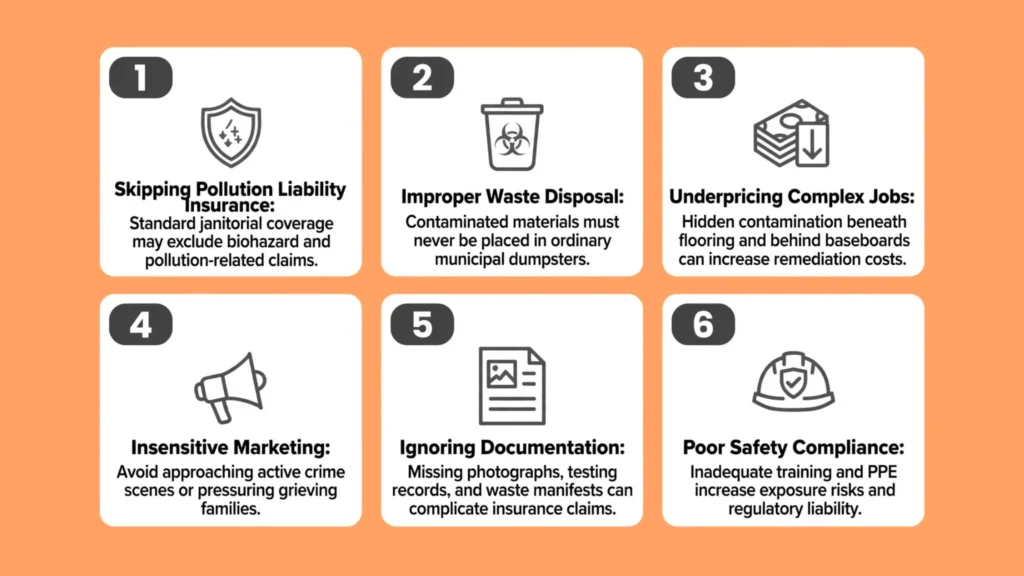
Many startups fail within their first two years due to avoidable operational missteps:
Skipping Pollution Liability Insurance: Operating with standard janitorial insurance leaves your personal and business assets completely exposed if a cross-contamination lawsuit or regulatory fine occurs.
Improper Waste Disposal: Throwing blood-soaked materials into regular municipal dumpsters is illegal, unethical, and carries severe environmental fines and criminal penalties.
Underpricing Complex Decomposition Jobs: Failing to inspect beneath flooring or behind baseboards during the initial walkthrough leads to absorbing unbilled demolition and odor-remediation hours.
Aggressive or Insensitive Marketing: Showing up uninvited at active crime scenes or pressuring grieving families ruins your reputation with law enforcement and local communities permanently.
Frequently Asked Questions
Do you need a special license to start a biohazard cleaning business?
There is no single federal license for crime scene cleaning, though every business must follow federal OSHA Bloodborne Pathogens and Hazard Communication standards. However, states like California and Florida require specific state-level permits or registrations for trauma scene waste practitioners and biomedical waste transporters.
How much does it cost to start a biohazard cleaning business?
Startup costs typically range from $15,000 to $50,000, depending on whether you already own a commercial vehicle. Primary expenses include specialized pollution liability insurance, OSHA training and certifications, HEPA filtration equipment, ATP testing devices, PPE inventory, and initial working capital.
Does homeowners insurance cover trauma scene cleanup?
Yes, in most cases. Standard homeowners, renters, and commercial property insurance policies generally cover sudden and accidental biohazard remediation—including crime scenes, suicides, and unattended deaths—under property damage provisions, minus the policyholder’s deductible.
How do biohazard cleaners dispose of medical waste?
Technicians seal contaminated porous materials, sharps, and biological waste in puncture-resistant, leak-proof red biohazard bags and rigid DOT-approved containers. These containers are tracked with a legal waste manifest and transferred to a licensed medical waste facility for incineration or autoclaving.
How long does it take to get certified in crime scene cleaning?
Core OSHA Bloodborne Pathogens and respiratory safety training can be completed within a few days, while comprehensive industry courses like the IICRC Trauma and Crime Scene Technician (TCST) certification typically take three to four days of intensive instruction and testing.
Is biohazard remediation dangerous for technicians?
The work carries real exposure risks to bloodborne pathogens such as Hepatitis B, Hepatitis C, and HIV, as well as airborne mold spores and chemical hazards. However, when technicians strictly follow OSHA exposure control plans, wear proper PPE, and use negative air containment, the risk of infection or injury is kept very low.
Final Thoughts
Building a successful biohazard cleaning business demands far more than strong stomach resilience and high-grade disinfectants. Long-term success rests on strict adherence to OSHA and state waste laws, proper pollution insurance coverage, accurate Xactimate-based biohazard pricing, and genuine compassion for people navigating devastating circumstances. Entrepreneurs who treat this field as a disciplined, compliance-driven emergency service—rather than a get-rich-quick side hustle—can build a respected, financially sustainable operation that provides vital support to their communities.
About The Author