Best Harness for Zipline Riding Shop Top Safety Picks
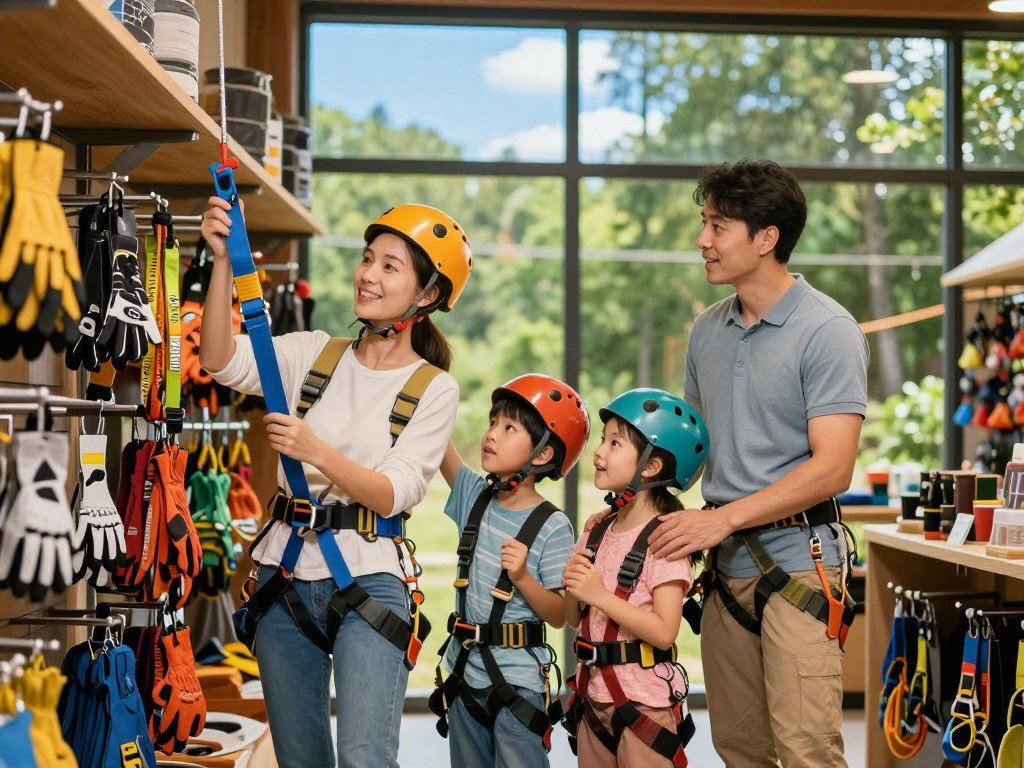
A comfortable zip-line ride starts with equipment that suits the rider’s position and the course setup. That match shapes the best harness for zipline riding, whether you are planning a family adventure or a solo run. The trolley is the wheeled device that travels along the zip-line cable.
A good fit can support comfort and help keep kids secure, but no single style suits every ride. Course rules, rider size, and riding position all matter. A choice made for an upright ride may not suit a head-first flight.
These picks separate upright riding, full-body support, and prone flight. You will also find practical ways to narrow choices without treating a familiar label as proof that equipment fits your course. A zip line operator’s rules still guide what you can bring and use.
The safest first step is to choose for the actual ride, not just the most familiar brand name.
Key Takeaways
- Choose a model for the rider’s position and course setup.
- Compare full-body support when shopping for kids.
- Check fit and condition before each ride.
- Ask the operator which models and connections are allowed.
- Do not assume a climbing harness suits a zip line.
Shop the Best Harness for Zipline Riding by Rider Type
For an adult seeking a purpose-built option for longer rides, start with the Fusion Roar; for a child, compare full-body options. The Roar has contoured padded foam and moisture-wicking material for extended time on a course.
Match each model to its intended rider and position before weighing its price. The table gives you a quick view of five choices, from general zip-line use to head-first flight.

Choose the Superman model only when the rider seeks head-first zip-line flight.
Seat and full-body choices
The Zip Line Gear Harness is listed from $65.00. The Child’s Full Body Harness – Black Diamond Momentum starts at $89.95 and offers a full-body design for a child.
The Petzl Panji costs $105.53 and comes in one size that covers a wide range of body sizes. That broad range can make it worth a look when one size needs to serve different riders.
| Model | Listed price | Intended rider or use | Distinguishing feature |
|---|---|---|---|
| Zip Line Gear Harness | From $65.00 | General zip-line use | Zip-line harness |
| Child’s Full Body Harness – Black Diamond Momentum | From $89.95 | Child | Full-body design |
| Petzl Panji | $105.53 | Broad range of body sizes | One-size design |
| Fusion Roar Zip Line Harness-Professional Harness | $435.60 | Long rides | Contoured padded foam and moisture-wicking material |
| Fusion Superman Harness-Super Ripper | $805.13 | Prone flight | Head-first riding |
Purpose-built and prone-flight options
The Fusion Superman Harness-Super Ripper is designed for head-first zip-line riding. Its intended position sets it apart from upright options, so choose it only for a course and ride built for prone flight.
The Black Diamond Solution Harness – Honnold Edition is a climbing-harness option, not a dedicated zip-line recommendation. Black Diamond calls it Alex Honnold’s favorite Solution Harness; its waistbelt uses Fusion Comfort Technology, has a contoured fit, and includes four pressure-molded gear loops.
That climbing design fits waist measurements from 24-27 inches in XS to 39-45 inches in XXL. Those details describe fit and climbing features, including its four gear loops, not approval for a zip-line system. Narrow your choices by the rider’s position and support needs before comparing prices.
How Should a Zipline Harness Fit and Be Checked?
A harness should sit securely on the rider before anyone connects it to a course system. Snug, even webbing helps keep the gear in place without pinching or leaving loose straps.
Follow the maker’s size and fitting instructions; the two-finger check is only a general guide. A common fit check allows no more than two fingers between the harness webbing and the rider’s body.

Fit the rider securely
Use this four-step check before each ride. A harness quick view may help you spot the parts to inspect, but it cannot replace the maker’s instructions.
- Follow the harness size chart for the rider.
- Adjust the webbing snugly and remove any twists.
- Check the stitching, webbing, and buckles for visible damage.
- Confirm the attachment point sits as the manufacturer specifies.
Full body styles can support riders differently from waist-belt styles. Fit still depends on the individual rider, so do not treat a general rule as a substitute for a size chart.
Inspect the harness and its attachment points
Fall arrest harnesses and rope-access models serve specific work uses; their technical parts do not make them recreational zip-line gear. The Petzl ASTRO International Version is designed for rope-access technicians.
It has a gated ventral attachment point for rope progression and ascent, plus an integrated CROLL L rope clamp. Metal side attachment points, equipment loops, and tool-holder slots support its rope-access tasks.
A red fall indicator appears on the dorsal attachment point after a fall. The harness also uses DOUBLEBACK self-locking buckles and FAST opening buckles. Petzl’s ASTRO details describe those work-focused features, not suitability for a zip line.
Remove a harness from use if its webbing, stitching, or buckle function raises a concern.
What Connects a Harness to a Zip Line Trolley?
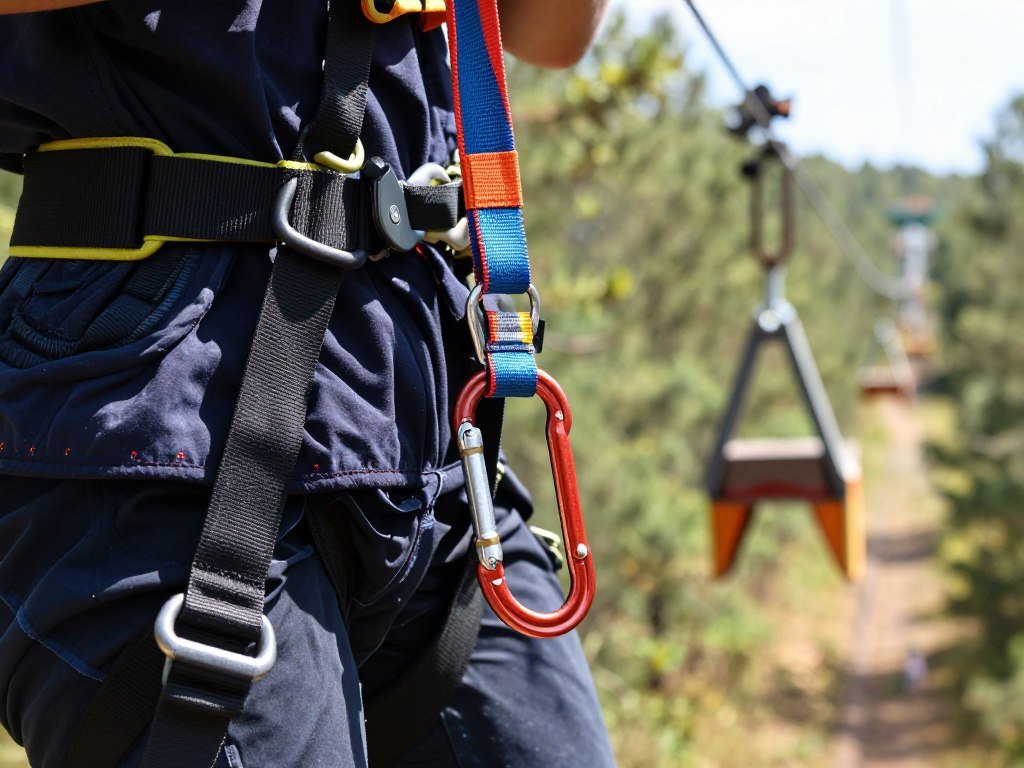
A harness connects to the trolley through a lanyard and carabiner. The course’s approved setup determines which parts you can use.
Use a harness where a fall could result in injury. On a zip line close to the ground, a seat may be suitable, with a carabiner connecting the seat to the trolley.
ANSI Z359.11-2021 relates to full-body harnesses. The ANSI/ASSP Z359.11-2021 standard sets requirements for full-body harness design, testing, labeling, use, and maintenance.
Meeting a full-body harness standard does not prove that a harness fits a particular zip-line system.
The standard covers the harness, not every trolley, lanyard, or carabiner combination. Confirm the operator’s required connection system before attaching personal equipment.
Conclusion
A good choice matches the rider and the actual course setup. A purpose-built design and a secure fit matter more than a familiar label.
Your next step is to ask the zip-line operator which models are allowed. Then choose one that suits the rider’s position and size.
Course rules can rule out a model that seems right on paper. Ask the operator to fit-check the selected model before the first ride.
FAQ
Which safety harness is best rated?
No single harness can be named the best rated without comparable rating information. A rating describes how a product meets a set standard, while suitability depends on the rider and course. Check whether the operator accepts the specific model and connection. A harness that meets a standard may still be the wrong size or setup for your zip line.
Which Petzl harnesses are good for rope access?
The Petzl ASTRO International Version is designed for rope-access technicians. It has an integrated CROLL L rope clamp and a gated ventral attachment point for rope progression and ascent. It also includes other work-focused parts, such as metal side attachment points and equipment loops. Those features suit rope access, not recreational zip-line use by default.
Which harness does Alex Honnold use?
The limited-edition Black Diamond Solution Harness – Honnold Edition is described as Alex Honnold’s favorite Solution Harness. It is a climbing harness, so that association does not make it a zip-line recommendation. Its waistbelt uses Fusion Comfort Technology and has a contoured fit. Use it on a zip line only if the operator approves that exact model and connection.
Can I use a rock climbing harness on a zip line?
Only use a rock climbing harness on a zip line if the operator approves the specific harness and connection. Climbing gear may have a suitable fit for one rider, but zip-line systems use their own approved parts and rules. A familiar climbing brand is not proof of compatibility. Ask the operator before bringing personal equipment to the course.
Do kids need a full-body harness for ziplining?
Not every child needs a full-body style, but it can help contain a child whose hips may not secure a waist belt. The operator’s sizing and fitting instructions govern the choice. A child’s height, body shape, and the course rules all matter. Have the operator assess the fit rather than choosing by age or label alone.
How often should a zipline harness be inspected?
Check a zip-line harness before every use, then follow the manufacturer’s inspection and retirement guidance. Look for damage or changes that could affect safe use, and do not keep using gear that raises a concern. The maker’s rules set how to inspect and when to retire that model. The course operator may also have its own checks.
What should I wear under a zipline harness?
Wear close-fitting clothing that does not bunch beneath the webbing. Loose folds can make the fit less comfortable and can get in the way of a proper check. Choose clothing that lets you move freely, and follow the operator’s clothing rules. Ask about items such as jackets or bulky layers before gearing up.
About The Author