Best Area Rugs for Hardwood Floors: Buyer’s Guide

A wool rug is a strong all-around starting point for a hardwood room, while the right choice depends on traffic, cleanup needs, and the floor finish.
The best area rugs for hardwood floors make a room feel softer and help limit direct wear from furniture and foot traffic. Cotton and low-pile washable styles can suit spaces where easy cleanup matters most.
Your choice depends on more than the visible rug material. The backing, rug pad, and hardwood’s protective coating all affect whether the rug works well in your home.
Before buying, check the rug’s construction and the floor-care instructions for the finish beneath it.
Key Takeaways
- Wool offers comfort and lasting use in many rooms.
- Choose cotton or a washable style when cleanup is a priority.
- Check the backing and rug pad against your floor finish.
- Match rug size to furniture, doors, and room traffic.
- Keep grit and moisture from collecting under the rug.
Best Area Rugs for Hardwood Floors: What to Look For
A good hardwood-floor rug combines a suitable surface material with a backing or pad approved for the floor’s finish. Both layers matter when you choose rugs for a room.
Wool feels soft and comfortable underfoot, and it holds up well to regular use. Cotton weighs less and is often easier to clean. A rug can soften footsteps and reduce direct wear, but its face fiber alone does not show whether the underside suits your floor.
Use a backing or rug pad specifically approved for the particular floor finish, and never apply adhesive to wood unless the flooring maker approves it.
Backing may contain rubber, latex, PVC, natural fibers, or synthetic materials. Do not assume any backing type is safe for every hardwood floor. Check the floor-care instructions and the rug or pad maker’s guidance first.
Mats for wooden floors need the same compatibility check as a large area rug. A small mat can still trap moisture or leave marks if its backing reacts with the finish.
If the backing’s materials are unclear, choose a different construction or confirm compatibility before placing it on the floor.
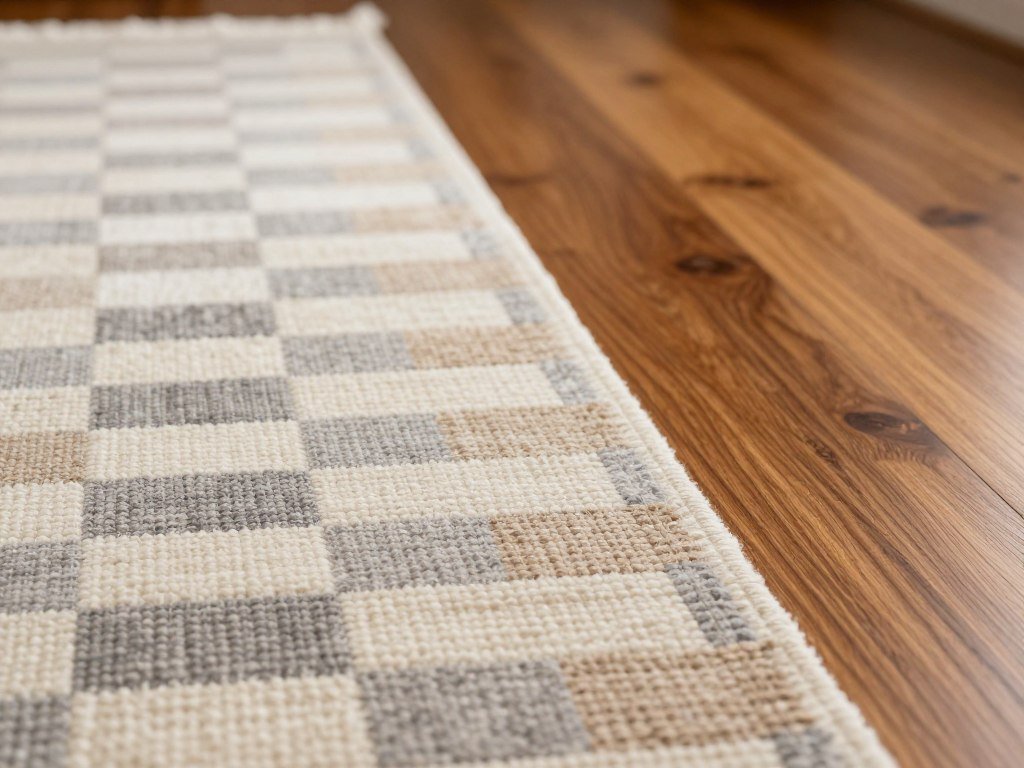
Which Rug Materials Suit Your Room and Routine?
Wool is a durable, comfortable all-around option, while washable cotton or synthetic styles can simplify cleanup in busy rooms. Choose by routine, not appearance alone.
Wool suits living rooms and bedrooms where softness and wear resistance matter. Cotton is light and easy to clean, making it handy for casual spaces. Washable rugs trade some thickness and lifespan for easier cleanup.

Wool, cotton, and washable fibers
Ordinary washable rugs are made to go into a machine, but check the care label and whether your washer can fit the rug. For 2026, polyester and polypropylene are common washable fibers, and some rugs use 100% cotton. Check the washer capacity for the rug before buying.
A washable rug may be thinner than a traditional rug and may not last as long. A cover system works differently: Ruggable uses a decorative rug cover attached to a separate nonslip rug pad. The company describes its rugs and runners as stain-resistant, water-resistant, and machine washable.
Jute, sisal, and flatweaves
Jute and sisal bring a natural, rough texture that suits drier locations. Their coarse fibers can rub against the floor as they shift, so pair them with a suitable pad.
A flatweave is a rug woven without a deep pile, so it lies close to the floor. Its low profile can fit halls and doorways without catching as easily on doors.
| Material or construction | Useful setting | Practical advantage | Trade-off |
|---|---|---|---|
| Wool | Living rooms or bedrooms | Durable and soft | Needs care suited to its label |
| Cotton | Casual spaces | Lightweight and easy to clean | May feel less substantial |
| Washable polyester or polypropylene | Spills and busy households | Designed for machine washing | Can be thinner and shorter-lived |
| Jute or sisal | Drier locations | Textured natural fibers | Needs a pad to limit movement |
For homes with children or pets, a lightweight, low-pile surface can make routine cleaning easier, while the backing still needs its own floor-safety check.
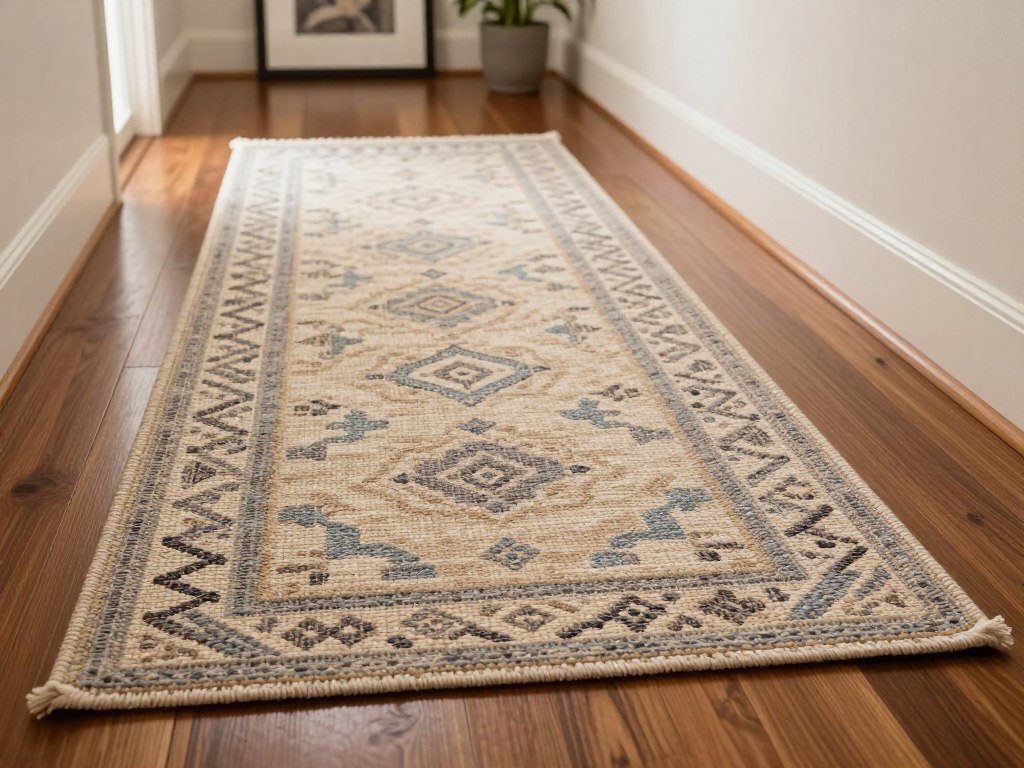
What Rug Pad Protects a Hardwood Finish?
The right rug pad is one approved for the exact floor finish, sized just inside the rug’s edge, and matched to the room’s need for grip or cushioning. Fit matters as much as material.
Pad thickness and size should suit the rug and its location. A low profile can help under doors or dining tables, while thicker cushioning may feel better in a bedroom. Follow both the floor-care instructions and pad-maker directions for compatibility.
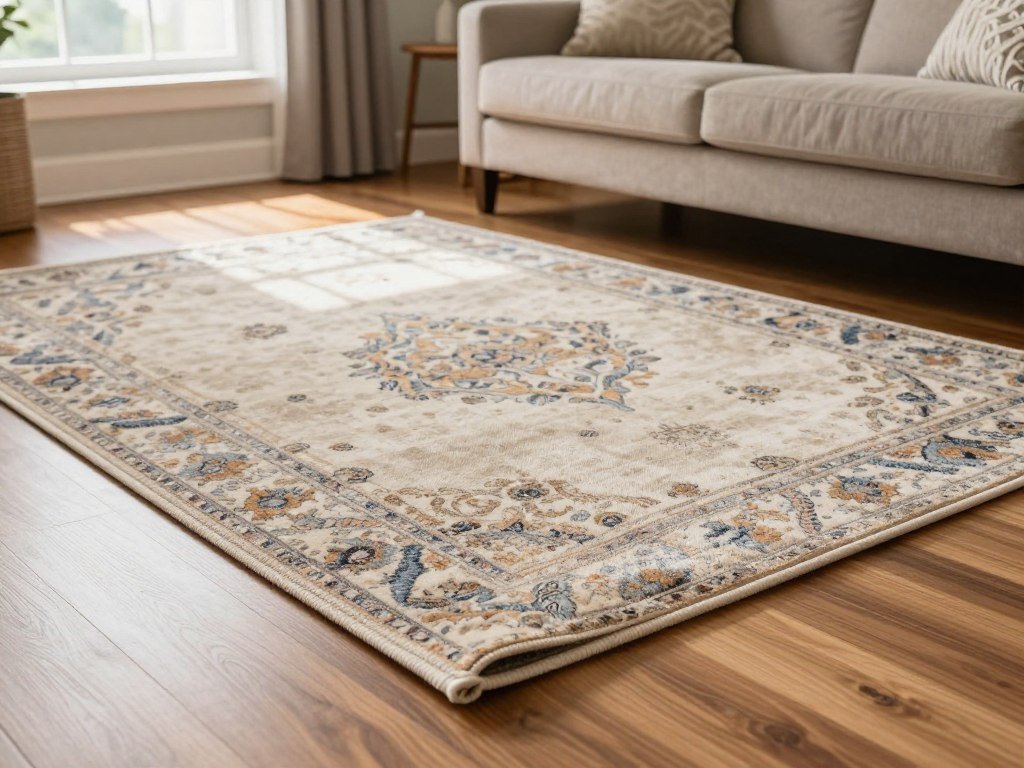
Choose grip, cushioning, and profile
For 2026, size a rug pad to the rug, not the room, and leave about one inch inside each rug edge. The exact hardwood finish and pad instructions govern which materials you can use.
Felt adds cushioning but does not provide nonslip grip on its own. Natural rubber grips with little cushioning, while a felt-and-rubber blend provides both grip and moderate softness. No material is safe for every finish.
| Pad type | Grip | Cushioning | Best fit |
|---|---|---|---|
| Felt | No nonslip grip | Useful cushioning | Large rugs that need softness |
| Natural rubber | Good grip | Little cushioning | Rugs needing stability |
| Felt-and-rubber blend | Good grip | Moderate cushioning | Living rooms and bedrooms |
| Felt bonded to thin solid rubber | Stable support | Moderate support | Thin piles and scatter rugs |
Special support for Oriental rugs and flatweaves
A 1/4-inch synthetic felt pad bonded to thin solid rubber can support Oriental scatter rugs, thin piles, antiques, needlepoints, Aubussons, and flatweaves. Dense 1/2-inch felt can slip under a scatter rug.
Sponge or foam pads may bottom out under Oriental rugs, then break down or stick to wood floors. For flatwoven Kilims, Dhurries, and Soumaks, RUGPADUSA’s Contour-Lock combines recycled felt with natural rubber and offers moderate cushioning.
RUGPADUSA says Contour-Lock suits polyurethane and other glossy finishes that may stain from PVC, vinyl, or plastic padding. The maker lists a 10-year warranty. Treat it as one specific option, not a universal match.
Check both sets of care instructions before laying down a pad, even when its surface material sounds suitable.
How Should You Size a Rug for Each Room?
In a living room, begin with a rug large enough for the sofa and chairs’ front legs, then check the surrounding floor border. Furniture should feel anchored, not crowded.
Leave about 10-20 inches of bare floor between a rug and the walls. The border can range from 8-24 inches, depending on room size. Measure the furniture footprint before choosing a rug size.
Living rooms and dining areas
An 8×10 rug fits most standard living rooms. Great rooms over 15 feet call for 9×12 or larger. Keep the front legs of sofas and chairs on the rug to connect the seating area.
For a dining room, allow about 24-30 inches of rug beyond each table side. That gives chairs room to slide back while staying on the rug. Designer rug placement advice also stresses keeping pulled-back dining chairs on the rug.
Bedrooms, kitchens, and hallways
A bedroom rug can extend 18-24 inches beyond the bed’s sides and foot. This gives you a soft landing when you get up, without filling every open area.
Runners work well in long kitchen layouts and busy hallways. A small kitchen mat can suit a sink or prep spot better than a large rug. Keep kitchen choices low-profile and easy to clean.
Measure the layout in three steps before ordering:
- Mark the furniture footprint.
- Measure the intended bare-floor border.
- Tape the proposed rug outline before ordering.
Use painter’s tape to preview the rug outline so furniture and door swings can be checked before purchase.
Which Rug Colors and Styles Complement Wood?
Start by deciding whether the rug should contrast with the wood or echo its warm or cool undertone. Either approach can make the room feel considered.
Warm-toned woods such as cherry or oak pair naturally with terracotta, rust, and beige. Cool-toned woods such as gray or ash work well with blue, gray, or green. A light or neutral rug can brighten dark floors, while a darker rug grounds pale wood.
Compare a rug sample or photo with the wood in the room’s actual light. Daylight can shift a color’s look, and evening lamps may make warm shades seem richer.
Persian rugs bring traditional motifs, while Scandinavian styles often use geometric patterns. Bessarabian kilims add floral designs. Braided or looped textures feel more tactile, while distressed patterns create a worn-in look.
Check the rug’s color in the room’s daylight and evening light before settling on a palette.
How Do You Maintain Rugs and Hardwood Floors?
Regularly lifting a rug matters because trapped grit can scrape a finish as the rug shifts. Small checks help catch wear, moisture, and backing changes before they mark the floor.
Vacuum area rugs once or twice weekly if their care instructions allow it. Deep-clean them 2-3 times each year, or more often in high-traffic areas. Rotate a rug every six months to spread wear and sun exposure.
Routine cleaning and checks beneath the rug
Lift rugs from time to time and check for grit, moisture, residue, or pad backing that has turned brittle or sticky. The exposed floor also needs a quick sweep or vacuum. Entryway rugs can catch dirt before it reaches the hardwood.
- Lift the rug and inspect for grit.
- Look for moisture or residue.
- Check whether the pad backing feels brittle or sticky.
- Sweep or vacuum the exposed floor.
Newly coated floors and wet cleaning
After a floor is coated, follow the flooring contractor’s schedule before covering it. A floor that feels safe for socks may still need more time before a rug and pad go down.
Clean a rug according to its care label, then let it dry fully for 24-48 hours before returning it to hardwood. Clean spills promptly, since moisture under a rug can affect both the finish and its backing.
Direct sunlight can fade exposed flooring and rug areas at different rates. Before replacing a rug after wet cleaning, allow both the rug and floor to dry. The NWFA’s hardwood maintenance tips also recommend a soft-bristle broom or dust mop for floor care.
For everyday cleanup, choose a cleaner that suits the surface, and review these eco-friendly household cleaning products before use.
Return a cleaned rug only after it and the hardwood are completely dry.
Which Rug Setup Fits Your Household?
For a durable, comfortable everyday rug, choose wool; for frequent spills, choose an easy-care low-pile option with a compatible pad. Your routine is the best starting point.
These three setups suit common needs:
- Wool with a floor-finish-compatible pad for a durable living-room or bedroom layer.
- A washable low-pile rug with a separately compatible pad for spills, kids, or pets.
- A flatweave runner with a low-profile pad for a hallway or kitchen path.
Judge top-rated rug pads by clear material details, floor-finish compatibility, needed grip, and suitable thickness, not star ratings alone. A trustworthy rug brand should identify its fiber, backing, care instructions, and warranty terms.
Choose a rug brand that clearly names its materials, backing, care needs, and warranty terms.
A well-labeled product makes it easier to compare rugs and check whether the pad suits your floor. Avoid relying on a high rating when the product details do not answer those questions.
Make the final choice by matching the rug and pad to both the household routine and the floor finish.
Conclusion
A well-chosen rug can make a hardwood room more comfortable while helping protect its finish. The best choice balances your household’s routine with the floor finish beneath it.
Check the floor-care instructions before ordering, so the rug and pad do not damage the surface. Measure the room and consider how furniture, doors, and daily foot traffic use the space.
Measure the space, confirm pad compatibility, and then choose the rug that suits your daily routine.
FAQ
What color rug looks good on a hardwood floor?
Warm wood pairs well with earthy shades, while cool wood often suits blue, gray, or green. A lighter rug can brighten dark hardwood, and a darker one can add contrast to pale floors. Check a rug sample or photo in the room, since daylight and evening lamps can change how its colors appear.
What are the best rug brands?
No single rug brand suits every home, so compare the product details before choosing. Look for clear fiber and backing information, care instructions, floor-finish compatibility, and warranty terms. A brand that names these details makes it easier to decide whether the rug and its separate pad fit your routine and flooring.
Can you clean area rugs on hardwood floors?
Yes, you can clean an area rug on hardwood, but follow its care label and protect the floor from moisture. After cleaning, let the rug dry fully before returning it. A cleaned rug may need 24-48 hours to dry. Make sure the hardwood is also completely dry before putting the rug and pad back in place.
What rugs to avoid on hardwood floors?
Avoid rugs with PVC, plastic, or tacky backing unless the floor-care instructions approve that construction for your finish. Coarse jute or sisal should not sit unpadded where it can shift and rub against the wood. Check the full backing details, since a rug’s visible fiber does not tell you whether its underside suits the floor.
What is the best rug for hardwood floors?
Wool is a strong all-around choice for comfort and durability in many rooms. Washable, low-pile styles can work better when easy cleanup matters more, especially in homes with children or pets. Whichever surface you choose, match its backing or separate rug pad to the specific hardwood finish.
Should you put a rug on hardwood floors?
Yes, you can put a rug on hardwood if the floor is ready to be covered and the rug and pad suit its finish. A rug can soften footsteps and reduce direct wear. Keep the floor-care instructions in mind, since a newly coated floor may need more time before you cover it.
Should a rug be lighter or darker than the floor?
Either choice can work: a lighter rug brightens dark wood, while a darker rug adds contrast to lighter floors. You can also choose a color that echoes the wood’s undertone for a more blended look. Check the rug in both daylight and evening light before settling on a color.
What kind of rugs complement wooden floors?
Rugs that echo the wood’s warm or cool undertone can create a coordinated look. You can also contrast color or texture for a stronger visual effect. Warm wood often pairs with earthy shades, while gray or ash wood can work with blue, green, or gray. Pattern and texture help set the room’s mood.
About The Author