What Is Edge AI? A Beginner’s Guide to Smart Tech Today
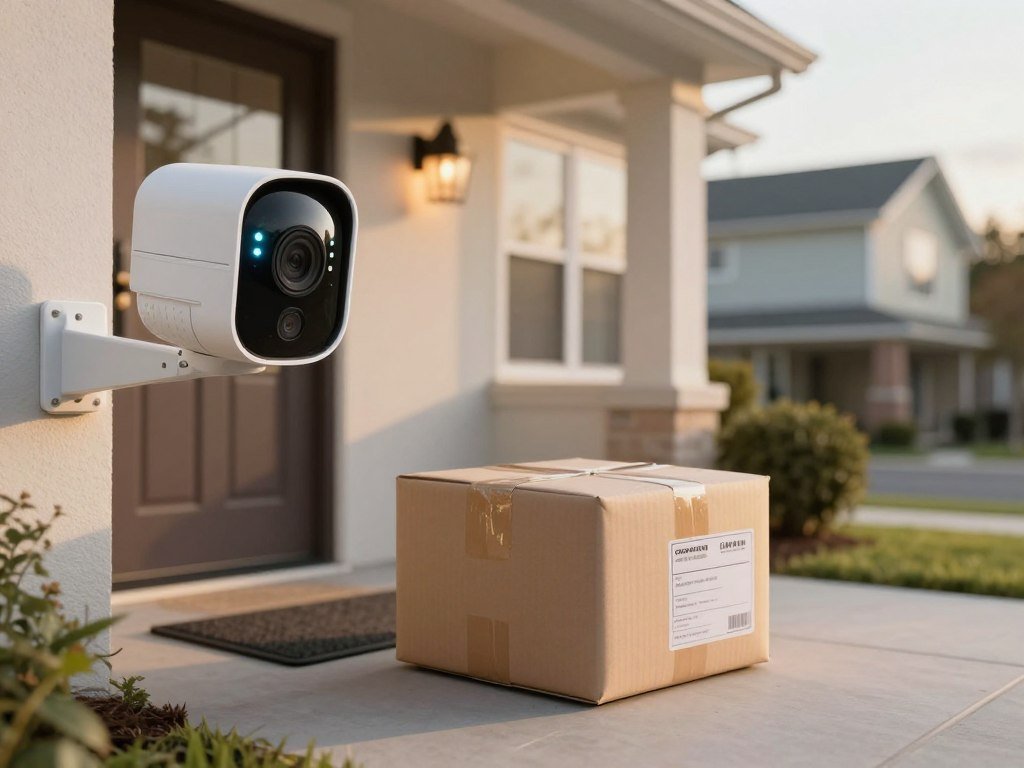
A smart camera that can recognize a package at the door shows how quickly edge AI is moving into everyday decisions. Inference means using a trained model to analyze new data and produce a prediction or decision. As more connected technology uses machine learning, you may wonder whether those decisions should happen nearby or across a network. Where processing happens can affect latency, privacy, and how much data travels elsewhere.
You do not need to build a robot or run a data center to meet this technology. It may already be part of a camera, phone, vehicle, or sensor you use. This guide gives you a clear way to understand local decisions, when they can help, and what limits them. The appeal is simple: useful decisions can happen close to the moment they matter.
Key Takeaways
- Edge AI can analyze new data near the device that collects it.
- Local decisions can respond without waiting for a remote server.
- Edge computing describes where processing happens; AI adds model-based analysis.
- Cloud systems can still train models and handle complex requests.
- Device capacity, energy use, and security all affect what works.
- A small test on the intended hardware can reveal practical limits.
What Is Edge AI and How Does It Differ From Edge Computing?
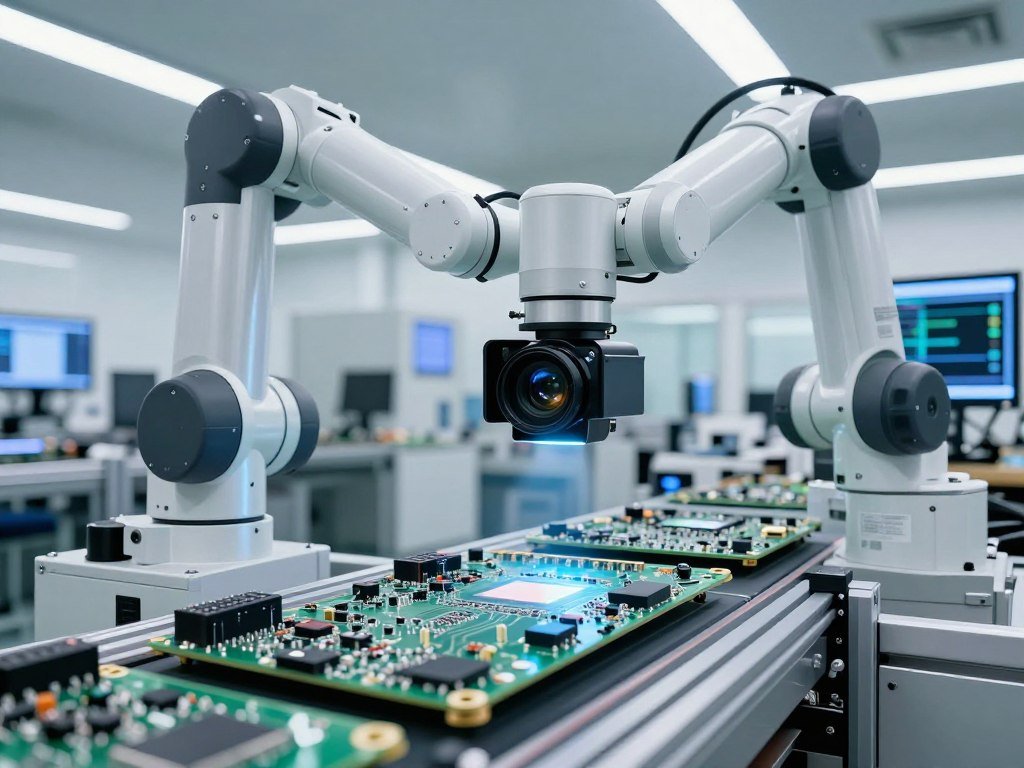
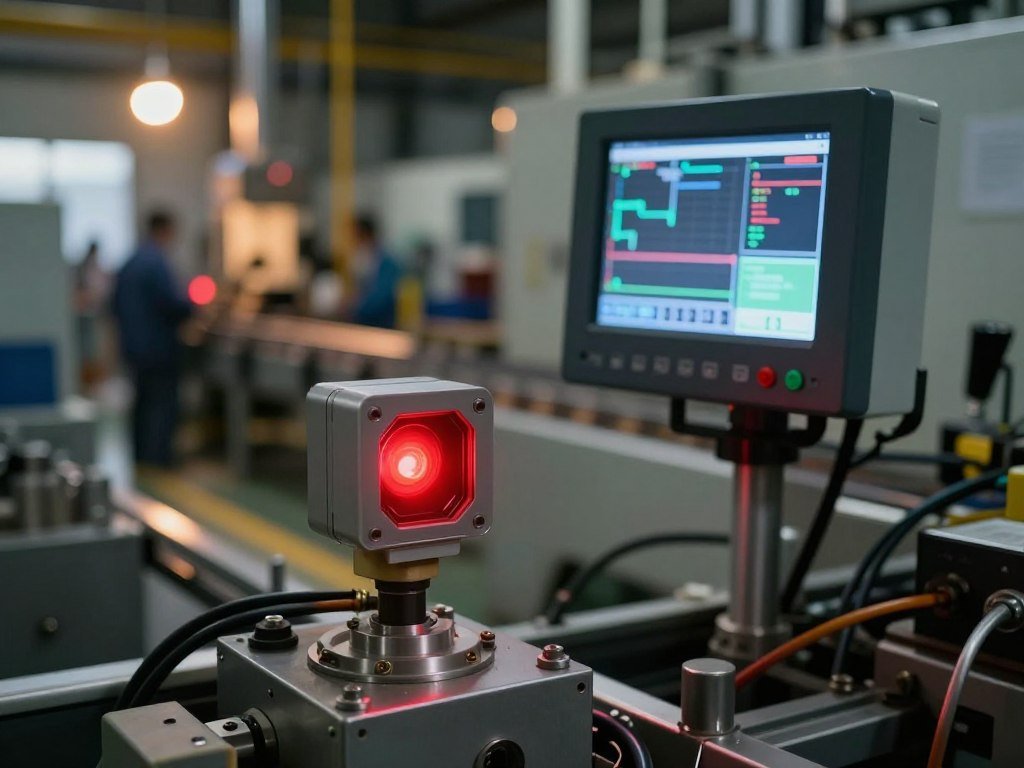
A camera can identify a defect on a factory floor without sending every frame to a distant server. Edge AI combines nearby processing with an AI model that analyzes data and makes a local decision.
Edge computing describes where processing happens; edge AI adds a model that analyzes the data. A device can process information near its source without using artificial intelligence.
Processing can happen at a device or a nearby server, but it is edge AI only when an AI model makes the local analysis or decision.
What Is Edge Computing, and What Does Edge AI Add?
Edge computing places computing resources near the place where data is generated. Edge AI adds a model that can recognize patterns, classify inputs, or guide an action there.
Cloud computing sends data to remote infrastructure for processing. Edge systems can run AI algorithms on cameras, sensors, gateways, or industrial PCs instead of depending only on a central cloud.
A gateway is a small computer that connects local devices and networks. It can serve as the edge, so a sensor does not need to run the model itself.
Content delivery networks began serving web pages and video from servers near users in the 1990s. That same broad idea of moving computing closer to users also applies to edge computing.
What Is Edge Machine Learning?
Edge machine learning means running a machine-learning model near the place where its data comes from. The model may run inside a camera, a phone, or a nearby gateway.
For example, a vibration sensor can send readings to an industrial PC. A local model can flag an unusual pattern for a worker to inspect.
The terms describe different parts of a system: edge computing sets the location, and machine learning supplies one way to analyze data. A device can use edge computing for tasks such as filtering or storing data without using an AI model.
How Does Edge AI Work?
A trained model reaches its device after learning from examples on powerful centralized hardware. Training teaches a model patterns; inference applies what it learned to new data.
Training usually needs more data and computing power than local inference. Large datasets may require cloud servers or GPUs, which can process many model calculations at once.
How Training Becomes Local Inference
During training, developers give a model examples, such as images labeled “cracked” or “intact.” The model adjusts its internal settings until it can sort examples with useful accuracy.
After training, developers prepare the model for a target device and install it there. The device then runs inference on new inputs, such as a fresh image or sensor reading.
A trained model can classify an input into a group or produce a numerical prediction. A factory system might label a part defective, while a sensor model might estimate a machine’s temperature trend.
Here is a practical cycle. A sensor captures data, the local model analyzes it, and the device takes an action or sends an alert.
Some systems share uncertain examples with a central team. Developers can review those cases, retrain the model, and send an updated version to devices.
How Edge Devices and the Cloud Share Work
The cloud can handle complex requests that exceed a device’s memory or processing capacity. A device might make a quick local decision, then send a harder case for cloud analysis.
Cloud computing also gives teams room to store large datasets and train new models. GPUs can provide the computing power needed to train models on large datasets.
Teams can use a mix of local and browser-based tools when building or testing models. Some AI software tools need less local hardware because they run through a web service.
When an updated model is ready, teams can test it and deploy it to selected devices. The cloud can support later improvement without taking over every decision made at the edge.
Keep training and local inference separate in your mental model, since they usually happen on different hardware.
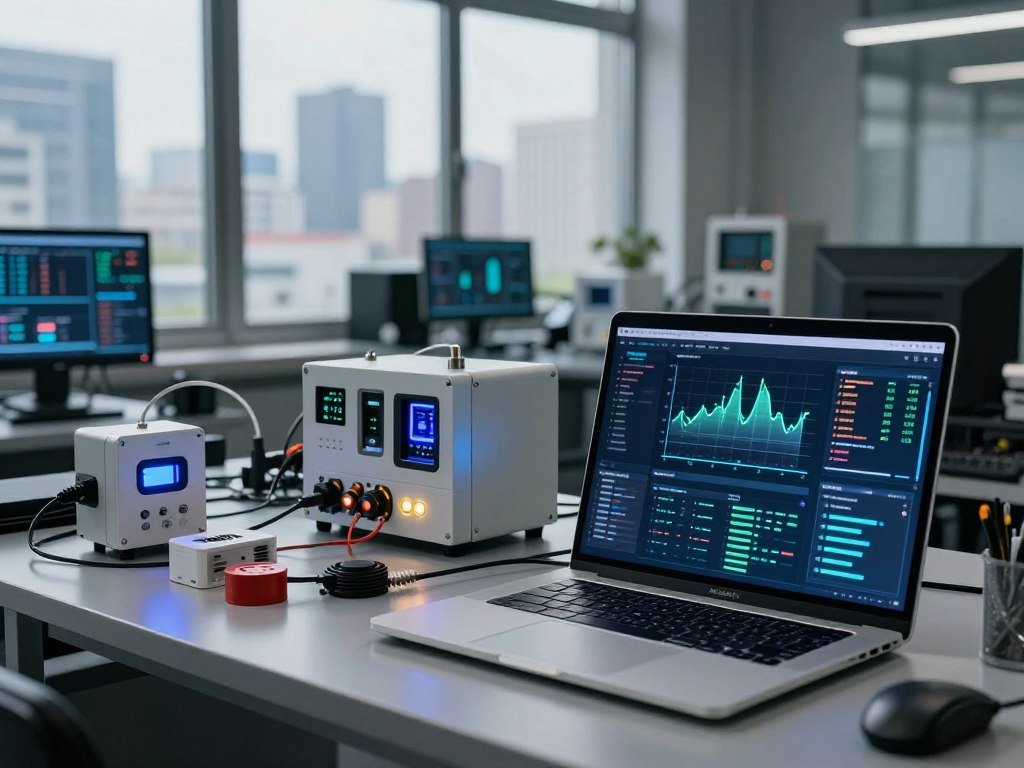
When Should Edge AI Work With the Cloud?
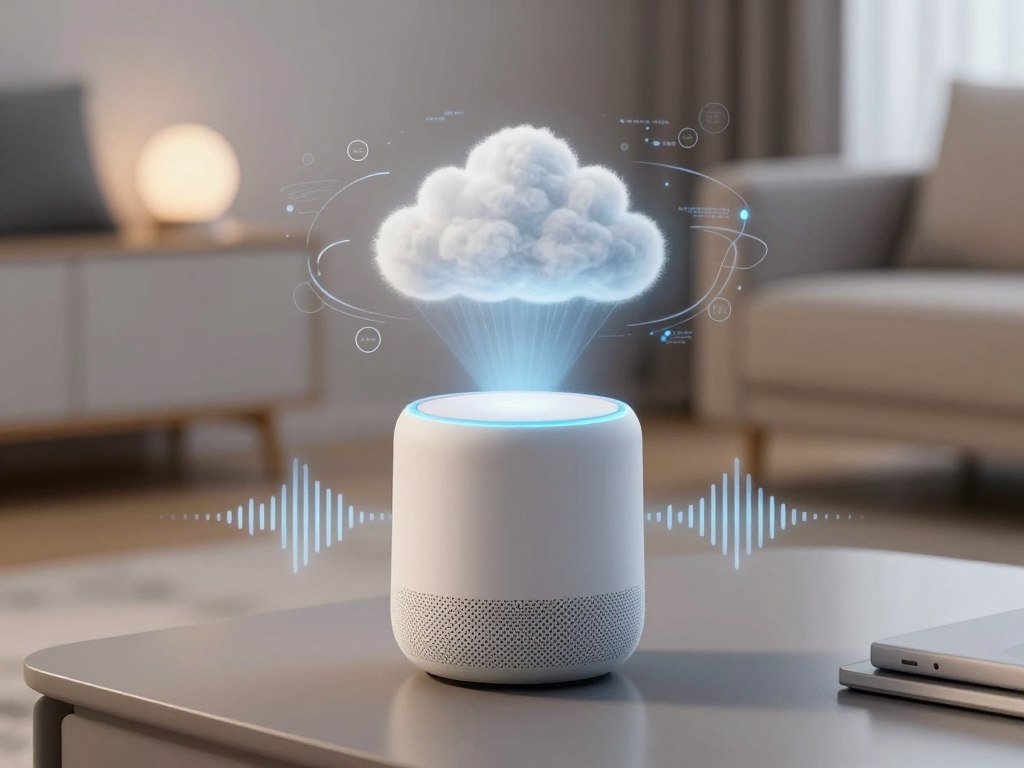
A wake-word feature can run on a speaker while a difficult spoken request goes to a cloud model. Hybrid systems split tasks between local devices and remote servers.
Use edge AI for actions that need a fast response or must keep working offline. Use cloud AI when a task needs more storage or computing power.
A round trip to a remote cloud server can take hundreds of milliseconds. That delay may matter when a vehicle detects a hazard, but it may matter less for a monthly report.
The cloud offers more storage and processing capacity. Edge processing can keep running without an internet connection, though remote services cannot.
| Attribute | Edge AI | Cloud AI |
|---|---|---|
| Processing location | Device or nearby server | Remote data center |
| Connection need | Can run offline | Depends on network access |
| Data movement | Send results or selected data | Send inputs to remote infrastructure |
| Best fit | Fast local actions | Large-scale computation and storage |
For a voice assistant, local wake-word detection can start a response quickly. A complex question can then travel to the cloud for deeper analysis.
A network link may be weak or unavailable at a remote worksite. In that case, devices can make immediate decisions locally and send reports when connectivity returns.
These examples show how to assign work based on timing, scale, and network access:
- Vehicle hazard response: run the decision on the vehicle.
- Large model training: use cloud computing.
- Voice assistant: detect wake words locally, then analyze complex speech in the cloud.
- Remote sensor alerts: make local decisions when connectivity is unreliable.
Keep the cloud available for work that benefits more from scale than immediate response.
What Benefits and Tradeoffs Matter Most?
A machine that can spot an anomaly locally can react even when its internet connection drops. Fast local analysis can help when a delay could affect safety or production.
Local processing can reduce delays and raw-data transfers, but it does not remove security risks. The right tradeoff depends on the task.
Faster Responses and Lower Network Use
A device does not need to wait for a remote server before every decision. This can reduce latency, the time between sending a request and getting a result.
Sending only a result or a small set of selected data can also lower bandwidth use. A camera might report “package detected” instead of sending every video frame.
Local inference may continue offline when an internet connection fails. That can matter at a remote site, where a lost connection should not stop a machine from flagging an unusual reading.
Reduced network use does not mean a device never needs the cloud. Updates, data review, and complex tasks may still rely on a connection.
Local Data, Privacy, and Security
Keeping sensitive raw data on a device can reduce how much information travels across a network. That may lower exposure during transmission, especially for video or health readings.
Local storage does not prevent device tampering, insecure software, or other attacks. Someone who gains control of a device may still reach data or change its behavior.
The value of each benefit depends on the setting. Lower latency may matter for a safety response, while offline reliability may matter more at an isolated site.
Privacy also depends on what the model collects and what the device stores. A camera that keeps no video has a different data risk from one that saves clips for later review.
Treat local processing as a privacy layer, not a substitute for device security.
Which Devices and Tools Run Edge AI?
A smartwatch and a factory gateway need different hardware budgets even when both run local inference. Device capacity shapes the model and software each can use.
Edge AI solutions combine a data source, a capable device or gateway, a model, and software that runs it. A small wearable and an industrial computer have different limits.
Edge AI Devices and Solutions for Local Inference
Edge devices include smartphones, smartwatches, thermostats, industrial sensors, and wearable health monitors. Some run models themselves; others send readings to a nearby gateway.
A complete system needs sensors or another data source, enough processing resources, and software that can load the model. It may also need storage, network access, and a power supply that fits its setting.
A battery-powered monitor cannot spend energy like a plugged-in industrial PC. Model size and processing demands should fit the expected battery life and workload.
Frameworks for NVIDIA, Cross-Platform, and Apple Hardware
Frameworks help developers prepare and run models on different hardware. TensorRT compiles models into graphs optimized for NVIDIA GPUs.
OpenVINO and TensorRT offer hardware-specific optimizations. ONNX Runtime supports custom backends and emphasizes cross-platform flexibility, while Apple Core ML is optimized for Apple hardware.
| Framework | Hardware or deployment fit | What it offers |
|---|---|---|
| TensorRT | NVIDIA GPUs | NVIDIA-specific optimization |
| OpenVINO | Supported hardware | Hardware-specific optimization |
| ONNX Runtime | Custom backends | Cross-platform flexibility |
| Core ML | Apple hardware | Apple-specific optimization |
Quantization reduces the precision used to store model values. Pruning removes less useful parts, and knowledge distillation trains a smaller model to mimic a larger one.
These methods can make models smaller or less demanding to run. Their effect on prediction quality depends on the model and the task.
Check accelerator compatibility before selecting a framework, since some runtimes target specific chip families.
Where Is Edge AI Used?
A production camera can flag a defective circuit board before it leaves the line. On-site decisions can help teams act while equipment or customers are nearby.
Measured results belong to specific deployments, not every organization in an industry. The task, data, and local conditions shape each outcome.
Manufacturing and Retail Decisions on Site
In manufacturing, visual inspection models can look for cracks, missing parts, or other flaws. One electronics manufacturer reported 99.7% accuracy in circuit-board defect detection, 65% less inspection time, and 80% fewer false positives.
Predictive maintenance uses equipment sensor data to find anomalies and anticipate failures. A model can flag unusual vibration or heat for a technician to check before a breakdown.
Retail systems can track items on shelves and flag low stock. One retail chain’s deployment reduced stockouts by 40% and improved inventory accuracy by 25%.
Healthcare Monitoring Close to the Patient
Wearable health monitors can analyze readings close to the patient and flag changes for review. One healthcare provider’s patient-monitoring deployment reduced false alarm rates by 70%.
Local models can also support wearable monitoring at home. The system may detect a pattern and alert a care team, depending on its design and clinical use.
Traffic and Transport Responses
Traffic systems can analyze camera feeds to adjust signals or flag congestion. An urban transit authority reported average peak-hour commute times fell by 15-20% after its traffic-management deployment.
Local processing can also support smart-home security and faster analysis of traffic-camera data. These applications still need careful testing for missed events and false alerts.
Compare each deployment against its own baseline, because accuracy alone can hide slower inspection or excess alerts.
How Do You Build an Edge AI Project?
A useful project starts with a measurable decision, such as flagging a defect before the next production step. A narrow goal makes it easier to judge whether the system works.
Test the model on the same kind of device and sensors you plan to deploy. Different sensors can produce data that changes model results.
Define the Task and Collect Suitable Data
Write down what the system should detect and what happens after detection. A goal might be flagging a motor vibration anomaly within a set time.
Collect examples that match real use, including normal data and the events the model should catch. Edge Impulse recommends using the same device or sensors planned for deployment because sensor differences can affect model data.
Many deep-learning projects need thousands or tens of thousands of samples. The needed amount depends on the task, the data quality, and how varied real conditions are.
Train a model with tools such as TensorFlow or PyTorch, then check it against examples that were not used during training. A simple prototype can help test whether the idea meets a real need. You can read more about low-budget AI startup ideas for related launch planning.
Fit the Model to the Device
Choose hardware with enough memory, processing power, and energy for the task. Then reduce model demands if the device cannot run it within its limits.
A Fast Fourier Transform, or FFT, can turn a time series with hundreds or thousands of points into a few dozen frequency features. That can reduce model size and execution time.
In one 8-bit quantization example, power use fell by up to 50% while prediction performance stayed acceptable. A Jetson video anomaly detection example reached 47.56 frames per second using 3.11 GB of RAM.
That Jetson version also showed 15% higher performance and 50% lower energy use than its previous version. These results describe those examples, not a promise for another project.
Deploy, Test, and Maintain the System
Test the complete system in real conditions, not just on a developer’s computer. Measure accuracy, inference time, and reliability when sensors produce noisy or incomplete readings.
Keep a record of each deployment so teams can compare results after changes:
- Sensor type
- Device model
- Model version
- Accuracy
- Inference time
For a new venture, a tech startup idea in the United States can start with a small trial before a wider rollout.
Keep a rollback path ready so a poor model update does not interrupt an operating device.
What Limits Edge AI, and What Is Changing?
The same model that works on a cloud GPU can fail on a battery-powered sensor because memory, power, and heat are limited. Small devices often need models with lower resource demands.
A model that performs well in the cloud may still exceed a device’s memory, storage, or energy budget. Teams must also keep deployed devices secure and up to date.
Device Resources, Energy, and Fleet Management
Edge devices usually have less processing power, memory, storage, and energy than centralized cloud systems. Those limits can rule out a complex model, even when its cloud results look strong.
Managing one device is different from managing thousands across sites. Teams need to track model versions, check device health, and plan updates without disrupting work.
Research explores ways to reduce energy use during inference. A 2021 Google Edge TPU test of 24 neural-network models found that memory-system energy was a major source of inefficiency.
A 2022 ETH Zurich analysis examined UPMEM, Mensa, and SIMDRAM for processing-in-memory inference. A 2022 University of Peloponnese study showed dynamic hardware-accelerated deployment on the Xilinx Kria K26 system-on-module, with better energy efficiency than microcontrollers and GPUs.
NAAS achieved a 4.4× energy-delay-product reduction compared with a human-designed Eyeriss accelerator at an equivalent compute budget. Each result applies to its own test or comparison.
Security Controls for Deployed Devices
Security needs to cover the hardware, its software, and its network links. Common controls include:
- Secure boot, which checks software during startup.
- Hardware security modules, which protect sensitive keys.
- Encrypted communications between devices and services.
- Regular software updates that fix known flaws.
Market size cannot show whether a model fits your task, device, or security needs.
Market Growth and Efficient Hardware Research
The global edge AI market was valued at USD 24.9 billion in 2025. It is projected to reach USD 30.0 billion in 2026 and USD 118.7 billion by 2033, with a 21.7% CAGR from 2026 to 2033.
North America held 36.0% of global edge AI revenue in 2025, and the United States had the largest country market share. Hardware held a 51.8% component share that year.
Qualcomm held more than 15.6% market share in 2025. Qualcomm, NVIDIA, Intel, MediaTek, and AMD together held 48.5%.
Enterprise IoT connections reached 10.7 billion of 18.5 billion total IoT connections at the end of 2024. GSMA expects enterprise connections to more than double by 2030, while global 5G connections reached 2.25 billion at the end of 2024.
For broader business context, U.S. technology startup ideas cover other ways companies apply AI and software.
Use market forecasts as context, then base a deployment decision on workload fit rather than market size.
Conclusion
A useful edge AI decision begins by matching response time, data sensitivity, and device capacity to the task. Local intelligence is most useful when a quick response, less data transfer, or continued operation without a connection matters.
The device still needs enough memory, power, and processing capacity to run the model. A small test can reveal whether the expected efficiency holds in real conditions.
Start without choosing a vendor or buying hardware: write down the decision and the sensor data it needs. Write down one decision that must happen locally, then test a small model on the exact device and sensors you expect to deploy.
FAQ
What is the difference between edge computing and edge AI?
Edge computing places processing near the data source; edge AI adds a model that analyzes data and makes a local decision. A gateway can count as the edge, even when a small sensor sends its readings there. A nearby computer that filters data without using an AI model is edge computing, but it is not edge AI.
What is edge software used for?
Edge software receives local data, runs inference, and can trigger an action, alert, or selected cloud upload. A camera might use it to detect a person and send an alert instead of streaming every frame. The software may also check device status or store results for review, depending on the system.
How much does Edge AI cost?
Total cost depends on device and accelerator choices, model development, integration, fleet size, connectivity, and ongoing maintenance. A single sensor prototype has different needs from a system used across many sites. Budget planning should include the software work and care needed after deployment, not just the price of the hardware.
How does Edge AI work?
Edge AI models are commonly trained with centralized computing, adjusted for the target device, and deployed for local inference. The device analyzes new data and may take an action or send an alert. A cloud service can still handle model training, updates, or requests that need more computing power than the device has.
Can edge AI work without internet?
Yes, local inference can continue without internet when the model and needed data are already on the device. Cloud-based training, remote updates, and tasks sent to a server still need connectivity. A device may store results while offline and share them later, if its software supports that feature.
Does edge AI make data completely secure?
No, local processing does not make data completely secure. It can reduce raw-data transfers, but it cannot prevent tampering, insecure software, weak access controls, or other device risks. Security also depends on how the device stores information, receives updates, and protects its network connections.
About The Author