Pyrolysis Oil Buyers and How Offtake Agreements Work
Finding reliable pyrolysis oil buyers and locking in a solid offtake agreement often decides whether a recycling project succeeds or stalls. Producers make pyrolysis oil from end-of-life tires, mixed waste plastics, or biomass. However, buyers do not buy on promises alone. They demand repeatable chemistry, verified compliance, and steady supply volumes.
Pyrolysis heats waste in an oxygen-free reactor to break large molecules into liquid oil, gas, and solid char. Yet “pyrolysis oil” covers many different liquids rather than one standard commodity. A chemical maker needs very different oil properties than a cement kiln or a participant in the tyre derived oil market. Before investing in production, you must know your target buyers, understand their oil quality specification, and learn how contracts manage risk.
Who Are Pyrolysis Oil Buyers?
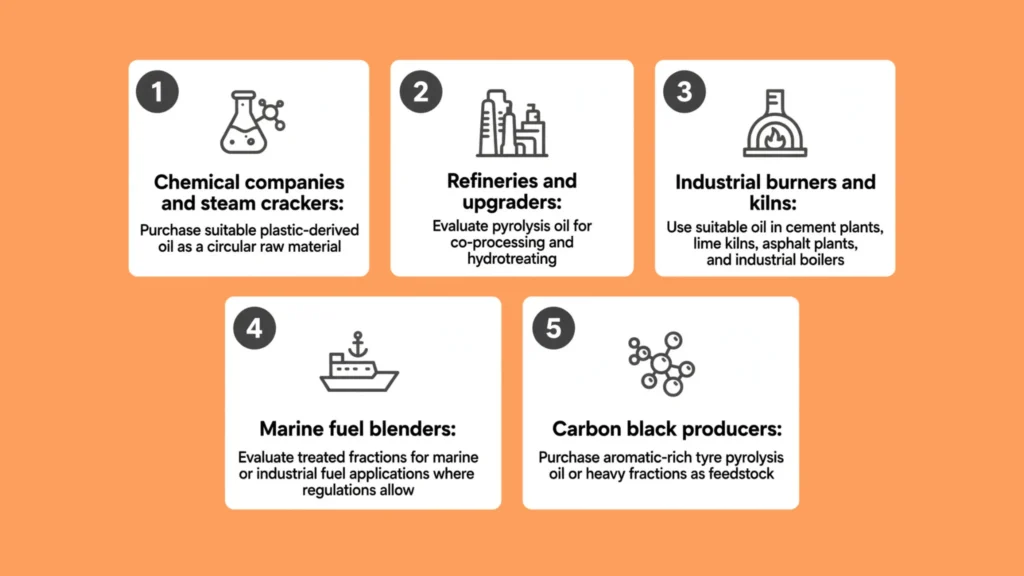
Industrial pyrolysis oil buyers fall into four main groups based on how they process or burn the oil. Matching your product to the right group early saves months of wasted lab testing.
Chemical Companies and Steam Crackers
Large chemical firms buy pyrolysis oil mostly from waste plastics as a circular raw material for steam crackers. Steam crackers use sensitive catalysts and high-heat furnaces.
Because of this, chemical buyers set strict caps on chlorine, silicon, nitrogen, and heavy metals. When a facility holds circular certification, certified mass-balance credits can also boost the oil’s market value.
Similar to how businesses monitor asset utilization to improve operational returns, tracking rental utilisation rate helps evaluate how efficiently resources generate value.
Refineries and Upgraders
Oil refiners and upgrading plants evaluate pyrolysis oil as a co-processing or hydrotreating feedstock. Before accepting shipments, refiners check boiling ranges, oxygen levels, aromatics, and trace contaminants. Even plants with hydrotreating units reject oils that foul heat exchangers or poison expensive catalysts.
Industrial Burners, Boilers, and Kilns
Cement kilns, lime kilns, asphalt plants, and industrial boilers offer practical outlets for pyrolysis oil. These buyers mainly use heavier fractions or whole oils that meet local air permits. They focus on heating value, flash point, viscosity, storage stability, and legal sulfur limits.
Marine Fuel Blenders and Carbon Black Producers
The tyre derived oil market serves two additional buyer groups alongside industrial heat users. Carbon black producers buy aromatic-rich tyre pyrolysis oil or heavy cuts as feedstock. Meanwhile, fuel blenders evaluate treated fractions for marine or industrial fuels where sulfur and flash point laws allow. Tyre-derived oil carries more sulfur and aromatics than plastic oil, so it fits different end uses.
Navigating the Tyre Derived Oil Market
The tyre derived oil market follows its own technical and legal rules. Manufacturers build tires with natural rubber, synthetic rubber, carbon black, sulfur, processing oils, and zinc. When a plant pyrolyzes tires, those materials shape the final liquid. Similarly, recycling and equipment-handling businesses can use GPS tracking for rental equipment theft and recovery to protect valuable machinery and maintain better operational control.
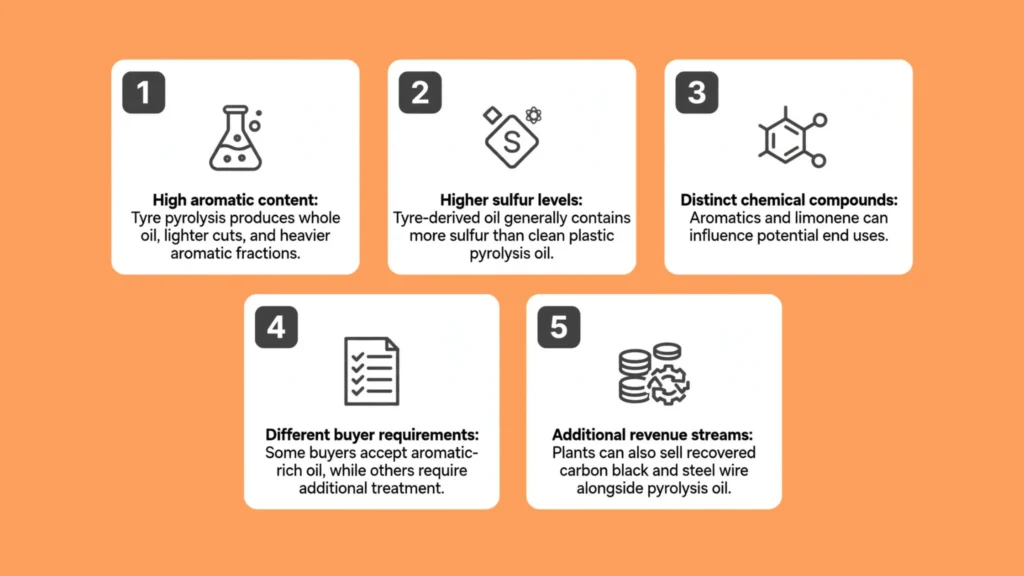
Key traits of tyre-derived oil include:
High aromatic content: Depending on reactor heat and condensation stages, plants produce whole oil, light cuts, or heavy aromatic fractions.
Higher sulfur levels: Tyre pyrolysis oil contains much more sulfur than clean plastic oil. That sulfur content limits direct burning and raises upgrading costs.
Distinct chemical markers: Tyre oil often holds specific aromatics and limonene. Some buyers welcome these compounds, while others ask producers to separate them.
Co-product revenue: Tire pyrolysis plants also sell recovered carbon black and steel wire while burning pyrolysis gas onsite. Together, these co-products shape plant profits and buyer deals.
Regulations also control trade in the tyre derived oil market. Authorities may classify shipments as regulated waste or as registered chemical products. That legal status determines what permits, transport notices, and receiving licenses you need before shipping a single load.
Oil Quality Specification: What Buyers Actually Screen For
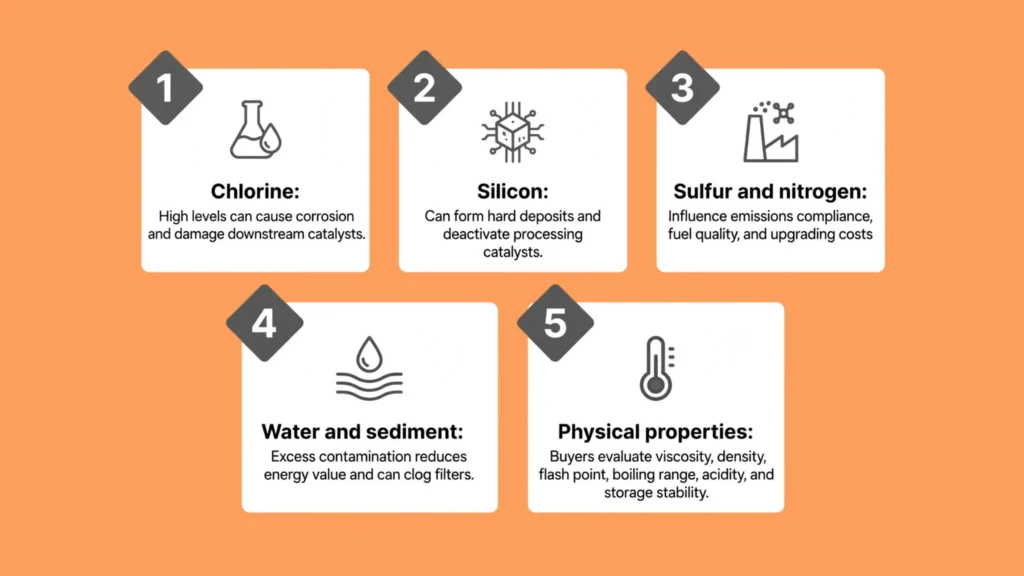
A clean brochure may start a conversation, but a verified oil quality specification closes the deal. Buyers require a Certificate of Analysis (COA) and a physical sample before they discuss serious pricing.
They want proof that your oil will not corrode equipment or breach air permits. Just as clear rental contract clauses define responsibilities and protect both parties in equipment rental agreements, precise quality requirements help prevent disputes between pyrolysis oil buyers and producers.
Critical Chemical Contaminants and Poisons
Chlorine: Chlorine causes severe corrosion and ruins downstream catalysts. Chemical buyers and refiners treat it as a top deal-breaker.
Silicon: Silicon compounds form hard deposits that foul reactors and deactivate catalysts.
Sulfur: Sulfur controls air emissions during combustion and sets hydrotreating costs at refineries.
Nitrogen and trace metals: High nitrogen hurts fuel quality and catalyst life. Metals like zinc, lead, and iron usually point to poor solids removal or dirty feedstock.
Physical and Performance Properties
Water and sediment: Excess water and solids lower energy value, clog filters, and disrupt burner flames.
Viscosity and density: These values govern pumping speeds, tank heating needs, and burner spray patterns.
Flash point and boiling range: Flash point sets fire-safety rules for storage and transport. Boiling range shows which refinery cut the oil matches best.
Acidity and storage stability: High acid numbers corrode tanks and pipes. Unstable oil can thicken or form gums during transit, causing a batch that passed at the plant to fail at delivery.
Most buyers test several consecutive production batches rather than one ideal lab sample. Proving batch-to-batch consistency is often the biggest challenge for new plants.
How an Offtake Agreement Works
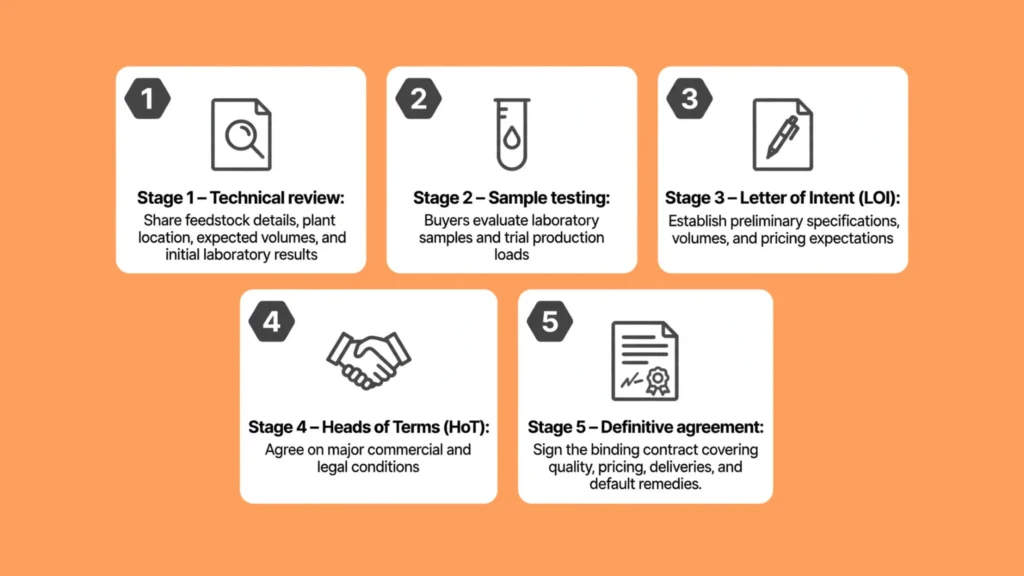
An offtake agreement is a binding contract where a buyer agrees to purchase and a producer agrees to deliver set volumes of oil over time. For project developers, a strong offtake agreement makes a new plant bankable. Lenders and investors look for signed contracts because predictable sales lower market risk.
Typical Stages to Reaching a Final Contract
Initial technical review: You share feedstock details, target monthly volumes, plant location, and early lab test results.
Sample testing and trial runs: The buyer tests lab samples and runs larger trial loads to confirm real-world performance.
Letter of intent (LOI): Both sides sign a non-binding outline covering target specs, expected volumes, and pricing ideas.
Heads of terms (HoT): Commercial teams lock down core business and legal terms before final contract drafting.
Definitive offtake agreement: Lawyers and executives finalize the binding contract covering deliveries, quality rules, pricing formulas, and default remedies.
Key Commercial Clauses in an Offtake Agreement
| Clause or Term | What It Covers | Practical Impact for Both Sides |
| Volume & Take-or-Pay | Minimum and maximum quantities, delivery schedules, and shortfall penalties | Protects buyer supply and secures steady revenue for the producer |
| Oil Quality Specification | Binding spec limits, test methods, sampling points, and lab dispute rules | Prevents arguments over off-spec loads at pickup or delivery |
| Pricing Mechanism | Fixed prices, index-linked formulas, or price floors and ceilings | Balances market swings with predictable operating margins |
| Conditions Precedent | Contract length, startup deadlines, permits, and sample approval milestones | Ties contract start dates to plant construction and commissioning |
| Logistics & Liability | Delivery terms, storage tanks, transport duties, risk transfer, and force majeure | Clarifies who pays for delays, spills, or sudden rule changes |
Practical Tips and Common Mistakes to Avoid
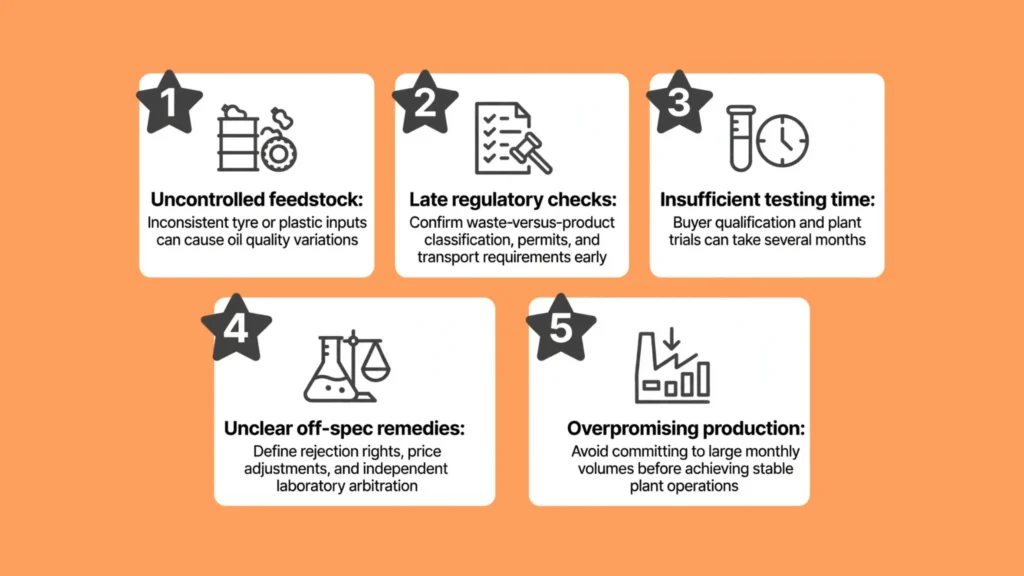
Winning a solid offtake agreement takes close coordination between your engineering, compliance, and sales teams. Avoid these common pitfalls:
Control feedstock before signing big deals: Unsorted plastics or inconsistent tire shred will cause your oil quality specification to drift.
Verify legal status early: Confirm waste versus product rules, air permits, and transport licenses before promising delivery dates.
Allow enough time for testing: Lab reviews and plant trials often take several months. Build that timeline into your launch schedule.
Define off-spec remedies upfront: Spell out clear rules for off-spec batches, including price discounts, rejection rights, and third-party lab arbitration.
Never overpromise output: Committing to high monthly volumes before steady operations expose your plant to heavy shortfall penalties.
Frequently Asked Questions
Who are the main pyrolysis oil buyers today?
The main pyrolysis oil buyers include chemical firms, steam crackers, petroleum refiners, industrial kilns, and boilers. Specialized fuel blenders and carbon black producers also buy heavily in the tyre derived oil market. Your best buyer depends on your feedstock, contaminant levels, and local permits.
How does the tyre derived oil market differ from plastic pyrolysis oil?
The tyre derived oil market trades oil made from end-of-life tires. This oil carries higher sulfur and aromatic levels than clean plastic pyrolysis oil. Because of that chemistry, buyers usually route tyre oil to aromatic-tolerant uses, industrial heating, or specialized upgrading rather than standard steam crackers.
What is the most important oil quality specification for buyers?
Every buyer sets custom limits, but almost all screen closely for chlorine, silicon, sulfur, nitrogen, metals, water, and sediment. Buyers also check viscosity, flash point, boiling range, and storage stability to protect their equipment.
Why is an offtake agreement important for financing a pyrolysis plant?
An offtake agreement turns future sales projections into binding commercial commitments. Banks and investors rely on these contracts to verify market demand and cash flow before funding plant construction.
How do buyers and sellers price pyrolysis oil in an offtake agreement?
Most contracts link pyrolysis oil prices to a published energy or petrochemical index. Parties often add quality adjustments, price floors, or shared price bands to manage market swings.
How long does it take to qualify oil with a buyer?
Qualification takes anywhere from a few weeks to several months. Simple fuel buyers move faster, while refineries and chemical crackers require multi-batch lab testing and trial runs.
Final Thoughts
Success with pyrolysis oil buyers depends on reliable chemistry and clear contracts. When you maintain a tight oil quality specification, confirm regulatory compliance, and target the right niche in the tyre derived oil market, buyers take your supply seriously. Pairing that operational discipline with a clear offtake agreement protects margins and builds lasting commercial partnerships.
About The Author