Buying an Existing Cleaning Business Instead of Starting One
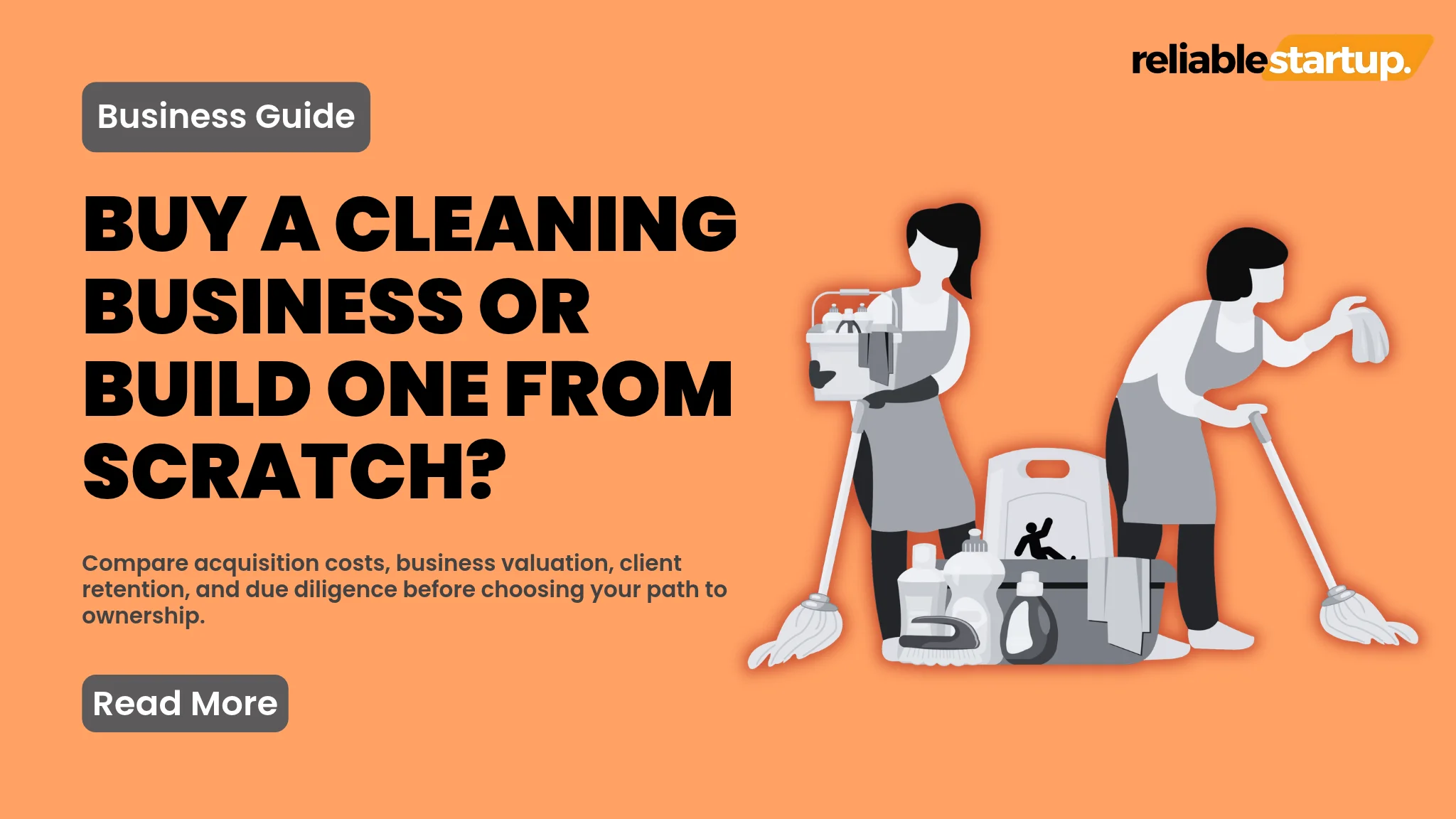
Buying a cleaning business allows you to bypass the slowest, riskiest phase of entrepreneurship by acquiring established recurring revenue, trained staff, and existing client agreements from day one. While launching a startup requires lower upfront capital, purchasing an operational company gives you immediate cash flow and proven systems that would otherwise take years to build.
For aspiring business owners, deciding between building a brand from the ground up and acquiring an established operation comes down to risk tolerance, available capital, and how quickly you want to generate income. Understanding how acquisitions work in the commercial and residential cleaning sectors helps you evaluate opportunities accurately and avoid costly missteps.
Why Buying a Cleaning Business Often Beats Starting from Scratch?
Starting a cleaning company is relatively inexpensive compared to other industries, which attracts heavy competition. New founders often spend their first year underpricing services just to win initial accounts, struggling with high employee turnover, and refining basic operational workflows.
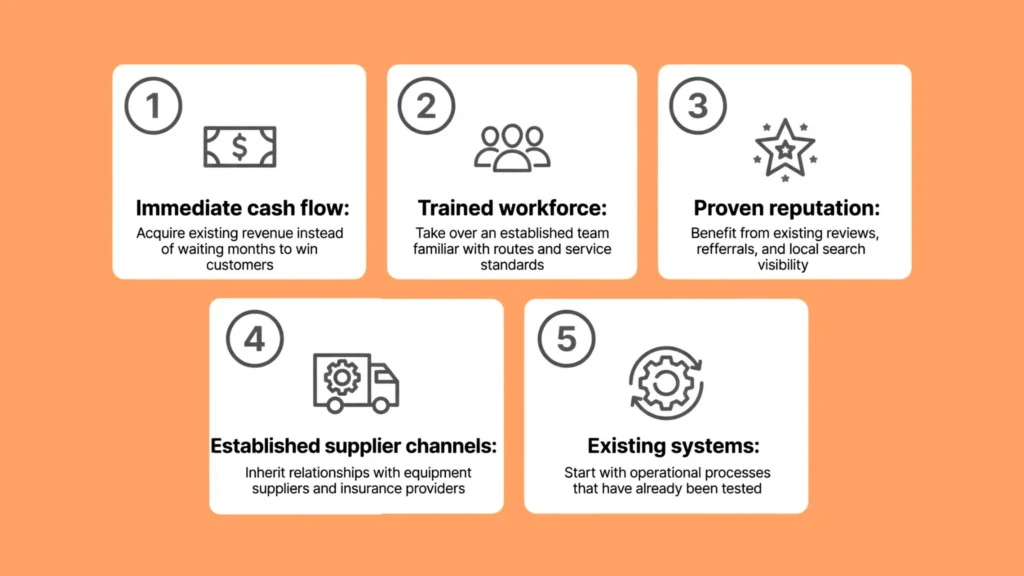
When you browse a cleaning business for sale, you are looking at an enterprise that has already survived those early growing pains. The primary advantages include:
Immediate Cash Flow: Instead of operating at a loss while marketing your services, revenue flows into the business from the day the transaction closes. This makes it easier to cover payroll, insurance, and financing payments immediately.
Trained Workforce: Recruiting, vetting, and training reliable cleaners is one of the biggest bottlenecks in the industry. An acquisition typically includes an existing team that already knows the routes, client preferences, and quality standards.
Proven Brand Reputation: Local reviews, word-of-mouth referrals, and established search visibility take years to accumulate. Acquiring an existing name gives you instant credibility in your local market.
Established Vendor and Supply Channels: Existing businesses already have commercial accounts with equipment suppliers, uniform providers, and insurance carriers, often with better pricing than a brand-new entity could negotiate.
Buying vs. Starting: A Practical Comparison
Choosing the right entry path depends on your financial resources and operational strengths. Both models have distinct trade-offs.
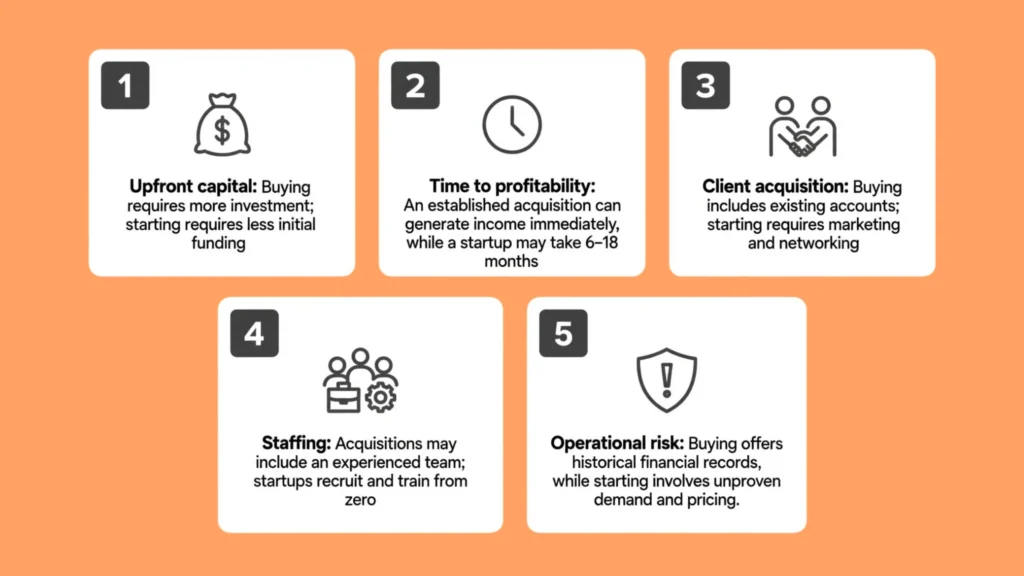
| Factor | Buying an Existing Business | Starting from Scratch |
| Upfront Capital | Higher (down payment, legal fees, working capital) | Lower (basic equipment, insurance, initial marketing) |
| Time to Profitability | Immediate, assuming healthy existing margins | Typically 6 to 18 months |
| Client Acquisition | Included via existing accounts and recurring schedules | Requires cold outreach, paid ads, and heavy networking |
| Staffing | Existing team in place (requires retention planning) | Must recruit, screen, and train from zero |
| Operational Risk | Lower, backed by historical financial records | Higher, with unproven pricing and local demand |
| Customization | Must adapt or gradually transition existing systems | Complete freedom over branding, software, and pricing |
If you have access to capital or financing and want a predictable income stream, acquisition is usually the stronger path. If you have limited funds and prefer building systems your own way without inheriting another owner’s habits, starting fresh makes more sense.
This approach also gives you the flexibility to explore specialized niches, such as a biohazard cleaning business or a gutter cleaning business, and develop services around your budget, skills, and local market demand.
Residential vs. Commercial Cleaning Acquisitions
Not all cleaning companies operate the same way. Before making an offer, determine which segment aligns with your management style and growth goals.
Residential Cleaning Businesses
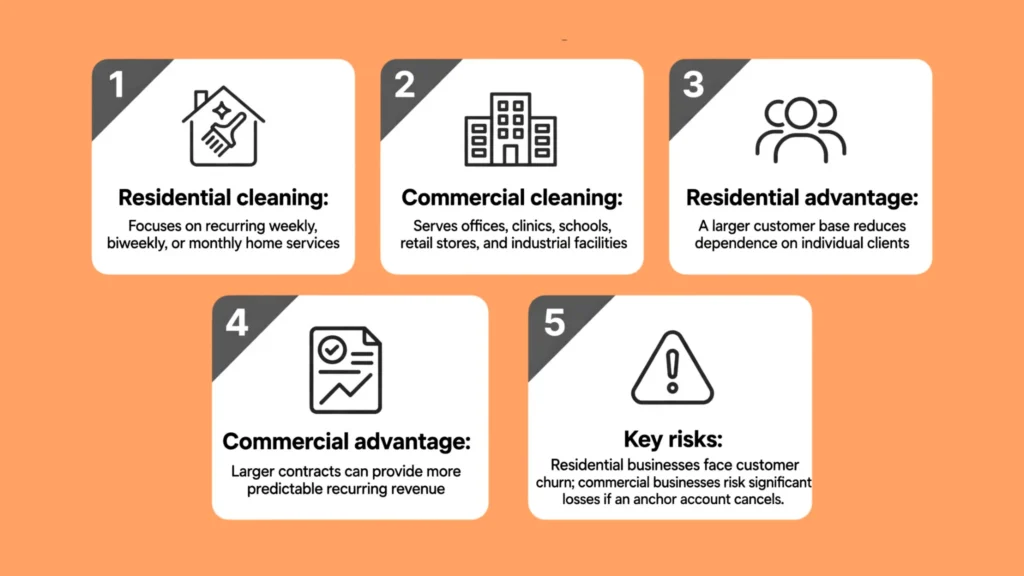
Residential companies focus on private homes, offering recurring weekly, bi-weekly, or monthly cleanings alongside one-time deep cleans and move-out services.
Pros: High volume of individual clients means losing one customer barely affects total revenue. Payments are typically collected automatically via credit card upon service completion.
Cons: Daytime scheduling requires tight route density to minimize drive time. Client churn can be higher due to household budget changes or relocations.
Commercial and Janitorial Businesses
Commercial operations service offices, medical clinics, retail stores, schools, and industrial facilities, usually during evening or weekend hours.
Pros: Contracts are larger, multi-year, and far more predictable. Commercial clients rarely cancel unless service quality drops noticeably.
Cons: Losing a single anchor account can significantly impact monthly revenue. Commercial clients typically pay on net-30 or net-60 invoice terms, requiring stronger working capital reserves.
Understanding Cleaning Business Valuation
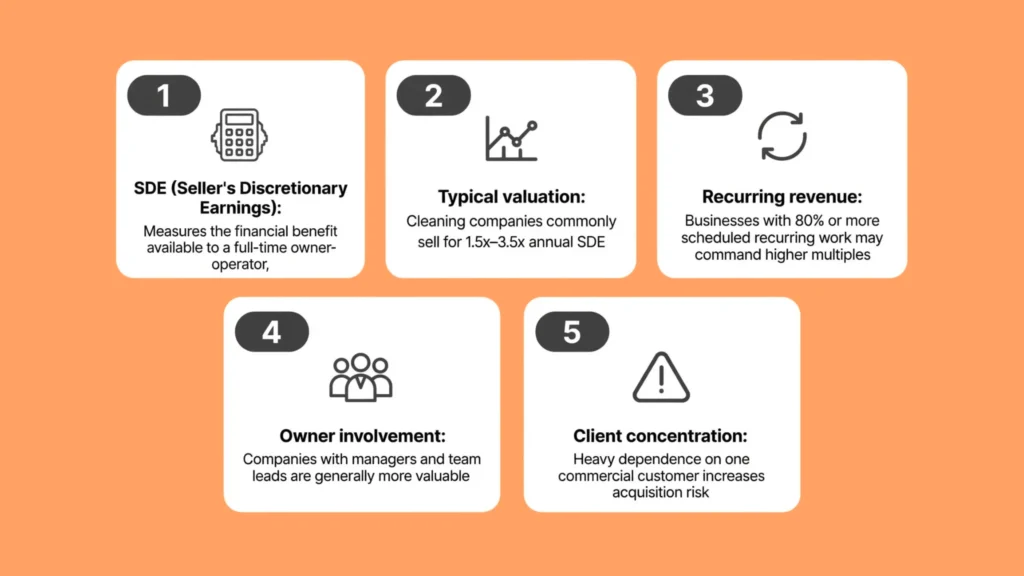
Determining a fair purchase price is critical. Overpaying erodes your return on investment, while lowballing can cause a motivated seller to walk away. Most small to mid-sized cleaning companies are valued using a multiple of Seller’s Discretionary Earnings (SDE).
What Is Seller’s Discretionary Earnings (SDE)?
SDE represents the true financial benefit a full-time owner-operator takes from the business. It is calculated by taking net profit and adding back the owner’s salary, personal expenses run through the business (such as a vehicle or phone), one-time non-recurring costs, and interest or depreciation.
Typical Valuation Multiples
In the cleaning industry, valuation multiples generally fall between 1.5x and 3.5x annual SDE, plus the fair market value of usable inventory and equipment. Where a specific business lands on that scale depends on several value drivers:
Recurring vs. One-Time Revenue: Businesses with 80% or more recurring scheduled work command higher multiples than those relying on one-off jobs.
Owner Involvement: If the seller still cleans houses or manages every daily dispatch manually, the business is worth less than a company with an operations manager or team leads in place.
Client Concentration: If a single commercial client accounts for more than 20% of total revenue, buyers usually apply a lower multiple due to higher risk.
Financial Record Quality: Clean tax returns, organized profit-and-loss statements, and verifiable payroll records justify higher valuations than cash-heavy or poorly documented operations.
Navigating Contract Transfer and Client Retention
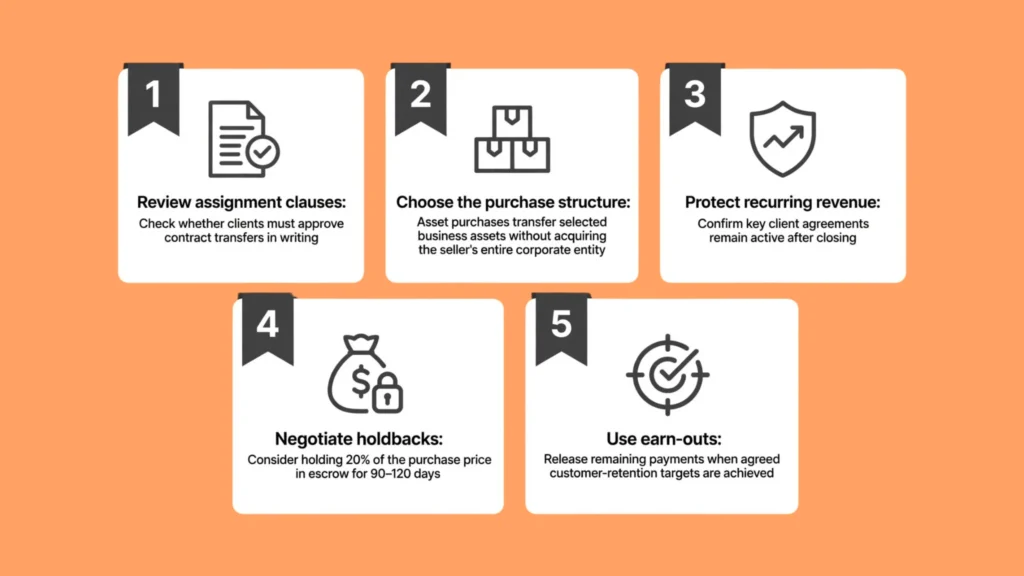
In a cleaning acquisition, the physical vacuums and supplies hold very little value compared to the customer list. Ensuring a smooth contract transfer is arguably the most delicate part of the entire transaction.
Review Assignability Clauses
Before signing a purchase agreement, examine the seller’s active service agreements—especially in commercial janitorial businesses. Many commercial contracts contain an assignment clause stating that the agreement cannot be transferred to a new owner without the client’s written consent.
If contracts are non-assignable, you will need the seller to help introduce you to key decision-makers and execute new agreements or formal assignment letters prior to or immediately following closing.
Asset Purchase vs. Stock Purchase
Most small business buyers choose an asset purchase rather than buying the seller’s corporate entity (a stock purchase). In an asset purchase, you buy the client list, brand name, phone numbers, website, and equipment while leaving behind the seller’s past tax liabilities or legal disputes. However, because a new legal entity is taking over, formal contract transfers and updated certificates of insurance are mandatory.
Holdbacks and Earn-Outs
To protect yourself against clients canceling right after the sale, negotiate a retention holdback or earn-out. For example, you might pay 80% of the purchase price at closing and hold 20% in escrow for 90 to 120 days. If a specified percentage of recurring revenue remains active after that transition window, the remaining funds are released to the seller.
Due Diligence Checklist Before You Buy
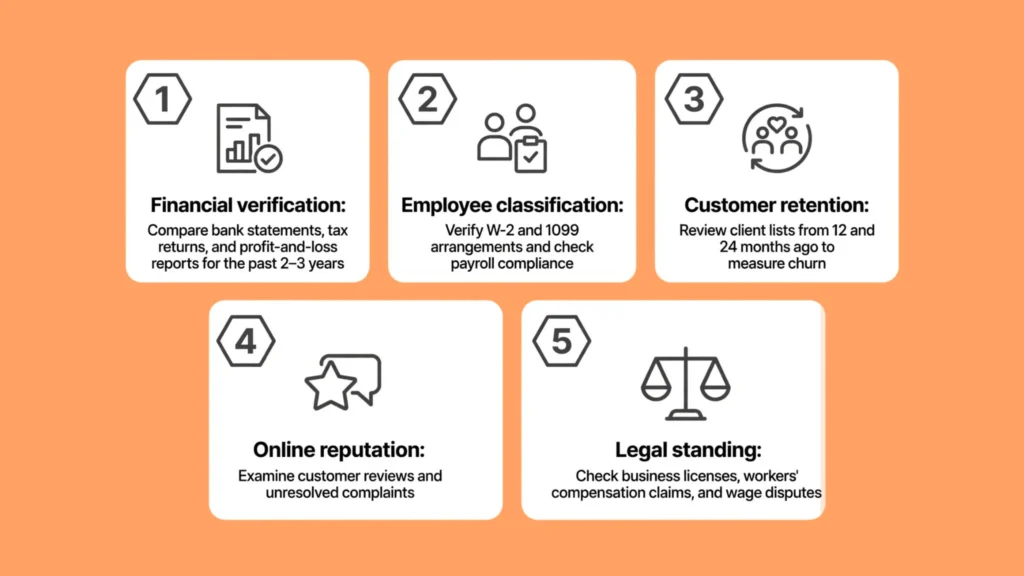
Never rely solely on a broker’s marketing summary. Before finalizing any deal, verify the health of the operation across four core areas. Reviewing the company’s service processes and documentation is equally important, especially if it offers specialized residential services such as move-out cleaning. This helps you understand the scope of its cleaning operations and assess whether its service standards meet customer expectations.
Financial Verification: Compare bank statements and merchant processor reports against tax returns and profit-and-loss statements over the past two to three years. Confirm that billed revenue matches actual cash deposits.
Employee Classification and Payroll: Verify whether cleaners are classified as W-2 employees or 1099 independent contractors. Misclassifying workers is a common compliance issue in the cleaning industry that can trigger severe back-tax penalties if not addressed properly.
Churn and Retention Rates: Ask for historical client lists from 12 and 24 months ago to see how many customers are still active today. High revenue growth means very little if the company is losing half its clients every year.
Online Reputation and Legal Standing: Check Google Business Profiles, Yelp, and local directories for unresolved complaints. Confirm there are no pending workers’ compensation claims, wage disputes, or expired business licenses.
Common Mistakes to Avoid When Buying a Cleaning Business
Even profitable acquisitions can stumble if the post-sale transition is handled poorly. Watch out for these frequent pitfalls:
Changing Everything Immediately: Raising prices, switching scheduling software, or changing uniforms during your first month creates unnecessary friction. Keep operations stable for the first 60 to 90 days while you learn the nuances of the business.
Neglecting Staff Communication: Cleaners often worry that a new owner will cut hours, change pay structures, or lay them off. Meet with the team immediately upon closing to reassure them, listen to their feedback, and establish trust.
Skipping a Transition Period: Ensure the purchase agreement obligates the seller to stay on for two to four weeks post-closing to introduce you to key clients, hand over vendor logins, and walk you through daily dispatch routines.
Underestimating Working Capital Needs: Closing costs and down payments can drain your cash reserves. Keep enough liquidity on hand to cover at least two months of payroll and overhead while waiting for invoice payments to clear.
Frequently Asked Questions
How much does it cost to buy an existing cleaning business?
Small, owner-operated residential routes can sell for $50,000 to $150,000, while established commercial or multi-crew residential companies frequently range from $250,000 to over $1 million. The exact price depends on annual Seller’s Discretionary Earnings, recurring contract stability, and management structure.
Can I get financing to buy a cleaning business?
Yes. Buyers commonly use Small Business Administration (SBA) 7(a) loans, which typically require a 10% to 20% down payment if the business has verifiable tax returns and strong cash flow. Seller financing where the current owner accepts a portion of the purchase price in monthly installments is also very common in this industry.
What happens if employees quit right after I buy the business?
Some natural turnover can occur during an ownership change. You can reduce this risk by reviewing current pay rates against local market averages before closing, offering a small retention bonus after 90 days, and maintaining open, respectful communication with team leads from day one.
Should I keep the existing business name after purchasing?
In most cases, yes. Keeping the established name preserves local search engine rankings, online reviews, and client familiarity. If you plan to rebrand, do so gradually after the transition period is complete and clients trust your service quality.
How long does the buying process usually take?
From making an accepted offer to closing the deal, buying a cleaning business typically takes 60 to 120 days. The timeline depends on how quickly the seller provides financial records for due diligence and whether bank or SBA financing is involved.
Final Thoughts
Buying a cleaning business offers a practical, lower-risk shortcut to business ownership by trading higher upfront capital for immediate revenue, trained personnel, and proven market demand. Success depends on thorough financial verification, realistic valuation multiples, and a carefully structured contract transfer that protects client retention.
By keeping operations steady during the initial transition and prioritizing relationships with both staff and customers, you can step into a profitable company positioned for long-term growth.
About The Author