Laundry Pickup and Delivery Service: Routes and Pricing
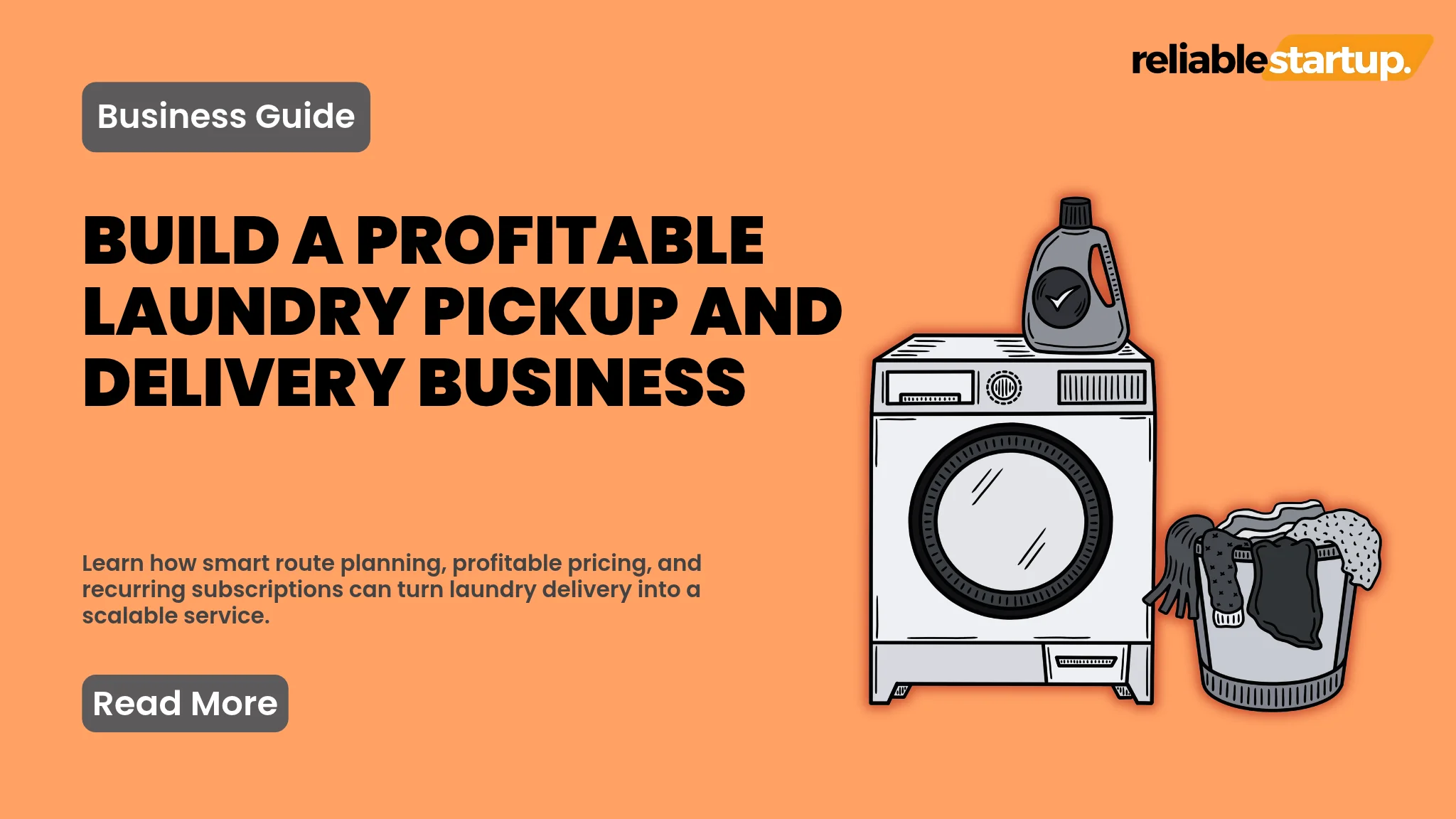
Running a successful laundry pickup and delivery business hinges on two operational pillars: efficient route planning and transparent, profitable pricing. While customer demand for convenient garment care continues to grow, many operators struggle to turn a profit because they underprice their services or spend too much time and fuel driving across town for scattered orders.
Whether you are adding mobile delivery to an existing laundromat or launching a standalone laundry route business, mastering your logistics and rate structure from day one is essential.
By grouping pickups strategically and aligning your fees with actual processing and labor costs, you can build a predictable, scalable operation that keeps both customers and your bottom line healthy.
Understanding the Laundry Pickup and Delivery Business Model
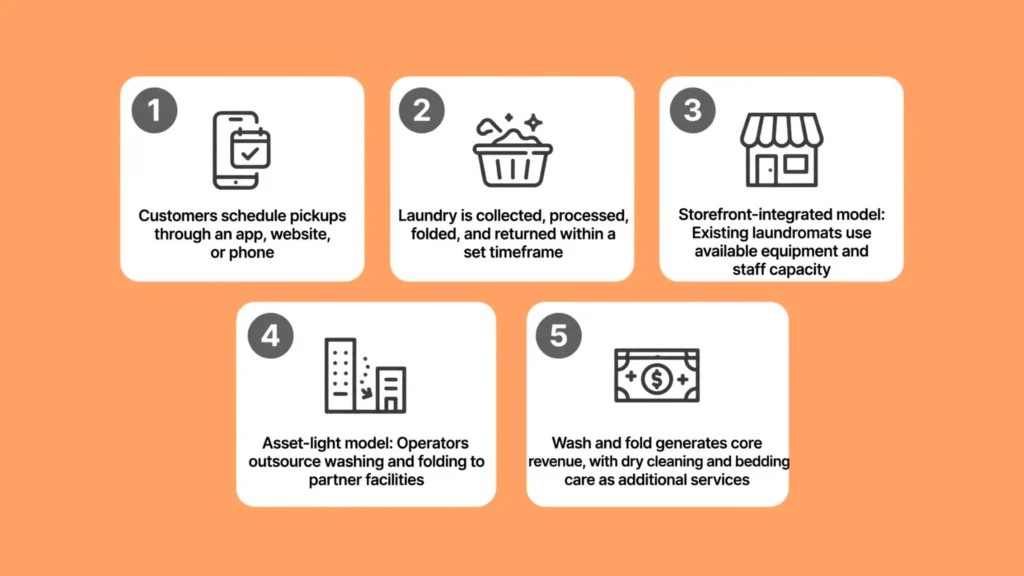
At its core, a laundry pickup and delivery business bridges the gap between busy households or commercial clients and professional garment care.
Customers schedule a pickup via an app, website, or phone call, leave their dirty laundry in designated bags outside their door, and receive clean, folded, or pressed clothes back within a set turnaround window typically 24 to 48 hours.
Operators generally fall into one of two categories:
Storefront-Integrated Services: Existing laundromats or dry cleaners that use their off-peak machine capacity and staff to process delivery orders. This model keeps overhead low because the facility and equipment are already paid for.
Asset-Light or Partner Models: Entrepreneurs who focus strictly on customer acquisition, branding, and logistics while outsourcing the actual washing, drying, and folding to partner facilities at a wholesale rate.
Regardless of the setup, the primary revenue driver for most residential routes is a wash and fold service, supplemented by higher-margin add-ons like dry cleaning, bedding care, and commercial accounts. Entrepreneurs looking to diversify their revenue can also explore these laundromat business ideas to identify additional services that complement traditional wash-and-fold operations.
How to Structure Delivery Routes for Maximum Efficiency
In a laundry route business, windshield time is your biggest enemy. Every minute a driver spends stuck in traffic or crisscrossing town eats directly into your profit margin. Effective route management relies on density, predictability, and smart scheduling.
Zone-Based Routing vs. On-Demand Routing
When setting up your service area, you must choose between two primary scheduling philosophies:
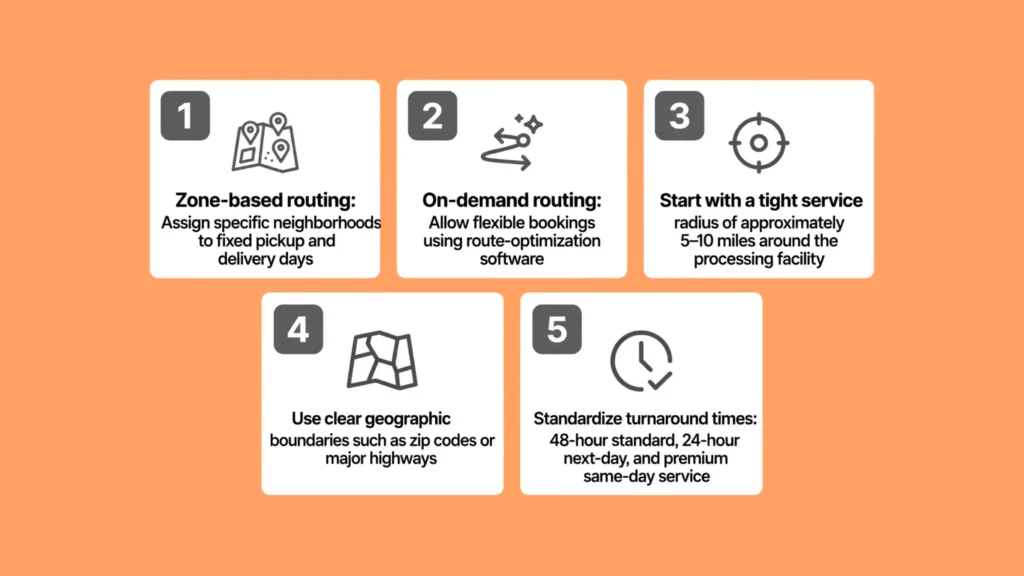
Zone-Based (Fixed-Day) Routing: You divide your city or service territory into distinct geographic zones and assign specific pickup and delivery days to each. For example, Northside neighborhoods are serviced on Mondays and Thursdays, while Southside neighborhoods are serviced on Tuesdays and Fridays. This guarantees high stop density and keeps drivers in one concentrated area per shift.
On-Demand Routing: Customers can book pickups for any day of the week within narrow time windows. While this offers maximum convenience, it requires high order volume and dynamic route-optimization software to remain profitable.
For most new and mid-sized operators, zone-based routing is the safer, more profitable choice. It trains customers to follow a weekly rhythm and prevents drivers from making long, isolated trips for a single bag of laundry.
Setting Service Boundaries and Turnaround Windows
Define clear geographic boundaries using zip codes or major highways rather than vague city limits. Start with a tight radius around your processing facility typically 5 to 10 miles and expand outward only after existing zones reach steady capacity.
Standardize your turnaround times to keep your workflow predictable:
Standard Service (48 Hours): Picked up on Monday morning, delivered on Wednesday morning. This gives your processing team ample time to wash, dry, fold, and quality-check orders without paying overtime.
Next-Day Service (24 Hours): Picked up on Monday, delivered on Tuesday. Ideal for commercial clients or customers willing to pay a rush premium.
Same-Day Service: Picked up by 8:00 AM and returned by 6:00 PM. Because this disrupts normal batching, it should always carry a substantial convenience surcharge.
Laundry Delivery Pricing Models Explained
Setting your laundry delivery pricing requires balancing customer expectations against your true costs—including detergent, utilities, packaging, driver wages, vehicle maintenance, insurance, and folding labor. Most successful services use one of three primary pricing structures.
| Pricing Model | How It Works | Best For | Key Advantage | Main Challenge |
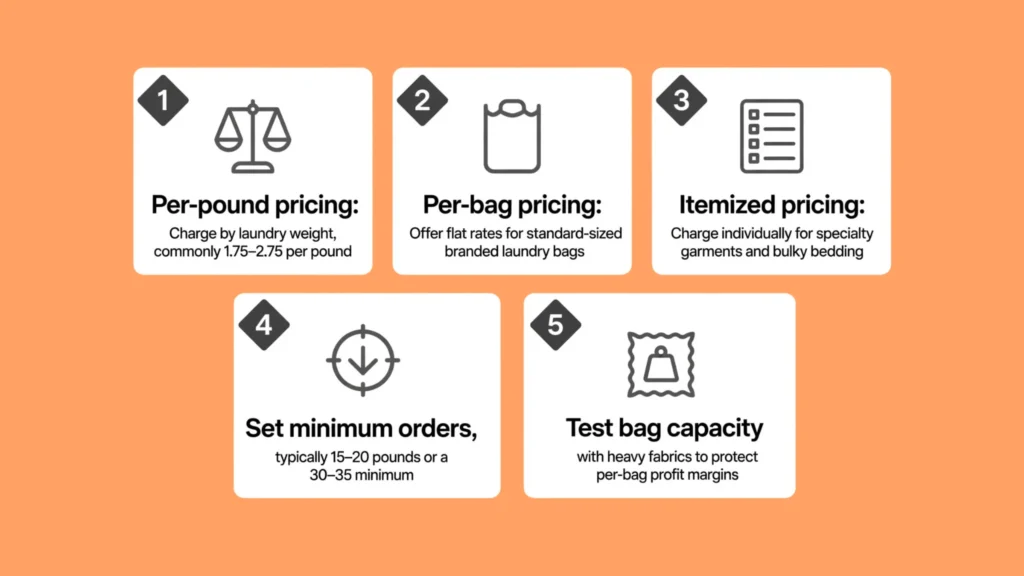
| Per-Pound Pricing | Charged by total weight (e.g., $1.75–$2.75/lb) with a minimum order requirement. | Residential wash and fold service | Directly ties revenue to machine load and folding labor. | Customers do not know the exact final bill until pickup. |
| Per-Bag Pricing | Flat rate based on standard-sized laundry bags provided by the business. | Subscription plans and price-sensitive households | Simple, predictable billing for the customer. | Customers may overstuff bags, reducing per-pound margins. |
| Itemized / Piece Pricing | Fixed price per garment (e.g., $3.50 per dress shirt, $25 per comforter). | Dry cleaning, specialty items, and bulky bedding | High margins on specialty care and clear upfront totals. | Time-consuming to count and log every item at intake. |
Per-Pound Pricing
Charging by the pound is the industry standard for residential wash and fold service. Drivers weigh bags at the doorstep using a calibrated hanging scale or weigh them upon arrival at the facility before washing.
To protect your route economics, always pair per-pound rates with a minimum order requirement commonly 15 to 20 pounds, or a flat dollar minimum such as $30 to $35. Without a minimum, a driver could spend 20 minutes driving to pick up a 5-pound bag that generates less than $10 in revenue.
Per-Bag Pricing
Flat-rate bag pricing removes price anxiety for customers. You supply branded, heavy-duty drawstring bags often categorized as Small, Medium, or Large and charge a set price for whatever fits inside as long as the drawstring closes completely.
To keep per-bag pricing profitable, test the maximum weight each bag size can reasonably hold when stuffed with dense fabrics like jeans and towels, and set your flat fee based on that upper weight limit rather than an average load.
Subscription Plans and Commercial Contracts
Recurring revenue stabilizes cash flow and simplifies route planning. Many operators offer monthly subscriptions (for example, four medium bags per month at a 10% discount off standard rates) to lock in regular weekly stops.
For commercial accounts such as gyms, spas, salons, medical clinics, and vacation rentals pricing is typically negotiated via monthly contracts based on estimated weekly poundage, linen types, and required turnaround speed.
Building a reliable business-to-business customer base also requires understanding how to secure and manage commercial service contracts with organizations that need recurring services.
Hidden Costs to Factor Into Your Rates
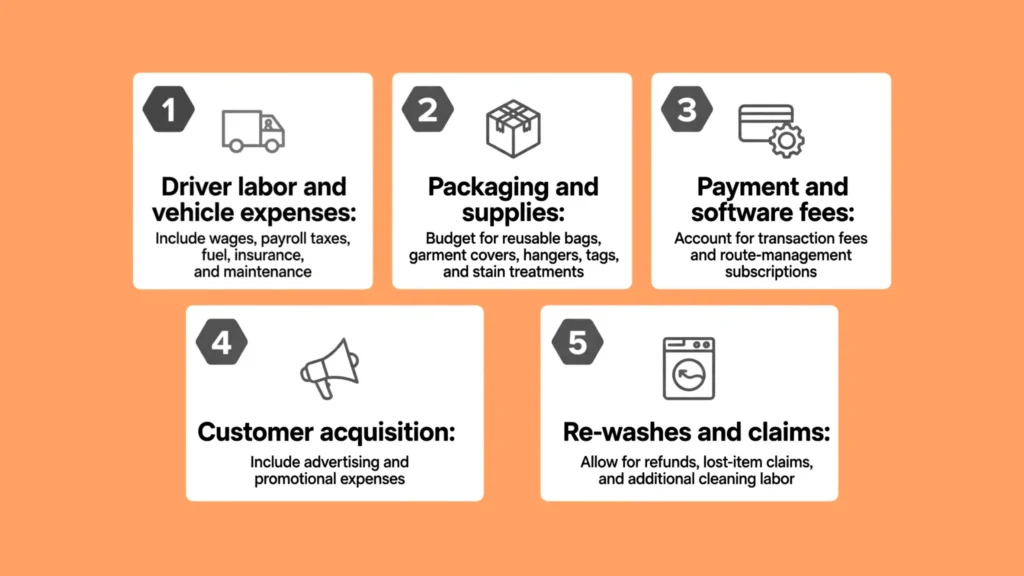
A common pitfall in laundry delivery pricing is calculating rates based solely on the cost of soap, water, and electricity. A sustainable price sheet must account for the full operational picture:
Driver Labor and Vehicle Expenses: Hourly wages, payroll taxes, commercial auto insurance, fuel, routine maintenance, and vehicle depreciation.
Packaging and Supplies: Branded reusable bags, clear plastic poly bags for folded stacks, hangers, garment covers, barcode tags, and stain-treatment supplies.
Payment Processing and Software Fees: Merchant credit card fees (typically 2.5% to 3.5% per transaction) and monthly subscriptions for route-optimization and point-of-sale software.
Customer Acquisition and Re-Washes: Marketing costs to win new households, plus occasional refunds, lost-item claims, or re-washing costs when stains require extra attention.
Delivery Fees vs. Free Delivery Thresholds
Customers strongly prefer “free delivery,” even when the cost of transportation is built into the per-pound or per-bag rate. Instead of tacking on a separate delivery surcharge for every order, consider building logistics costs into your base rate and enforcing a minimum order threshold.
If a customer’s order falls below the minimum, you simply charge the minimum base fee rather than penalizing standard orders with extra line-item fees.
Practical Tips for Launching and Scaling Your Routes
Building a dense, profitable route takes discipline. Keep these practical guidelines in mind as you grow:
Cluster Marketing Efforts by Neighborhood: Do not run broad, city-wide ads when starting out. Focus direct mail, door hangers, and local digital ads strictly within your active route zones so new sign-ups naturally stack along existing paths.
Enforce Bag Prep Guidelines: Require customers to separate dry cleaning from wash-and-fold items in distinct bags, and clearly state in your terms of service that you are not responsible for items left in pockets, such as pens, lip balm, or electronics.
Standardize Folding and Packaging: Consistent, tight folding wrapped neatly in clear poly bags or tied with branded ribbon makes a strong visual impression when returned to the customer’s porch, driving referrals and repeat orders.
Track Revenue Per Route Hour: Monitor how much gross revenue each driver generates per hour on the road. If a route falls below your target benchmark, tighten the zone boundaries or adjust pickup days until density improves.
Common Mistakes to Avoid
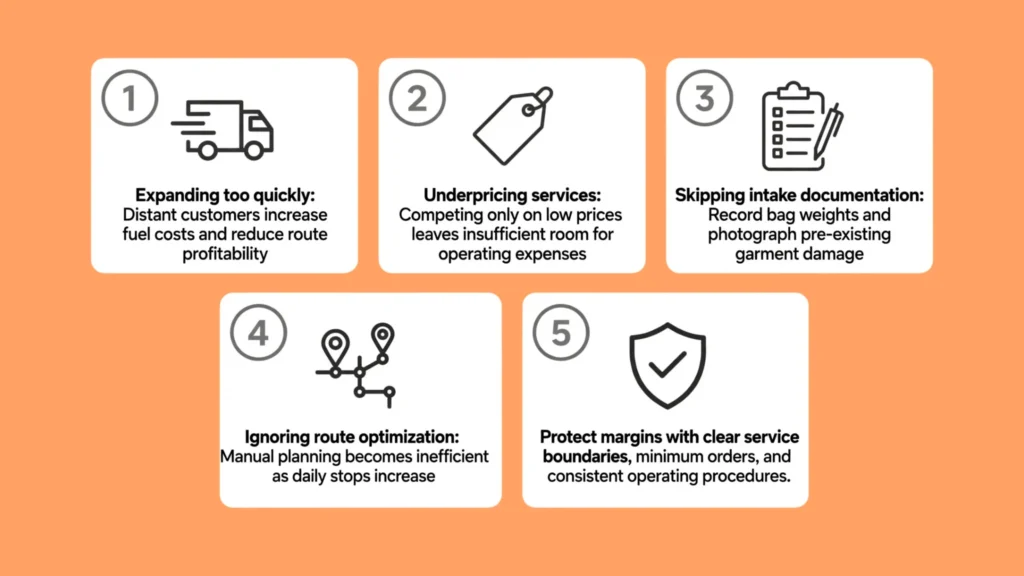
Even well-funded startups stumble when they overlook basic route and pricing fundamentals. Watch out for these frequent errors:
Expanding the Service Area Too Quickly: Saying “yes” to a customer 20 miles away feels like a win, until you realize the drive costs more in labor and fuel than the order brings in.
Underpricing to Beat Local Laundromats: Delivery customers are buying convenience and time, not bargain-basement self-service pricing. Competing strictly on the lowest price leaves no margin for vehicle maintenance or driver wages.
Skipping Order Intake Documentation: Failing to weigh, photograph, or log bags upon pickup leads to billing disputes and customer distrust. Always record weights and note pre-existing garment damage before washing begins.
Ignoring Route Optimization Tools: Relying on manual spreadsheets or memory works for ten stops a day, but quickly breaks down at thirty or forty. Dedicated routing software saves hours of planning and reduces unnecessary mileage.
Frequently Asked Questions
How much should I charge per pound for laundry pickup and delivery?
Most residential laundry pickup and delivery services charge between $1.75 and $2.75 per pound, depending on local cost of living, fuel prices, and competition. Always pair your per-pound rate with a minimum order requirement—typically 15 to 20 pounds or a $30 minimum—so small orders remain profitable.
Is a laundry pickup and delivery business profitable?
Yes, a laundry pickup and delivery business can generate healthy profit margins once routes achieve sufficient stop density. Storefront laundromat owners often see strong returns because they utilize existing equipment and staff during slower mid-week hours, while standalone operators succeed by maintaining tight delivery zones and high customer retention.
How many stops can a laundry delivery driver complete per hour?
In a well-clustered suburban or urban zone, an experienced driver can typically complete 4 to 6 stops per hour, including driving, walking to the doorstep, scanning or weighing bags, and loading the vehicle. In spread-out rural areas or high-rise apartment districts with difficult parking, expect closer to 2 to 3 stops per hour.
Should I charge a separate delivery fee or offer free pickup and delivery?
Offering “free pickup and delivery” above a set minimum order threshold generally converts better than charging a separate delivery fee. Customers dislike surprise surcharges at checkout, so folding transportation costs into your base per-pound or per-bag pricing creates a cleaner, more attractive offer.
What is the best turnaround time for a wash and fold delivery service?
A 48-hour turnaround is the standard benchmark for residential wash and fold service. It gives your team plenty of time to sort, wash, dry, fold, and inspect clothes without rushing, while still feeling fast and convenient for weekly household laundry. Next-day and same-day options can be offered as paid upgrades.
How do I handle delicate items or special washing instructions?
Provide a clear preferences section in your booking system where customers can select detergent types (such as hypoallergenic or fragrance-free), water temperatures, and drying preferences. For delicate garments that require air-drying or specialized care, either charge a per-item surcharge or route those pieces to a dedicated dry-cleaning workflow.
Final Thoughts
Launching and growing a laundry pickup and delivery business comes down to balancing customer convenience with strict operational discipline. When you organize your territory into tight, predictable zones and set laundry delivery pricing that reflects every true cost—from detergent and folding labor to fuel and vehicle upkeep you protect your margins on every mile driven.
Start with a manageable service radius, enforce clear order minimums, and focus on consistent quality so every delivery turns a one-time user into a loyal weekly customer.
About The Author