Pet Waste Removal Business: Recurring Revenue From a Simple Service
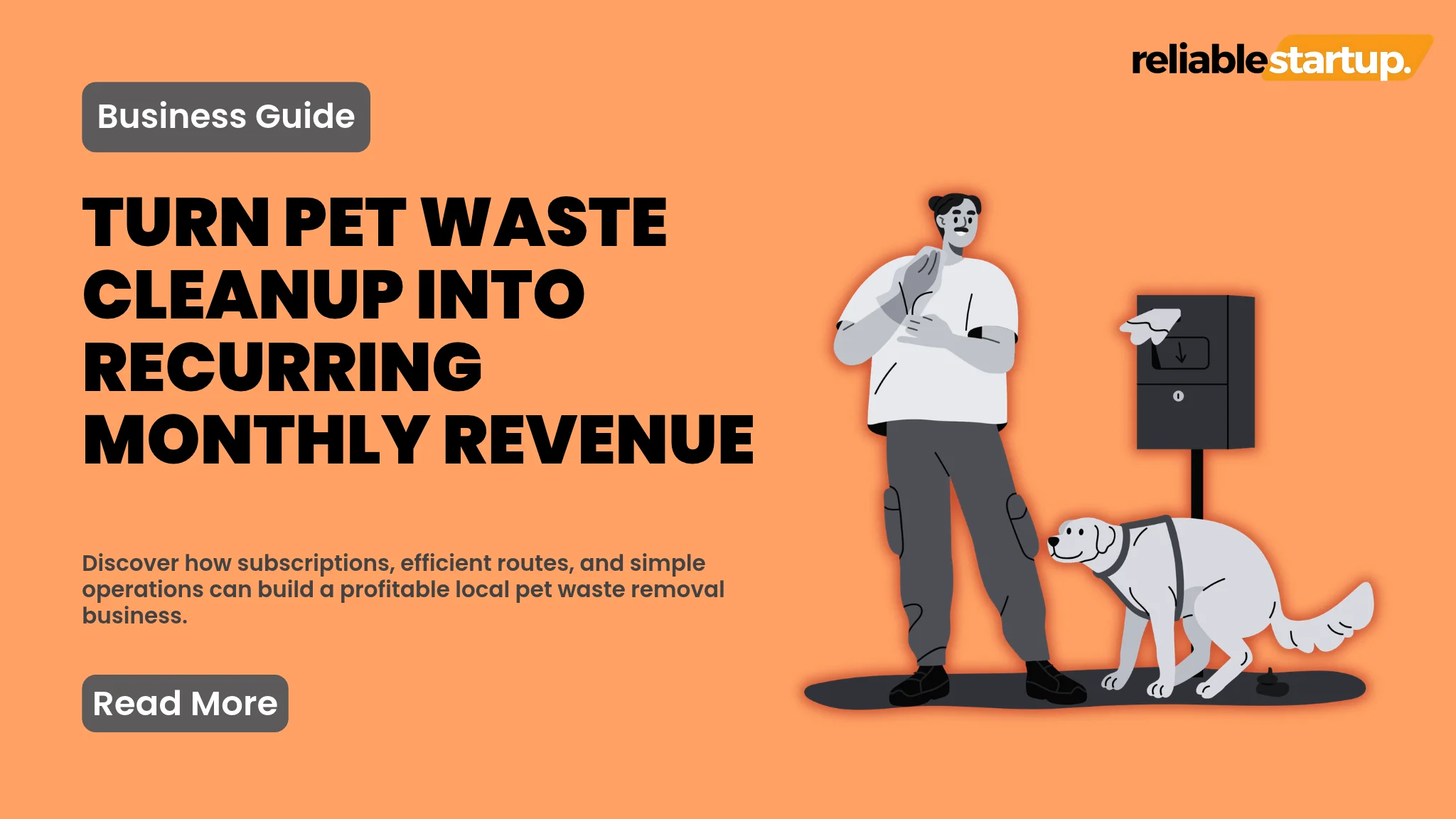
A pet waste removal business generates predictable recurring revenue by turning a routine household chore into a weekly or twice-weekly yard service subscription. Instead of chasing one-off jobs, operators build dense local routes where each residential yard takes only a few minutes to clean, creating steady monthly cash flow with minimal startup overhead.
For entrepreneurs looking for a straightforward home-service model, a dog waste removal service often called a pooper scooper business stands out because demand does not depend on seasonal trends or complex equipment.
Dogs produce waste every single day regardless of economic cycles, and busy homeowners are consistently willing to pay a modest recurring fee to keep their yards clean, sanitary, and ready to use.
What Is a Pet Waste Removal Business?
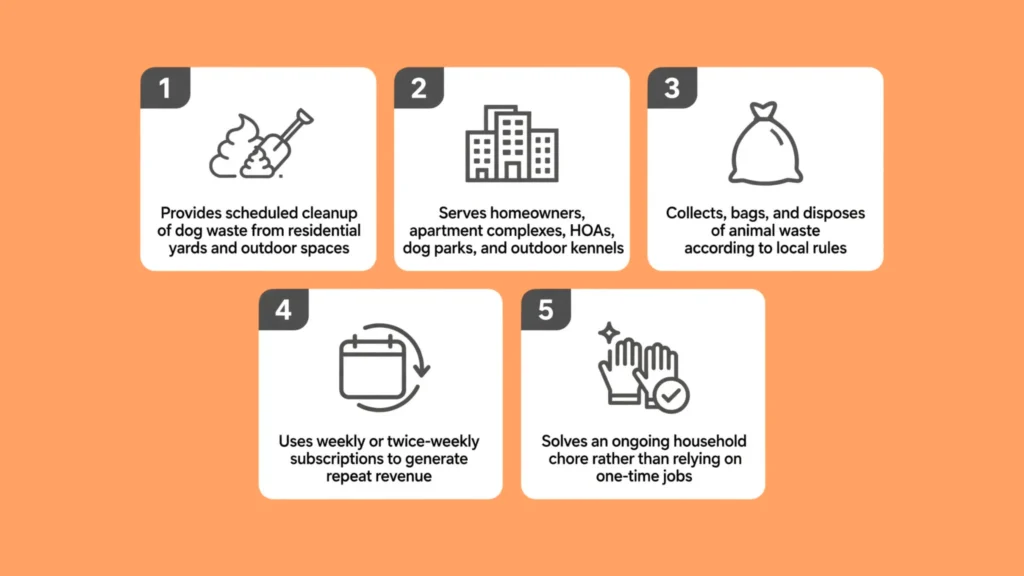
A pet waste removal business is a local service company that visits residential properties, apartment complexes, homeowners associations (HOAs), and commercial pet areas on a scheduled basis to collect, bag, and dispose of animal waste.
While most operators focus primarily on dogs, some also service outdoor kennels, dog parks, and multi-family pet relief stations.
Entrepreneurs exploring different service niches can also consider specialized cleaning services to identify other focused business opportunities with consistent local demand.
The model works because it solves an ongoing, recurring problem rather than a one-time issue. Unlike landscaping renovations or pressure washing, where you must continually sell new projects to replace completed ones, a yard service subscription retains the same clients month after month.
Once a customer signs up for weekly cleanup, they typically stay on the schedule as long as they own their pet or live in the service area.
Why the Subscription Model Works So Well
The financial strength of a pooper scooper business comes from recurring billing combined with route density. When structured properly, a single route can support dozens of stops within a tight geographic radius.
Predictable Monthly Cash Flow
Most residential clients pay on a flat monthly billing cycle rather than per visit. Charging a consistent monthly rate smooths out revenue across four-week and five-week months, reduces billing friction, and makes financial forecasting straightforward. Automated card billing ensures payments are collected at the beginning of each month before service is rendered.
Low Startup and Operating Costs
Compared to other exterior home services, the barriers to entry are remarkably low:
Equipment: Commercial-grade rakes, spades, swivel-bin scoopers, heavy-duty contractor bags, and biodegradable waste bags.
Sanitation: Veterinary-grade disinfectant sprays to sanitize tools and boots between every single yard.
Transportation: Any reliable, fuel-efficient vehicle—a truck or SUV is helpful for hauling waste, though a lined cargo area in a compact vehicle works at the start.
Software: Basic route-optimization and recurring billing software to group stops by neighborhood and automate customer notifications.
High Route Density and Fast Service Times
An average residential yard with one or two dogs typically takes between five and ten minutes to scoop once the initial cleanup is complete. When five or six customers live within the same subdivision or zip code, drive time drops to just a few minutes between stops. High route density directly increases hourly revenue without requiring extra hours in the field.
Common Service Tiers and Pricing Structures
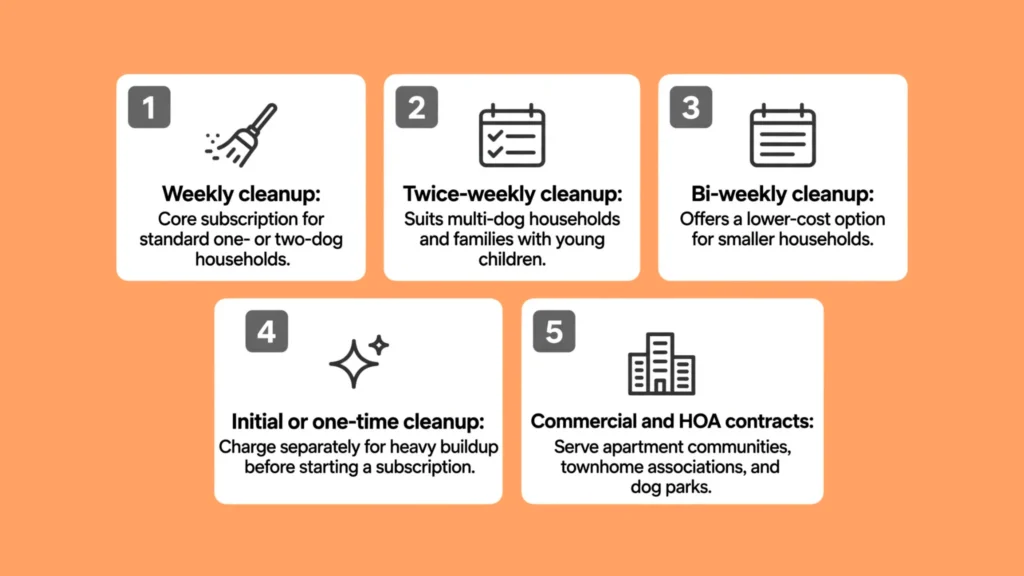
Successful operators keep their pricing simple so homeowners can sign up without requesting an in-person quote. Pricing is usually determined by three variables: the number of dogs, the frequency of visits, and the size of the yard.
| Service Tier | Typical Frequency | Ideal Customer Profile | Key Operational Benefit |
| Weekly Cleanup | Once per week | Standard 1–2 dog households with average yards | Core revenue driver; easy to group into neighborhood routes |
| Twice-Weekly Cleanup | Two times per week | Multi-dog households, small yards, or families with young kids | Doubles monthly revenue from a single customer acquisition |
| Bi-Weekly Cleanup | Every other week | Single small-dog households with large properties | Lower entry price point, though slightly heavier waste per visit |
| Initial / One-Time Cleanup | Single visit | New subscribers with winter buildup or hosts preparing for an event | Billed separately to cover extra time before standard subscription starts |
| Commercial & HOA Contracts | 1–3 times per week | Apartment communities, townhome associations, and dog parks | Larger anchor accounts that stabilize weekly route volume |
Businesses interested in expanding beyond residential customers can explore commercial cleaning contracts to understand how recurring agreements with property managers and commercial clients can support long-term revenue.
Most operators also offer optional add-ons such as deck and patio deodorizing, yard sanitizing sprays, or pet waste station maintenance for commercial properties to increase average revenue per client without adding drive time.
Choosing profitable rates requires understanding labor, operating expenses, and service complexity, so reviewing different service pricing strategies can help new operators establish competitive prices without sacrificing margins.
Essential Steps to Launch a Dog Waste Removal Service
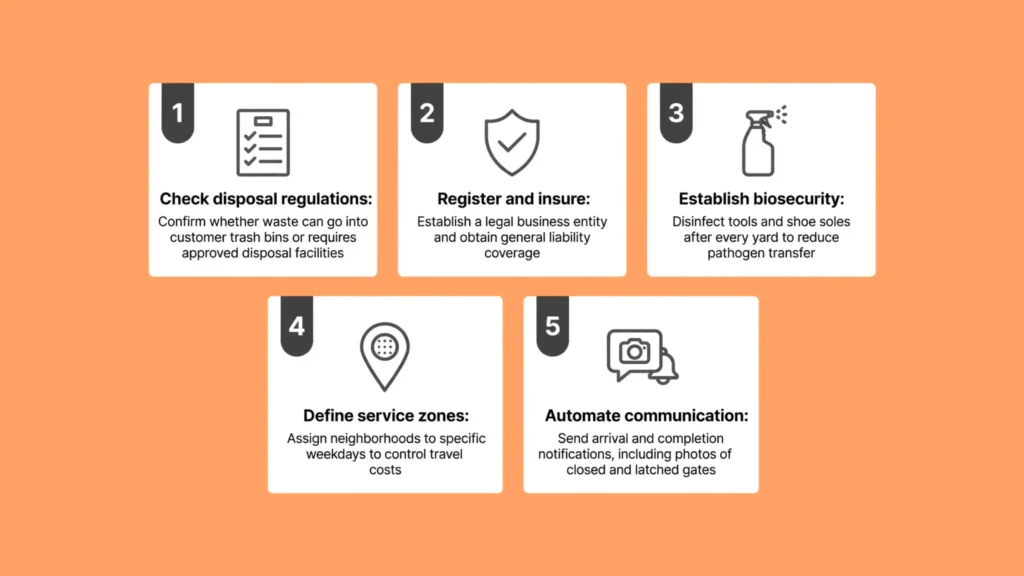
Starting a compliant, professional operation requires more than buying a scooper and posting flyers. Building trust is critical because technicians enter fenced backyards while homeowners are often at work.
1. Check Local Waste Disposal Regulations
Municipal rules govern how pet waste must be disposed of. In many areas, double-bagged waste can be placed in the customer’s outdoor municipal trash bin, which eliminates hauling weight and disposal fees. Other jurisdictions require operators to haul waste away and dispose of it at an approved transfer station or landfill. Verify local solid waste ordinances before finalizing your operating procedures.
2. Set Up Business Registration and Insurance
Form a legal business entity, such as an LLC, and obtain general liability insurance. Even though the work is low-risk, carrying proper coverage protects you if a gate is accidentally left unlatched or property is damaged. Bonding and commercial auto coverage should also be reviewed as soon as you begin driving daily routes or hiring technicians.
Before accepting customers, review the essential requirements for business registration and insurance to establish a compliant operation and protect your business against unexpected liabilities.
3. Establish Strict Biosecurity Protocols
Dog waste can carry parasites and pathogens such as parvovirus, giardia, and roundworms. Professional operators protect client pets—and differentiate themselves from casual hobbyists—by spraying all tools and shoe soles with a pet-safe, broad-spectrum disinfectant after every yard. Mentioning this sanitation step in your marketing builds immediate credibility with cautious pet owners.
4. Build Tight Geographic Service Zones
Resist the temptation to accept customers across an entire metro area early on. Define specific zip codes or neighborhoods and assign each zone to a specific day of the week. For example, servicing the north side of town on Mondays and the east side on Tuesdays keeps fuel costs low and prevents wasted hours in traffic.
5. Automate Communication and Gate Photos
Customer retention relies heavily on reliability and communication. Sending an automated text notification when a technician is on the way—and a completion message with a photo of the closed, latched gate afterward—gives homeowners peace of mind and drastically reduces churn.
Effective Marketing Channels for Local Subscribers
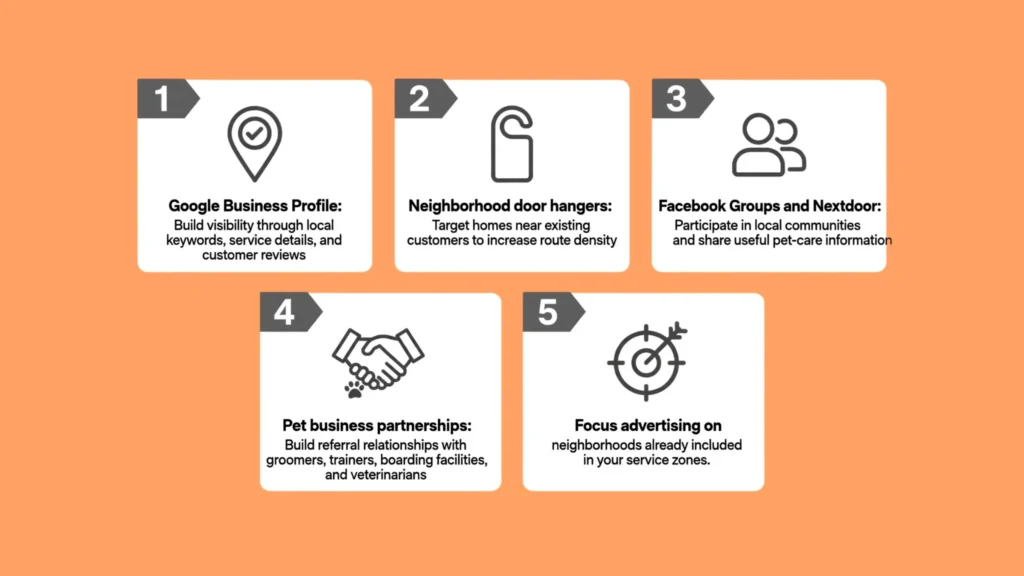
Because a yard service subscription is hyper-local, broad advertising wastes money. Focus on channels that reach homeowners within your target route zones:
Google Business Profile: Optimizing your local profile with clear service descriptions, neighborhood keywords, and verified customer reviews captures high-intent searches from homeowners actively looking for help.
Door Hangers in Active Neighborhoods: Leaving door hangers on the five houses surrounding an existing customer’s home builds immediate route density. If you already drive down that street every Thursday, adding a neighbor is pure profit.
Local Facebook Groups and Nextdoor: Participating genuinely in community boards and sharing helpful pet-care tips positions your business as a trusted neighborhood service.
Partnerships With Pet Businesses: Leaving referral cards with local dog groomers, trainers, boarding facilities, and veterinarians connects you directly with people who already spend money on pet care.
Common Mistakes That Hurt Profitability
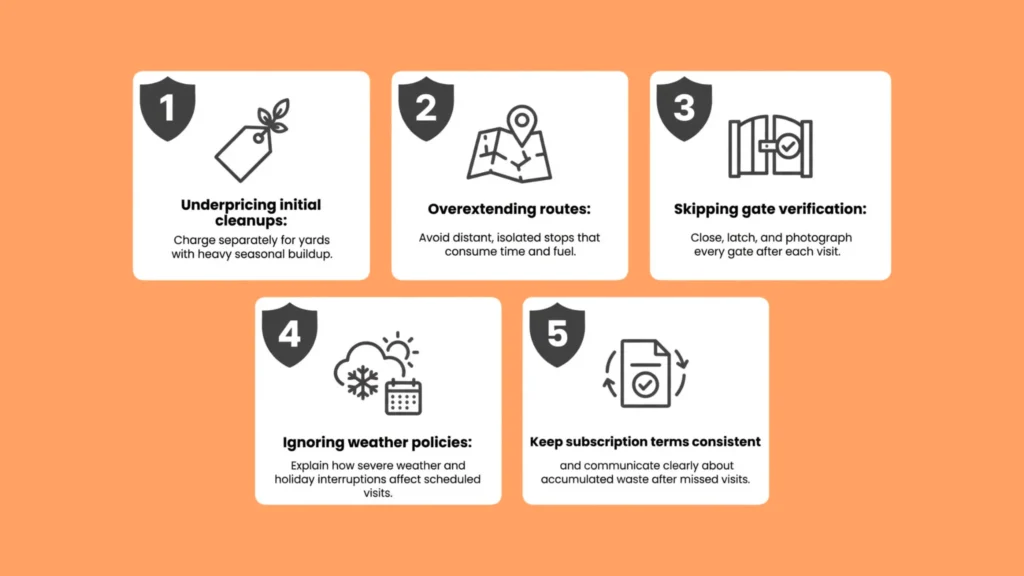
Even a simple service model can struggle if basic operational discipline is overlooked. Avoid these frequent pitfalls:
Underpricing Initial Cleanups: A yard that has not been scooped all winter can take 45 to 60 minutes to clear. Always charge an initial cleanup fee based on the actual condition of the yard rather than absorbing that labor into the first month’s subscription.
Overextending Route Boundaries: Driving 25 minutes out of your way for one $20 stop erodes profit margins. Keep prospects outside your active service zones on a waitlist until you have enough interest in that area to open a new route day.
Skipping Gate Verification: Leaving a gate open is the fastest way to lose a client and risk a pet’s safety. Make closing, latching, and photographing the gate a non-negotiable step on every visit.
Ignoring Weather and Holiday Policies: Clearly communicate in your service agreement how skipped visits due to severe weather or major holidays are handled. In a subscription model, waste accumulates whether a visit happens or not, so the following week’s cleanup covers the extra volume—which is why standard monthly subscription fees remain consistent.
Frequently Asked Questions
How much does it cost to start a pet waste removal business?
Startup costs are relatively low compared to most service businesses. Basic commercial tools, disinfectant supplies, business registration, initial insurance, and a simple website typically cost between $1,000 and $3,000 if you already own a reliable vehicle.
What do you do with the dog waste after scooping it?
Depending on local regulations and company policy, operators either double-bag the waste and place it in the client’s outdoor trash receptacle or haul it away in a sealed container for disposal at a municipal waste facility. Hauling waste typically carries a slightly higher service fee to cover disposal costs and extra time.
How do you price a dog waste removal service?
Most companies use tiered flat-rate monthly pricing based on the number of dogs and service frequency. A single-dog weekly subscription generally costs less than a three-dog household, with an extra one-time fee applied if the yard requires a heavy initial cleanup.
Do you need a license to start a pooper scooper business?
Most cities and counties require a standard local business license, though specialized trade licenses are rarely needed. However, you must follow local environmental and municipal waste rules regarding proper bagging and disposal.
How does a yard service subscription handle winter or rainy weather?
Most dog waste removal services operate year-round because dogs continue going outside in cold or wet weather. If extreme conditions like severe storms or deep snow make scooping unsafe or impossible, visits are paused and cleared once conditions improve, with clear terms outlined in the client’s service agreement.
How many yards can one technician clean per day?
Once routes are tightly grouped within specific neighborhoods, a single technician can typically clean 20 to 35 residential yards in a standard workday, depending on yard sizes, drive times, and the number of dogs per household.
Final Thoughts
A pet waste removal business proves that a service does not need to be complex to generate reliable, recurring income. By focusing on tight geographic routes, transparent subscription pricing, strict sanitation practices, and consistent customer communication, operators can turn an everyday household chore into a scalable local enterprise with predictable monthly revenue.
About The Author