Validate Business Idea With Pre Sales Before You Build Anything
Building a product in isolation is one of the riskiest moves a founder can make. Months of design, development, and engineering can easily end in silence if the market does not actually want what you built. The most reliable way to mitigate this risk is to validate business idea with pre sales before writing code or placing inventory orders.
When people pledge money for an unfinished product, they provide proof of genuine demand. Polite praise and email signups show interest, but financial transactions prove utility. Securing pre-orders allows you to confirm that a real problem exists and that customers will pay for your solution. Understanding this validation model reshapes how modern companies launch.
By securing buyer commitment early, teams reduce burn rates, refine core features, and build with confidence, especially when bootstrapping a business startup with limited financial resources.
Pre-selling products lets founders test market demand using real financial commitments before investing heavily in development. By running a waitlist test or pre-order campaign, teams capture valuable buyer feedback, fund early operations, and validate business idea with pre sales. This approach minimizes financial risk and confirms that customers will actually buy what you plan to build.
Key Takeaways:
Pre-selling validates real customer intent through financial commitment rather than polite praise.
Waitlist tests and minimal landing pages let you gauge market demand with minimal upfront capital.
Transparency about build timelines builds buyer trust during early validation campaigns.
Direct feedback from pre-order customers helps refine product scope to features users actually want.
The High Cost of Building in the Dark
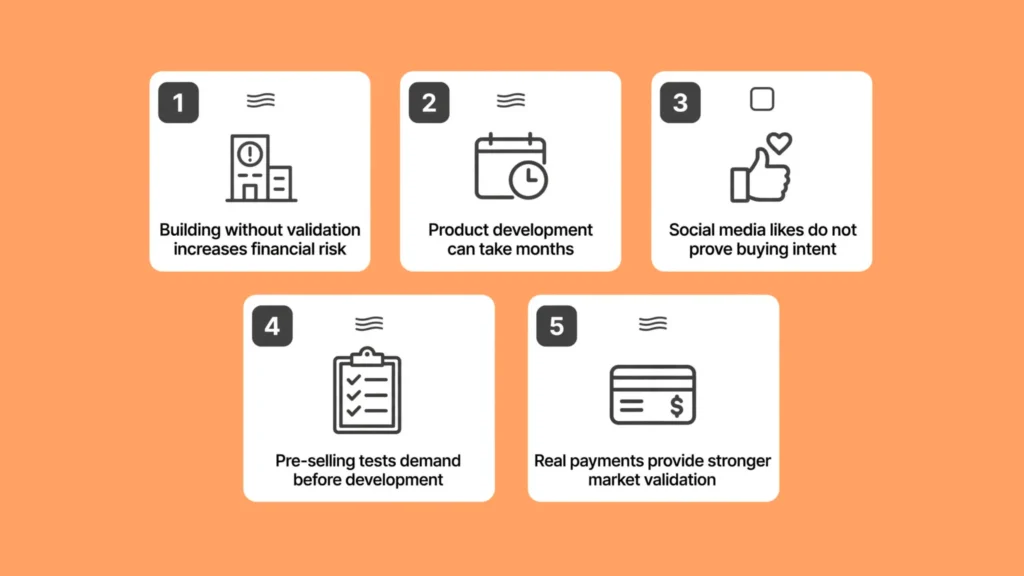
Traditional product development follows a predictable, high-risk pattern. A team conceives an idea, spends six months building it, designs a marketing campaign, and launches to the public. If the market rejects the product, the capital and time spent are lost.
Pre selling a product flips this sequence entirely. Instead of building first and selling second, you sell first and build second. This approach also helps founders understand the importance of developing a minimum viable product (MVP) before investing heavily in a complete solution.
When founders skip early demand validation, they usually rely on bad proxy metrics, even when exploring low-cost business ideas that require minimal initial investment.
. Social media likes, survey responses, and verbal promises rarely translate into revenue. People express enthusiasm for many products they will never buy. A credit card transaction is the clearest signal that your value proposition resonates.
Key Phases of a Pre-Sales Validation Campaign

To execute a pre-sales validation test effectively, founders generally move through three distinct operational phases. The first phase centers on hypothesis definition. Your primary objective here is to define your target persona and core problem. You will produce value proposition copy and audience profiles, measuring your success through a problem alignment score.
The second phase involves building your offer and landing page. The main goal is to present your solution and collect intent. You will create a high-converting page and a pre-order checkout, tracking your success using your page conversion rate.
The third phase focuses on demand testing. Here, your objective is to drive targeted traffic and evaluate conversion. You will run paid campaigns, outreach, and community posts, measuring real pre-sales volume in revenue.
Refining the Value Proposition
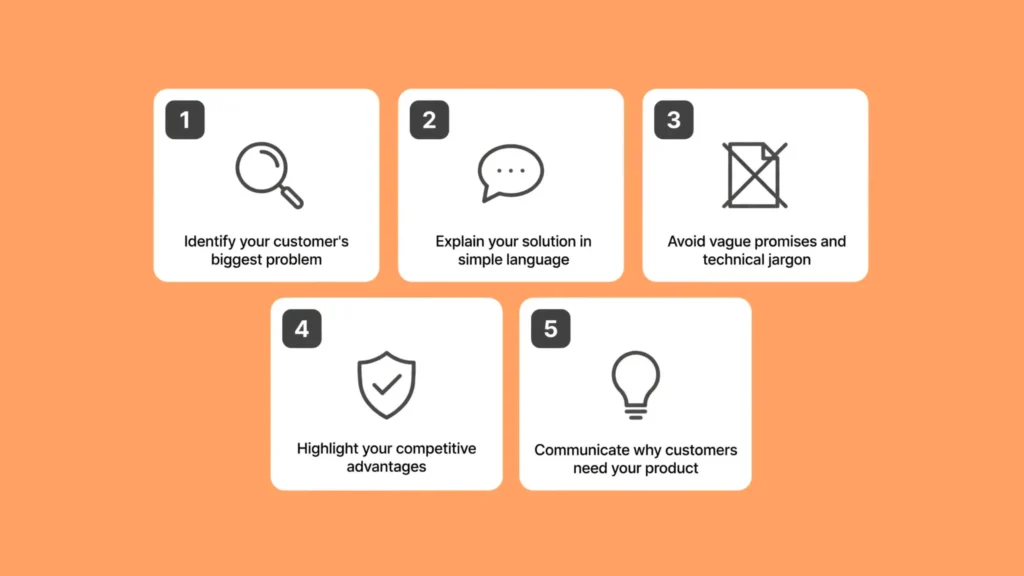
Before setting up a checkout page, you must articulate the problem you solve in clear language. Avoid technical jargon or vague promises. State the pain point, present your proposed solution, and explain why your approach is better than existing workarounds.
Building the Landing Page
Your landing page does not need complex graphics or extensive feature tours. It needs clear copy, mockups or wireframes, clear pricing terms, and a single call to action. Platforms and insights shared by communities like reliablestartup.com emphasize keeping early landing pages simple to isolate your core offer.
Driving Targeted Traffic
Once the page is live, route high-intent visitors to it through targeted ad campaigns, specialized online communities, direct outreach, or email distribution lists. Learning how to market an online startup business can also help founders attract the right audience for their pre-sale campaigns. The goal is not massive traffic, but reaching people who experience the specific problem you aim to solve.
Running an Effective Waitlist Test
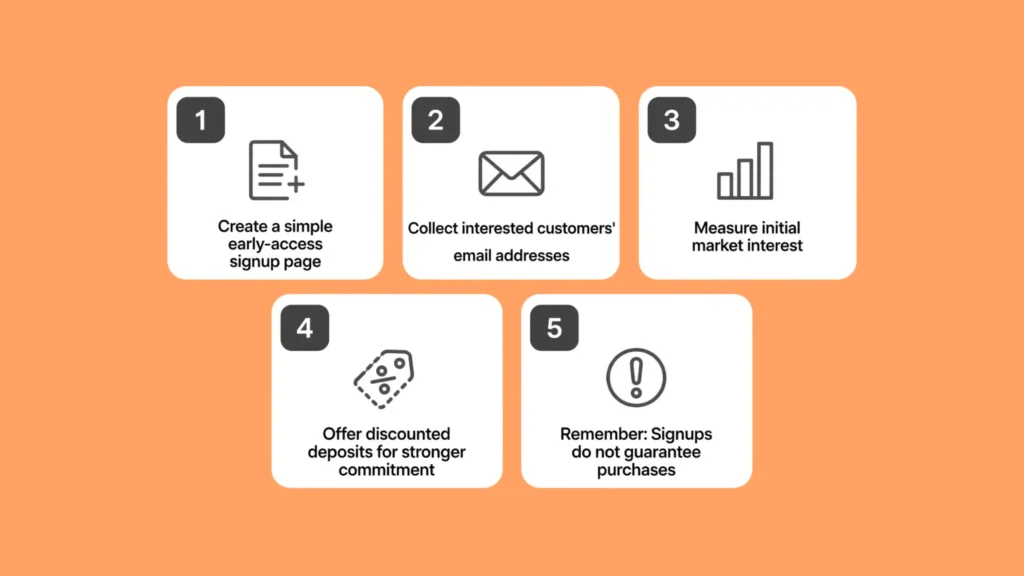
Before asking for full payment, many founders launch a waitlist test to gauge initial interest. A waitlist page collects email addresses from visitors who want early access or discounted pricing when the product launches. A waitlist test provides an initial signal of topic interest. However, an email signup only represents partial validation. Someone giving you an email address shows curiosity, not buying intent.
To turn a basic waitlist into a real validation tool, add a micro-commitment step. After a user enters their email, direct them to a survey or offer a discounted deposit. A small financial commitment of five or ten dollars yields clearer signals than a free email submission.
Strategies for Pre Selling a Product Ethics and Clarity
Pre-selling requires complete transparency. Selling a product that does not yet exist is standard practice in tech, publishing, and physical goods, but hiding your timeline destroys trust.
Be explicit about your development schedule. Clearly state when pre-order customers should expect delivery, and outline your refund policy. If technical or supply chain delays occur, communicate them immediately. Successful creators use these guidelines when pre-selling software or physical items:
Render clear, realistic visuals or prototypes so buyers understand what they are purchasing.
Limit early pre-orders to a manageable cohort to ensure reliable delivery.
Offer early-bird pricing or exclusive bonuses to compensate initial supporters for their patience.
Send regular progress updates showing development milestones and behind-the-scenes work.
Maintain an easy refund process for backers whose schedules or needs change before ship day.
Educational resources from platforms like reliablestartup.com highlight that long-term customer trust matters far more than short-term pre-sale revenue.
Analyzing Pre-Sale Data to Make the Go/No-Go Decision
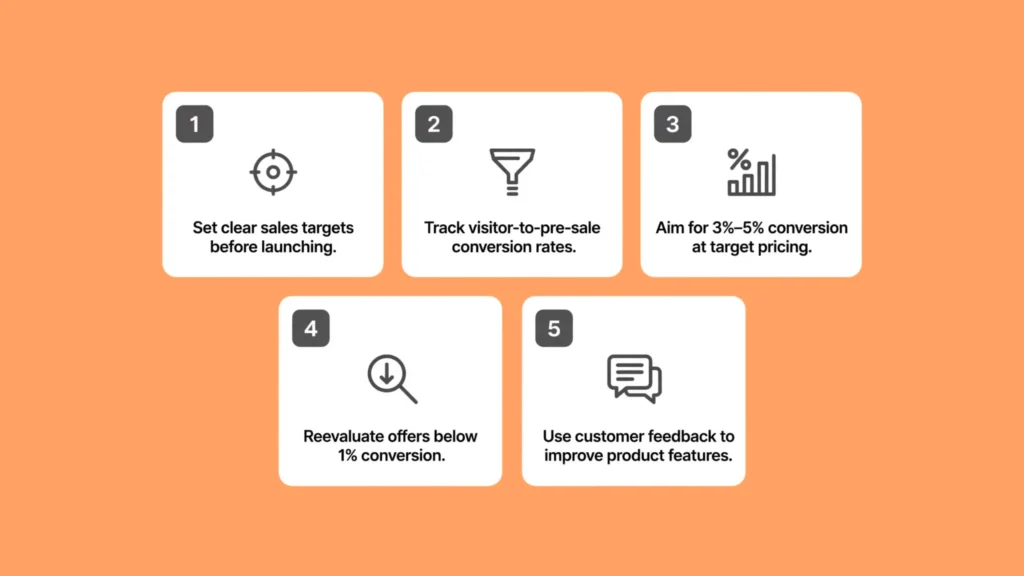
Running a validation campaign yields quantitative data that guides your decision on whether to move forward. Set target thresholds before launching your campaign so emotion does not cloud your judgment.
Calculate your visitor-to-pre-sale conversion rate. If you send 1,000 targeted visitors to a page and achieve a 3% to 5% pre-order conversion rate at your target price, you have strong validation evidence. If conversion stays below 1%, reevaluate your positioning, pricing, or the core problem itself.
Pre-sale campaigns also generate qualitative feedback. Analyze customer service questions, site comments, and exit surveys. If visitors repeatedly ask about a missing feature, you can integrate that insight into your build plans before writing code.
Overcoming Common Objections to Pre-Sales Validation
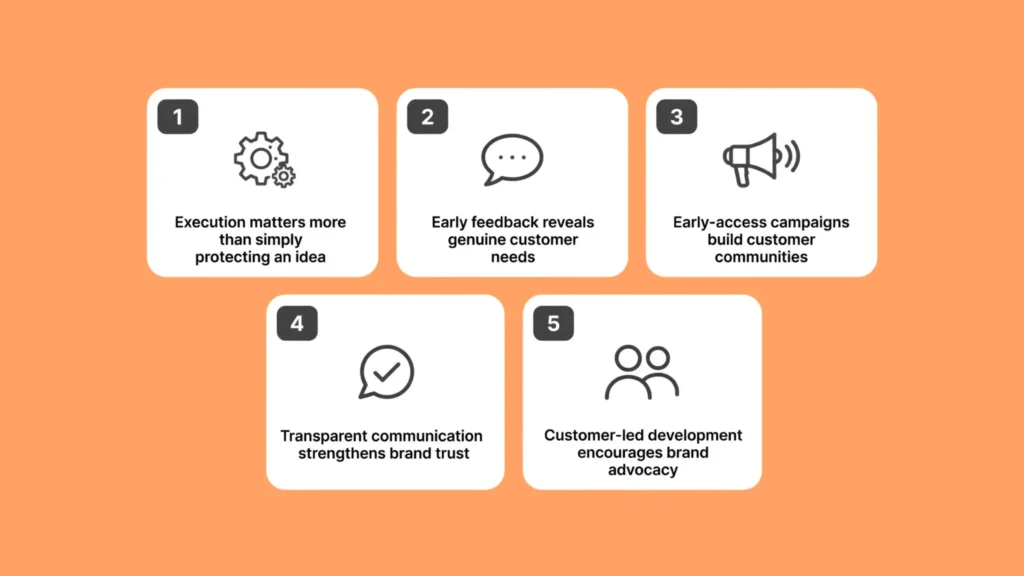
Founders often hesitate to adopt a pre-selling approach due to common misconceptions.
Fear of Intellectual Property Theft
Many entrepreneurs fear that sharing an unbuilt product idea invites competitors to steal it. In reality, execution drives startup success, not raw ideas. The market insights gained from early pre-sale feedback outweigh the slight risk of public exposure.
Worry About Brand Reputation
Some teams fear that running a pre-sale makes them look undercapitalized. However, modern consumers expect early access models, crowdfunding, and pre-orders. Positioning your pre-sale as an exclusive early-access cohort frames your launch around community and collaboration rather than limitation. Operational guides across reliablestartup.com emphasize that customer-led development builds stronger brand advocacy than secret launches.
FAQs
What is the difference between a waitlist test and pre-selling?
A waitlist test collects email addresses from prospective users to gauge general topic interest. Pre-selling requires customers to pay money upfront before the product is built, providing stronger proof of actual market demand.
Is it legal to sell a product before building it?
Yes, pre-selling is legal provided you clearly disclose that the product is in development, provide realistic delivery timelines, and honor your stated refund policies and consumer protection laws.
How much traffic do I need to validate business idea with pre sales?
You do not need massive traffic. Typically, 500 to 1,000 highly targeted visitors provide enough data to measure conversion rates and determine whether your value proposition attracts paying buyers.
What if I fail to reach my pre-sale goal?
If your campaign fails to meet its pre-sale threshold, refund all customer deposits promptly. Treat the result as a successful test that saved you from building a product the market did not want.
How much of a discount should I offer during a pre-sale campaign?
Early-bird discounts typically range between 20% and 40% off the planned retail price. This discount compensates early supporters for waiting through the development phase.
Conclusion
Validating your market before building is the single most effective way to eliminate product failure risk. By prioritizing real financial commitment over polite applause, you ensure that every hour and dollar spent on development goes toward a product with proven market demand.
Pre-selling provides operational clarity, early capital, and a direct channel to your most passionate customers. Define your value proposition clearly, launch a targeted validation campaign, and let real market data guide your product journey.
About The Author