Junk Removal Business Startup Cost: Full Breakdown
Junk removal business startup cost is one of the first things you should understand before you buy a truck, print flyers, or take your first call. Because while junk hauling can be a simple business, the costs add up fast if you don’t plan them.
So, in this guide, you’ll get a practical breakdown of what you’ll spend, what you can delay, and how to start lean without looking “cheap.” Plus, you’ll see sample budgets for different startup styles.
What Is the Average Junk Removal Business Startup Cost?
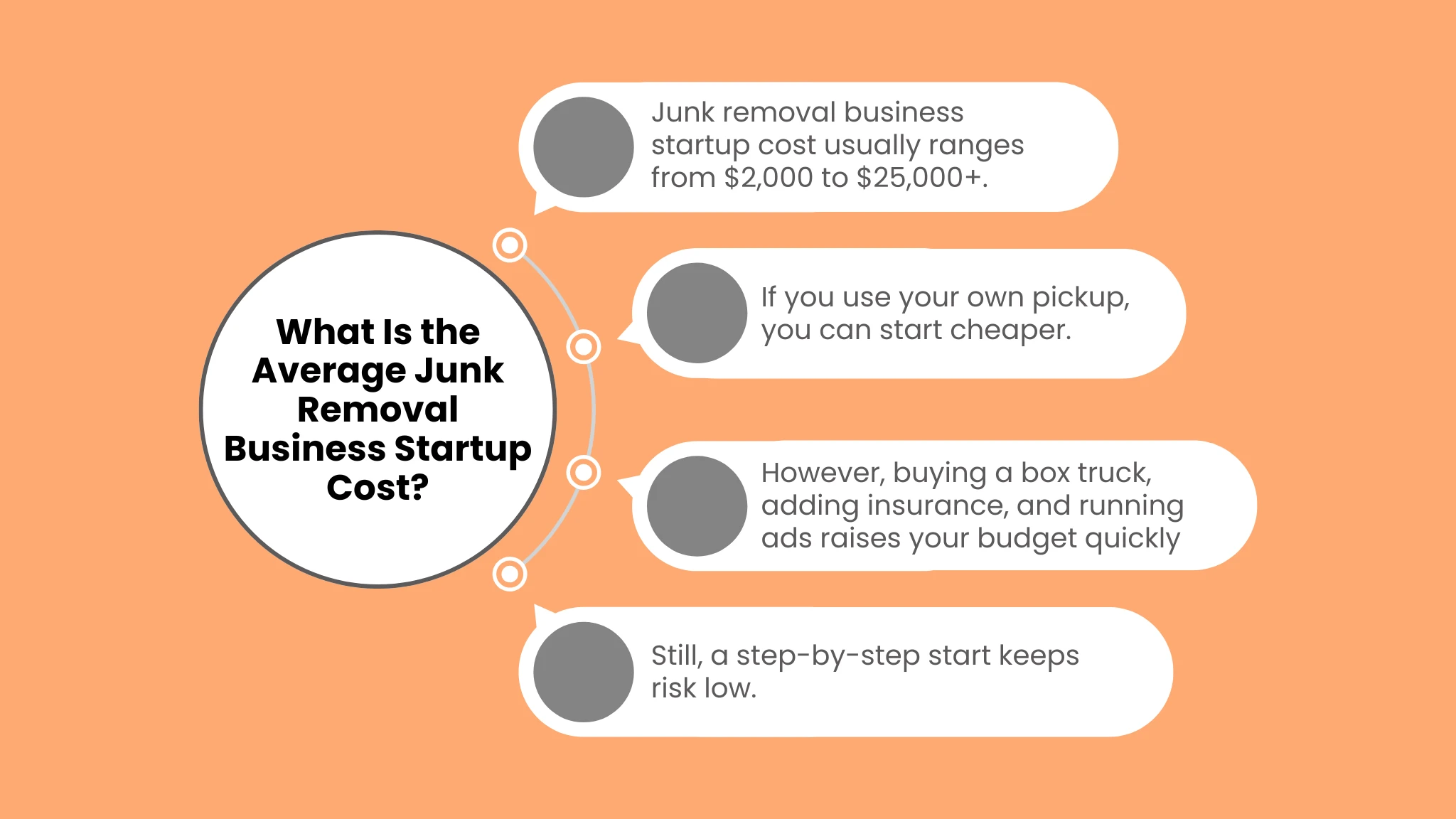
In most cases, the junk removal business startup cost ranges from $2,000 to $25,000+, depending on how you start. If you use a personal pickup, you can start lower. However, if you finance a truck, buy bins, and run ads immediately, your budget rises quickly.
Even so, the good news is you can scale step-by-step. That means you don’t need every tool and upgrade on day one.
Startup Cost Categories You Must Budget For
Before you estimate totals, it helps to split costs into clear categories. That way, you won’t forget the “small stuff” that turns into big money later.
Vehicle and Transportation Costs
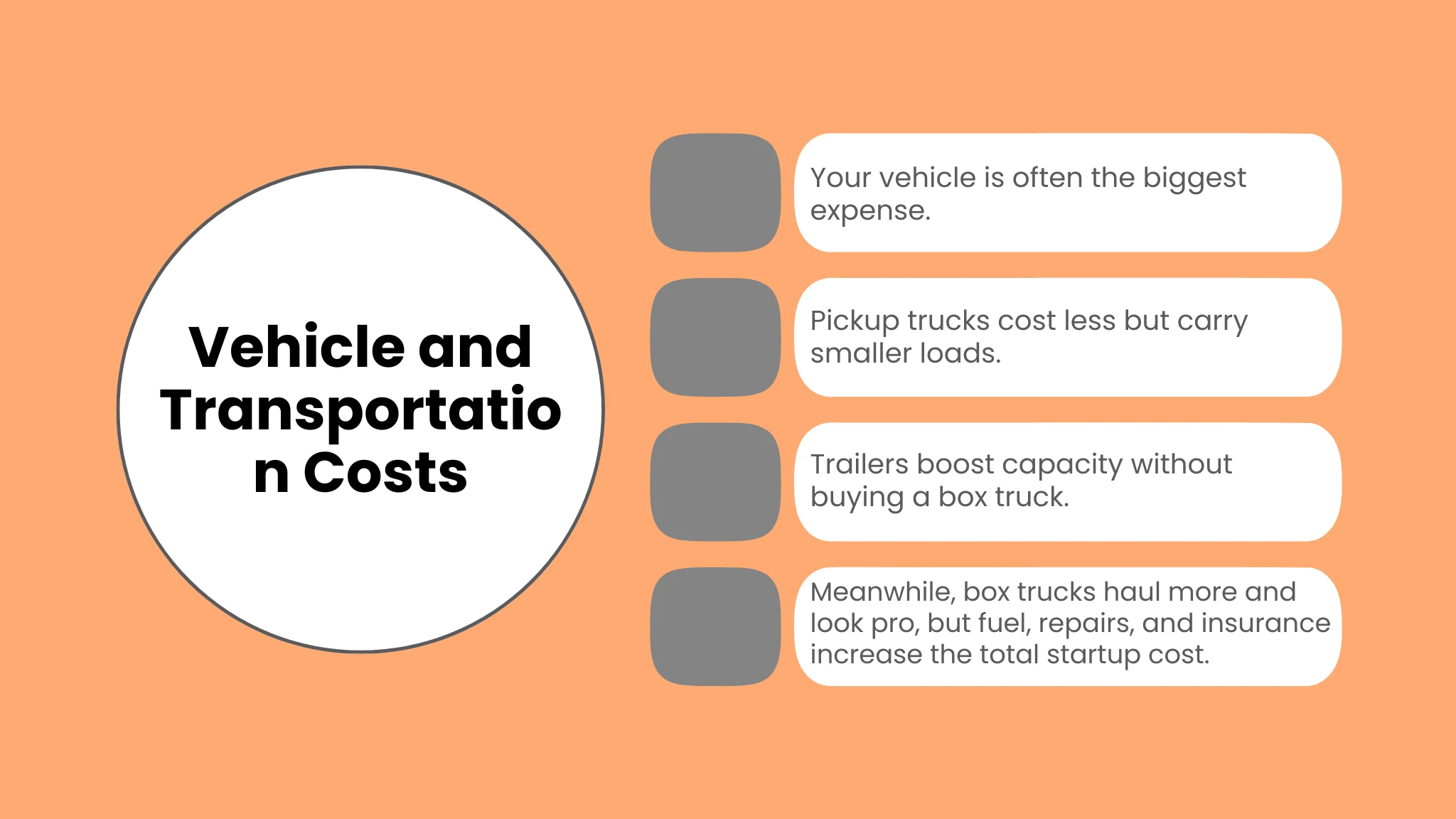
Your vehicle is usually the biggest expense. Therefore, choose based on your local market and the size of jobs you want.
Common vehicle options include:
-
Pickup truck (lowest cost to start, smaller loads)
-
Cargo van (good for lighter jobs, cleaner look)
-
Box truck (bigger jobs, higher cost)
-
Trailer setup (flexible, often cost-effective)
Costs can include:
-
Down payment or purchase price
-
Registration and inspections
-
Maintenance (tires, oil, brakes)
-
Fuel (a major ongoing cost)
Typical range: $0–$20,000+ upfront (depending on what you already own).
Equipment and Tools
You don’t need fancy gear at the start. Still, you do need basic tools to work safely and efficiently.
Minimum essentials:
-
Heavy-duty gloves
-
Safety glasses and masks
-
Dolly/hand truck
-
Ratchet straps
-
Broom, shovel, trash bags
-
Basic toolkit (hammer, pry bar, utility knife)
Optional but helpful:
-
Power tools for light demo
-
Tarps and moving blankets
-
Traffic cones for tight driveways
Typical range: $150–$1,500.
Disposal Fees and Dump Runs
Disposal costs are not optional. In fact, this is where many beginners underprice jobs and lose money.
You may pay for:
-
Landfill tipping fees (often based on weight)
-
Transfer station fees
-
Recycling fees (mattresses, tires, TVs, appliances)
-
Special handling (hazardous waste rules vary)
Because fees differ by location, call your local landfill and ask for pricing by weight and item type. Then, build that into your quotes.
Typical range: $200–$1,500 to get started (plus ongoing per job).
Licensing, Permits, and Business Setup
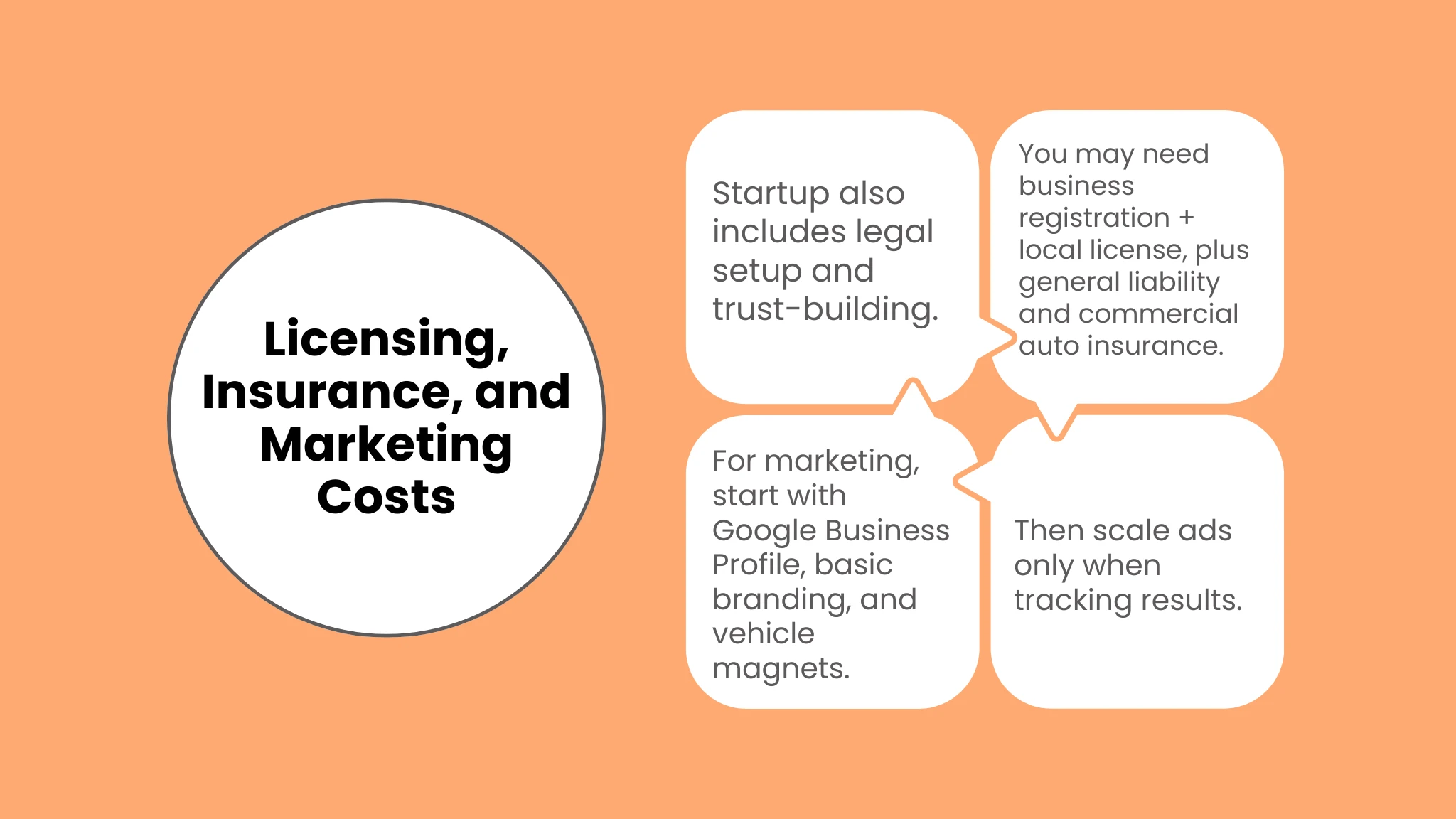
Rules depend on your area. However, most junk removal businesses need basic registration and may need a hauling permit.
Common setup costs include:
-
Business registration (LLC or sole proprietorship)
-
Local business license
-
DBA filing (if needed)
-
Sales tax registration (some areas require it)
-
Accounting software or bookkeeping help
Typical range: $100–$1,000.
Insurance (Do Not Skip This)
Insurance protects you when things go wrong—and eventually something will. So, even if you’re starting small, don’t ignore coverage.
You may need:
-
Commercial auto insurance
-
General liability insurance
-
Workers’ comp (if you hire help)
-
Tool coverage (optional)
Typical range: $100–$400/month for basic coverage, depending on your area and vehicle.
Branding and Marketing: Junk Removal Business Startup Cost
At the start, marketing doesn’t have to be expensive. Still, you need to look trustworthy because people are inviting you onto their property.
High-impact basics:
-
Business name + logo (simple but clean)
-
Phone number and email
-
Google Business Profile (free)
-
Yard signs or door hangers
-
Vehicle magnets or decals
-
A basic website or landing page
If you run paid ads, costs rise. However, local service ads and search ads can work well once you track results.
Typical range: $100–$3,000 to launch, depending on ads and website.
Sample Startup Budgets (3 Realistic Scenarios)
1) Ultra-Lean Startup (Using Your Own Pickup)
This is the fastest way to start if you already have a vehicle.
Estimated budget: $2,000–$4,000
-
Basic tools and safety gear
-
Business registration and license
-
Insurance deposit
-
Simple branding + flyers
-
Initial disposal fees
2) Moderate Startup (Used Trailer Setup)
This gives you more capacity while staying affordable.
Estimated budget: $5,000–$12,000
-
Used trailer
-
Upgraded tools and straps
-
Better branding (decals, signs)
-
Website + basic SEO
-
Larger insurance coverage
3) Professional Startup (Box Truck + Ads)
This is higher risk, but it can grow faster if you price correctly.
Estimated budget: $15,000–$30,000+
-
Down payment or purchase of box truck
-
Higher insurance costs
-
Strong marketing budget
-
Team help for lifting and speed
-
Scheduling and quoting software
Hidden Costs New Owners Forget
Even smart beginners miss these. So, plan ahead to avoid surprise expenses.
-
Vehicle repairs (they always happen at the worst time)
-
Fuel spikes during busy weeks
-
Dump wait times that reduce daily job volume
-
Broken items (accidental property damage)
-
Refunds or re-dos if expectations weren’t clear
-
Seasonal slow months
Because of this, keep a small buffer fund if you can.
How to Reduce Junk Removal Business Startup Cost Without Looking Cheap
You can start lean and still look professional. Here’s how:
-
Start with vehicle magnets instead of a full wrap.
-
Offer a minimum load price, so small jobs stay profitable.
-
Partner with recyclers and donation centers to reduce dumping.
-
Use free tools like Google Business Profile and local community groups.
-
Rent or borrow specialty tools until jobs pay for upgrades.
Most importantly, price for profit, not just to “get the job.”
Pricing Tips So Your Startup Cost Pays Back Faster
If you want your business to grow, you must price correctly from day one.
Smart pricing habits:
-
Quote by volume + weight risk (not just time).
-
Add extra for stairs, heavy items, and long carry distance.
-
Include dump fees in your quote, not after.
-
Set a minimum charge for every visit.
Additionally, take before/after photos. They help with marketing and build trust fast. If you’re exploring other low-barrier service models, you can also review this guide on 401k rollover business startup to compare startup requirements and pricing strategies.
FAQs
What is the cheapest way to start a junk removal business?
The cheapest way is to start with a pickup truck you already own, basic safety gear, and free marketing like Google Business Profile. Then, you reinvest profits into a trailer or larger vehicle.
Do I need a dump truck to start junk removal?
No. You can start with a pickup and trailer. In fact, many owners grow to a box truck only after they have steady weekly demand.
How much should I charge for junk removal jobs?
Pricing depends on load size, weight, and disposal costs. However, many businesses charge using tiers (small, medium, full load) with add-ons for heavy items and stairs.
Is junk removal profitable for beginners?
Yes, it can be profitable if you control disposal costs and price correctly. Also, showing up on time and communicating clearly often wins customers even more than low prices.
Conclusion: Junk Removal Business Startup Cost
The junk removal business startup cost can be small or large—it depends on how you launch. If you already have a vehicle, you can begin with a lean budget and still look professional. However, if you buy a truck and run ads right away, your upfront costs will jump.
Either way, your best move is simple: start with the essentials, price for profit, track dump fees carefully, and reinvest into better equipment as you grow. If you’re funding your launch and want flexible purchasing power for tools, fuel, and marketing, check out startup business credit cards with no credit to explore beginner-friendly options.