Which Business Is 100% Profitable? Honest 2025 Guide

Many people wonder which business is 100% profitable because they want guaranteed success. The truth is that no business can stay profitable without any cost or risk. Every business has some expenses, even if they seem very small at first. The goal is to find business models that come extremely close to a high-profit margin.
People often use the phrase “100% profitable” when they want a safe choice. They hope for low investment and fast returns with steady income. This is a reasonable desire because nobody wants to lose money on a new idea. That is why understanding realistic profitability matters a lot.
Many industries come close to very high margins with smart planning. Digital products, coaching, SaaS, consulting, and affiliate marketing have strong potential. These ideas can scale fast without heavy overheads. That is why they are often recommended for beginners.
What People Really Mean by 100% Profitable Business
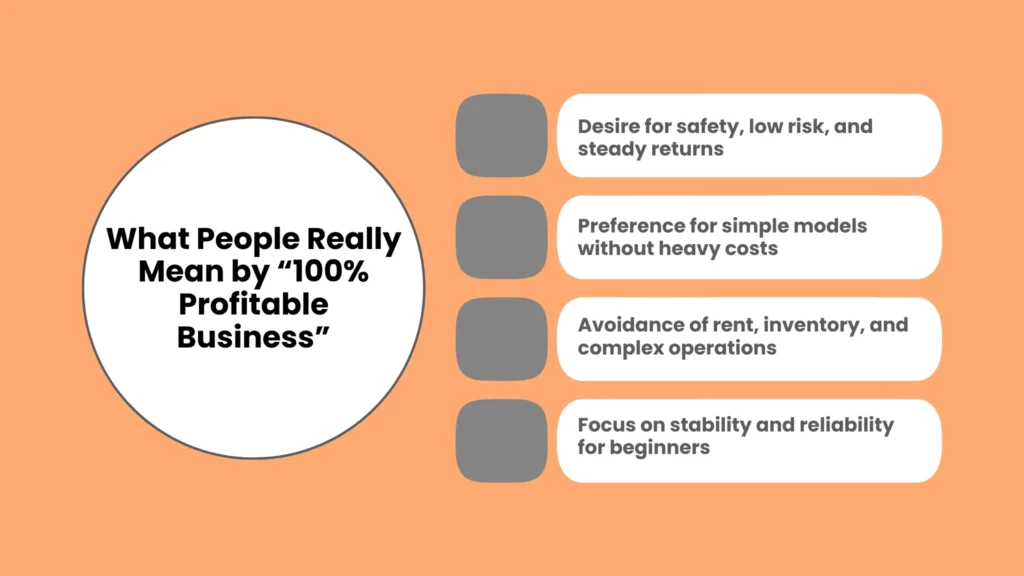
When someone searches for a completely profitable business, they want peace of mind. They want a business that never loses money and grows consistently. They also want low investment and little financial risk. These goals are very common among first-time entrepreneurs.
Most people are not asking for a magical business with zero cost. They want something simple, safe, and steady in the long term. They want to avoid high rent, heavy labor, and large inventory. They prefer something flexible and beginner-friendly.
Translating “100% profitable” into realistic criteria
A realistic way to view this idea is by focusing on strong margins. Businesses with high margins give you more breathing room and less financial stress. You want something that earns well without huge expenses. That makes growth much easier.
Here are the real traits of a business that feels “100% profitable”:
-
High gross margin (50–80% and above)
-
Low fixed costs like rent, equipment, or staff
-
Low variable costs which stay stable as you grow
-
Scalable model that earns more without huge new expenses
When a business checks these boxes, it becomes close to risk-free. This helps beginners feel secure and confident in their journey.
How Profitability Actually Works (Simple Breakdown)
Understanding profitability makes choosing the right business easier. Profit is simply what remains after you pay your costs. The formula is very simple and very important. Profit equals revenue minus expenses.
Many beginners forget that even tiny costs reduce profit. Some models have almost no overhead, which makes them attractive. Others have higher costs and lower margins. Knowing this helps you choose wisely.
Basic profit formula
A small change in cost can affect your overall margin. That is why low-overhead models are popular today. These models allow you to reach profitability faster. They also allow you to reinvest money into growth.
Types of costs
Every business has fixed and variable costs. Fixed costs stay the same each month like rent, software, or tools. Variable costs change based on your sales efforts. Understanding both types helps you improve your margins easily.
Service businesses often have very low variable costs. Product businesses often have higher costs due to materials. This is why many people prefer digital or service models. These options naturally offer stronger profit margins.
What is a “good” profit margin?
Most profitable businesses maintain strong margins. Service companies aim for high margins because they have little overhead. Digital products and SaaS also offer excellent margins after creation. These margins help you earn more with less pressure.
In general, a good margin starts around 20–30% for small operations. Digital and service businesses can reach 50–70% or more. Some SaaS companies even achieve higher gross margins. These levels bring you close to the idea of “100% profitable.”
Business Models Closest to 100% Profitable in 2025
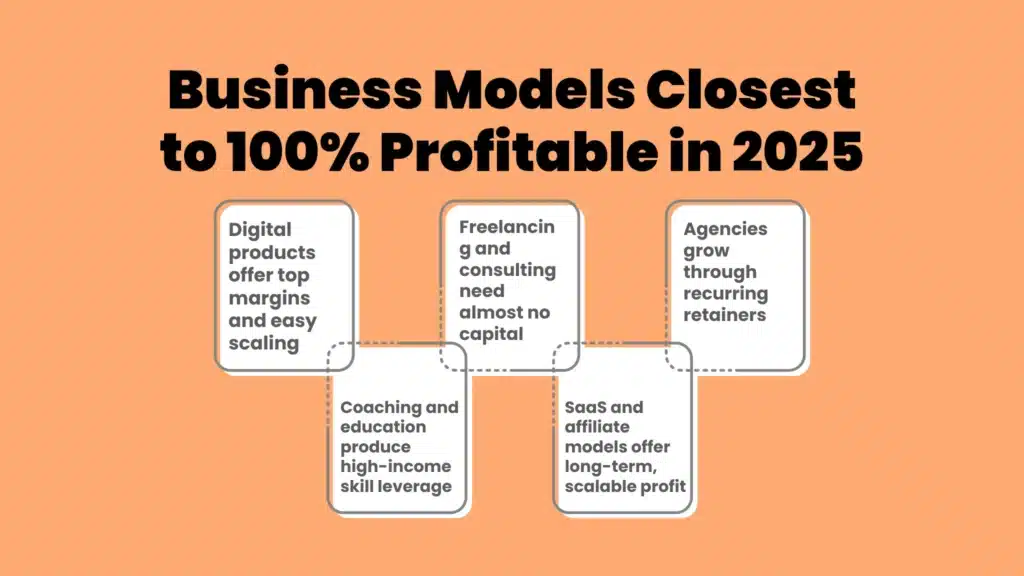
Many business models today offer strong profit potential. These models are simple to start and easy to scale online. They have low startup costs and low monthly expenses. That makes them ideal for beginners.
Below are the business types that come closest to extremely high profitability. They work well because they need minimal resources. They also help you grow without constant investment. Most importantly, they offer stable income with manageable risk.
1. Digital Products (Courses, E-Books, Templates)
Digital products have some of the highest margins online. You create them once and sell them again without extra cost. This makes them a strong choice for beginners. They also scale well with audience growth.
Creating digital products requires skills or basic research. You need to know what people want and how to teach it well. You can sell on your website or on marketplaces. The earning potential grows quickly with good marketing.
2. Freelance and Consulting Services
Freelancing and consulting have very low startup costs. You can begin with a laptop and a skill. This makes them almost risk-free compared to physical businesses. They also offer strong margins because you mainly sell your time.
Consultants charge higher fees when they build expertise. Many niches like marketing and design are always in demand. You can scale by raising rates or outsourcing tasks. This model is simple and very beginner-friendly.
3. Digital Marketing and Content Agencies
Digital agencies help businesses grow online. They provide services like SEO, content writing, ads, and social media. These services require little equipment to get started. That leads to strong profitability in most markets.
Agencies also grow through monthly retainers. This gives stable recurring revenue each month. You can hire team members as work increases. With good systems, agencies scale very fast and maintain strong margins.
4. Online Coaching and Education
Online coaching continues to grow every year. People want guidance, support, and personalized help. Coaches sell knowledge using calls, videos, and digital programs. This keeps costs very low and margins very high.
You can coach in fitness, career, business, communication, or mindset. Group programs increase your income with the same effort. Membership communities also create recurring revenue. These options bring stable and predictable profit.
5. SaaS and Subscription Apps
SaaS offers very high margins because one product serves many users. You invest in development once and earn recurring fees. This model has stronger potential but higher initial risk. It is ideal for tech-skilled founders.
Subscription apps create predictable monthly income. Users stay longer if you solve a real problem. Growth depends on customer retention and product value. Once established, SaaS becomes extremely profitable long term.
6. Affiliate and Content Businesses
Affiliate marketing requires almost no upfront cost. You earn commissions from products you recommend. This makes it attractive for beginners without capital. Content platforms like blogs and YouTube help this model grow.
The main effort is creating helpful content consistently. Once traffic grows, income becomes passive. Affiliate business is low risk and long term. It might start slow but becomes very profitable later.
7. Low-Capital Service Businesses
Some service businesses need almost no money. Examples include virtual assistant work, tutoring, pet sitting, and social media services. These ideas are easy to start and require simple skills. They fit well for beginners who want quick income.
Service businesses grow with good reputation and referrals. You can raise prices as your skills improve. You can also hire help and expand operations. The model is stable, simple, and profitable across many niches.
Comparison Table – High-Margin, Low-Cost Business Models
| Business Type | Startup Cost Level | Typical Gross Margin | Time to First Profit | Skill Needed | Risk Level |
|---|---|---|---|---|---|
| Digital Products | Low–Medium | Very High (70%+) | Medium | Medium | Low–Medium |
| Freelancing / Consulting | Very Low | High (40–60%+) | Fast | Medium–High | Medium |
| Digital Marketing Agency | Low–Medium | High | Medium | High | Medium |
| Online Coaching | Low–Medium | High | Medium | Medium | Medium |
| SaaS / Subscription Apps | Medium–High | Very High | Slow–Medium | High | Medium–High |
| Affiliate / Content | Low | High | Slow | Medium | Medium |
How to Choose the Most Profitable Business for You
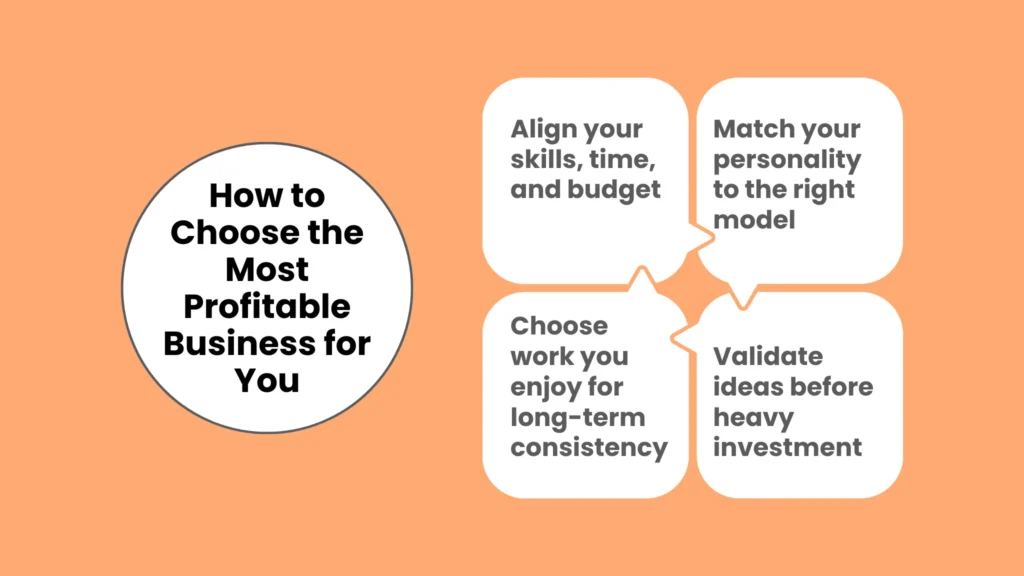
Choosing the right idea depends on your skills and budget. You should pick something you can enjoy doing daily. This makes you more consistent and confident. It also helps you grow faster over time.
You must match your strengths with the model. A creative person might prefer content. A tech person might build SaaS or tools. Someone social may enjoy coaching or consulting. Matching correctly increases your chance of success.
Step 1 – Map your skills, time, and budget
Think about how much time you can invest weekly. Think about your experience or natural strengths. Think about your available money for tools or marketing. These answers guide your ideal niche.
Step 2 – Match yourself to the right model
Match your personality with a business model. Introverts often like writing or design based work. Extroverts may enjoy coaching or consulting. Tech-driven people can explore SaaS or automation.
Step 3 – Validate before investing heavily
Test your idea with a small offer. Speak to real people and check their interest. Look at competitors and learn from their approach. A small test reduces risk and improves confidence.
How to Make Any Business More Profitable
Profitability is not only about choosing the right business. It is also about managing costs and increasing revenue. Smart decisions help you grow faster. This makes your business more stable over time.
Increase your margin
You can improve your profit by raising prices. You can offer premium options for advanced clients. You can reduce unnecessary tools or subscriptions. These changes increase your financial freedom.
Add recurring revenue
Recurring revenue helps you earn predictably every month. You can offer memberships or retainers. You can sell subscription-based digital products. This makes long-term planning easier.
Improve customer lifetime value
Improve LTV by offering upsells and add-ons. Create bundles or extra services. Build deeper relationships with customers. This increases your long term profitability.
Avoid beginner mistakes
Many beginners underprice their services. Many ignore their actual costs. Many skip validation before building. Avoiding these mistakes saves money and time.
FAQs
Can any business be 100 percent profitable?
No business is truly 100 percent profitable. Every business has some cost. You can only aim for high margins. Smart planning helps you reach strong profitability.
Which business gives maximum profit with minimum investment?
Digital products, freelancing, affiliate marketing, and coaching offer high returns. These models need low capital. They also scale with low risk. They are perfect for fast and steady growth.
How long does it take for a business to become profitable?
Service businesses can become profitable quickly. Content and SaaS take longer. Digital products take medium time depending on audience. Good marketing speeds up results.
Conclusion
The real answer to which business is 100% profitable is simple. No business can achieve profit without any expense or risk. But many business models come extremely close. These models give strong margins and low overhead.
Focus on choosing a high-margin model that matches your skills. Build carefully and validate early to reduce risk. With consistent effort, you can build a stable and profitable business. Your goal should be high margin, low stress, and smart growth.
If you still wonder which business is 100% profitable, remember that the real goal is choosing a model that keeps your costs low and your margins high.