How to Market an Online Startup Business: A Practical Guide
If you’re wondering how to market an online startup business, you’re not alone. Most startups don’t fail because the product is bad; instead, they fail because the right people never hear about it. However, marketing isn’t about shouting louder, it’s about being clear, consistent, and helpful. So, in this guide, you’ll learn practical steps to attract your first customers, build trust, and grow steadily without sounding pushy.
Start with a clear brand message that people understand
Before you post, run ads, or write content, you need a simple message. Otherwise, your marketing will feel confusing.
Start by answering three questions:
-
Who is your ideal customer?
-
What problem do you solve?
-
Why should they trust you over alternatives?
Now, turn those answers into a short value statement. For example: “We help busy students learn design in 30 minutes a day.” It’s direct, and it’s easy to remember.
Also, keep your tone consistent. If your startup is friendly, stay friendly everywhere. If it’s premium, keep it polished. That consistency builds trust faster than fancy words.
Create an offer that feels hard to ignore
A good product still needs a strong offer. So, make your offer clear and specific.
Instead of saying “Best marketing tool,” say “Plan your week of content in 10 minutes.” That’s more believable. Also, add a simple reason to act now, like a limited-time bonus, early access, or a founder discount.
Moreover, remove friction. Use clear pricing, simple checkout, and short forms. If people feel confused, they leave.
Build a website that converts visitors into leads
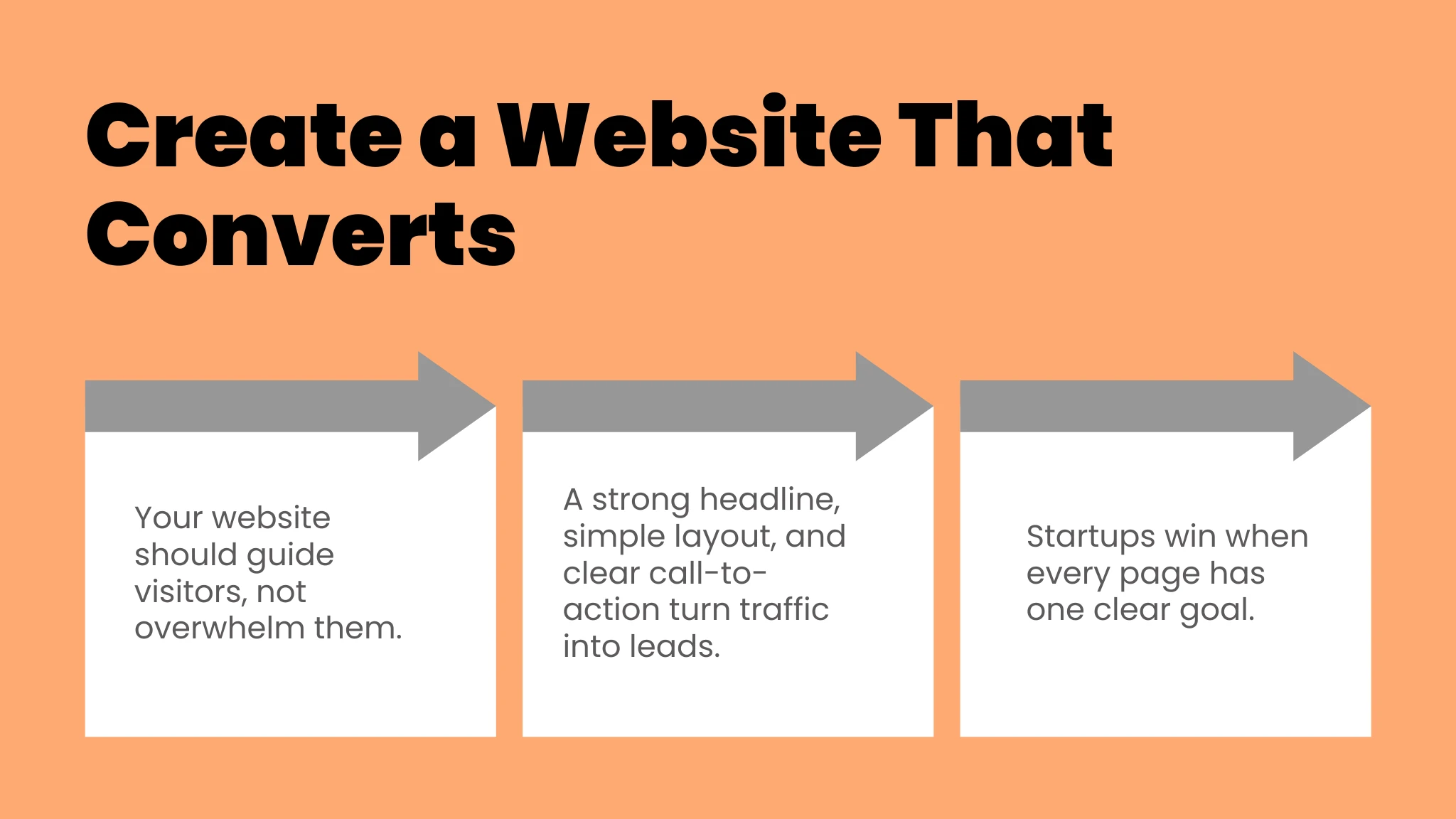
Your website is your home base. Even if you market on social platforms, you still need a site that captures leads and explains your offer.
Your homepage should include:
-
A clear headline that matches your key benefit
-
One main call-to-action (like “Start free trial” or “Get a demo”)
-
Social proof (reviews, results, or logos if you have them)
-
A short “How it works” section
Also, keep paragraphs short and scannable. People don’t read online the way they read books. Therefore, make it easy to skim.
Additionally, create one landing page for each main audience or service. That way, your message matches the visitor’s intent.
Use SEO basics to get free traffic over time
SEO helps you show up when people search for answers. It’s slower than ads, but it compounds.
First, pick one main topic for your startup and create content around it. Then, write pages that match what people actually search for.
Examples of useful content:
-
“How to…” guides
-
“Best tools for…” lists (without linking out, if you prefer)
-
Beginner-friendly tutorials
-
Comparison posts (your solution vs. alternatives)
Also, use your focus keyphrase naturally in the title, intro, and a few subheadings. However, don’t stuff it. Write for humans first, and search engines will follow.
Moreover, optimize your page structure:
-
Use clear headings
-
Add short paragraphs
-
Include FAQs
-
Use descriptive image names (even if you don’t add links)
Market through content that builds trust
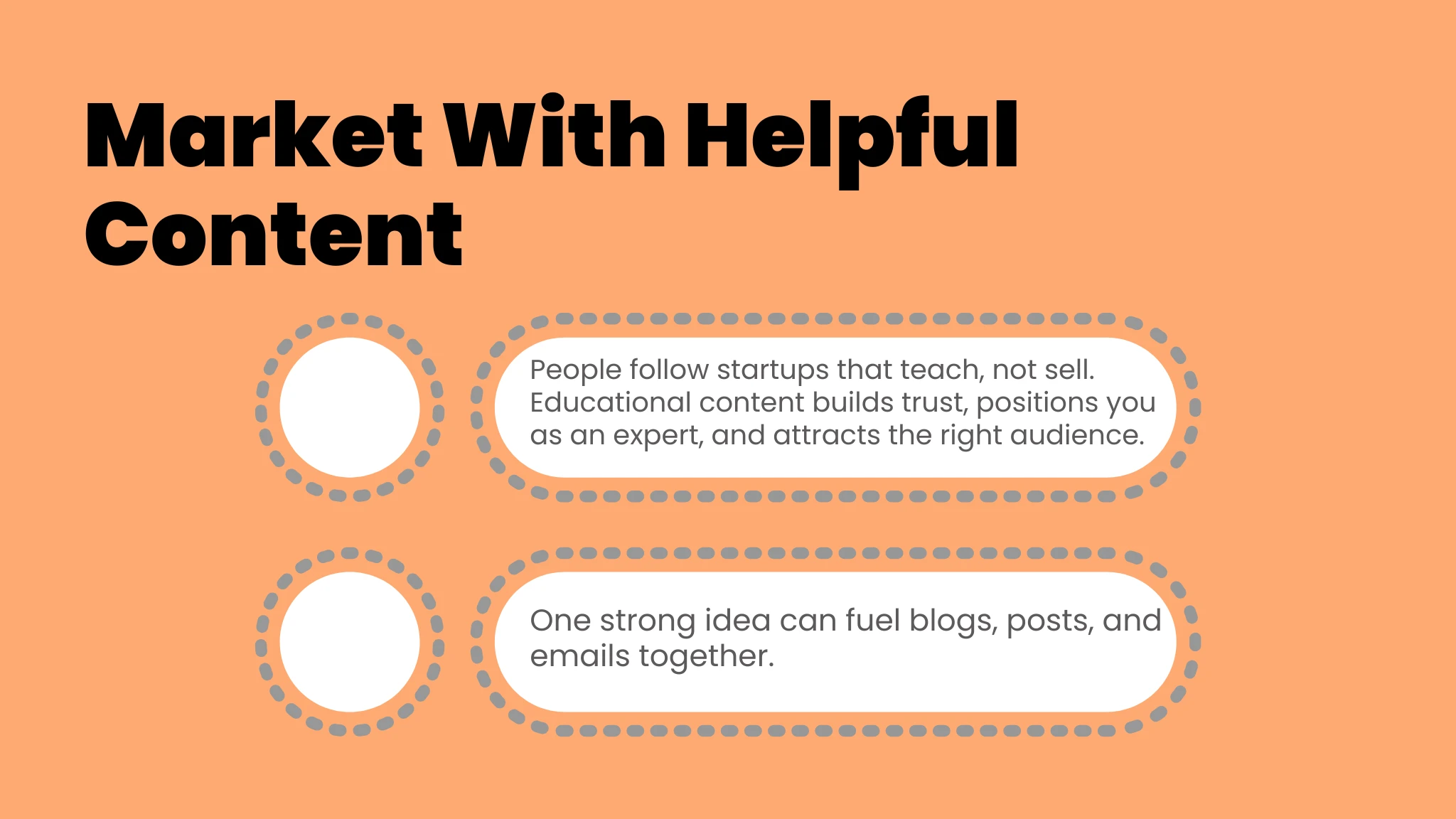
Content marketing works because it helps people before asking them to buy. So, create content that solves real problems your audience faces weekly.
A simple weekly content system:
-
1 helpful blog post
-
2 short social posts that summarize the blog
-
1 email that shares a quick tip and links to your product (without pushing)
Also, repurpose everything. A blog can become a video script, a carousel post, and an email. Therefore, you produce more without burning out.
Most importantly, share personal lessons and small wins. People connect with real stories, not perfect brands.
Choose 1–2 social platforms and stay consistent
Many startups waste time by posting everywhere. Instead, focus on where your audience already hangs out.
If your product is visual, choose Instagram or TikTok.
If it’s professional, choose LinkedIn.
If it’s community-driven, choose Facebook groups or Reddit-style discussions.
Then, follow a simple rule: be useful more often than you promote.
For example:
-
Teach one tip
-
Share one mistake you learned from
-
Post one mini case study
-
Then mention your startup as the solution
That balance keeps your marketing natural and human.
Build an email list early and nurture it
Social platforms can change overnight. However, email is yours.
Offer a simple lead magnet such as:
-
A checklist
-
A template
-
A short email course
-
A free mini-tool
Then, set up a welcome sequence of 4–6 emails:
-
Deliver the free resource
-
Share your story and mission
-
Teach a quick win
-
Address common objections
-
Show a small case study
-
Invite them to try or buy
Also, keep emails simple. Short lines, friendly tone, and one clear point per email work best.
Use partnerships and communities to grow faster
Paid ads are not the only way to scale. Partnerships can be cheaper and more trusted.
Start with small collaborations:
-
Guest posts (without linking, you can still collaborate by writing for their audience)
-
Joint webinars
-
Co-created guides
-
Product bundles
Also, be active in communities where your customers ask questions. Answer honestly, give value, and avoid hard selling. Over time, people will check your profile and come to you.
Try paid ads only after your message is working
Ads amplify what already works. So, don’t rush.
Before spending money, test your message with:
-
Organic posts
-
Small influencer shoutouts
-
Community responses
If people react well, then start small with ads. Keep the goal simple: collect leads or promote one landing page.
Also, track just a few numbers:
-
Cost per lead
-
Conversion rate
-
Customer acquisition cost
-
Retention or repeat usage
That clarity prevents wasted budget.
For instance, reviewing real demand-driven topics such as business ideas for stay-at-home moms can help you shape a message that feels instantly relatable:
FAQs
How to market an online startup business with a low budget?
Start with SEO-friendly content, community engagement, and email marketing. Also, focus on one platform and one clear offer. Consistency beats expensive tools.
How long does it take to see results?
It depends on the channel. Social can bring results in weeks, while SEO usually takes a few months. However, if your message is strong, you can get early customers quickly through communities and partnerships.
What is the best marketing strategy for a new startup?
The best strategy is the one you can repeat weekly. Usually, that means a clear brand message, one main platform, content marketing, and an email list that nurtures leads.
Should I use influencers for my startup?
Yes, but start small. Micro-influencers often have higher trust. Also, give them a clear message and a simple offer to share.
What content should I create first?
Begin with problem-solving content. For example, write guides, quick tips, and short case studies that match your audience’s daily struggles.
Conclusion: How to Market an Online Startup Business
Learning how to market an online startup business is not about doing everything at once. Instead, it’s about clarity, consistency, and trust. Focus on a simple offer, a website that converts, and content that solves real problems. At the same time, make smart financial decisions early, such as choosing the right tools and resources to support growth, including business credit cards for startup businesses that help manage expenses and improve cash flow.
Then, build an email list, show up in the right communities, and improve based on real results. Over time, your marketing won’t feel stressful. Instead, it will feel like a repeatable system that consistently grows your startup every month.