Foodstuff Business Guide to Starting and Growing Profit
The foodstuff business is one of the best business options today. People need food every day, so demand never stops. When you sell food items used daily, you can earn steady income over time.
Because of this, many beginners choose this business. It can start small and grow slowly. In this guide, you will learn how the foodstuff business works. You will also learn how to start and grow it in easy words.
What the Foodstuff Business Means
A foodstuff business means selling, supplying, or sometimes making food products. These products are used for eating or cooking. They include fresh items like fruits and vegetables. They also include dry items such as rice and pulses. Packaged foods like spices, snacks, and frozen items are also part of this business.
Some people run small grocery shops. Others sell food online or supply it to restaurants and stores. Because food is a basic need, this business stays active even when markets slow down.
Why the Foodstuff Business Is a Smart Choice
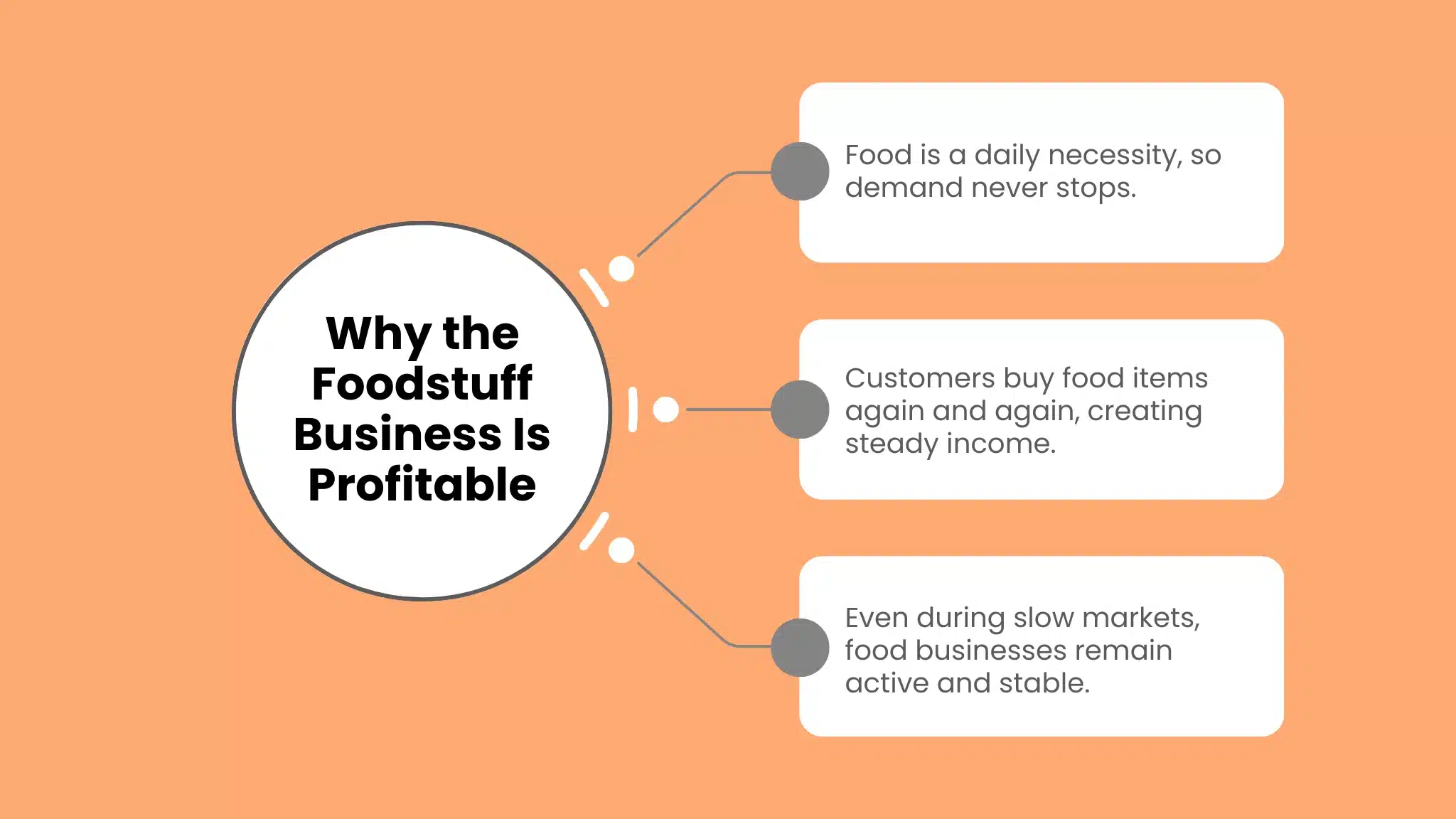
The foodstuff business is a smart choice because customers return often. When people like your quality and price, they buy again. This makes your income more stable.
You can also choose products based on your budget and local demand. This means you do not need to invest heavily at the start. According to the Food and Agriculture Organization, global food demand is rising due to population growth. This shows why the industry remains strong. You can learn more here.
Types of Foodstuff Business You Can Start
Retail Foodstuff Business
A retail foodstuff business sells directly to customers. You can sell through a shop, small store, or online page. This model works well because people buy daily-use items regularly.
Competition can be high. However, you can succeed with clean products, fair prices, and good service.
Food Processing Business
A food processing business turns raw food into finished products. Examples include spice mixes, sauces, snacks, frozen foods, and packed dry items. You then sell these products under your own brand.
This business grows faster because products become unique. Customers return if they like the taste and quality.
Wholesale Foodstuff Business
A wholesale foodstuff business sells food in bulk. Customers include shopkeepers, restaurants, and small sellers. Profit per item is usually lower. However, total profit can still be strong because of large sales volume.
This business works best with strong suppliers and good delivery systems.
Organic and Healthy Food Business
Organic and healthy foods are in high demand. Many people now prefer clean and natural products. Because of this, this market is growing quickly.
However, products must be truly organic. Proper certification is important, depending on local rules.
How to Start a Foodstuff Business Step by Step
Do Market Research First
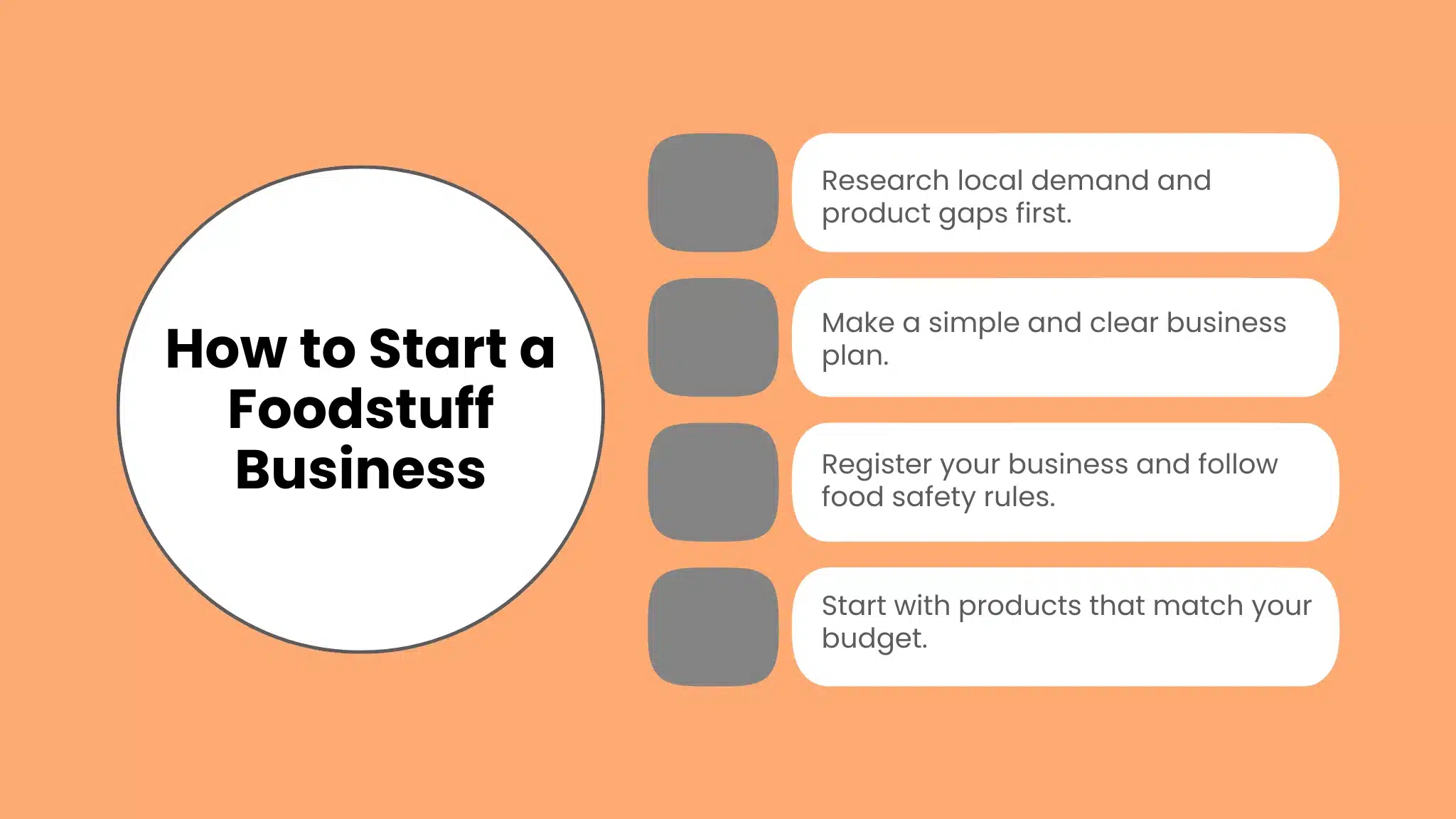
Start by understanding what people buy most in your area. Check which products are missing or overpriced. This helps you choose the right items.
You should also study your competitors. Look at what they sell and how they price products. This helps you plan better and avoid mistakes.
Make a Simple Business Plan
After research, create a simple business plan. It should explain what you will sell and where you will buy from. It should also include costs and expected profit.
The plan does not need to be complex. It only needs to be clear and practical.
Register and Follow Food Rules
Food businesses must follow safety rules. You should learn the legal requirements in your area. In many places, business registration and food safety certificates are required. This is especially important if you process or package food.
You can read official food safety guidance here: https://www.fda.gov/food
Suppliers, Quality, and Storage
How to Choose Suppliers
Quality is very important in the foodstuff business. Customers do not compromise on food. You should choose suppliers who offer fresh products and clean packaging.
When you work with trusted suppliers long-term, you get better prices and stable supply.
How to Store Food Properly
Proper storage prevents spoilage and waste. Dry items should stay in clean and dry areas. Packaged goods should be kept away from heat and moisture.
Frozen or chilled items need proper temperature control. This protects both your stock and reputation.
Branding and Packaging
Why Branding Matters
Branding helps customers remember your business. Clean and professional packaging builds trust. Even simple products sell better with good presentation.
Labels should clearly show product name, expiry date, and ingredients. This makes customers feel safe.
Simple Packaging Tips
Packaging should be neat and easy to read. It should also protect the product well. When packaging looks clean, customers trust the quality more.
Using the same design style for all products improves brand recognition.
Marketing Your Food Business
Online Marketing
You can start online with a simple website or social media page. Share clear product photos, prices, and offers. Explain how your products help customers.
You should also use basic SEO. Add your keyphrase naturally to website content and product descriptions.
Offline Marketing
Local promotion is also useful. You can share your products with nearby stores and restaurants to reach regular buyers. In addition, free samples or small discounts help customers try your products with confidence. As a result, many first-time buyers become repeat customers.
You can also join food fairs and local markets because these events help you meet people face-to-face. Moreover, they help you build trust quickly and grow your local reputation. For more ideas, you can explore this helpful guide on food business opportunities: https://reliablestartup.com/business-ideas/food-industry-business-ideas/
Common Challenges and Simple Solutions
Spoilage and Wastage
Spoilage is common in food businesses. You can reduce it by buying the right quantity. Proper storage and stock rotation also help avoid loss.
Price Changes and Supply Issues
Food prices change often. Having more than one supplier reduces risk. Watching market trends helps you buy at the right time.
Managing Records
Keeping sales and inventory records is important. It shows which products sell well. When you track data regularly, you make better decisions.
How to Grow Your Foodstuff Business
Add Products Step by Step
You can grow by adding new products slowly. This helps control quality and cost. Expansion should be planned, not rushed.
Sell Online and Deliver
Online selling helps growth. Many customers prefer home delivery. Easy ordering and fast delivery increase loyalty.
Supply Restaurants and Shops
Supplying restaurants and shops increases regular sales. These buyers order frequently. Strong relationships create stable income.
Think About Export Later
Exporting is a future option. It works best for spices and packaged foods. Export needs planning but offers higher growth.
Future Trends in the Food Industry
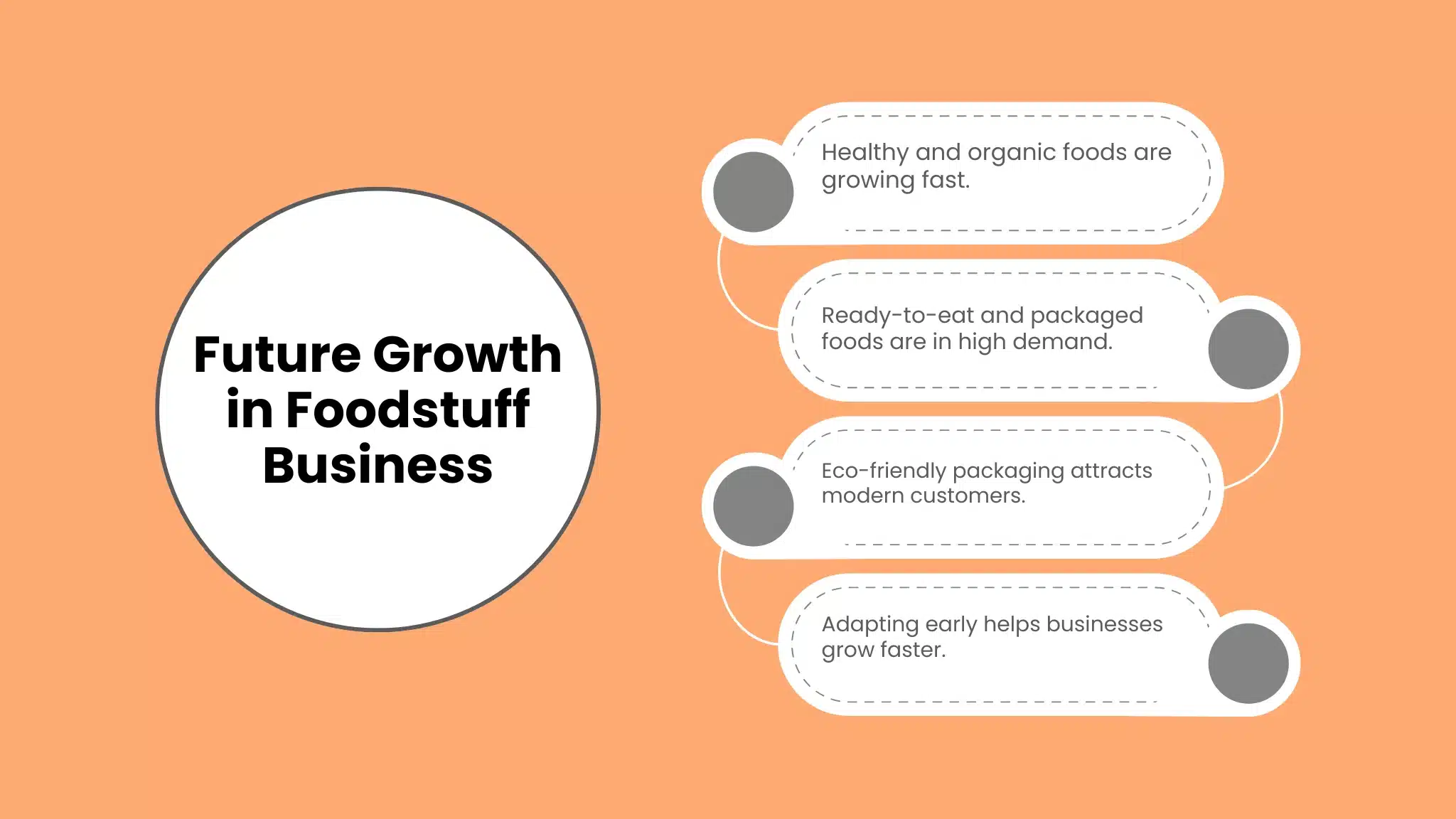
The food industry continues to change. For example, healthy foods are becoming more popular. At the same time, ready-to-eat meals are also in demand. In addition, eco-friendly packaging is another growing trend.
Moreover, plant-based and low-sugar foods are gaining attention. Because of this, choosing these categories helps businesses stay competitive. As a result, brands that follow these trends often build stronger customer trust.
However, it is still important to focus on quality and clear labeling. Therefore, businesses should keep improving recipes, packaging, and customer experience. In fact, small updates can make a big difference in sales over time.
Meanwhile, market platforms like Statista show how food markets keep expanding through innovation. Overall, staying updated and adapting early can help a food business grow faster.
FAQs
What is the easiest foodstuff business to start?
A small retail business is easiest to start. Daily-use items like rice, pulses, and spices sell regularly and are easy to manage.
Can I start a foodstuff business from home?
Yes, you can start from home. Choose products that store easily and follow local food safety rules.
Is the foodstuff business profitable for beginners?
Yes, it is profitable when you choose the right products and maintain quality. Customer trust plays a big role.
Do I need a license to sell food products?
In many areas, a license is required. This is important for packaged or processed food. Always check local rules.
Conclusion
The foodstuff business is safe and reliable. First, food is a daily need, so customers keep buying. Because of this, the demand stays strong in every season. With that in mind, proper planning and quality products help you build steady income, even with a small budget. In addition, when you manage stock well, you reduce waste and protect profit.
As a result, your business becomes stronger over time. Next, as your business grows, you can add more products and improve your services. Moreover, you can sell online to reach more customers. For example, home delivery can attract busy buyers who want convenience. Meanwhile, supplying larger buyers like restaurants and shops can increase regular orders. However, growth works best when you move step by step and stay consistent.
Finally, when you focus on quality, honesty, and customer needs, your foodstuff business can become a long-term success. If you also want more inspiration for product direction and planning, you can explore these food company ideas to choose a path that matches your budget and market demand: https://reliablestartup.com/business-ideas/food-company-ideas/