Cleaning Business Startup: Profitable Company From Scratch
A cleaning business startup can be one of the quickest paths to steady income because people always need clean homes and workplaces. However, starting “fast” doesn’t mean starting “messy.” Instead, the goal is to build a small system that gets you paying clients, delivers great results, and keeps costs under control.
In this guide, you’ll learn how to choose your services, price your work, set up basics legally, market like a pro, and grow step by step. Most importantly, you’ll do it in a way that feels realistic, not overwhelming.
Decide your cleaning niche and services
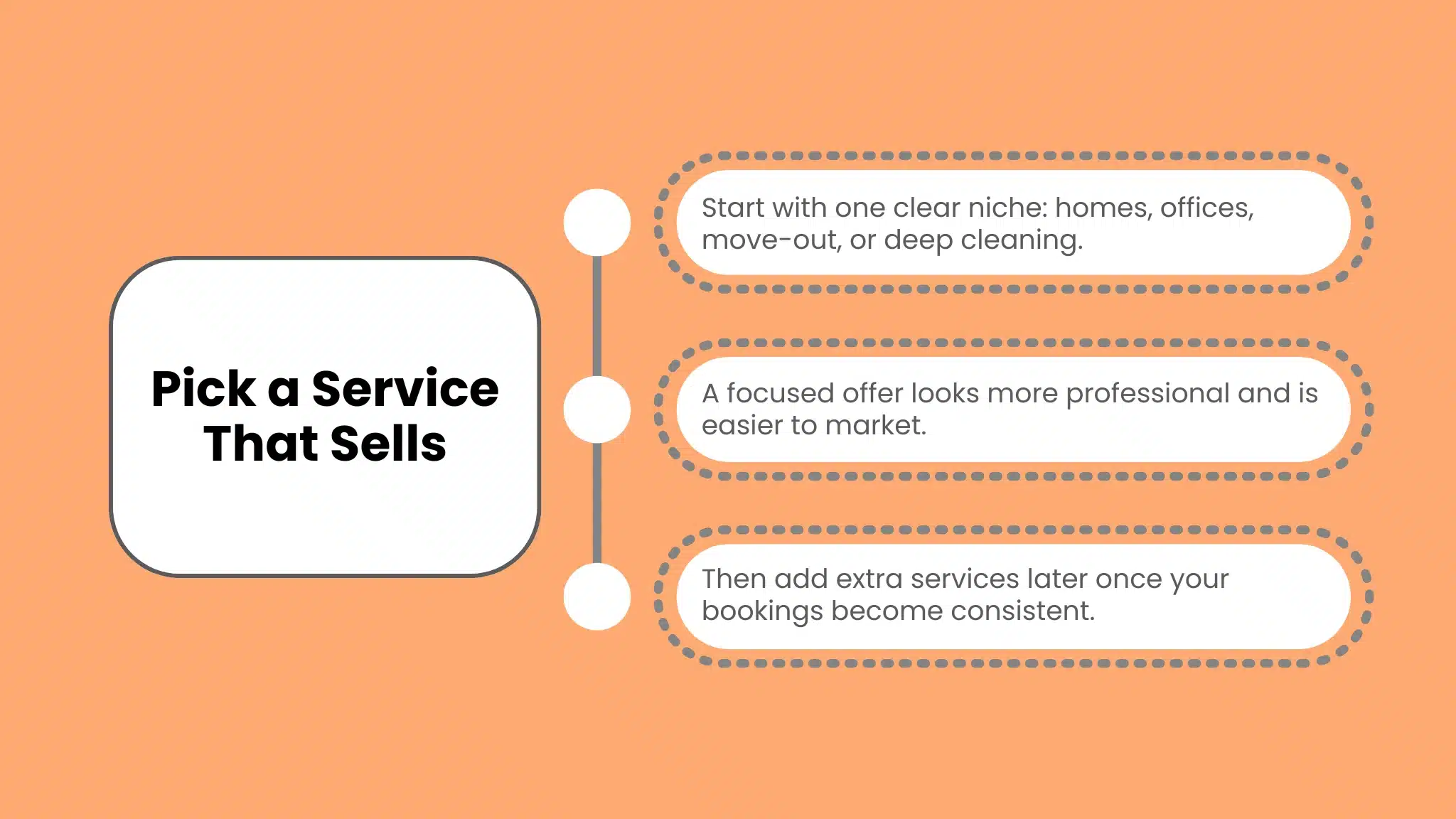
First, choose what kind of cleaning you want to offer, because your niche affects your tools, pricing, and marketing. For example, residential cleaning is easier to start, while commercial cleaning often pays more and can be stable long-term.
Here are popular service options:
-
Residential cleaning: weekly, bi-weekly, deep cleaning
-
Office and commercial cleaning: after-hours, routine maintenance
-
Move-in/move-out cleaning: high demand, higher rates
-
Post-construction cleaning: detailed, debris-focused work
-
Specialty add-ons: fridge/oven, windows, carpet spot cleaning
Additionally, start with a short service menu. That way, you look professional and avoid confusing customers. Later, you can expand once you understand what sells best.
Build your brand and business name
Your name and brand should be simple, clear, and easy to remember. So, aim for something that tells customers what you do and where you serve.
For instance, “SparkleCare Cleaning” feels friendly, while “Prime Office Clean” sounds corporate. Meanwhile, a clean logo and consistent colors help you look trustworthy even if you’re just starting.
Also, decide your brand voice. If your customers are busy families, keep it warm and helpful. On the other hand, if you want offices and clinics, keep it polished and detail-focused.
Handle the legal setup and basic paperwork
This step protects you and makes clients take you seriously. Even if you start small, handle the basics early.
Common tasks include:
-
Choose a business structure (often sole proprietor or LLC, depending on your area)
-
Register your business name if required
-
Get a tax ID if needed for invoicing or hiring
-
Open a separate business bank account
-
Use simple service terms (cancellations, damages, access instructions)
Most importantly, consider liability insurance. Accidents are rare, but when they happen, insurance can save your business. As a result, many clients feel safer hiring you.
Estimate startup costs and buy the right supplies
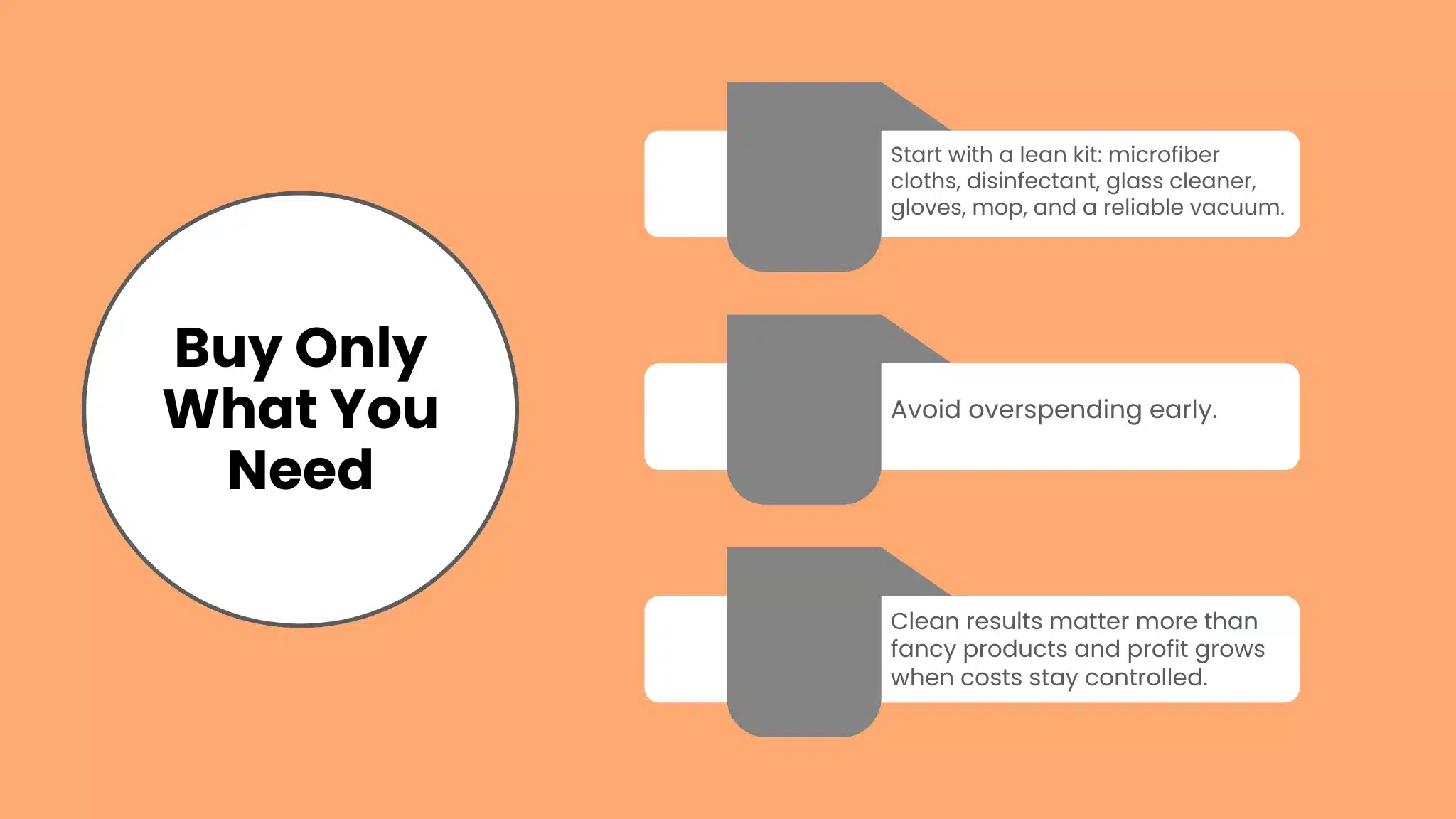
A cleaning business can start with a modest budget. However, buying random products can waste money. Instead, get a basic kit that covers 80% of jobs.
Core supplies:
-
Microfiber cloths, scrub pads, sponges
-
Mop, bucket, vacuum (reliable, not fancy)
-
All-purpose cleaner, glass cleaner, bathroom disinfectant
-
Gloves, masks, trash bags
-
Caddy or bag for carrying tools
Additionally, decide if you’ll use eco-friendly products. Many clients love green cleaning, so it can be a strong selling point. Still, don’t overpay at the start—choose products that work well and are easy to restock.
Set pricing that actually makes you profit
Pricing is where many new cleaning businesses struggle. If you price too low, you’ll feel exhausted and stuck. If you price too high without proof, clients may hesitate. So, build your pricing around time, effort, and your costs.
Common pricing models:
-
Hourly rate: good for first-time clients or uncertain jobs
-
Flat rate: best for repeat clients and clear packages
-
Per square foot: common for commercial spaces
Start by estimating how long each service takes. Then add costs like supplies, travel, and taxes. After that, add your profit margin. In other words, price based on your business goals, not just what others charge.
Also, create 3 packages so customers can choose easily:
-
Standard Clean
-
Deep Clean
-
Move-Out / Move-In Clean
This approach feels professional, and it also increases your average booking.
Create a simple process for great results every time
Consistency builds trust. Therefore, create checklists for each cleaning type. Even if you’re working alone, a checklist helps you move faster and reduces mistakes.
Your process should include:
-
Pre-visit confirmation message
-
Arrival routine (shoes policy, quick walkthrough)
-
Room-by-room checklist
-
Final quality check
-
Payment confirmation and review request
Additionally, keep notes for repeat clients. For example, record pet info, product preferences, and “do not touch” areas. As a result, your service feels personal, and clients stay longer.
Get your first clients without feeling salesy
You don’t need fancy ads to start. Instead, focus on trust-building and local visibility. At the beginning, people hire you because they feel safe—not because your business is “big.”
Ways to get clients quickly:
-
Tell friends, family, and neighbors you’re taking bookings
-
Post before/after photos (even small wins matter)
-
Offer a limited-time launch deal for first 10 customers
-
Ask early clients for referrals and reviews
-
Create simple business cards and share locally
Also, write a clear message you can reuse:
“I’m now booking weekly and deep cleaning services. If you want a reliable cleaner with attention to detail, message me for availability.”
It’s direct, friendly, and not pushy.
Keep customers coming back with retention habits
Getting a client is good. Keeping them is better. So, focus on small actions that make clients feel cared for.
Retention tips:
-
Show up on time and communicate clearly
-
Bring consistent results, not random effort
-
Ask for feedback after the first clean
-
Offer easy scheduling options
-
Use a simple loyalty offer (e.g., discount on every 5th clean)
Additionally, handle problems calmly. If a client points out a missed spot, thank them and fix it quickly. That response builds trust, and it often turns a complaint into loyalty.
When to hire help and how to grow safely
At some point, you’ll get more requests than you can handle. That’s a great problem. However, growing too fast can ruin quality. So, hire slowly and train properly.
Start with:
-
A part-time helper for busy days
-
Clear training checklists
-
Simple rules for customer privacy and safety
-
Quality inspections on early jobs
Meanwhile, track numbers monthly: revenue, costs, profit, and repeat clients. Because when you measure results, you can grow with confidence instead of guessing. Also, if you need extra cash for equipment, payroll, or marketing while you scale, explore startup business loans with no revenue to understand your options and plan your next move wisely.
FAQs
How much money do I need for a cleaning business startup?
You can start small with basic supplies and transportation. However, your cost depends on equipment, branding, and whether you need insurance right away. Many people begin lean and upgrade after steady bookings.
Is a cleaning business profitable in the first month?
It can be, especially if you price correctly and get repeat clients quickly. Still, profit is easier when you control supply costs and avoid undercharging.
Should I focus on homes or offices first?
Homes are usually easier to enter as a beginner. On the other hand, offices can provide steady contracts. Ideally, start where you have the easiest access to customers, then expand.
How do I stand out from other cleaners?
Focus on reliability, clear communication, and consistent quality. Additionally, offer simple packages, professional checklists, and a friendly customer experience.
What’s the biggest mistake new cleaning businesses make?
Underpricing is a common one. Also, many skip systems and try to “wing it.” Instead, build a repeatable process and price for profit from day one.
Conclusion
A cleaning business startup becomes successful when you treat it like a real business from the start: pick a clear service menu, price for profit, follow a consistent checklist, and market with trust. Then, as you gain clients, you can refine your process, raise rates, and hire help without losing quality. Also, managing cash flow early matters, so choosing the right payment tools can help you stay organized and earn rewards—see our guide on business credit cards for startup businesses: https://reliablestartup.com/business-ideas/business-credit-cards-for-startup-businesses/. With steady effort and smart systems, you can turn a simple cleaning service into a stable, growing income stream.