All-in-One Business Software for Startups: Grow Faster Now!
All-in-One Business Software for Startups is no longer just a “nice-to-have” tool—it’s quickly becoming the secret weapon for teams that want to grow without chaos.
Starting a business is exciting, however, it can also feel overwhelming. You’re handling tasks, managing clients, tracking sales, replying to emails, organizing finances, and trying to keep your team aligned—all at the same time.
That’s exactly why startups today choose an all-in-one business software solution. It keeps your operations in one place, reduces confusion, and helps your team work faster with fewer mistakes.
Most importantly, it lets you focus on what truly matters: building your product, serving customers, and scaling smartly.
Why Startups Need One Unified System
Startups typically begin with scattered tools. One app for communication, another for invoices, a spreadsheet for tasks, and yet another tool for customer support.
At first, it seems manageable. However, as your team grows, these tools stop working smoothly together. As a result, productivity drops and errors increase.
An all-in-one platform solves this issue by offering everything under one roof. Therefore, your team spends less time switching between tools and more time getting work done.
Additionally, unified software supports faster decisions because all your business data stays connected in real time.
What “All-in-One Business Software” Really Includes
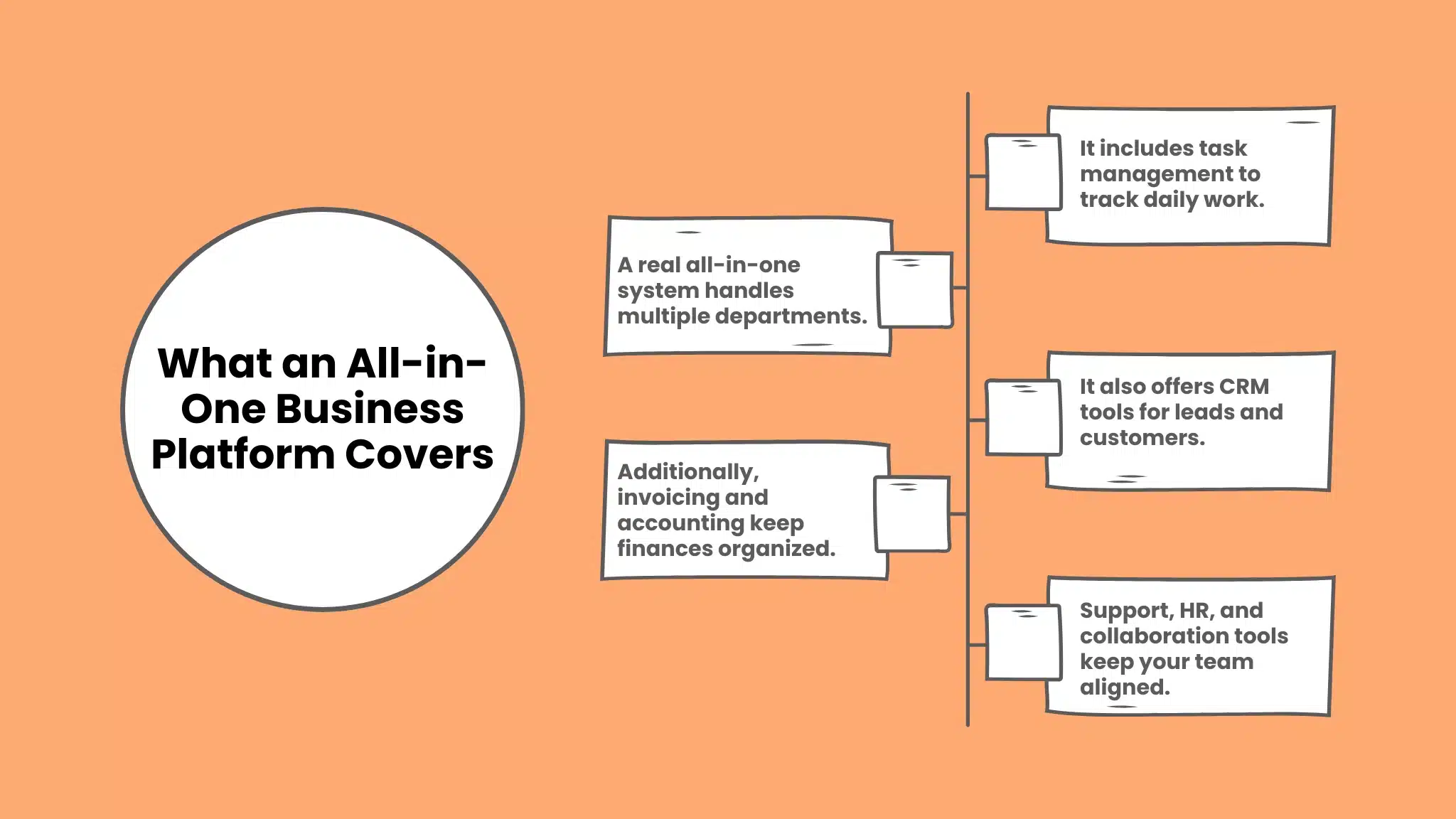
Not all tools are truly all-in-one. A real all-in-one business software for startups should cover multiple key areas without needing extra add-ons.
Here are the essential features startups should expect:
Project and Task Management
You can assign tasks, set deadlines, track progress, and organize workflows.
Instead of chasing updates, you get instant visibility into what’s happening. Consequently, your team stays aligned and deadlines become easier to meet.
CRM and Sales Pipeline
Customer relationship management is critical for startup growth. A built-in CRM lets you track leads, manage follow-ups, and monitor every stage of your sales pipeline.
Moreover, it helps you avoid losing leads due to missed communication.
Accounting and Invoicing
Managing finances with spreadsheets can become risky. With integrated accounting features, you can send invoices, track payments, and manage expenses easily.
Even better, financial reports become faster to generate and easier to understand.
HR and Team Collaboration
Startups hire quickly. As a result, managing employees and internal communication becomes challenging.
All-in-one software can support onboarding, attendance, payroll tracking, team updates, and internal messaging—so your team stays connected and organized.
Customer Support and Ticketing
Customer trust is everything, especially for a startup. Having customer support tools inside the same platform helps you manage queries quickly.
In addition, you can connect support tickets with customer profiles, so responses become more personalized and effective.
Key Benefits of All-in-One Business Software for Startups
Choosing one strong system instead of many separate tools provides serious advantages.
Saves Time Every Day
When everything is in one place, your team doesn’t waste time switching between apps. Furthermore, automation features reduce repetitive work.
This means your team can focus on growth tasks rather than routine operations.
Reduces Monthly Costs
Buying multiple tools often costs more than one unified system. Additionally, startups often pay for features they rarely use.
With an all-in-one platform, you can access the tools you need with one subscription. Therefore, budgeting becomes easier.
Improves Data Accuracy
When tools don’t sync properly, data becomes inconsistent. However, all-in-one software keeps everything connected.
As a result, reports are accurate and decisions are based on real numbers not assumptions.
Helps You Scale Smoothly
Startups grow fast. That means your processes must grow too. A scalable system supports growth without needing to rebuild your workflow from scratch.
Consequently, you avoid operational breakdowns that often happen during expansion.
How to Choose the Best All-in-One Business Software
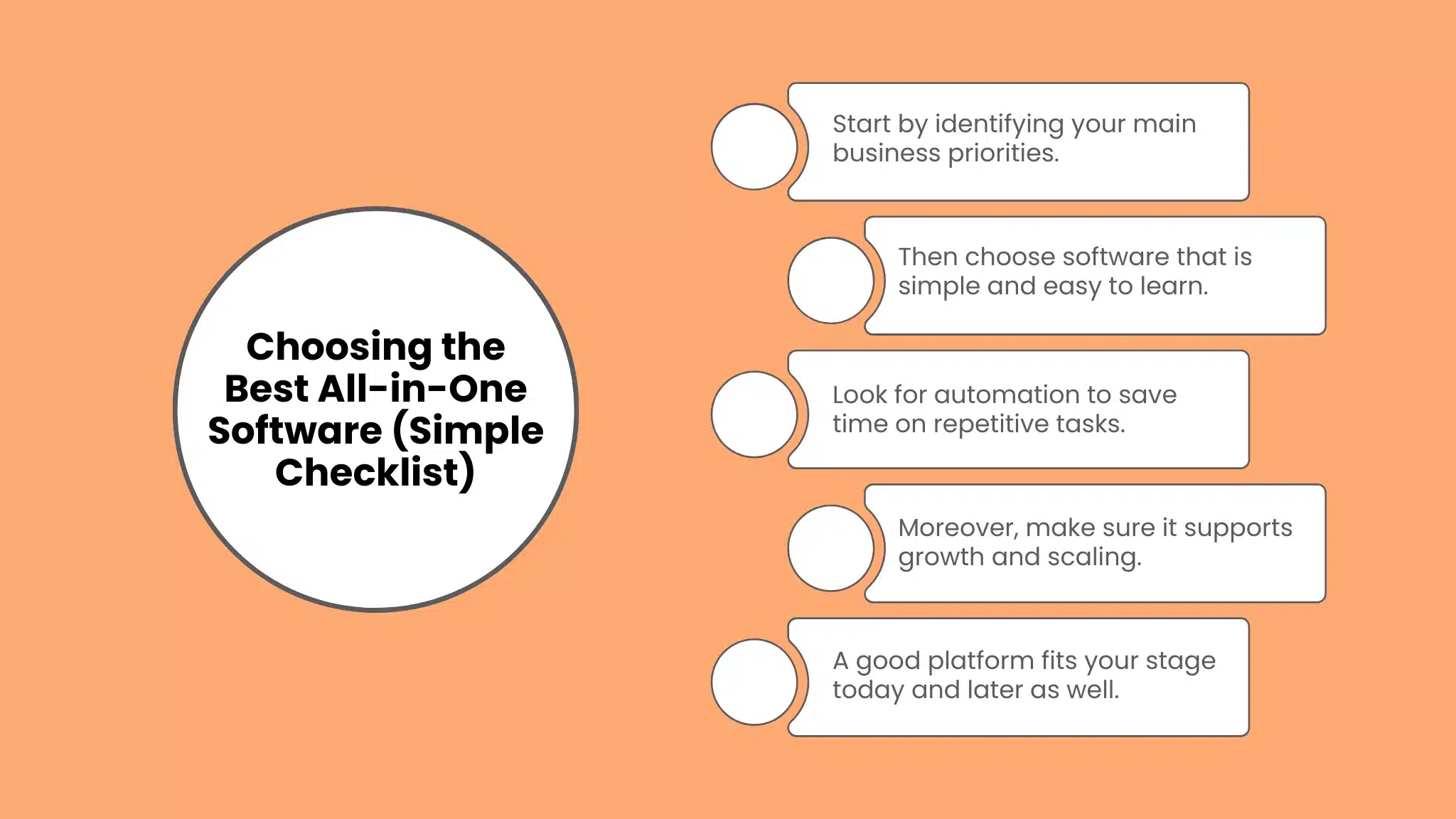
Not every solution fits every startup. So, before selecting a platform, you should consider your business stage, team size, and core needs.
Know Your Startup’s Priorities
Start by listing the most important functions you need right now.
For example, if you’re focused on sales, prioritize CRM and lead management. If you’re managing a remote team, focus on collaboration and project workflows.
Check Ease of Use
The best tool is the one your team will actually use. Therefore, look for a clean interface, clear navigation, and easy onboarding.
Additionally, choose software that supports mobile access if your team works on the move.
Look for Automation Tools
Automation saves time and reduces human errors. So, prioritize software that offers automated reminders, recurring invoices, reporting, and workflow automation.
Make Sure It Can Integrate (If Needed)
Even an all-in-one tool might need occasional integrations. For instance, you may want email syncing or payment gateways.
Therefore, ensure it supports common integrations while still keeping the system simple.
Best Use Cases for Startup Teams
All-in-one business software works well across many industries, and it’s especially helpful for:
SaaS Startups
SaaS teams benefit from unified customer support, CRM, and task management. Moreover, they can track customer feedback and product issues faster.
E-commerce Startups
E-commerce businesses need strong inventory, invoicing, customer support, and marketing tracking. All-in-one software keeps the business running smoothly.
Service-Based Startups
Agencies, consultants, and freelancers can manage clients, send invoices, track time, and monitor project status in one place.
As a result, client satisfaction improves and work becomes more organized.
Common Mistakes Startups Make When Choosing Software
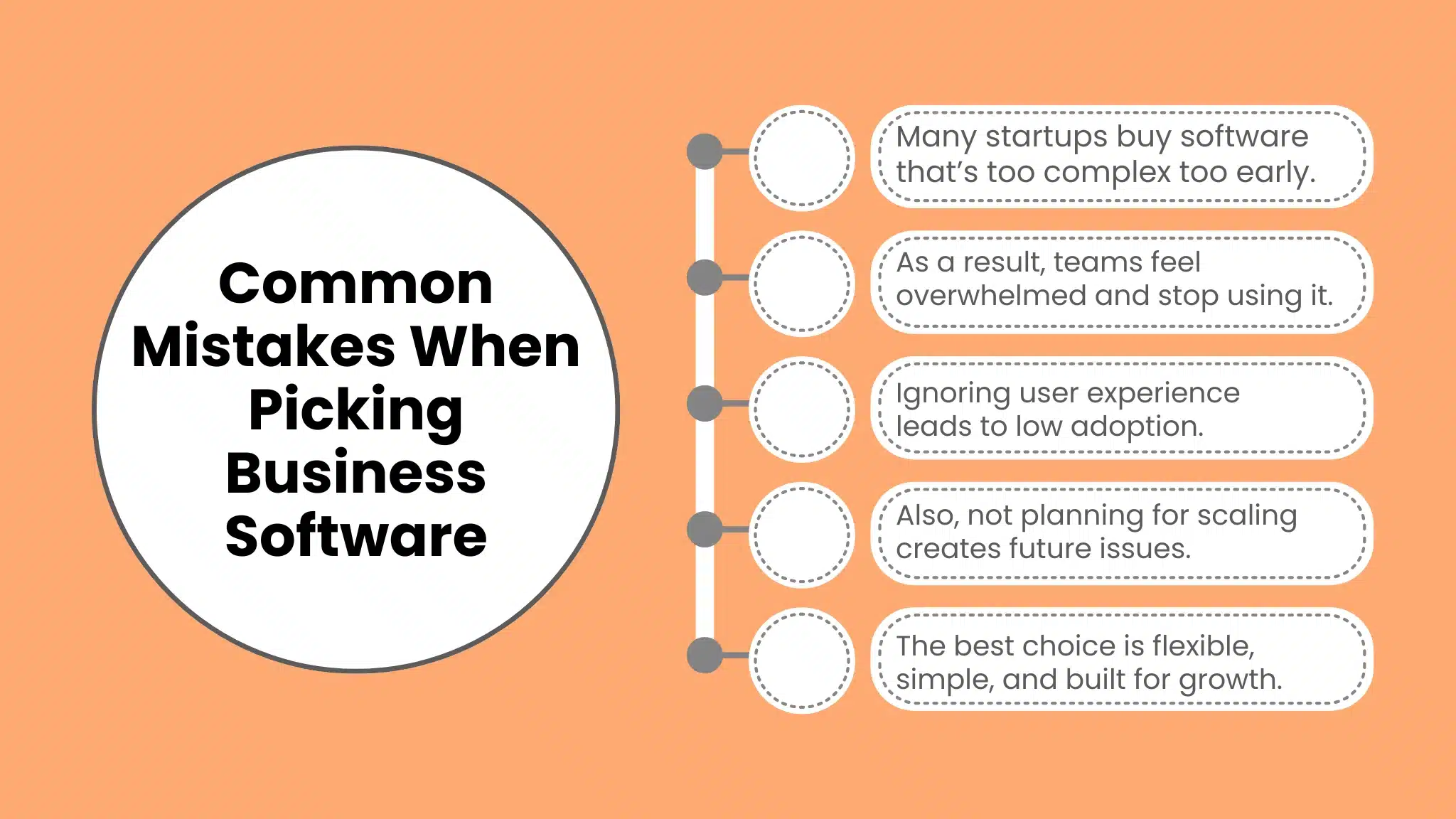
While all-in-one tools are powerful, some startups still struggle due to poor selection.
Choosing Too Many Features Too Soon
Some startups choose massive tools with features they don’t need. Consequently, teams feel overwhelmed.
Instead, pick a solution that fits your current needs and can expand as you grow.
Ignoring Team Adoption
Even the best software fails if your team refuses to use it. Therefore, include your team in the selection process and focus on user experience.
Not Planning for Scaling
A tool that works today might not work next year. So, choose software that can scale and support more users and workflows later.
Future Trends in Startup Business Software
The future of startup operations is becoming smarter and more automated.
For example, many platforms now include AI features that help with forecasting, customer support replies, and smart recommendations.
Similarly, dashboards are becoming more visual, helping founders make faster decisions with fewer meetings.
Most importantly, modern startups are moving toward simplicity—because managing growth shouldn’t feel complicated. In fact, if you’re still exploring profitable opportunities, you can also check out these business ideas for college students to discover low-investment startup options that fit today’s fast-moving world.
FAQs
What is all-in-one business software for startups?
All-in-one business software for startups is a unified platform that includes tools like CRM, project management, invoicing, HR, and customer support in one system.
Is all-in-one software better than using separate tools?
Yes, in many cases. It saves time, reduces costs, and improves data accuracy. However, the best option depends on your startup’s specific needs.
Can small startups afford all-in-one business software?
Absolutely. Many platforms offer startup-friendly pricing. Additionally, using one tool often costs less than paying for multiple subscriptions.
Will all-in-one software work for remote teams?
Yes. In fact, remote teams benefit greatly because collaboration, task tracking, and communication stay centralized and easy to manage.
How long does it take to set up an all-in-one platform?
Setup time depends on the platform and your business needs. However, most systems offer quick onboarding and templates that speed up the process.
Conclusion
All-in-One Business Software for Startups is one of the smartest investments a growing business can make. It helps you stay organized, reduces daily stress, and improves productivity across every department.
Instead of managing scattered tools and messy workflows, you get one simple system that supports your growth from day one.
Most importantly, it allows you to work smarter, serve customers better, and scale faster—without losing control of your business operations.
If your startup is ready to grow with confidence, choosing the right all-in-one platform could be the best move you make this year. And if you’re also searching for financial support to launch or scale, you may want to explore startup business loans with no revenue to help fund your next big step.